

BIOBRIEF

Lateral Ridge Augmentation in the Posterior Mandible

Dr. John M. Sisto

THE SITUATION

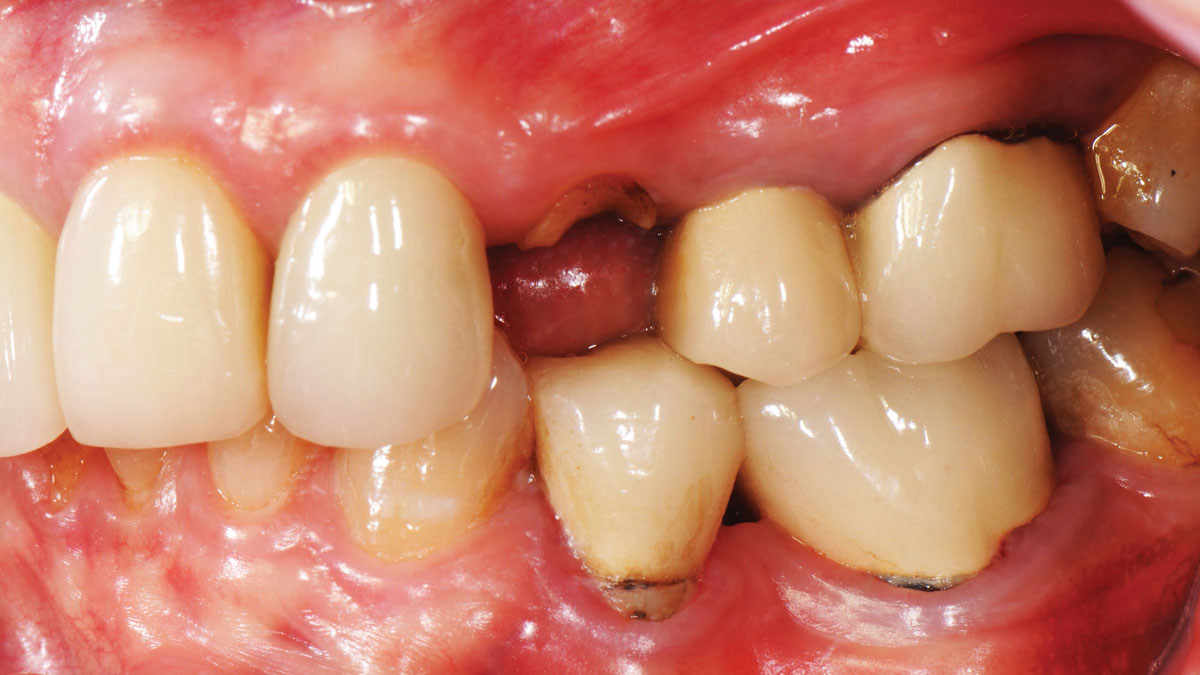
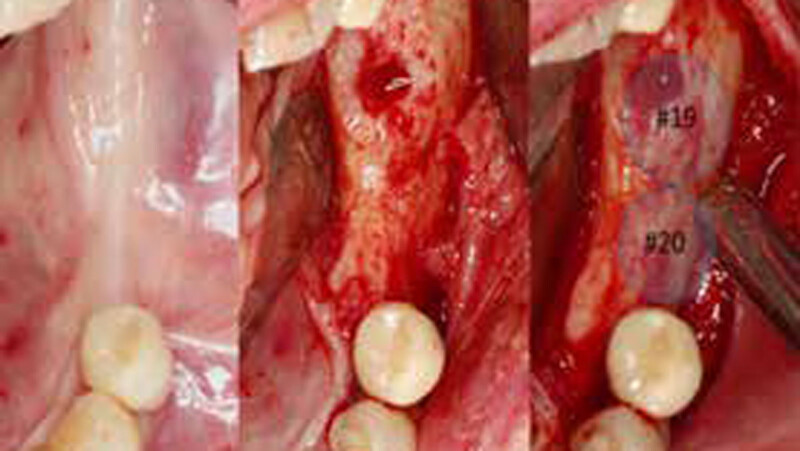
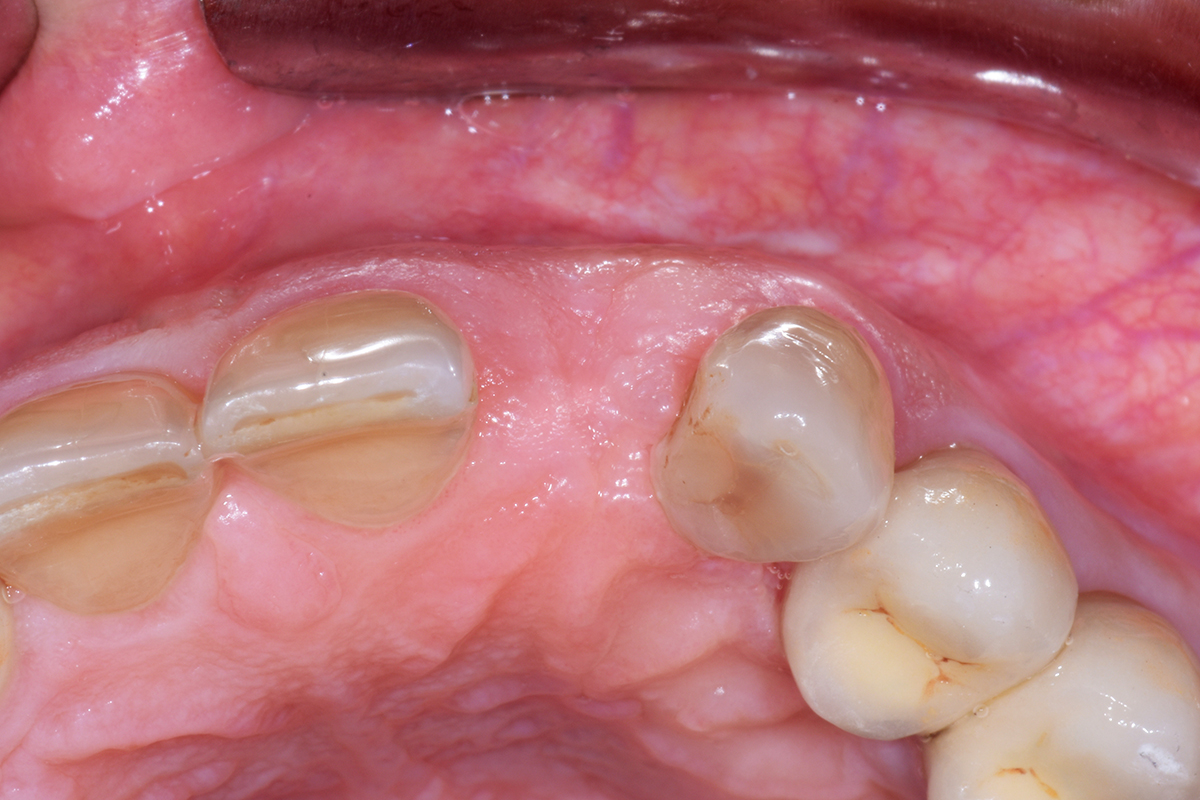
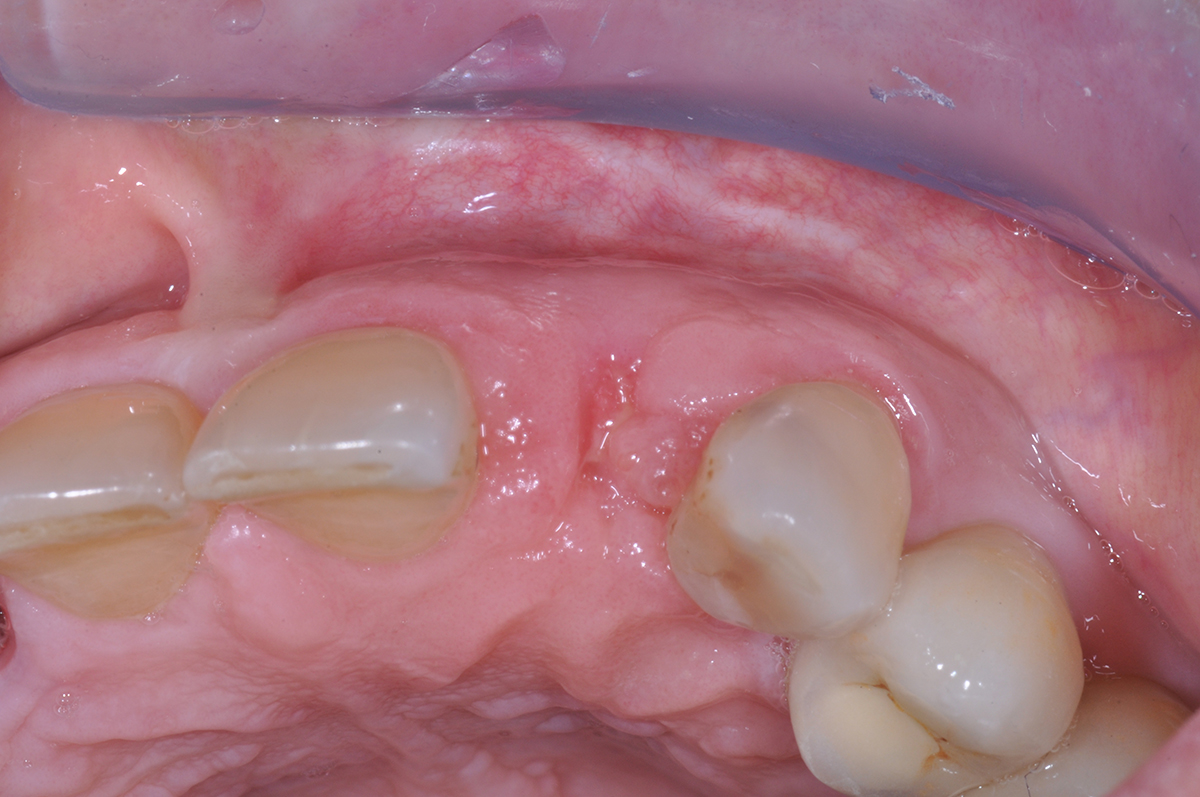
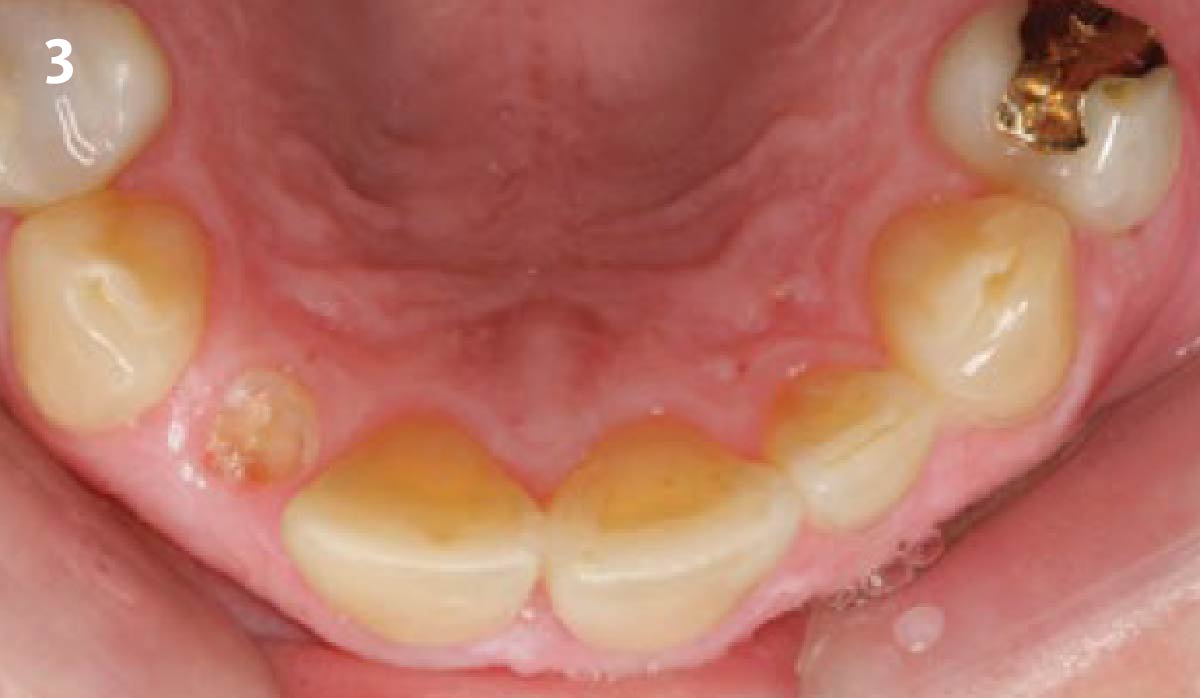
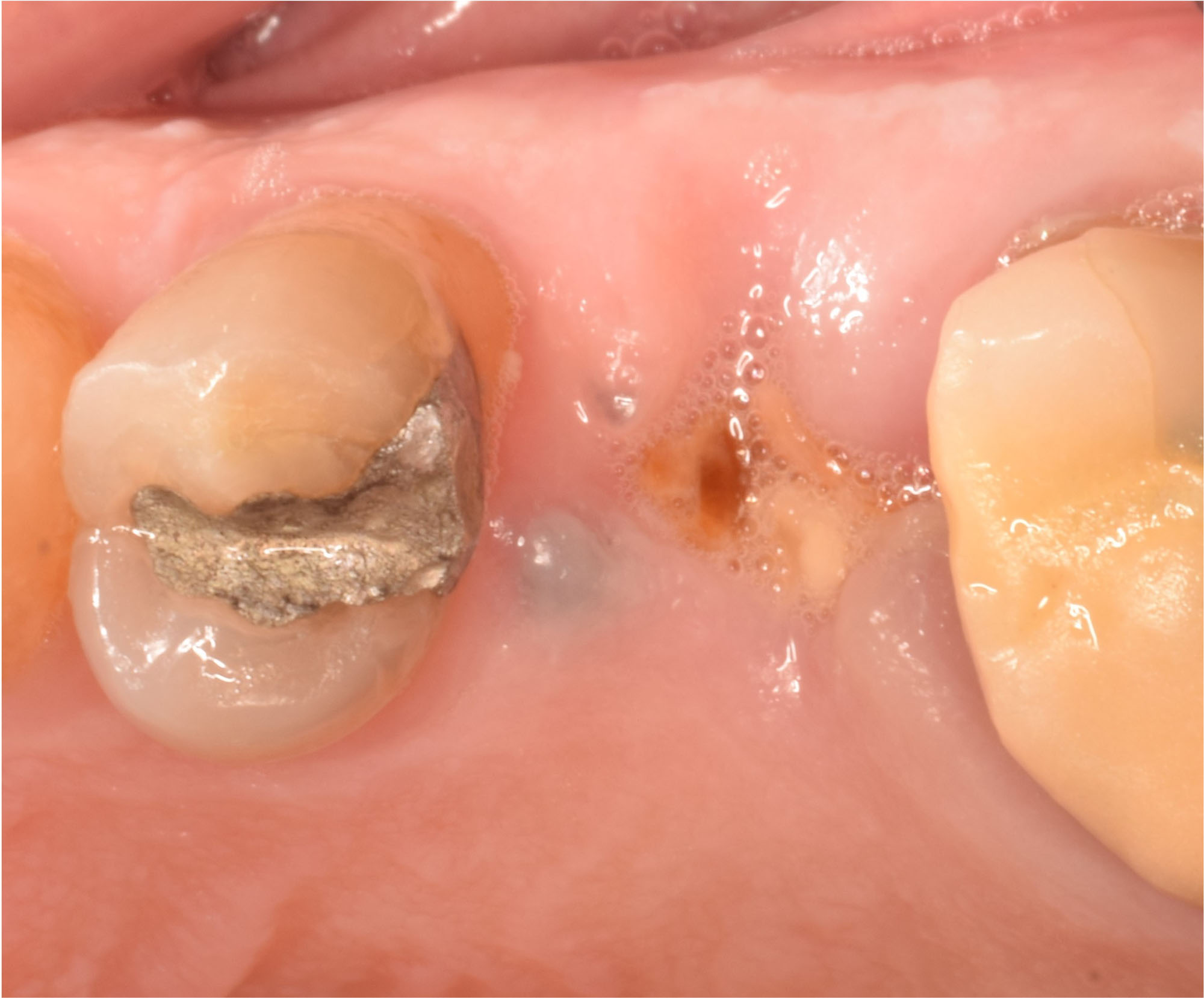
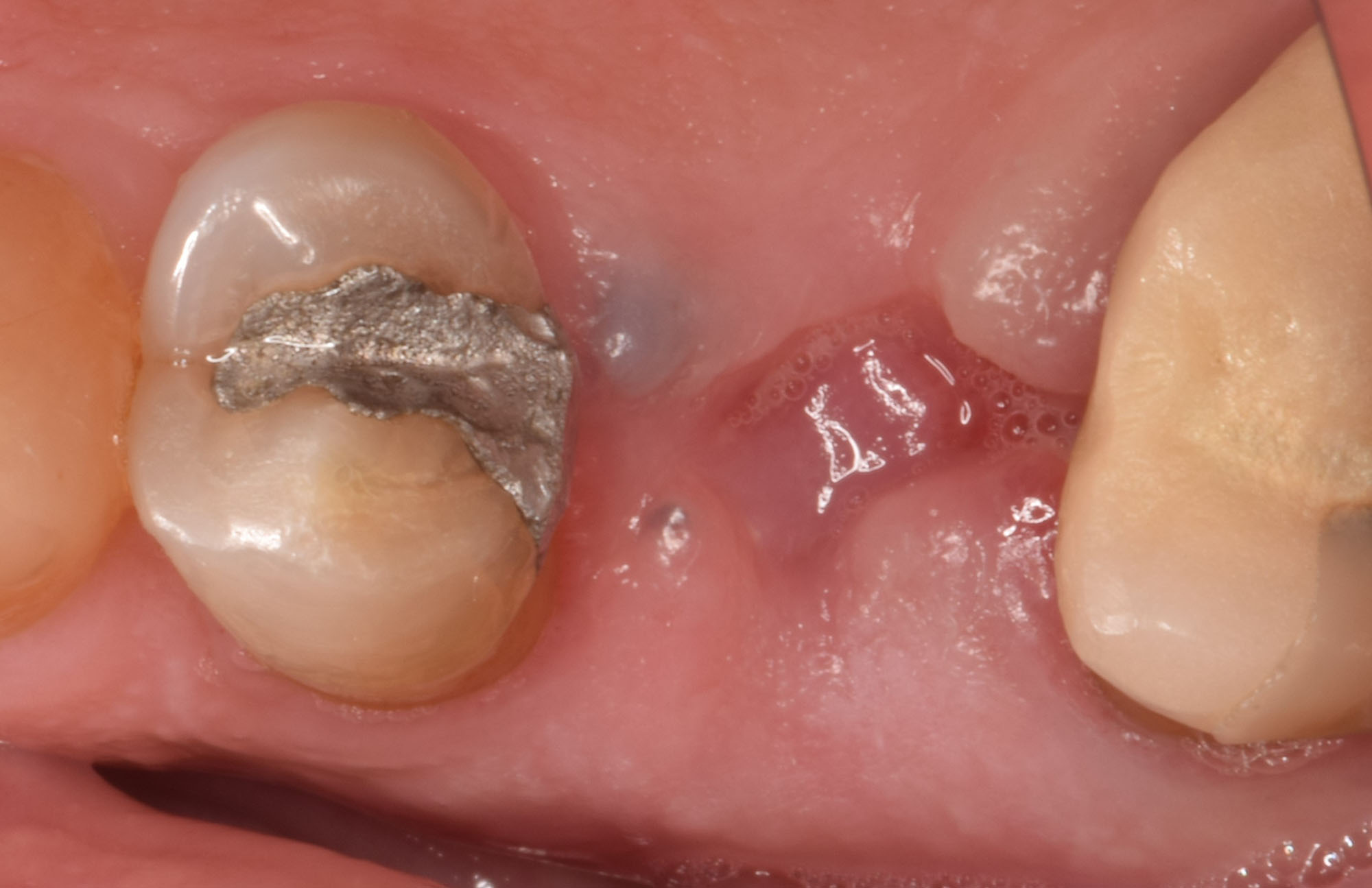
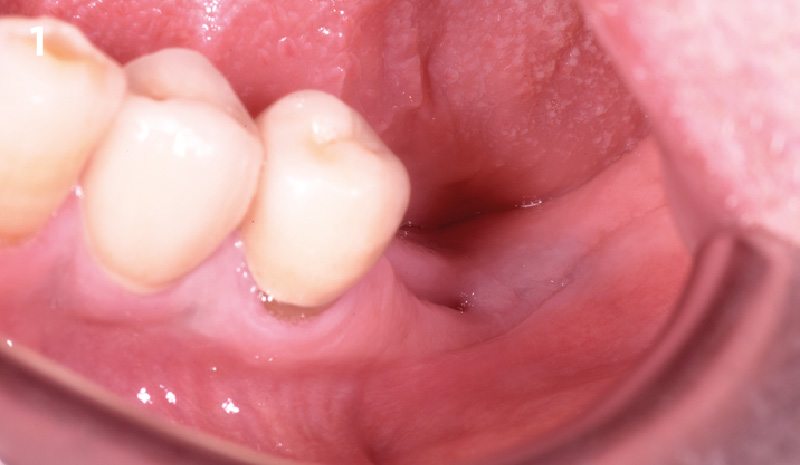
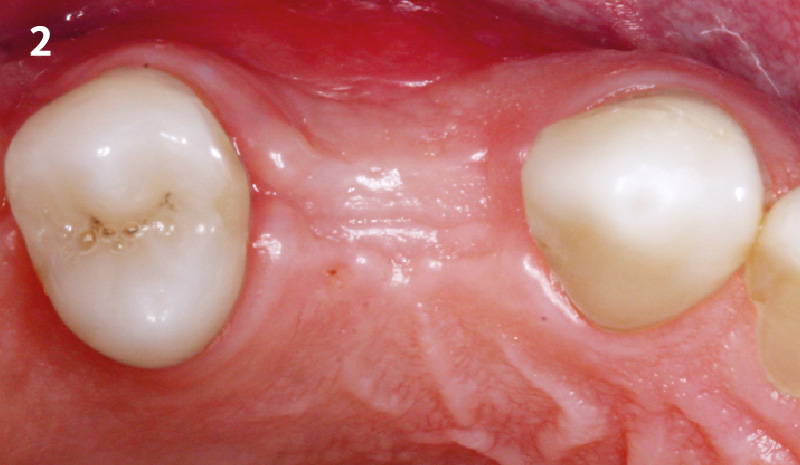
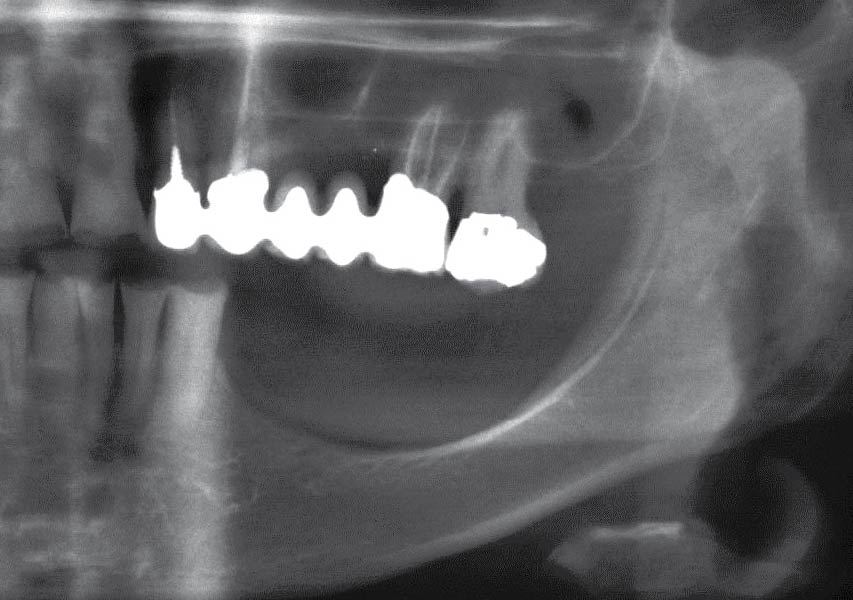
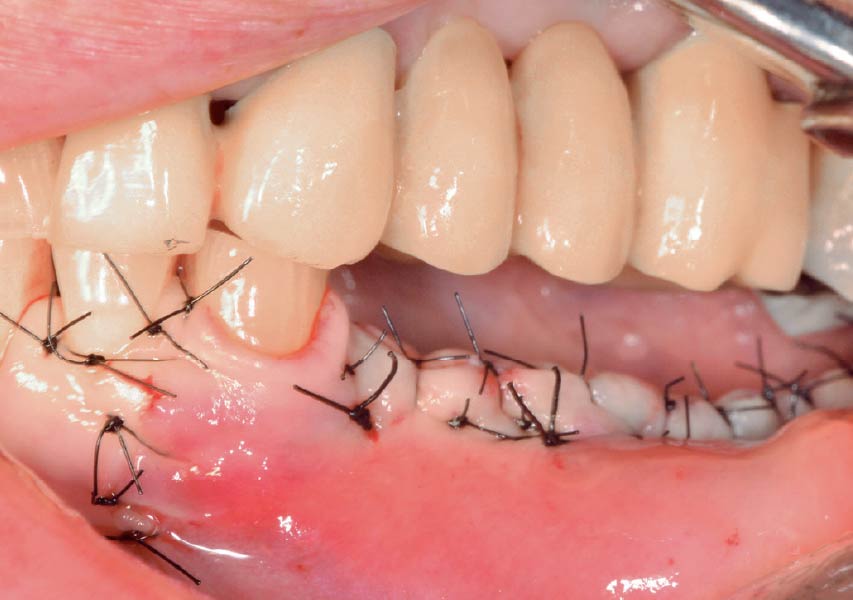
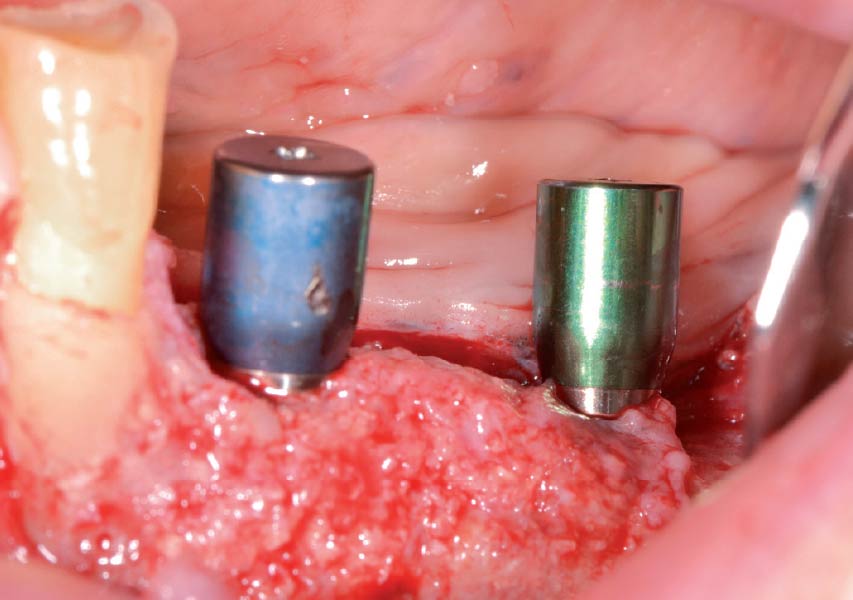
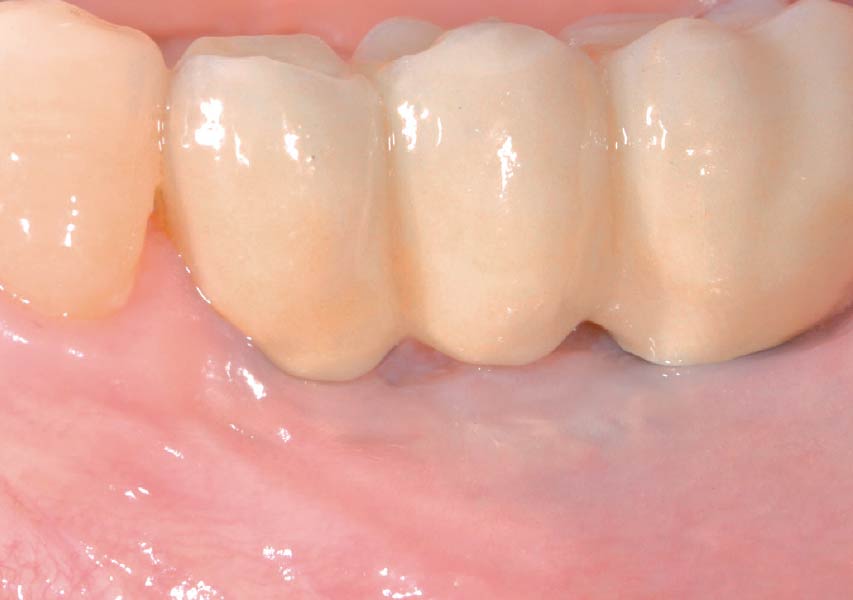
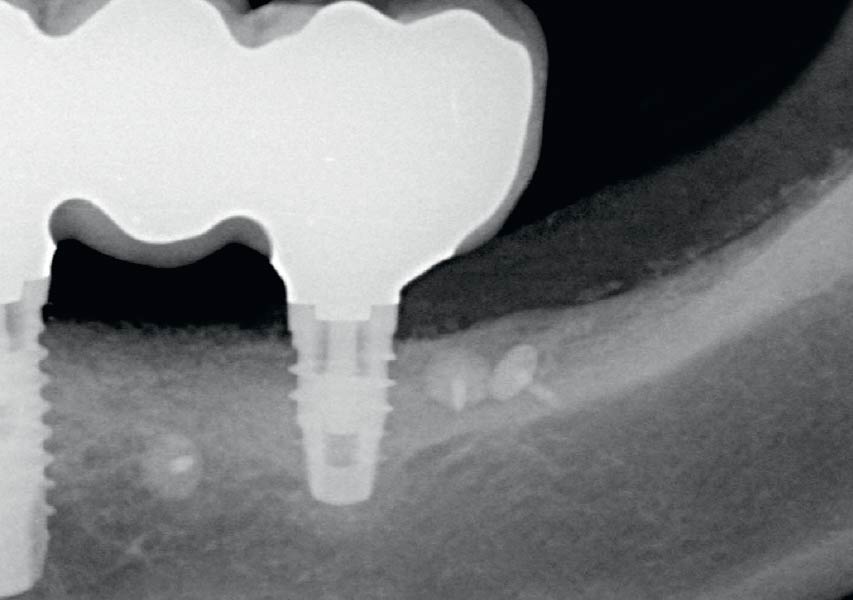
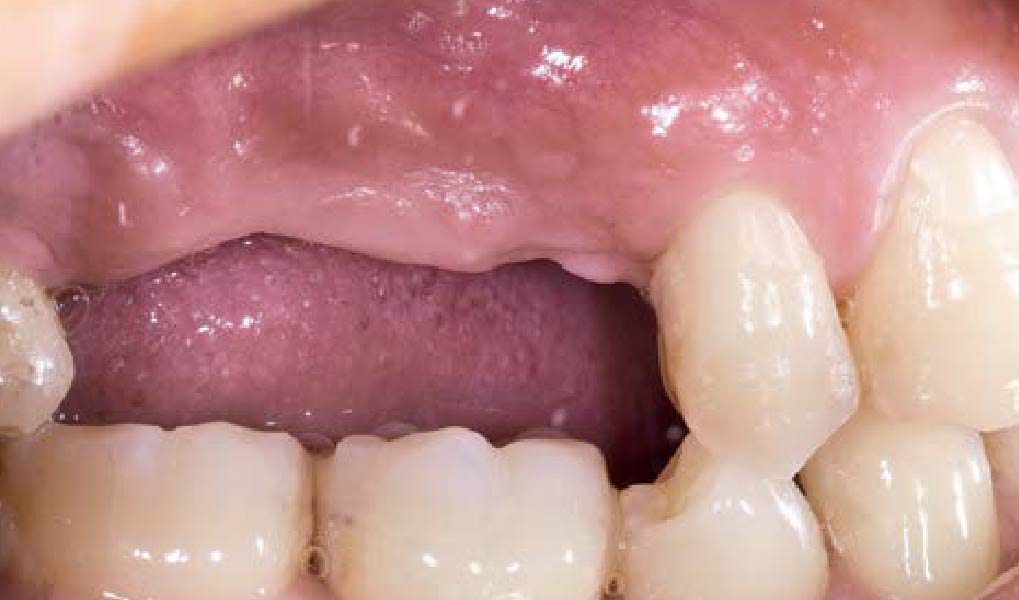
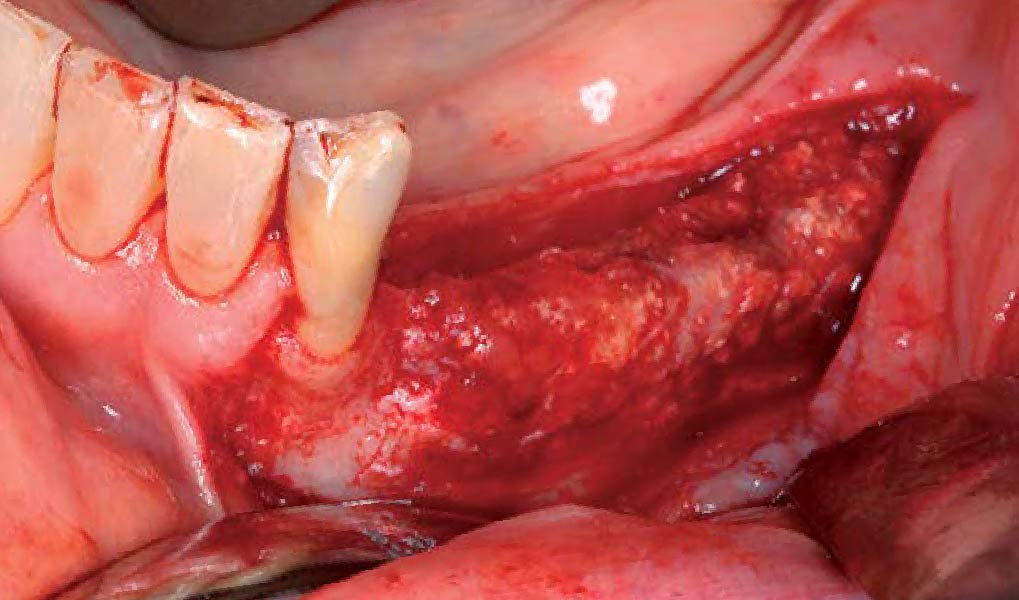
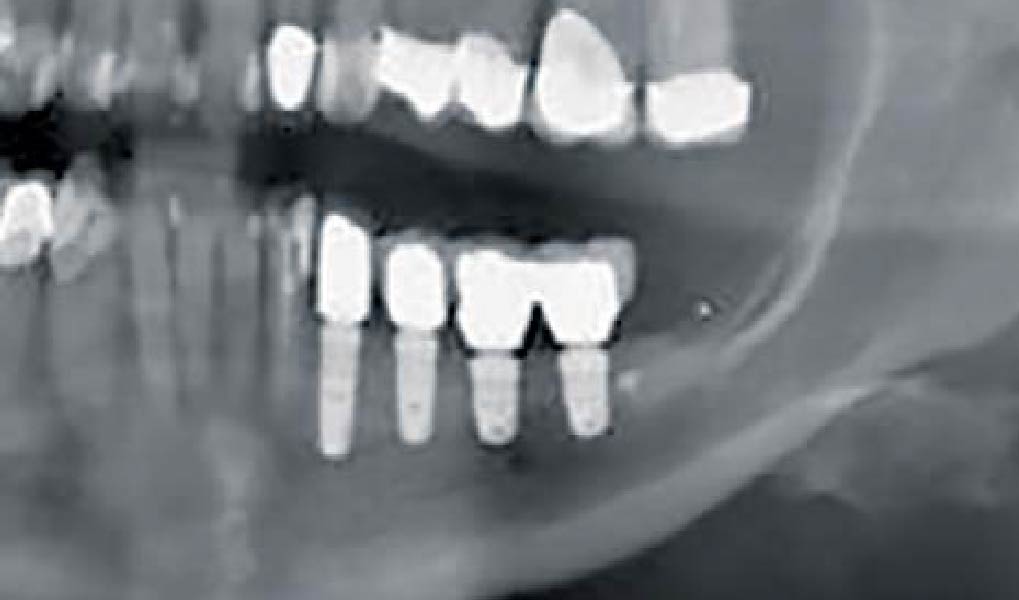
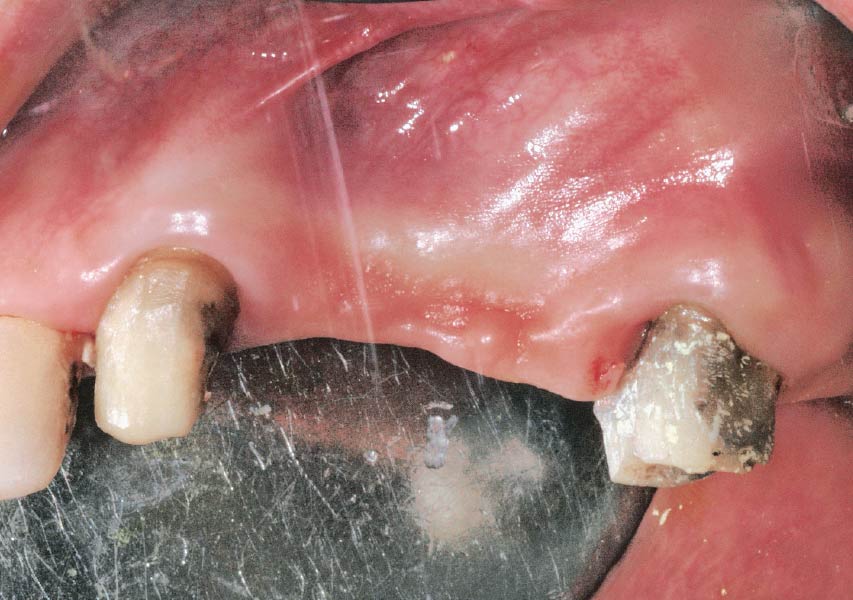
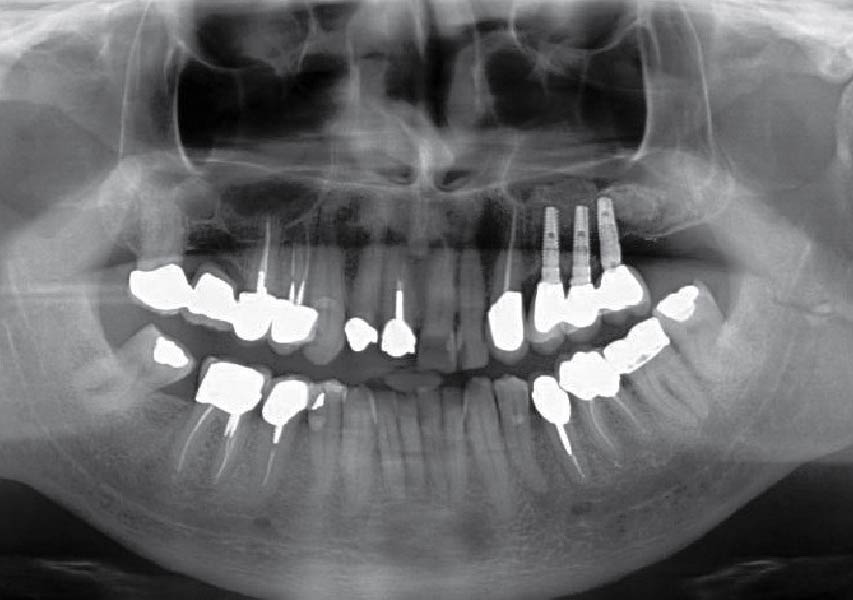
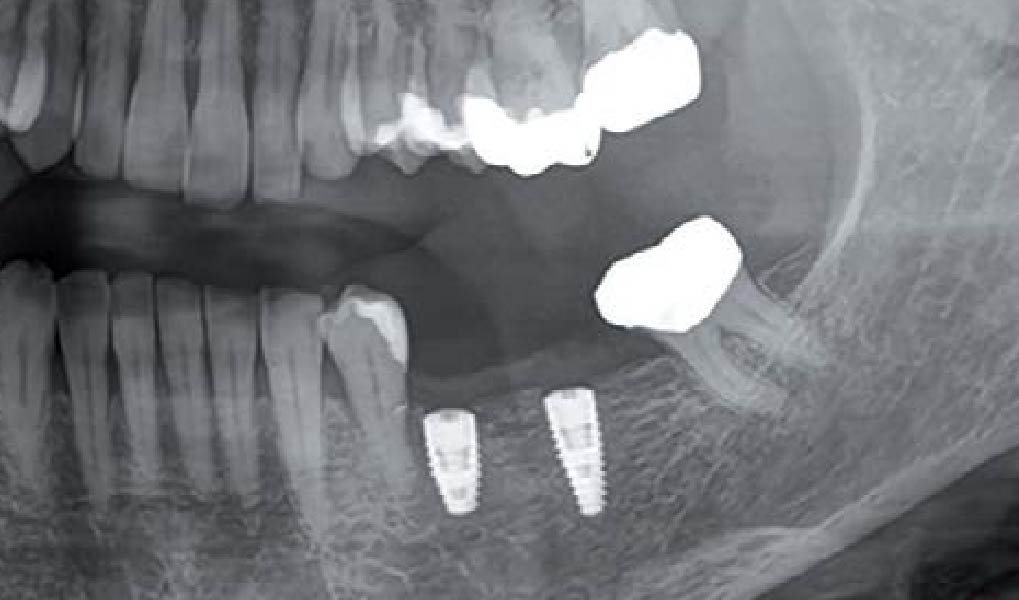
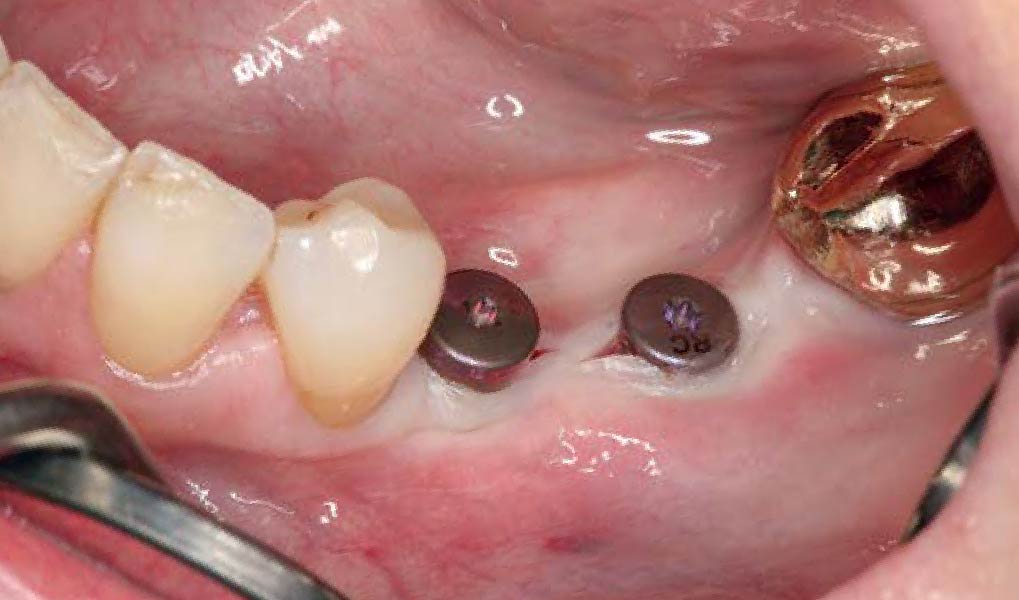
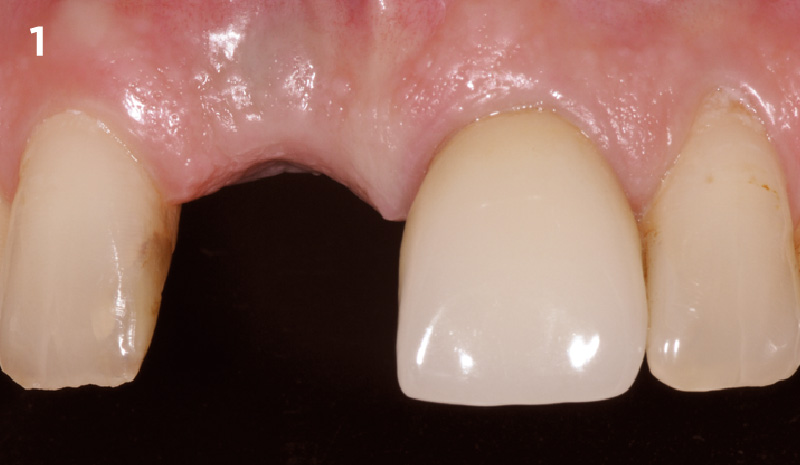
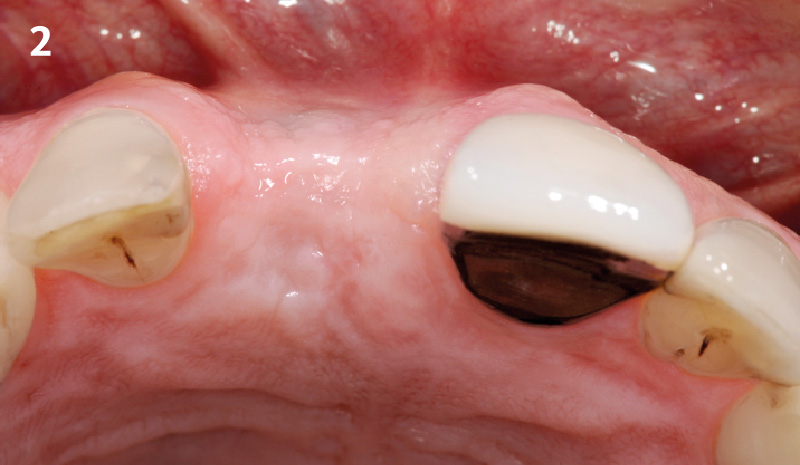
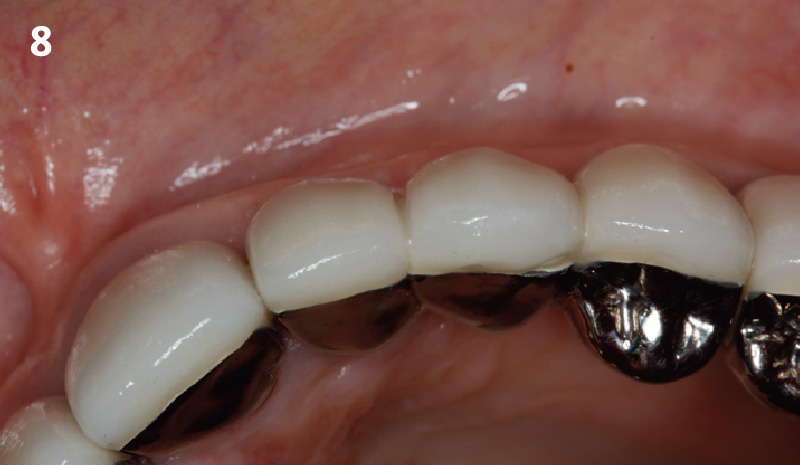
A 70-year-old female in good health presented with a fracture of tooth #19 which is the distal abutment for a four-unit bridge tooth #19-22, with pontics in the #20 and #21 positions. With the loss of the bridge, the patient desired a fixed prosthetic replacement. A bridge from tooth #22 to an implant placed at the #18 position was not deemed mechanically sound. She opted for implant placement at positions #19, #20 and #21 following lateral ridge augmentation with autogenous bone and Geistlich Bio-Oss® contained with a Geistlich Bio-Gide® membrane.

THE RISK PROFILE

Low RiskMedium RiskHigh Risk
Patient’s healthIntact immune system Light smokerImpaired immune system 
Patient’s esthetic requirementsLowMediumHigh
Height of smile lineLowMediumHigh
Gingival biotypeThick – “low scalloped”Medium – “medium scalloped”Thin – “high scalloped”
Shape of dental crownsRectangularTriangular
Infection at implant sightNoneChronicAcute
Bone height at adjacent tooth site≤ 5 mm from contact point5.5 – 6.5 mm from contact point≥ 7 mm from contact point
Restorative status of adjacent toothIntactCompromised
Width of tooth gap1 tooth (≥ 7 mm)1 tooth (≤ 7 mm)2 teeth or more
Soft-tissue anatomyIntactCompromised
Bone anatomy of the alveolar ridgeNo defectHorizontal defectVertical defect
watch video download pdf

THE APPROACH

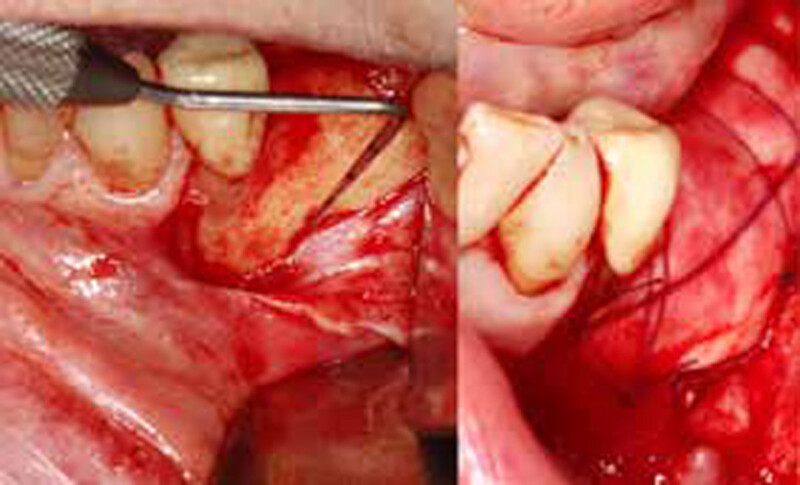
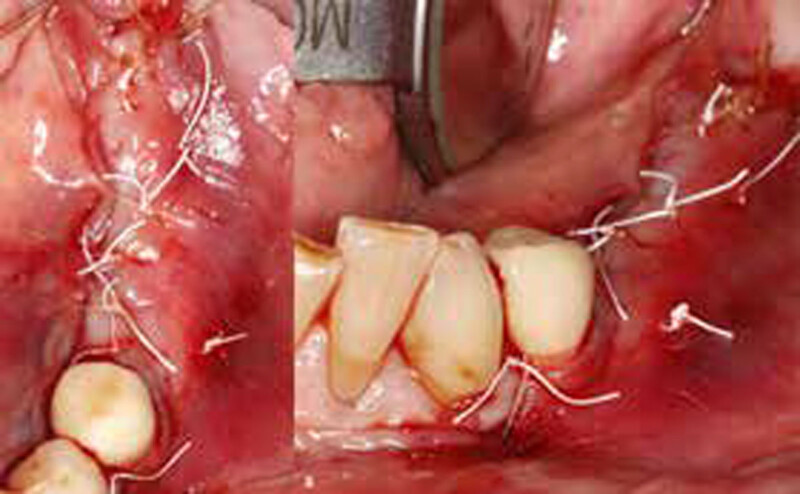
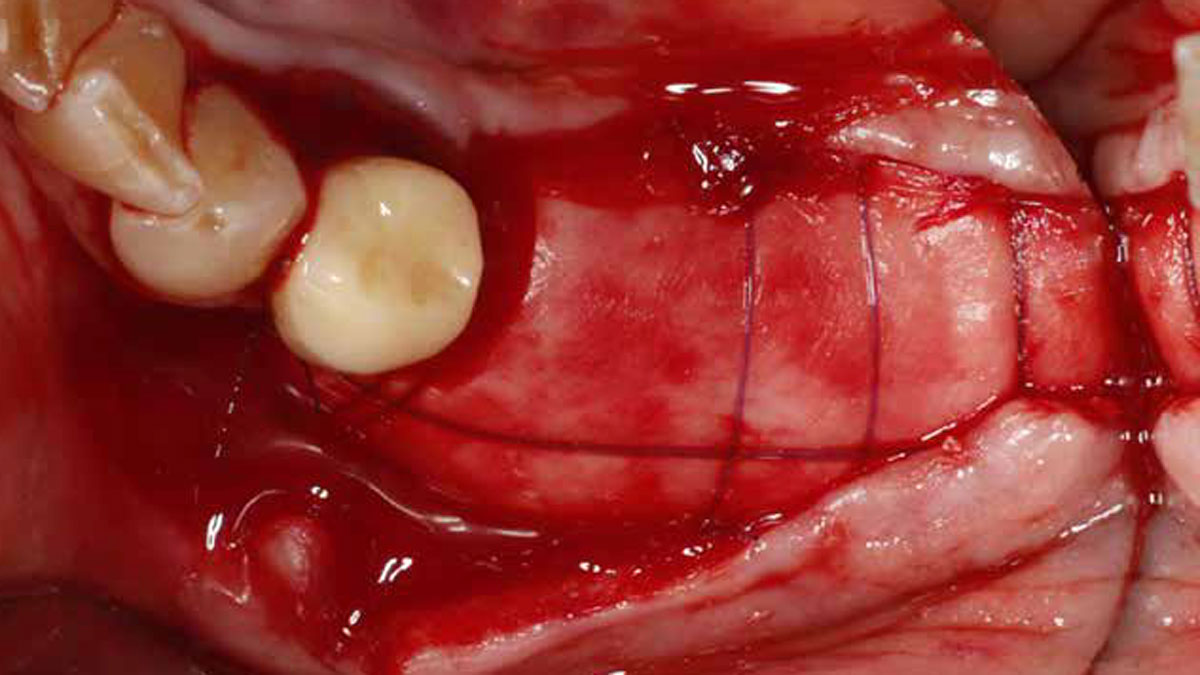
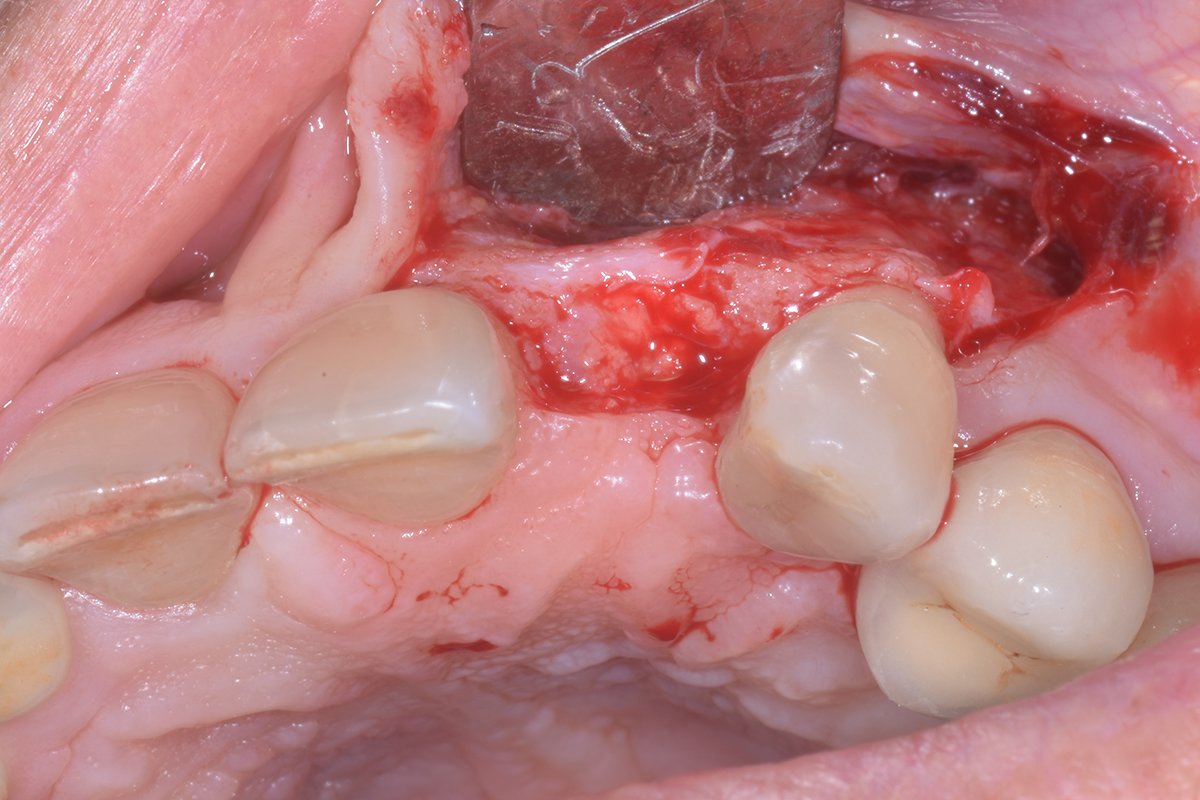
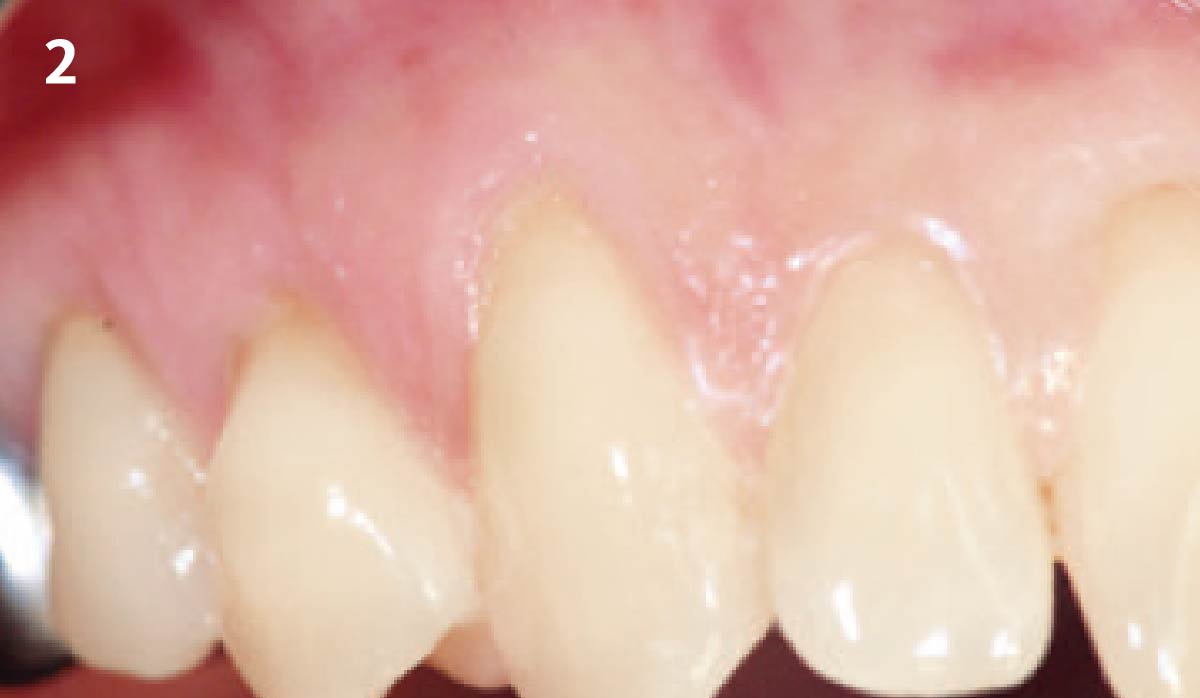
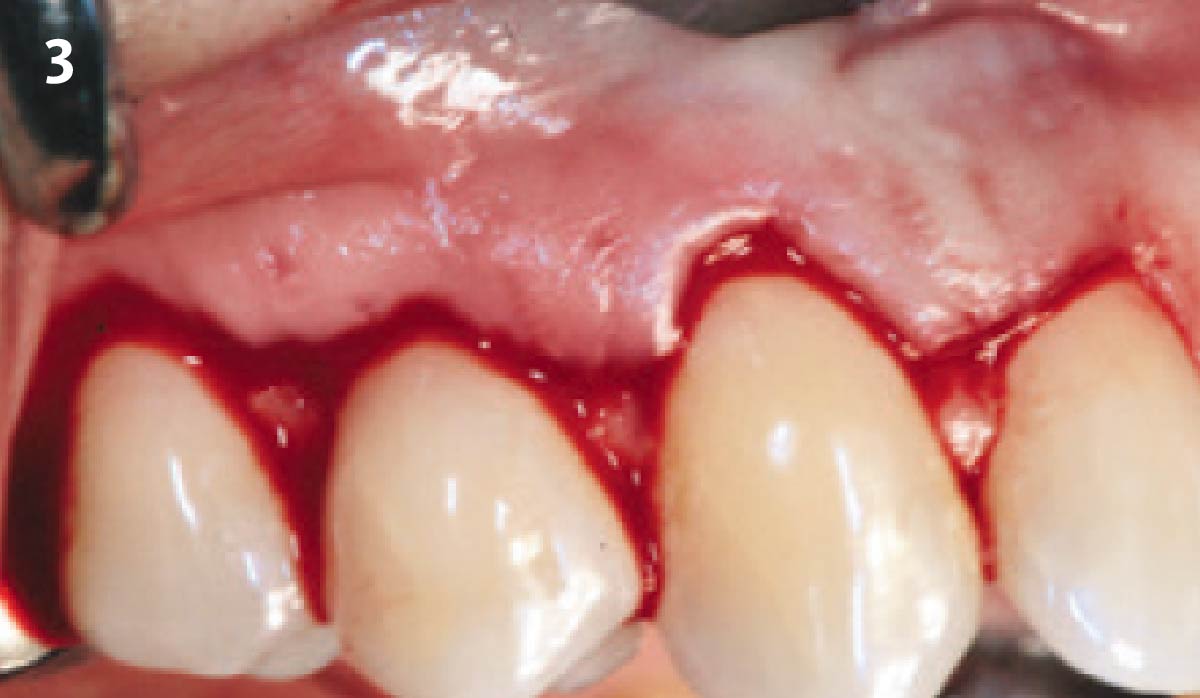
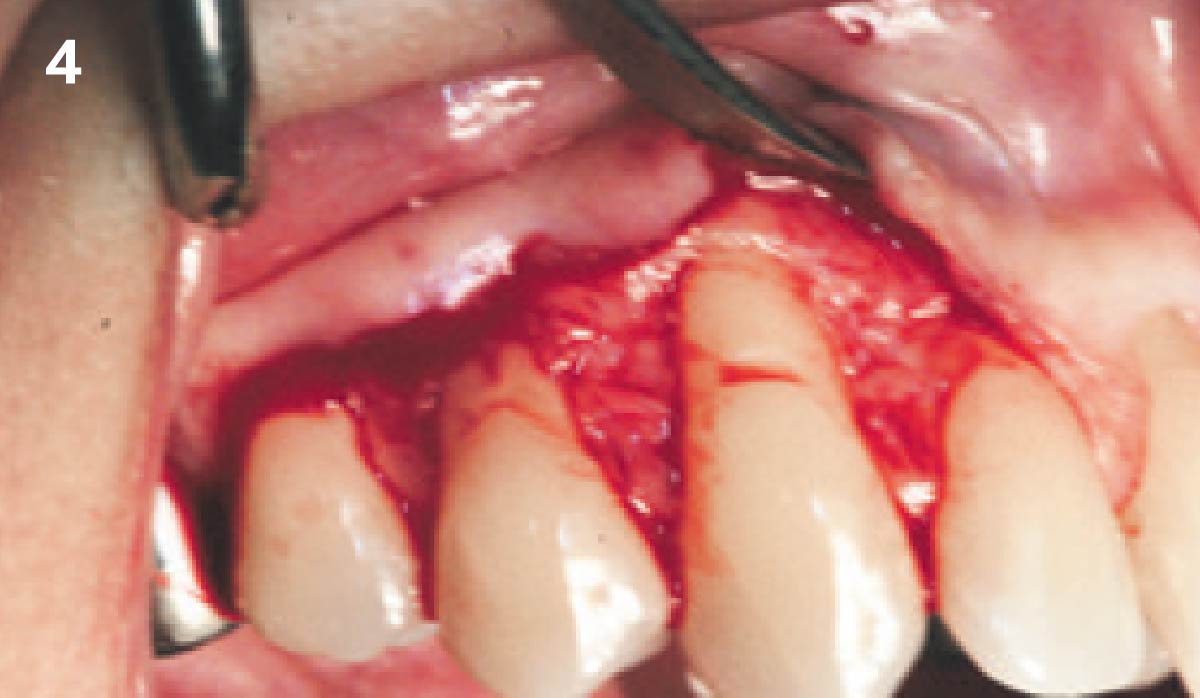
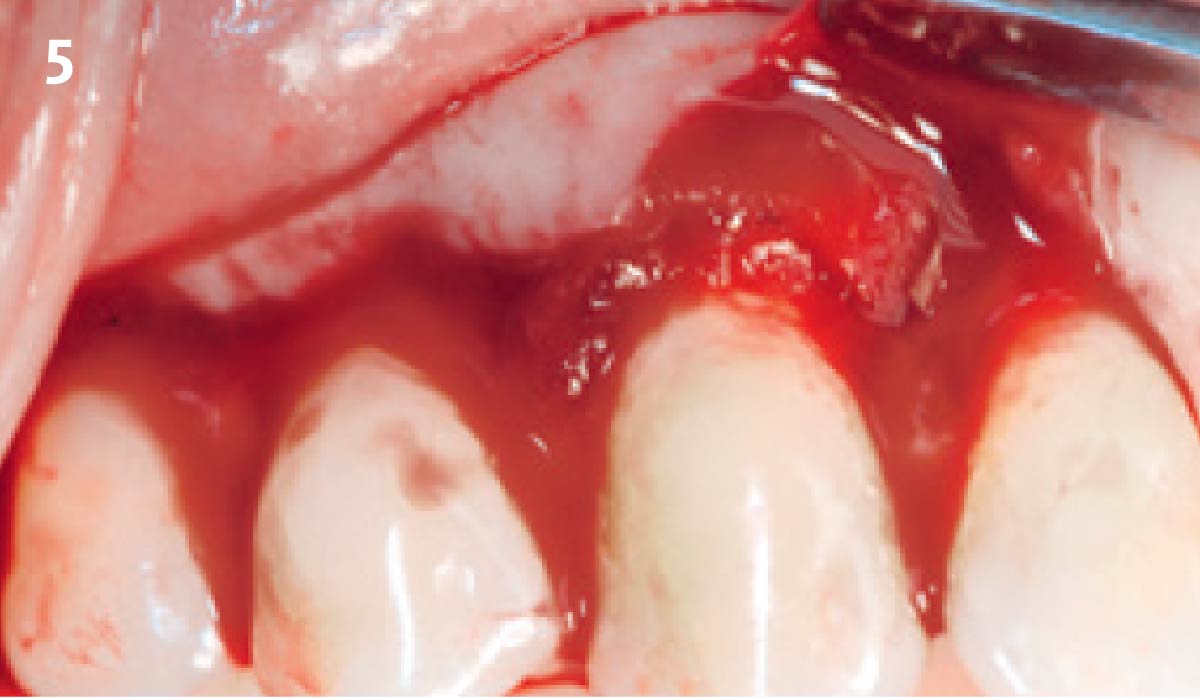
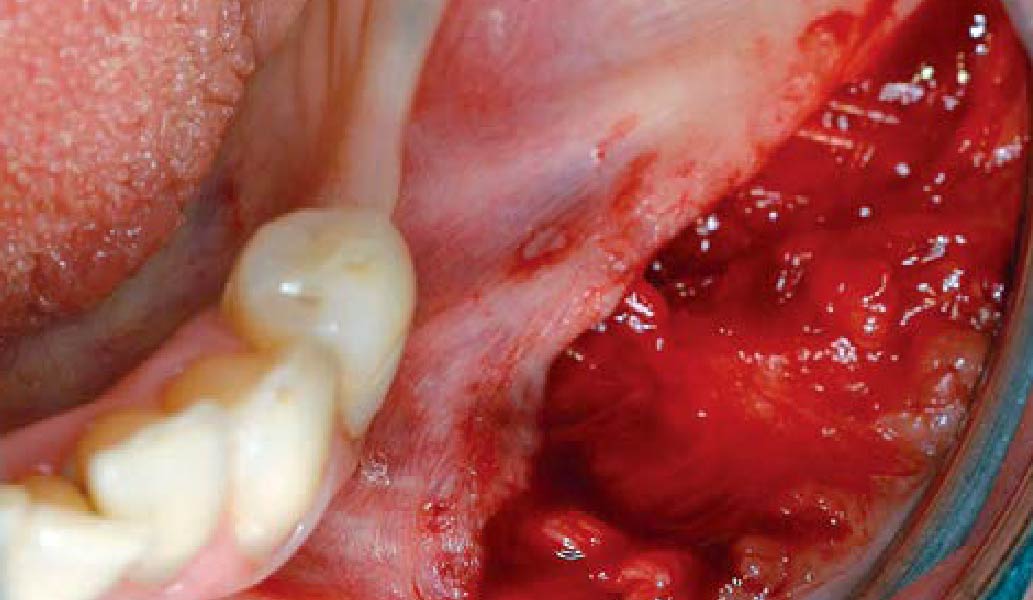
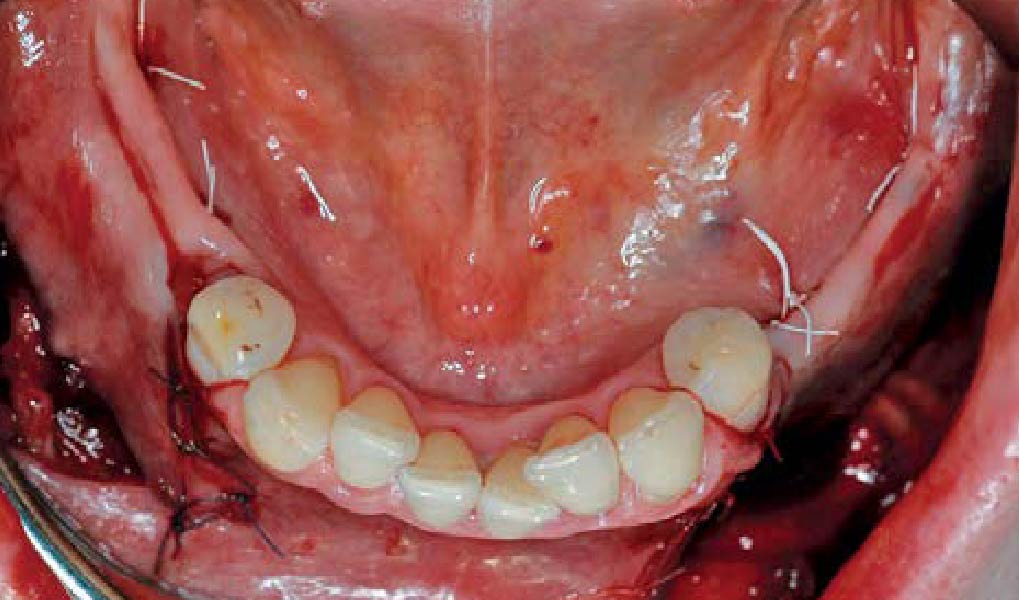
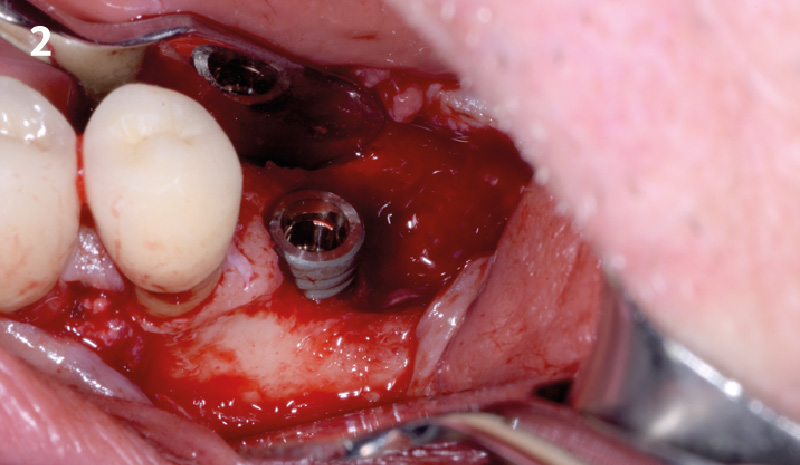
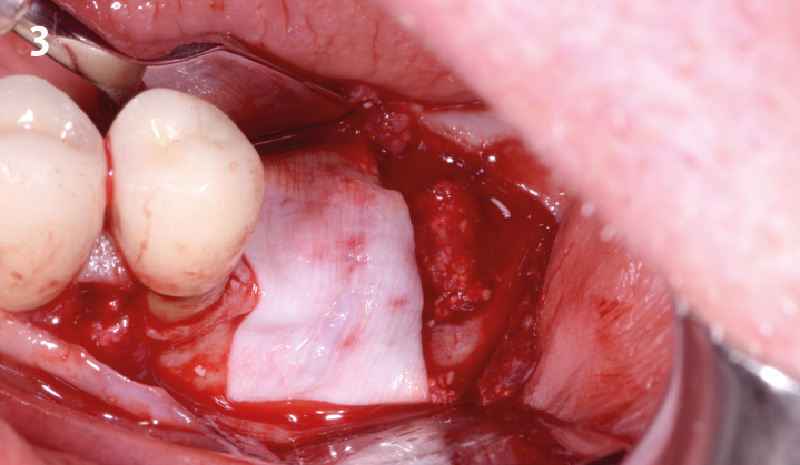
A subperiosteal flap with a mid-ridge incision was performed with anterior and posterior releasing incisions which were placed the distance of one tooth mesial and one tooth distal from the graft site. The posterior releasing incision allowed for exposure of the ramus for harvesting of the autologous bone. The grafted site was allowed to heal for a period of 8 months at which time the implants were placed. Abutment connection occurred 4 months following implant placement.

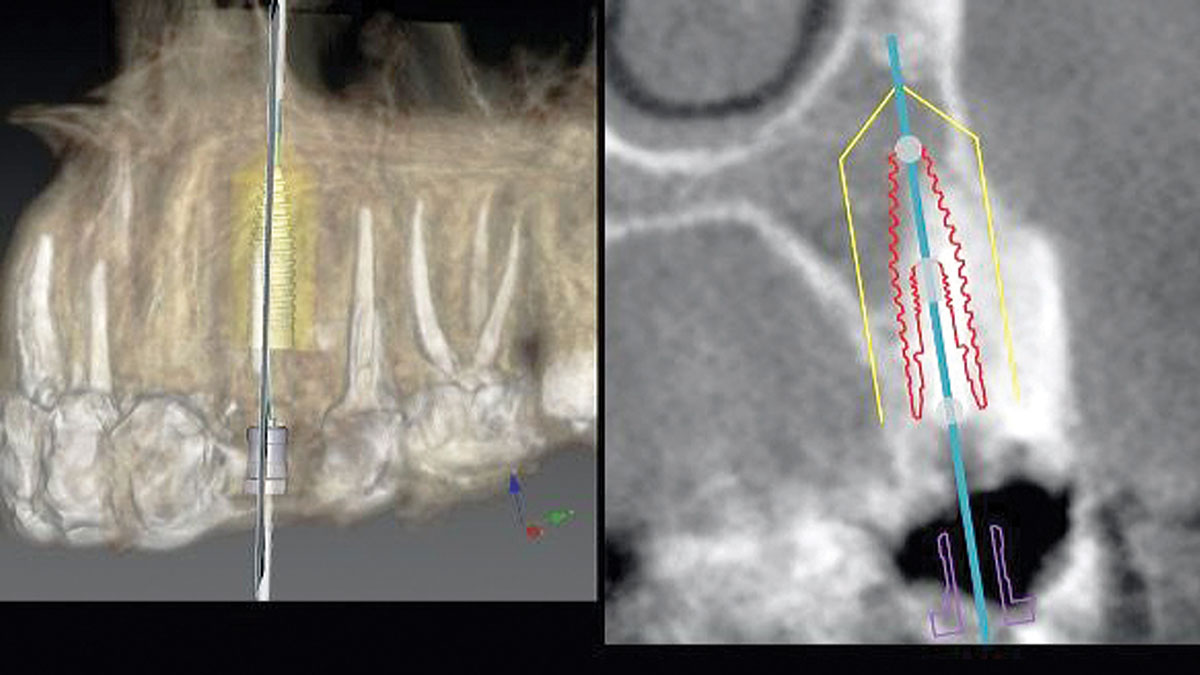
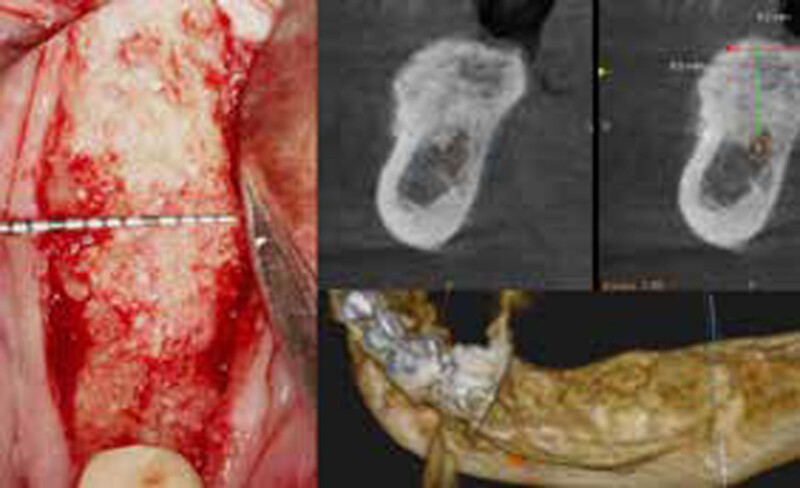
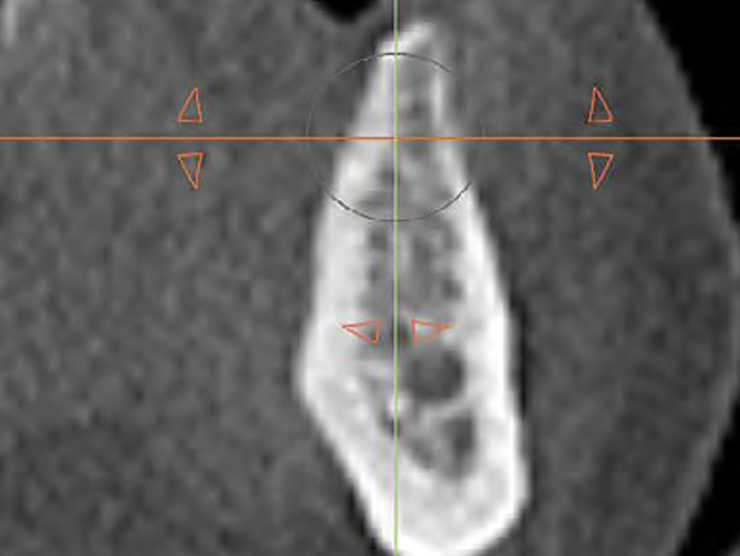
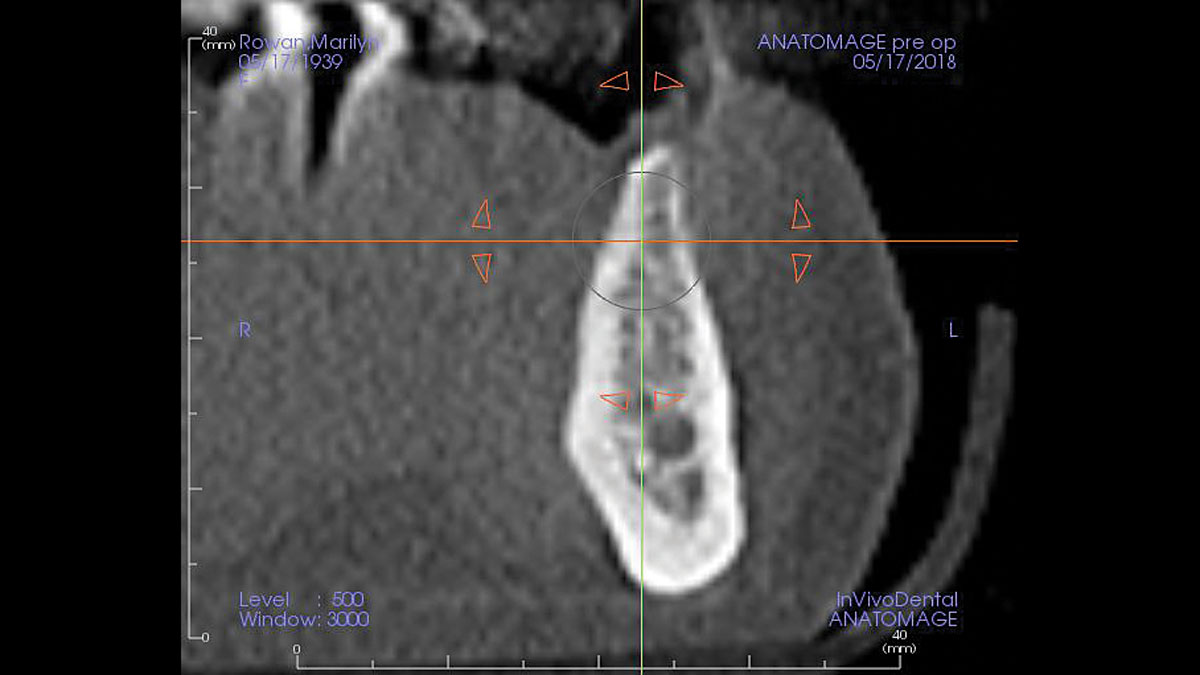
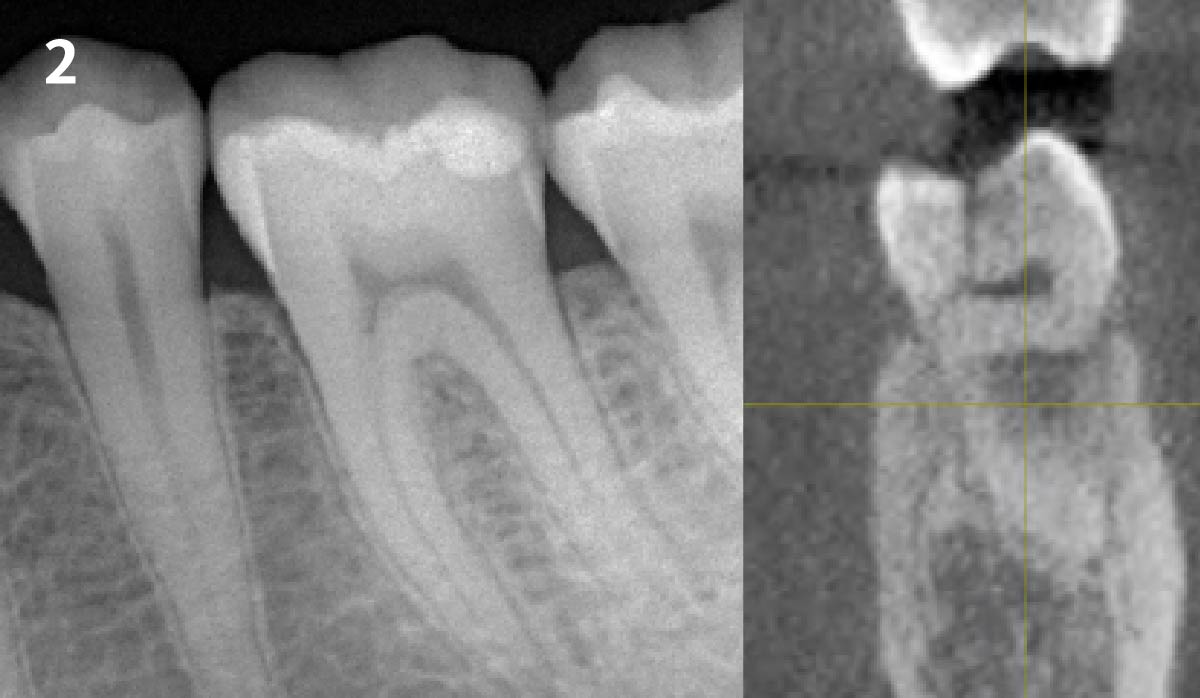
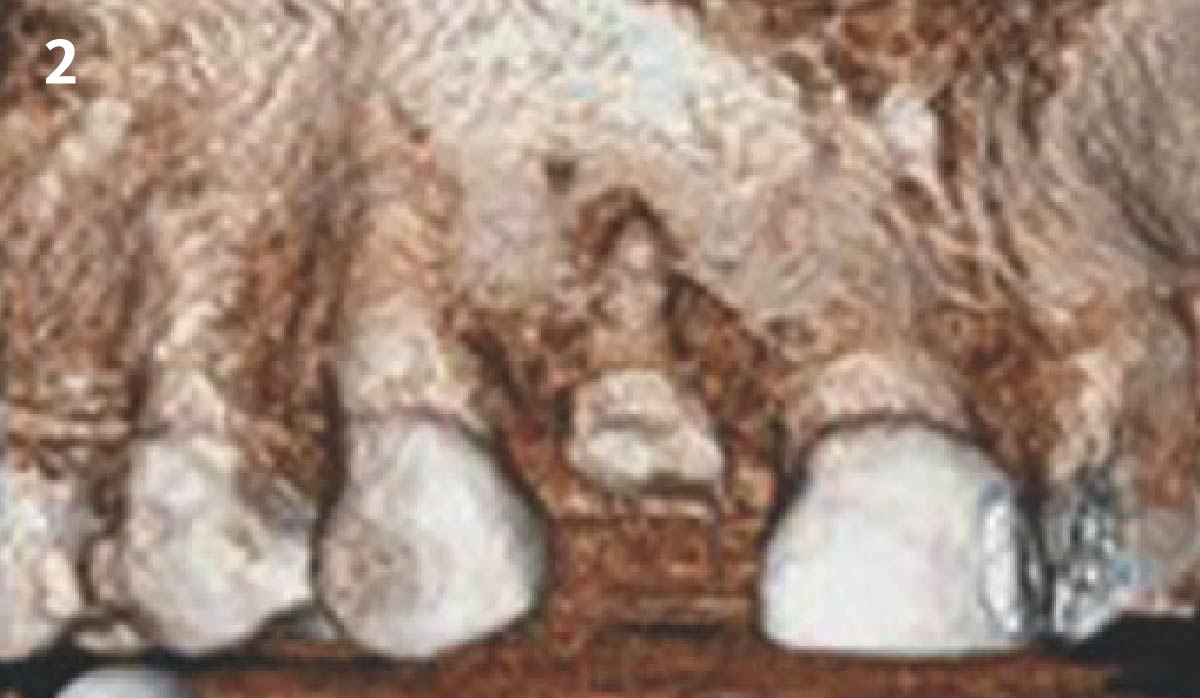
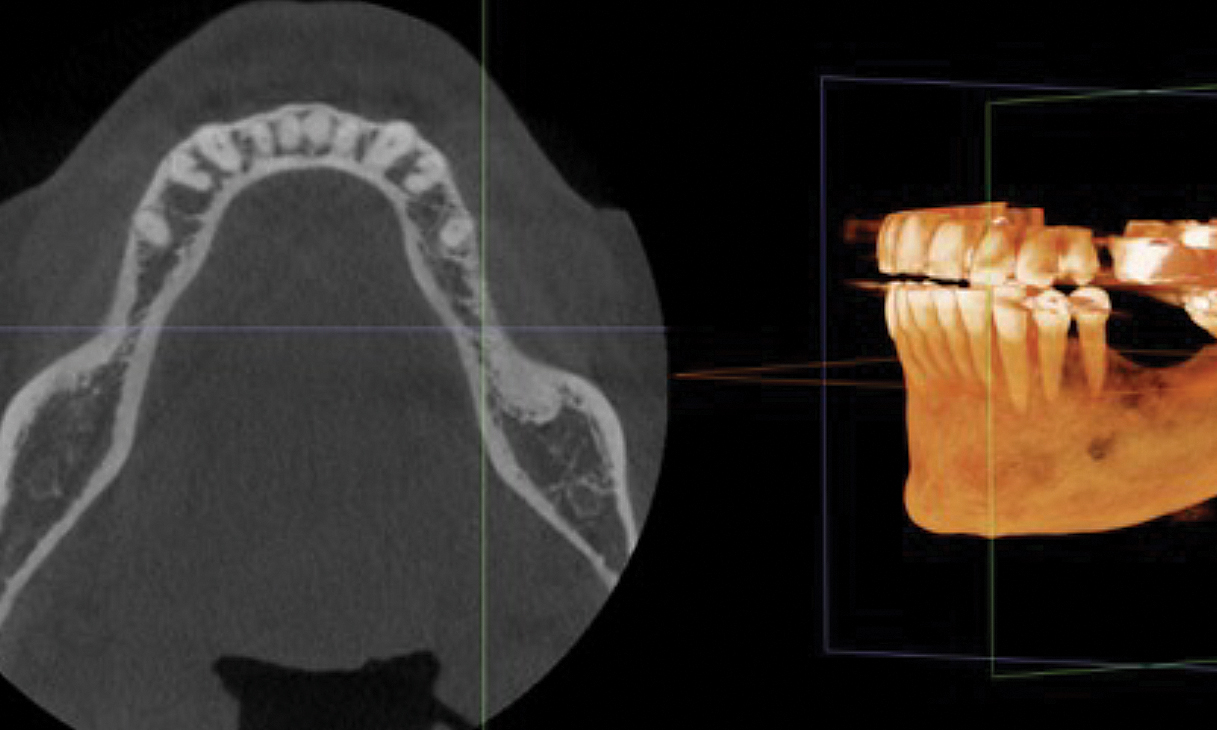
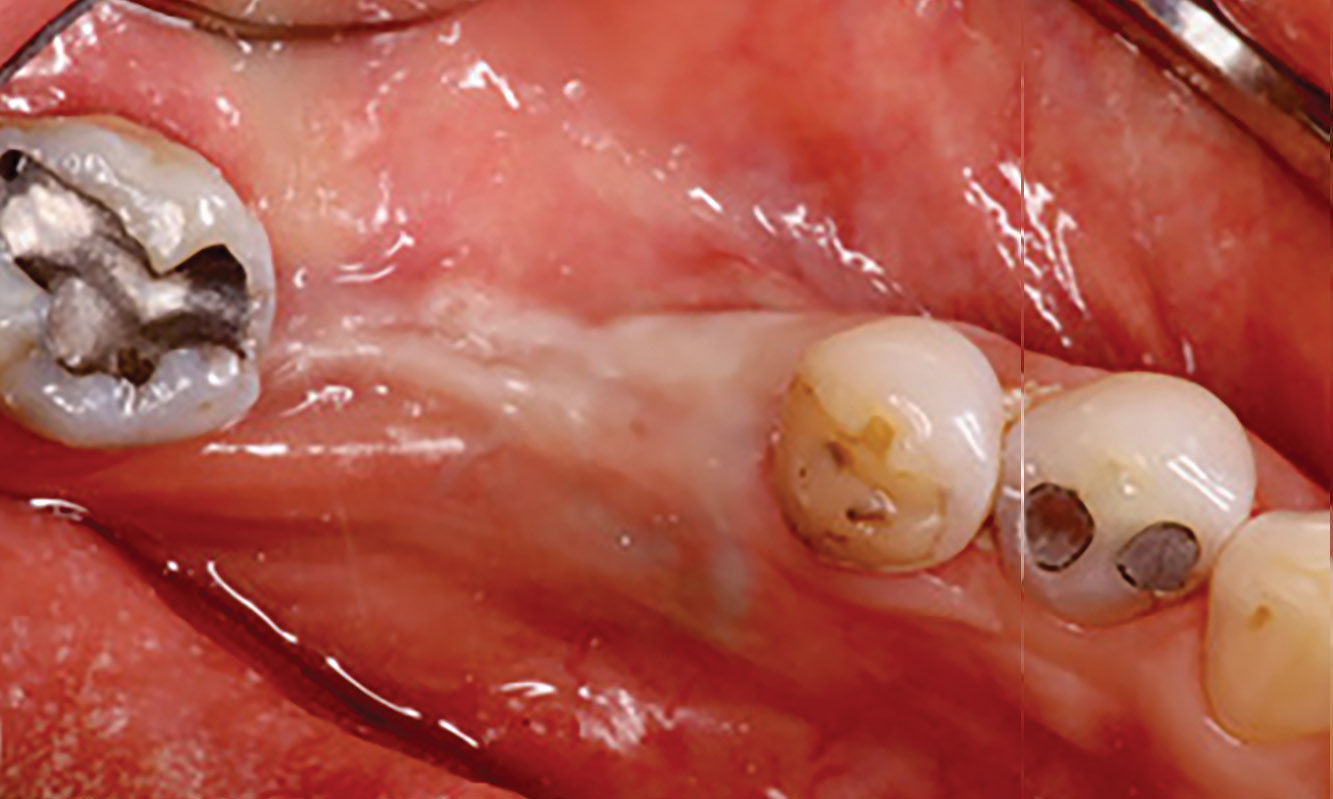
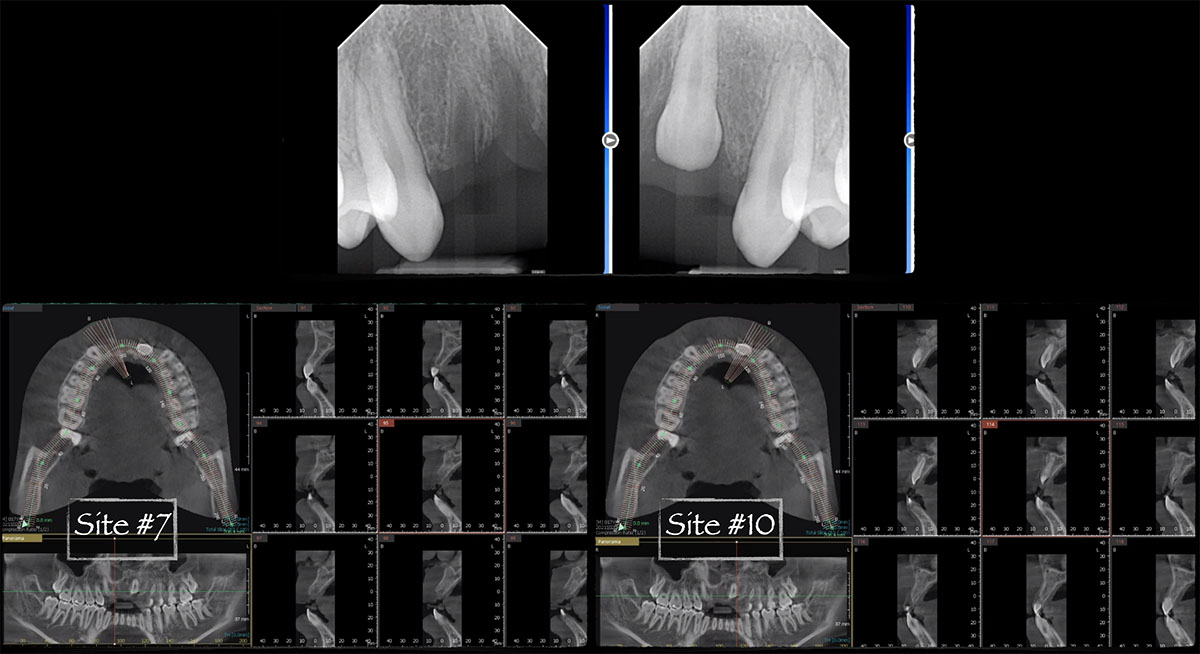
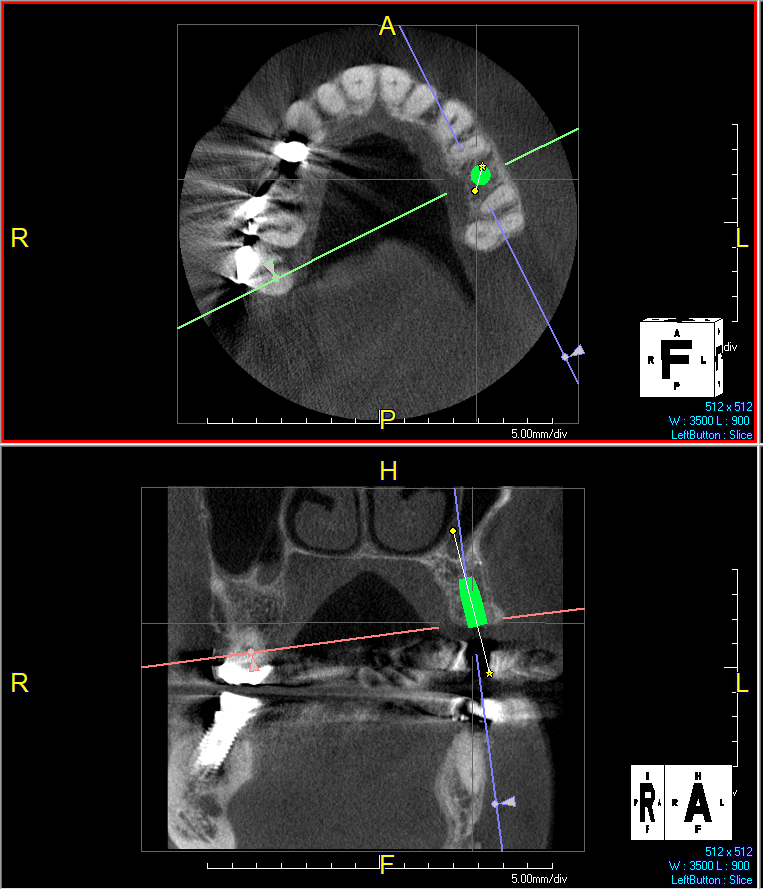
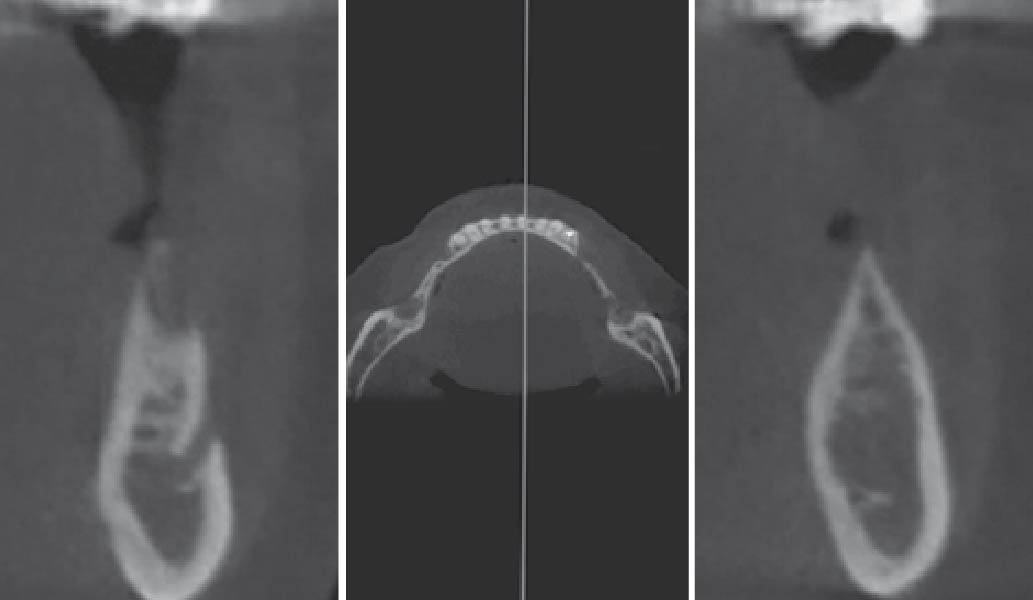
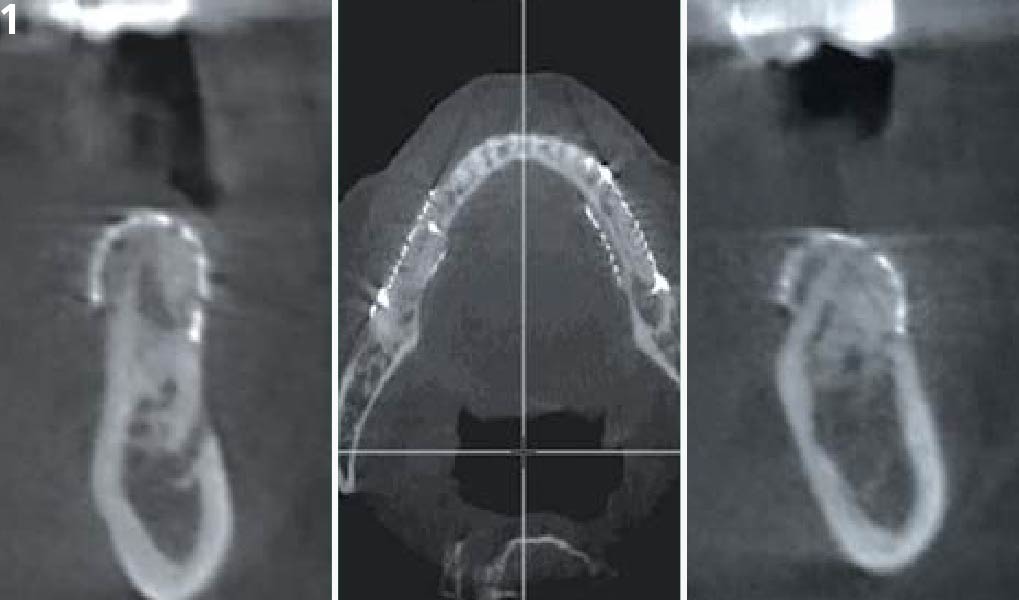
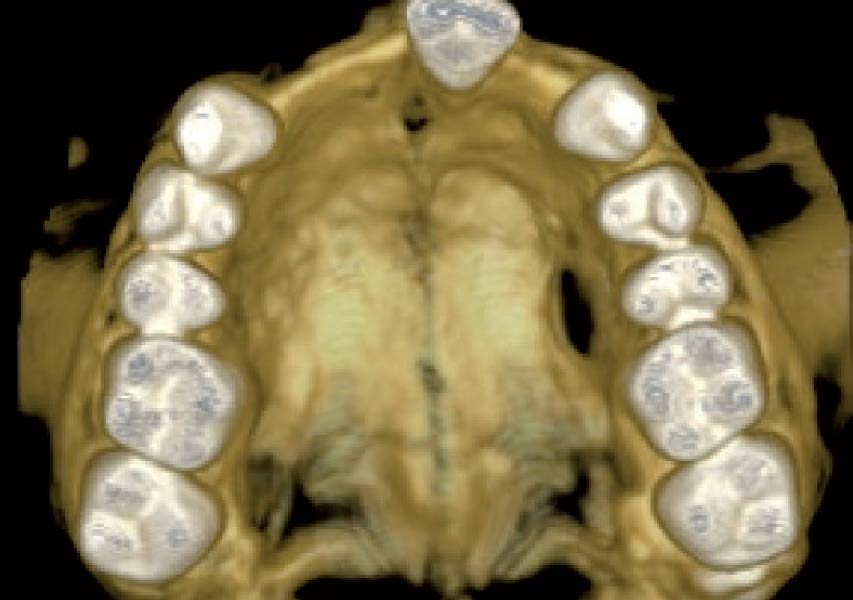
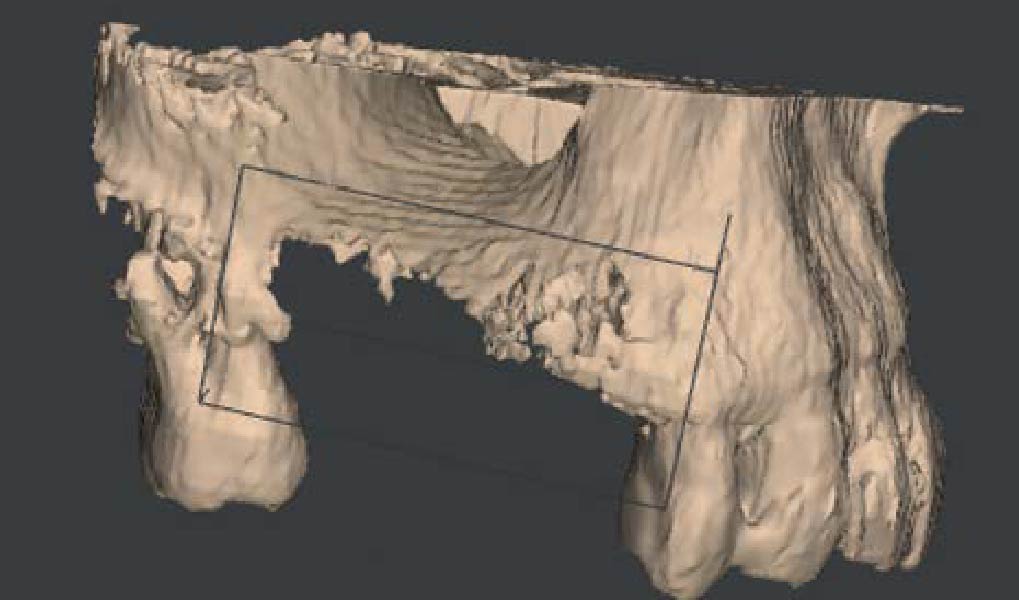
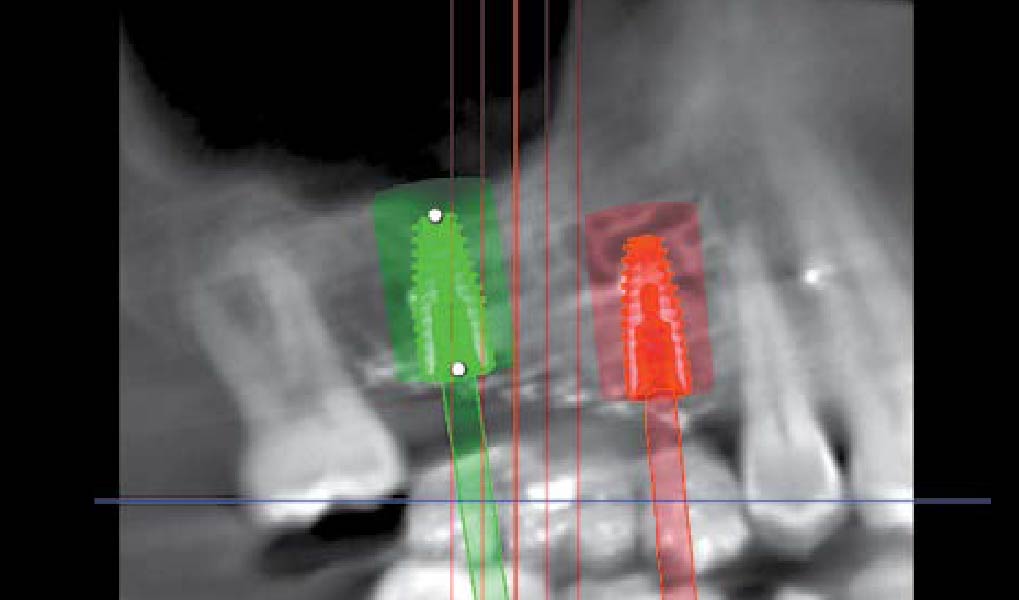
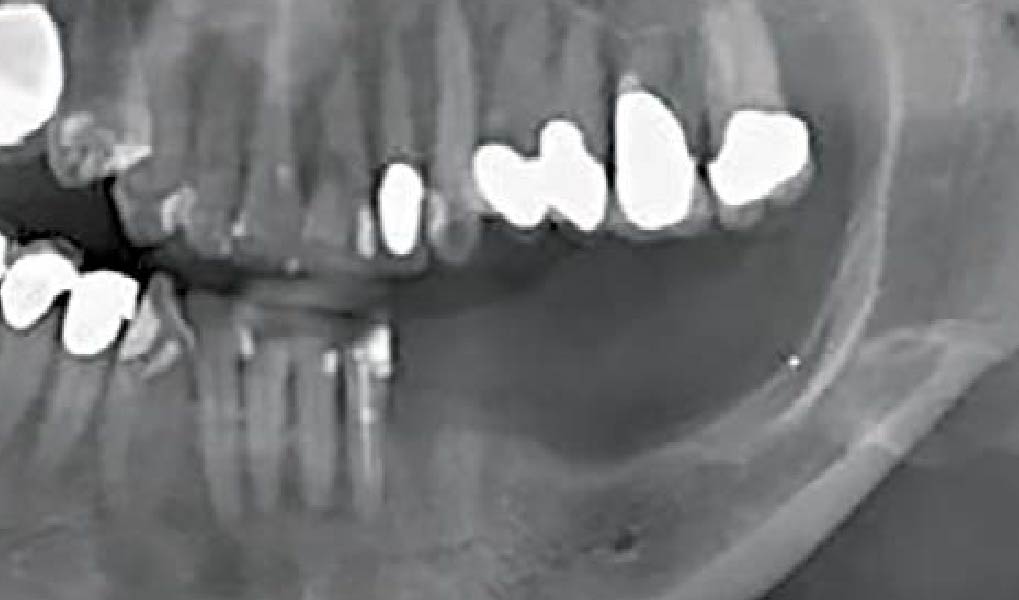
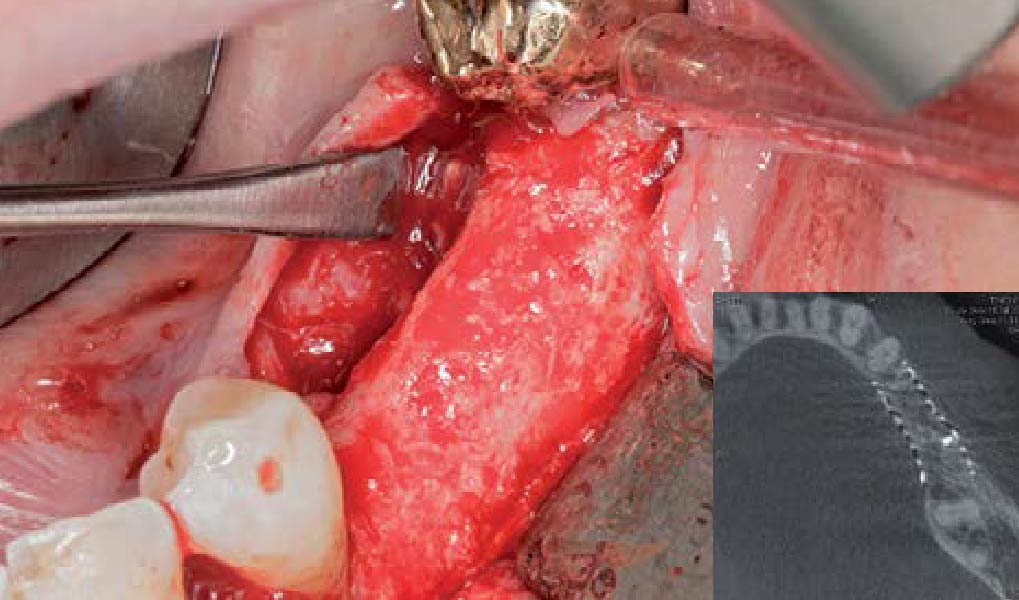
CT scan showing insufficient bone width for implant placement < 4mm.
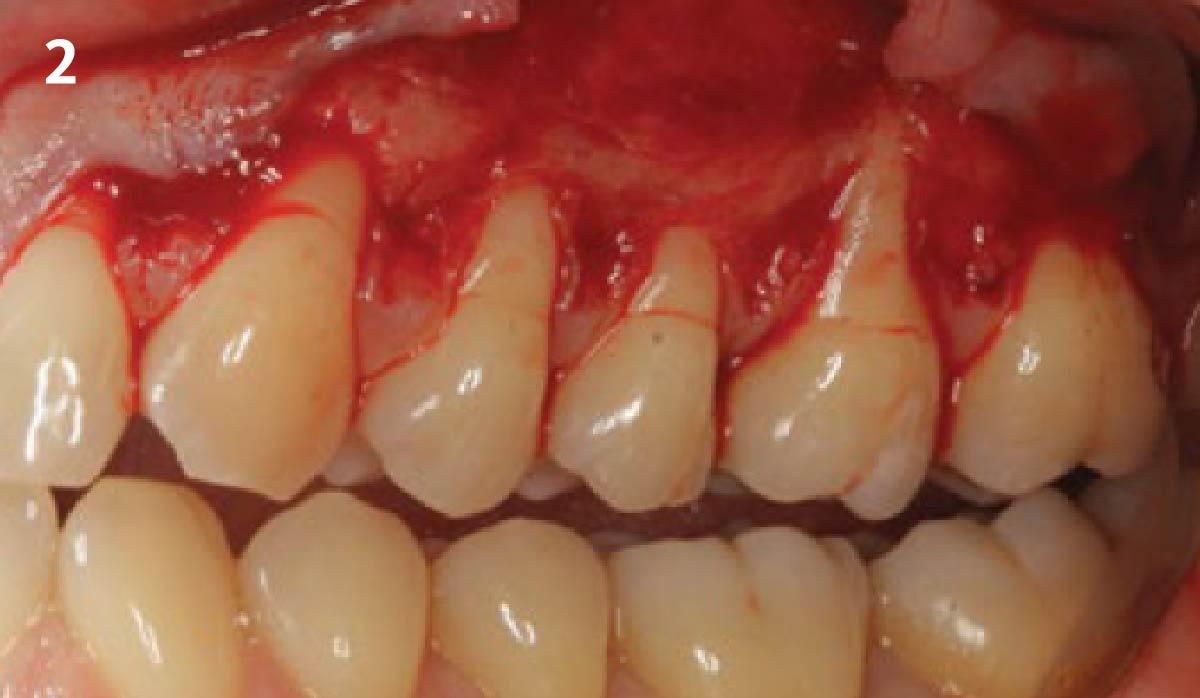
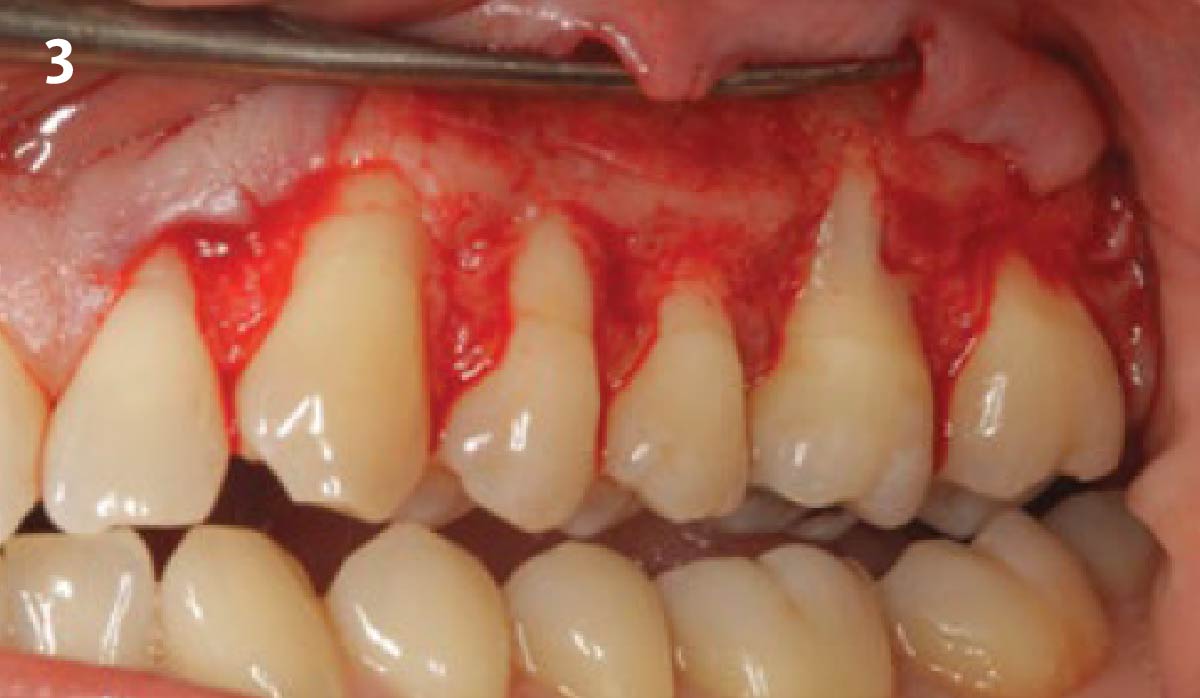
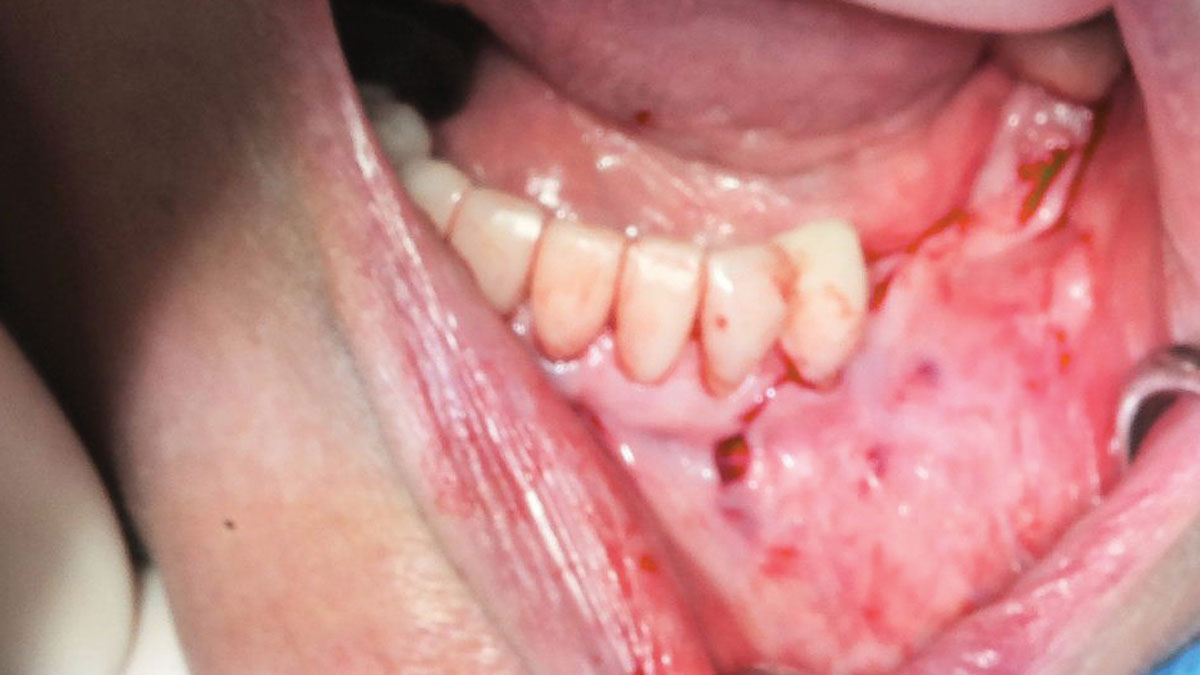
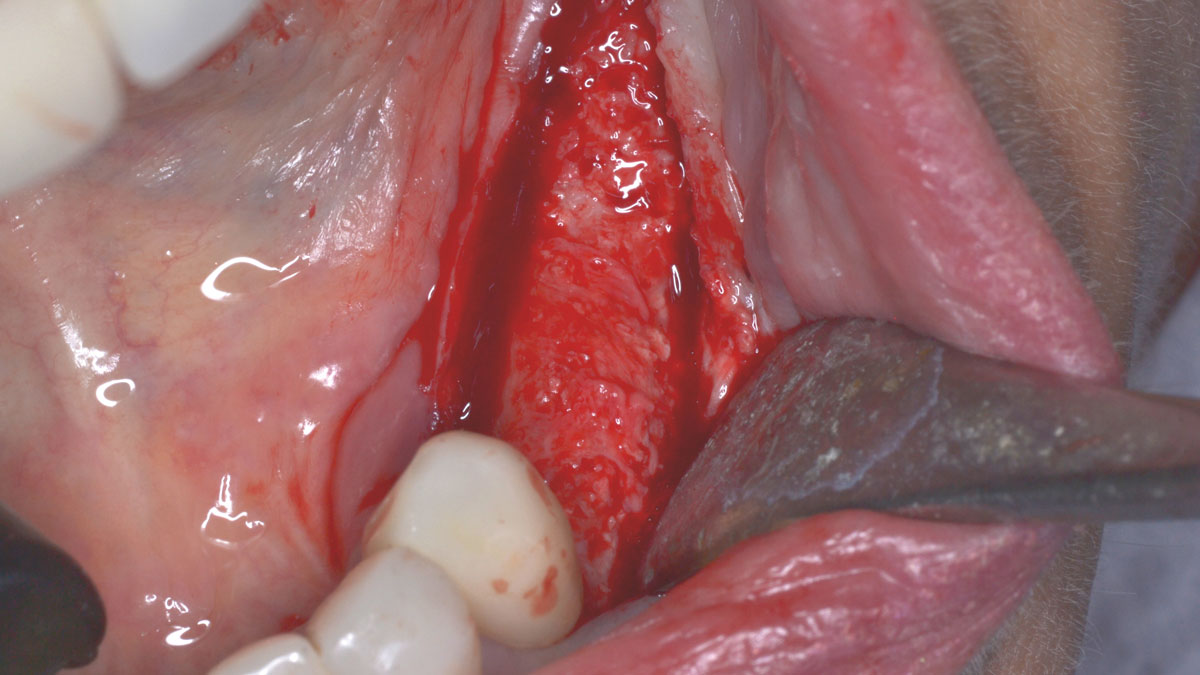
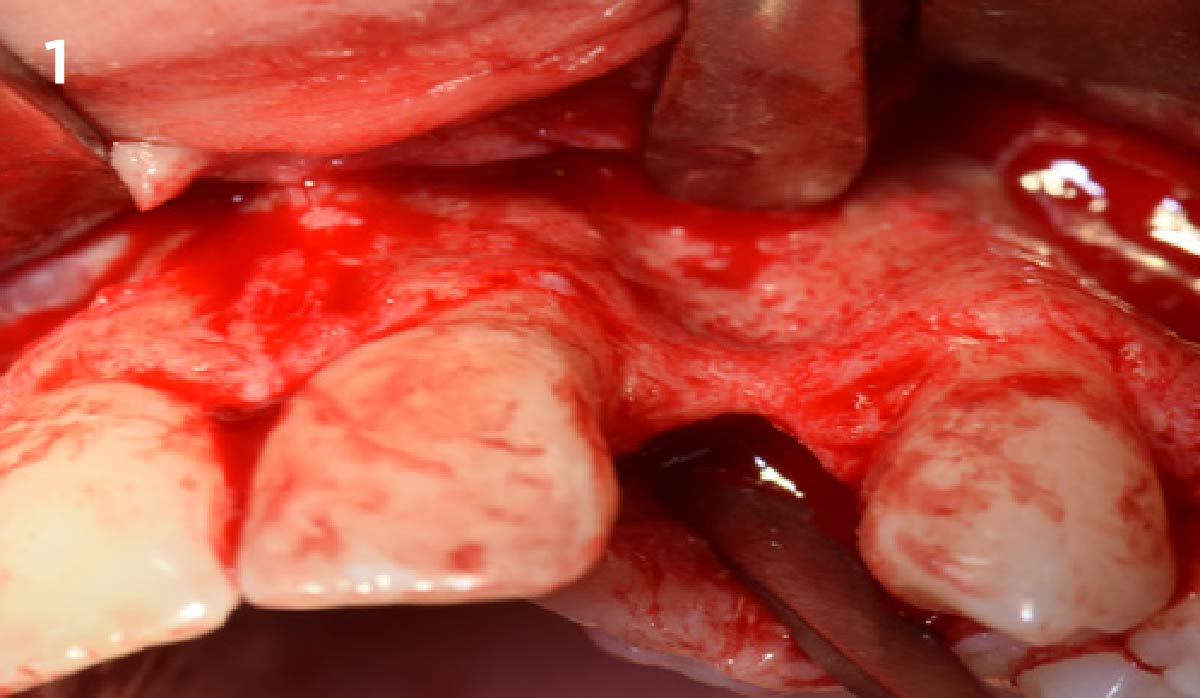
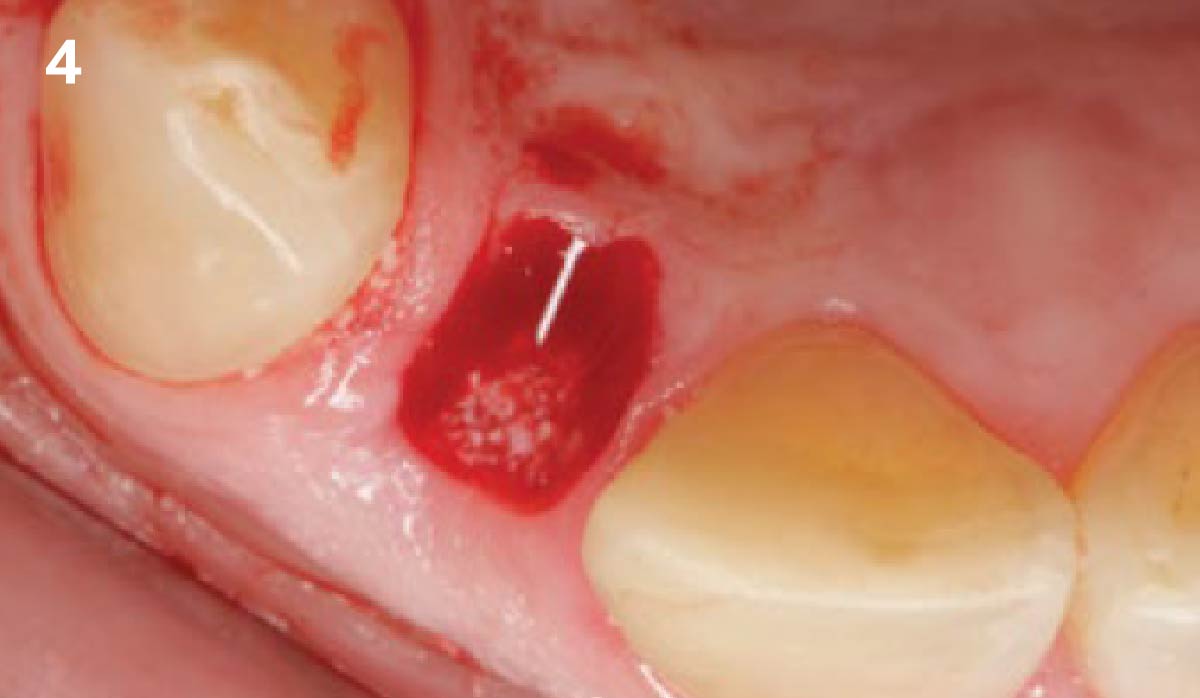
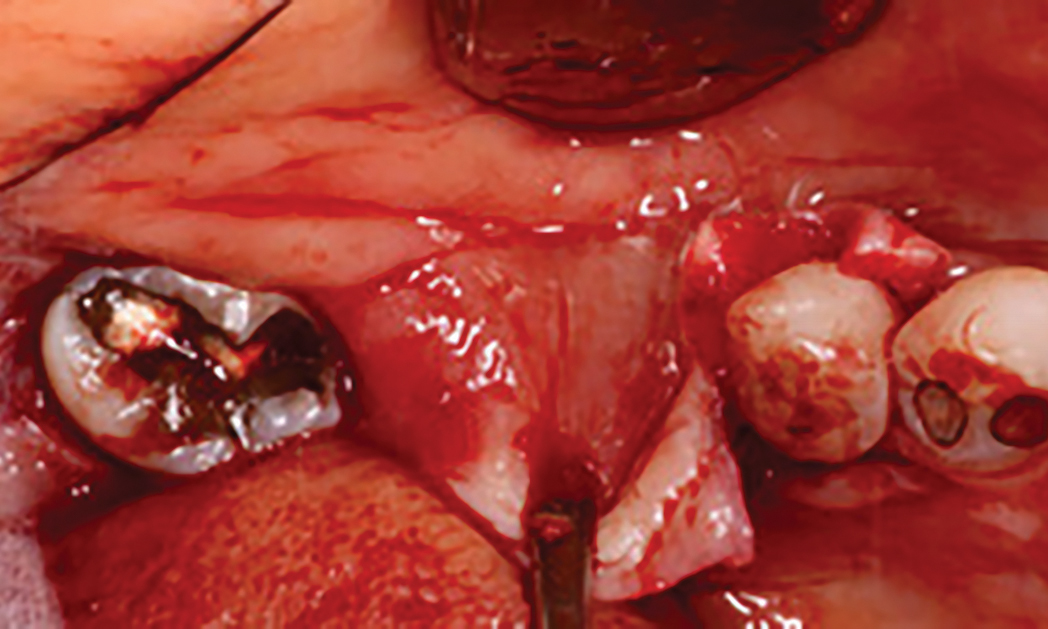
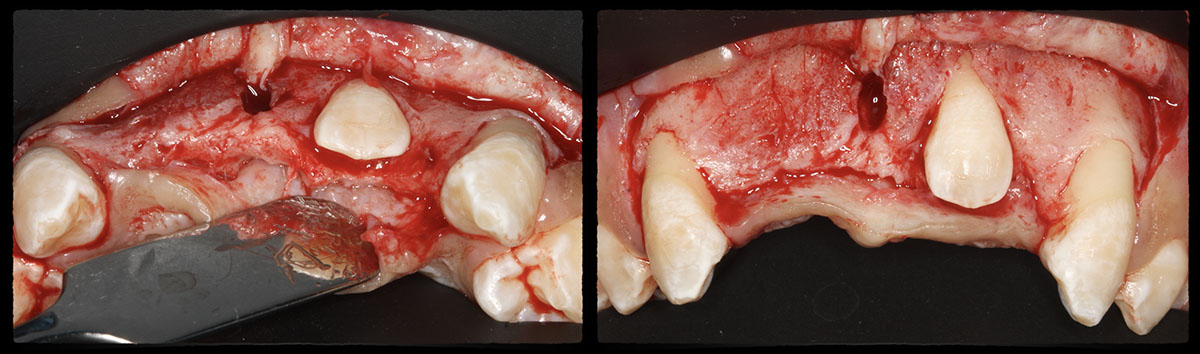
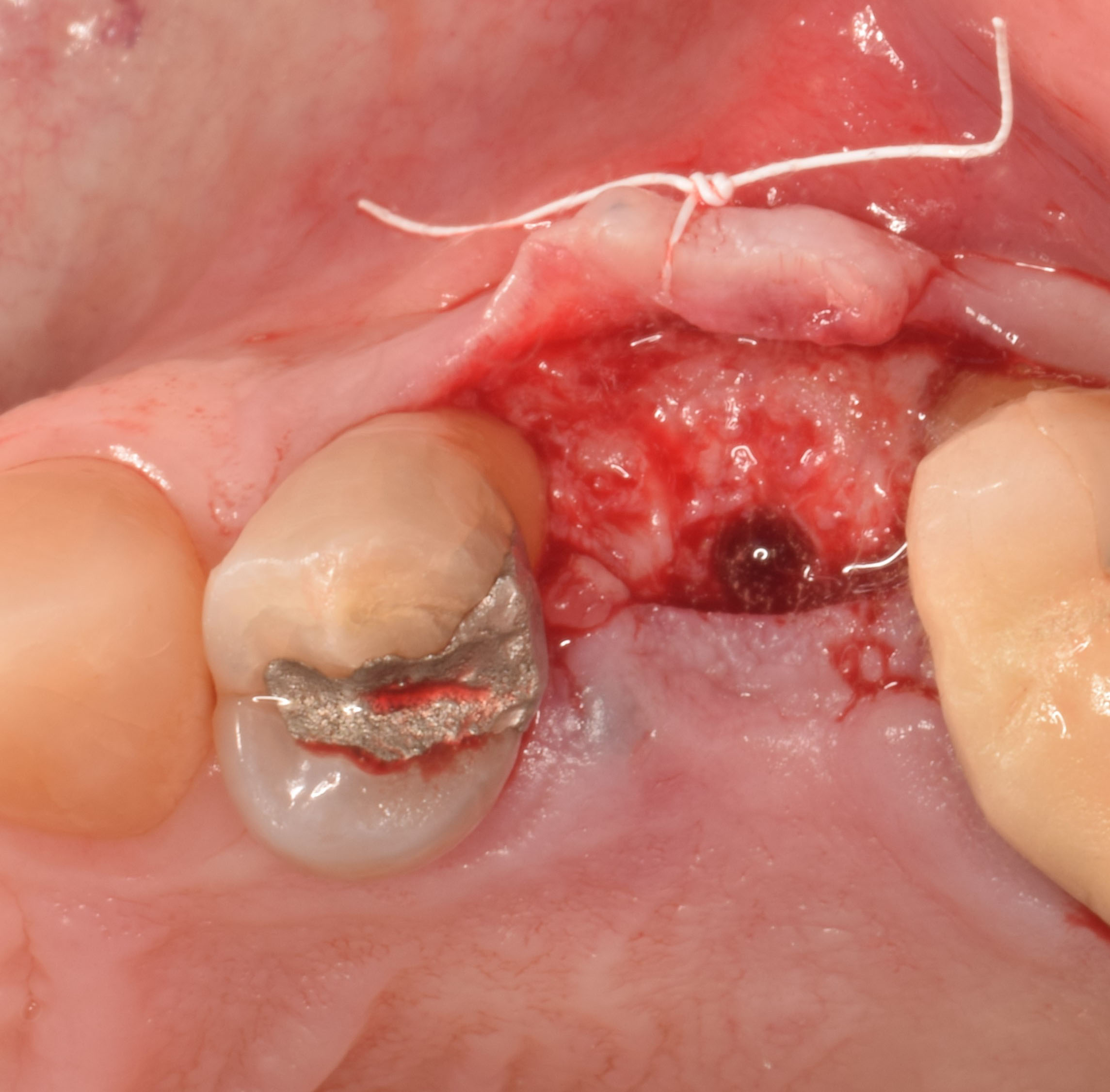
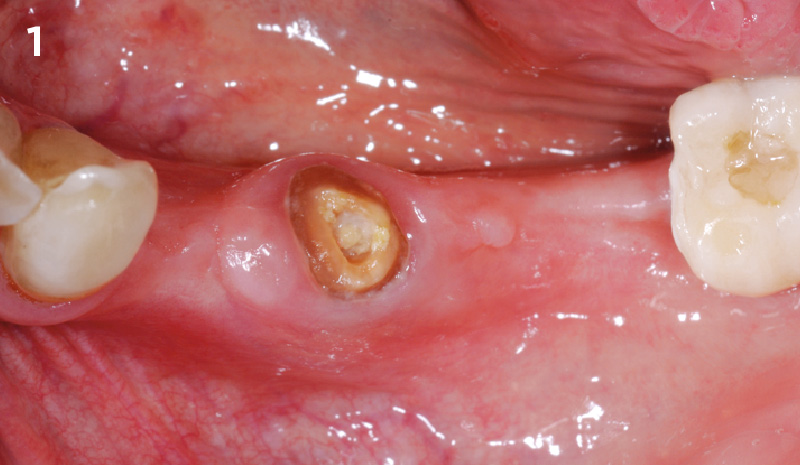
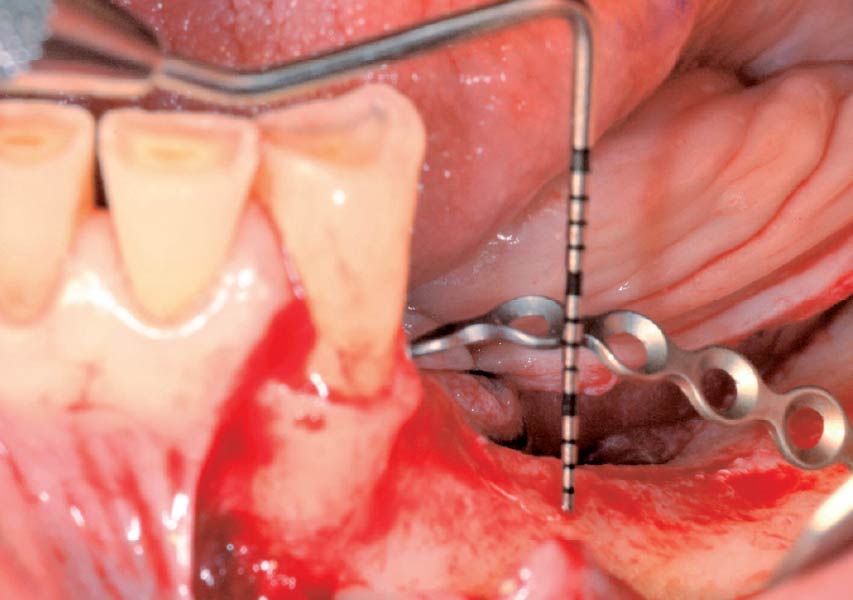
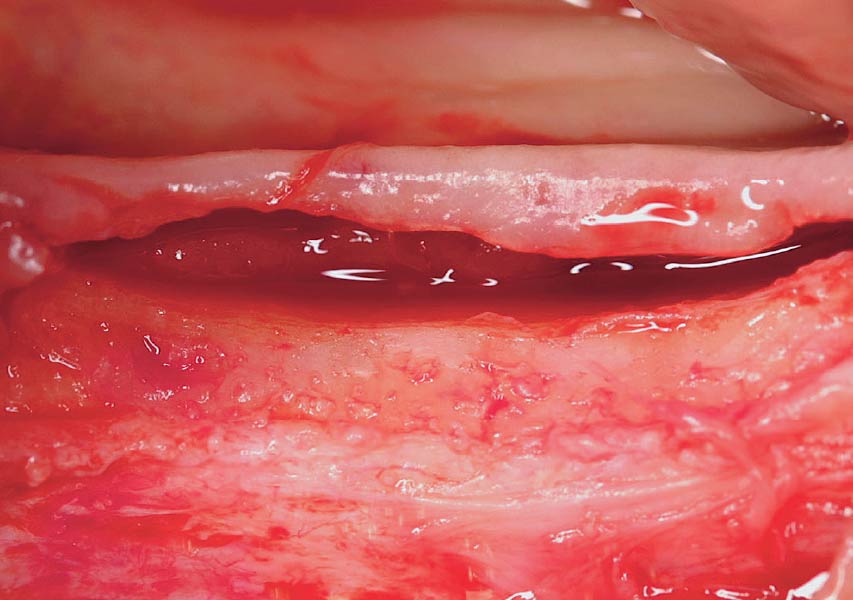
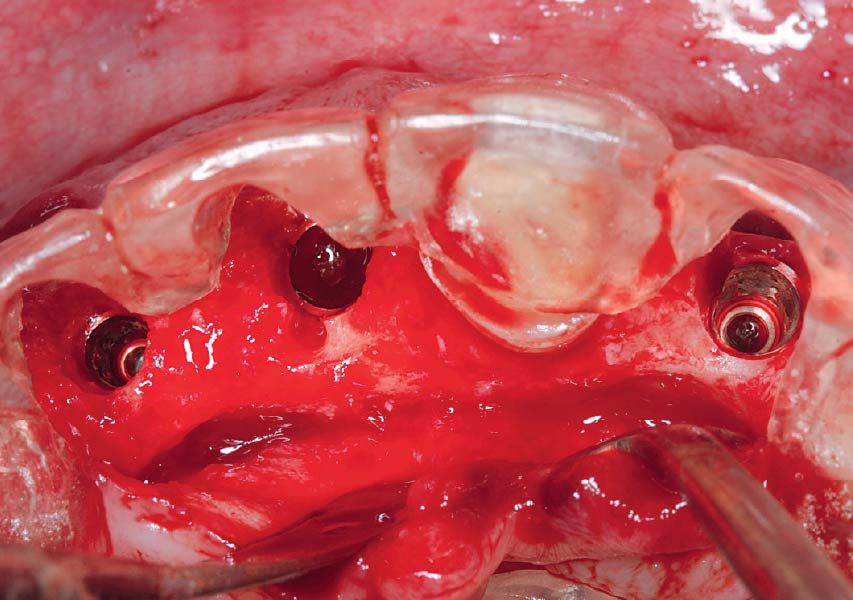
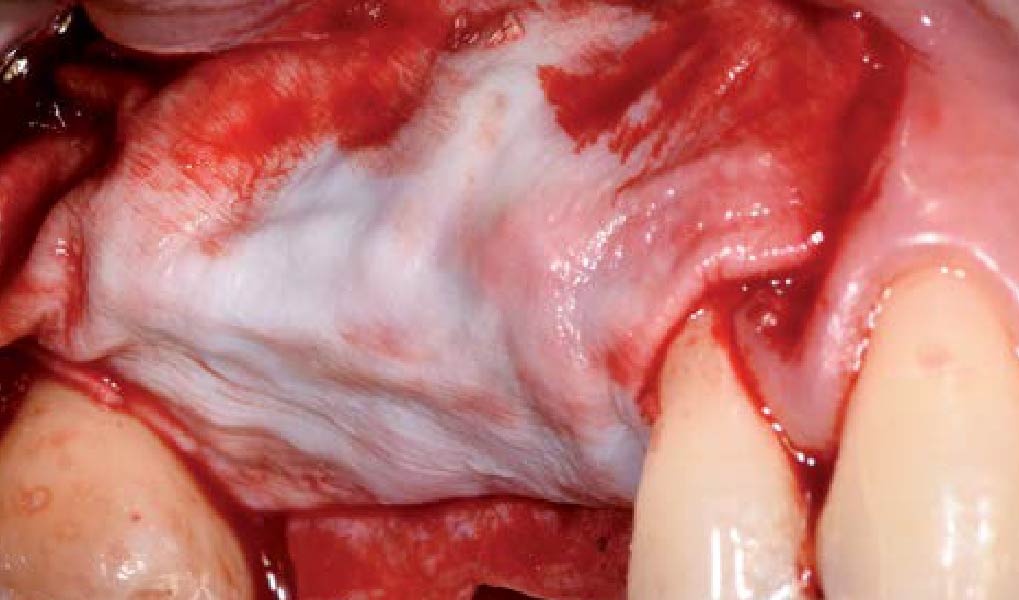
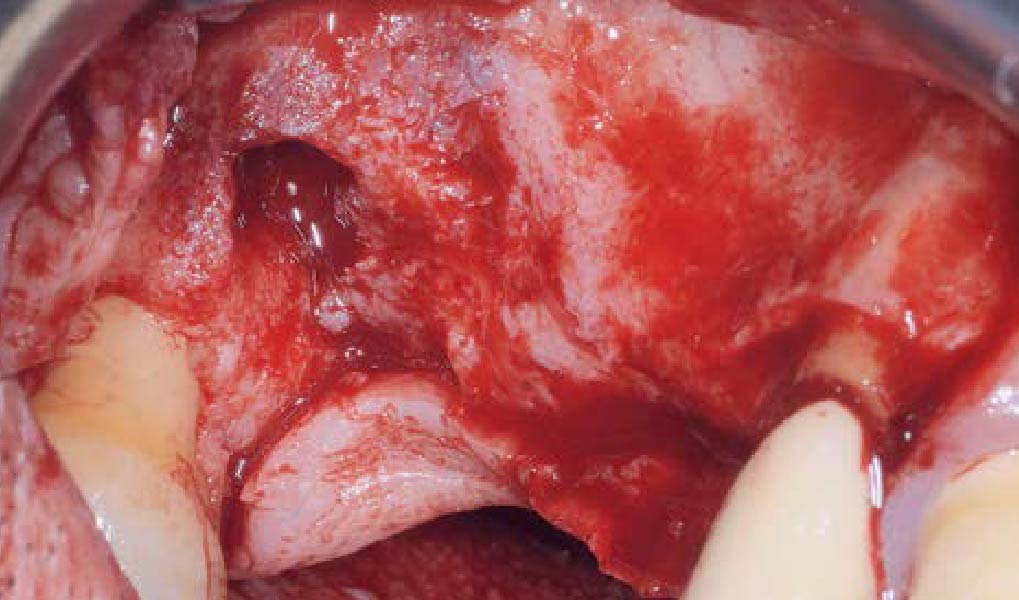
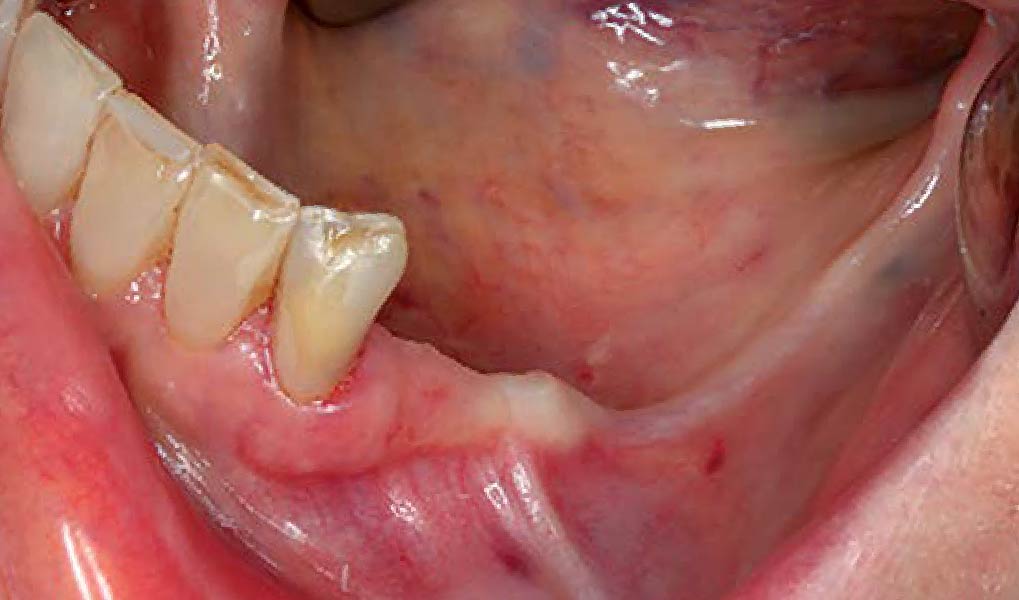
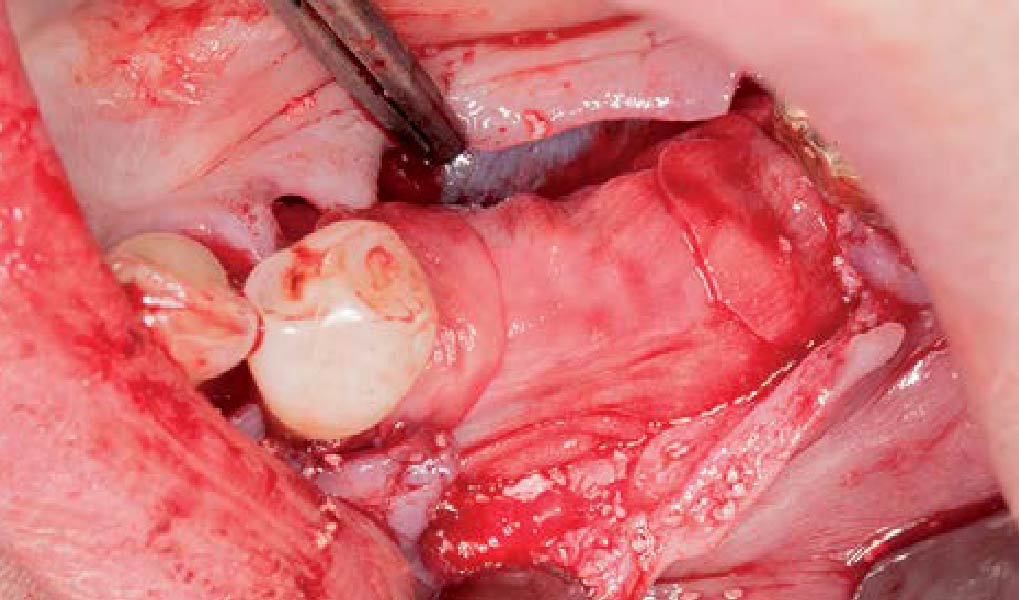
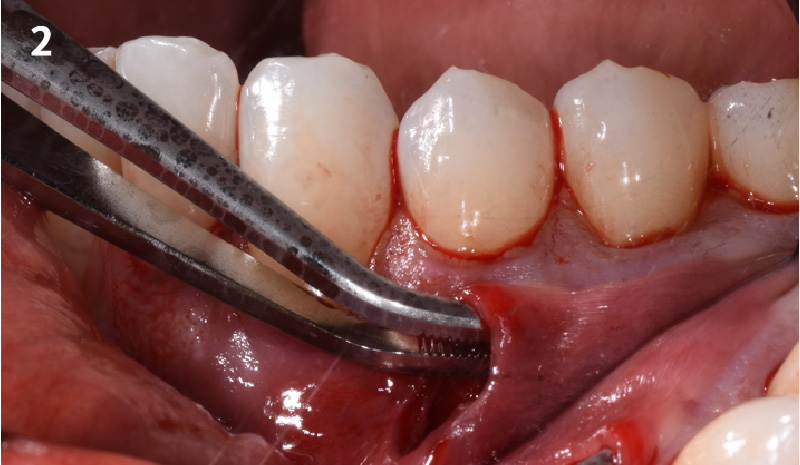
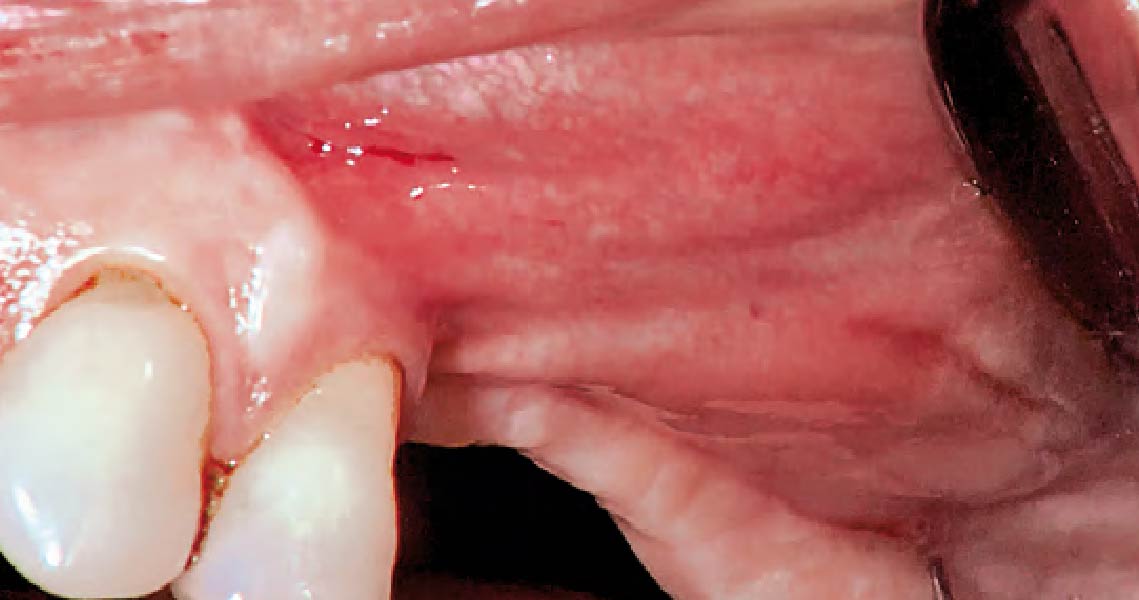
Initial incisions on the midcrest of the ridge were performed for full-thickness flap preparation.
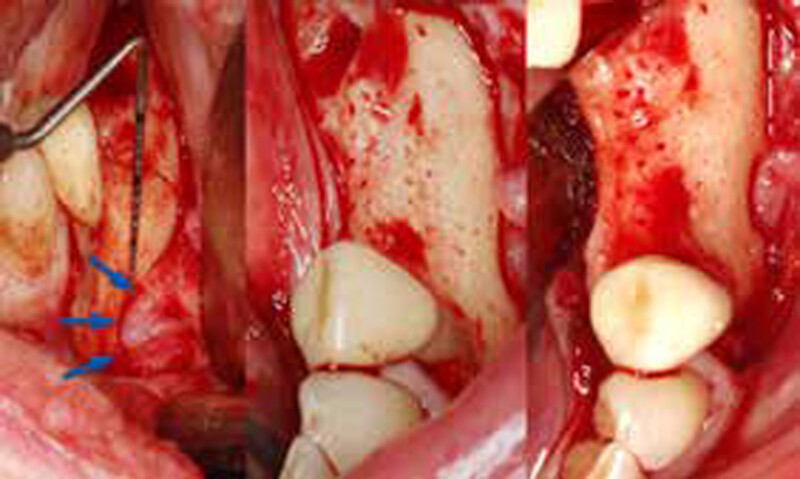
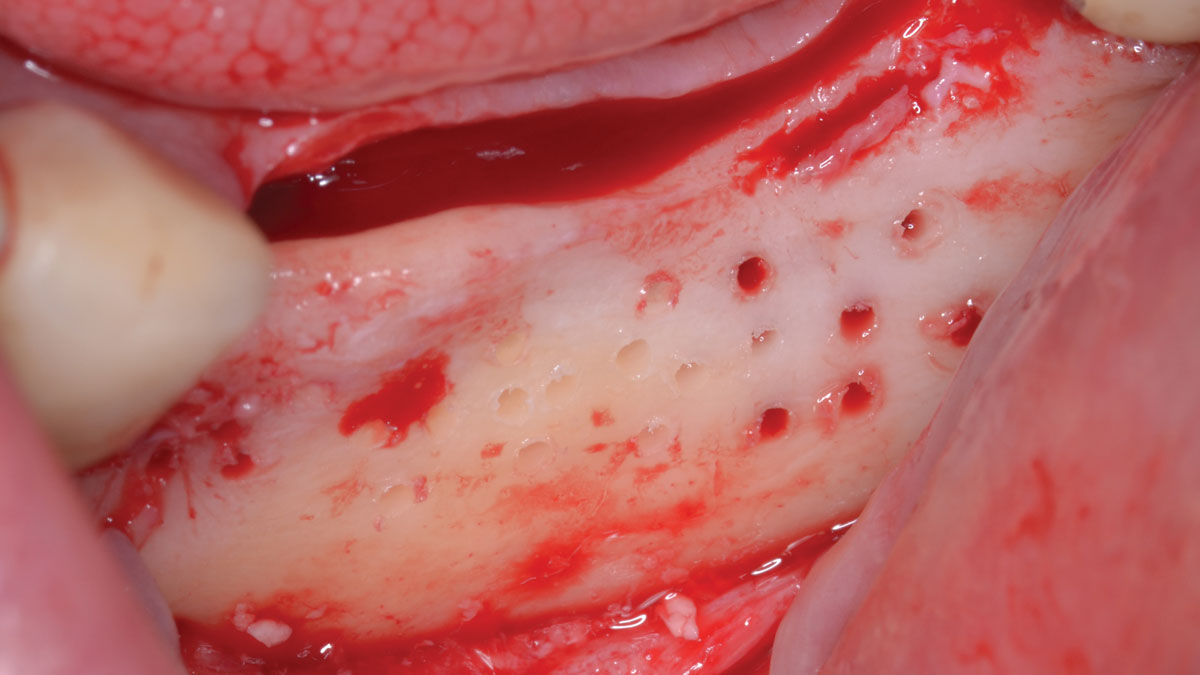
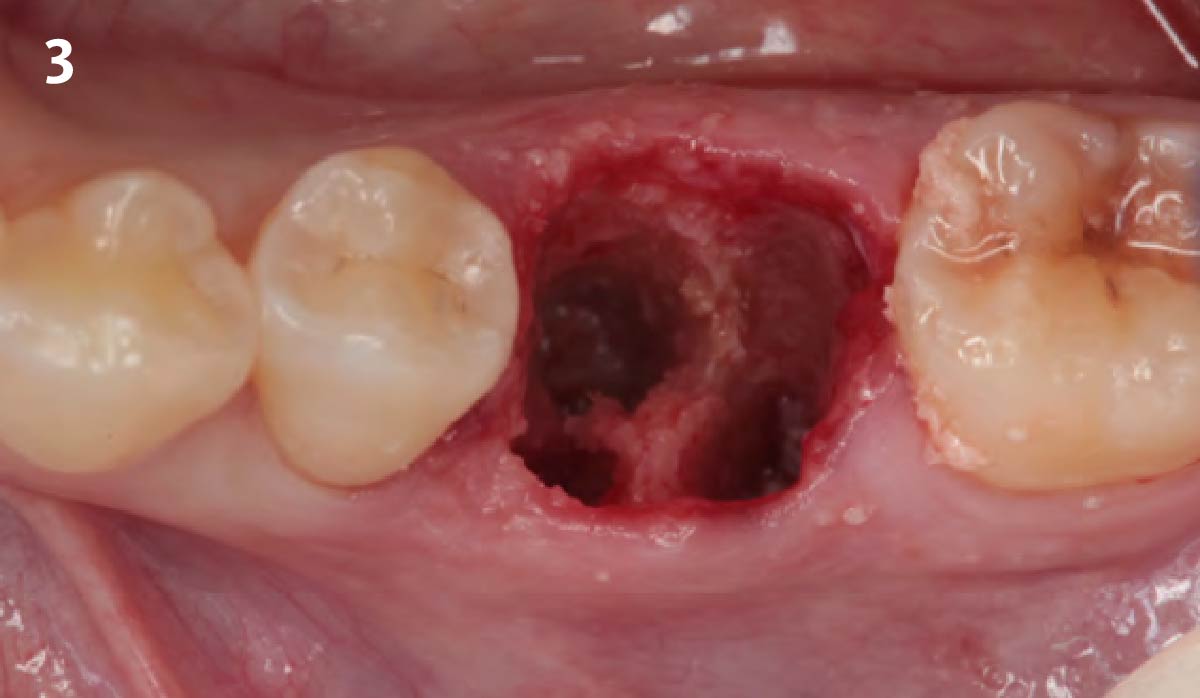
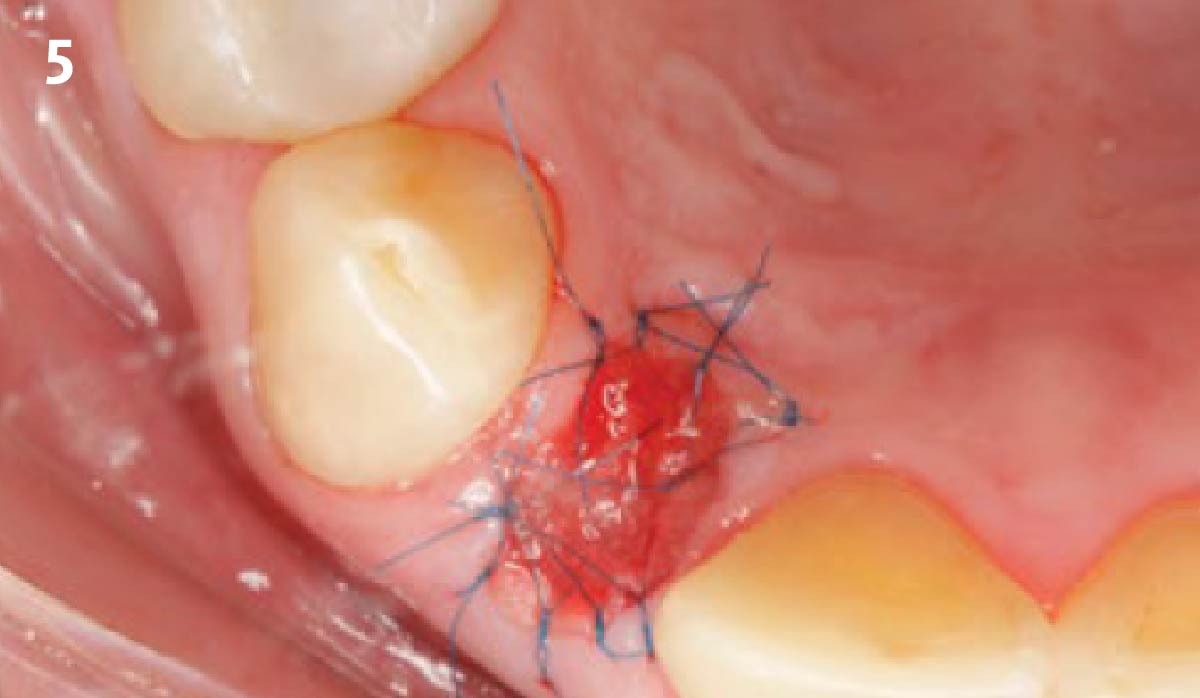
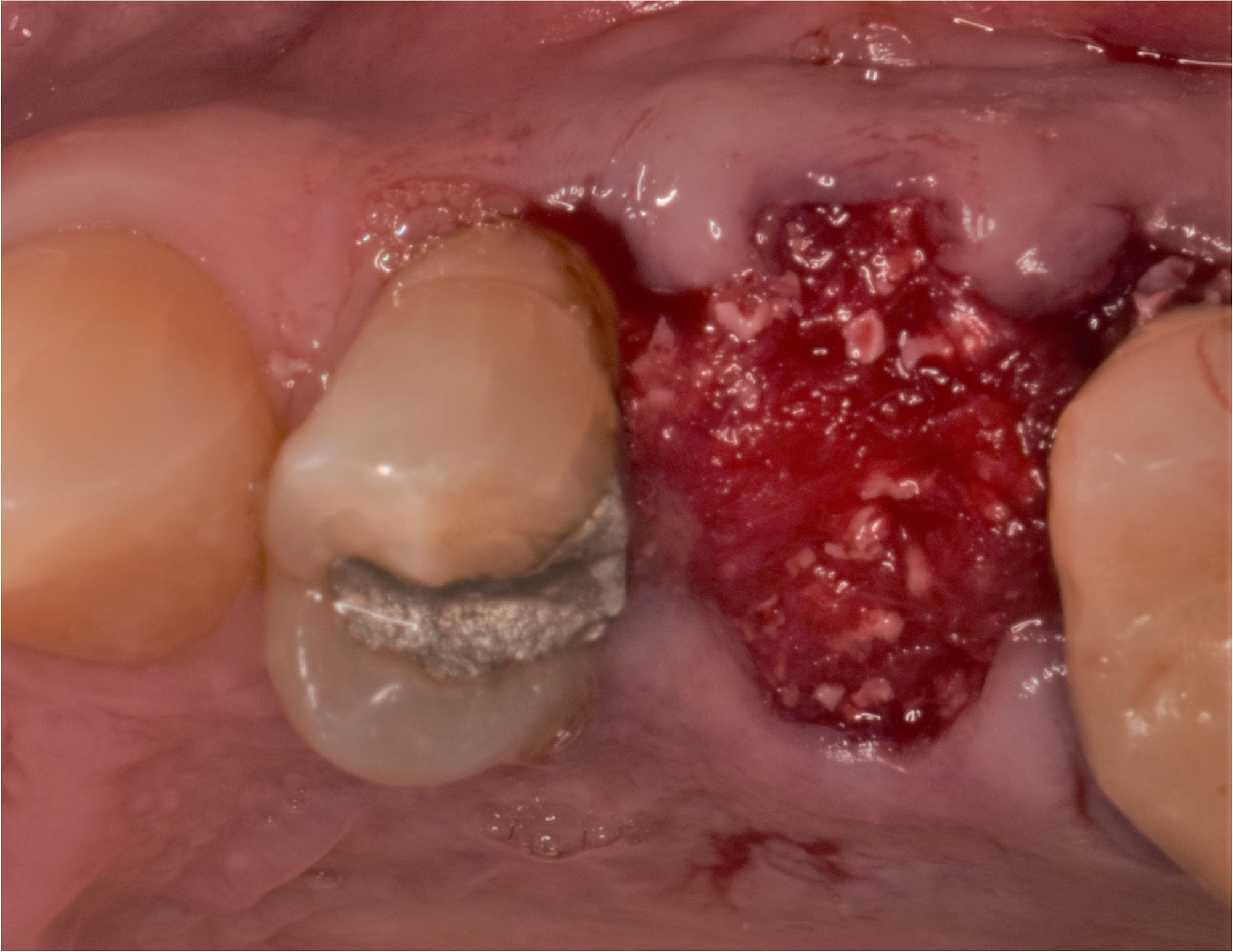
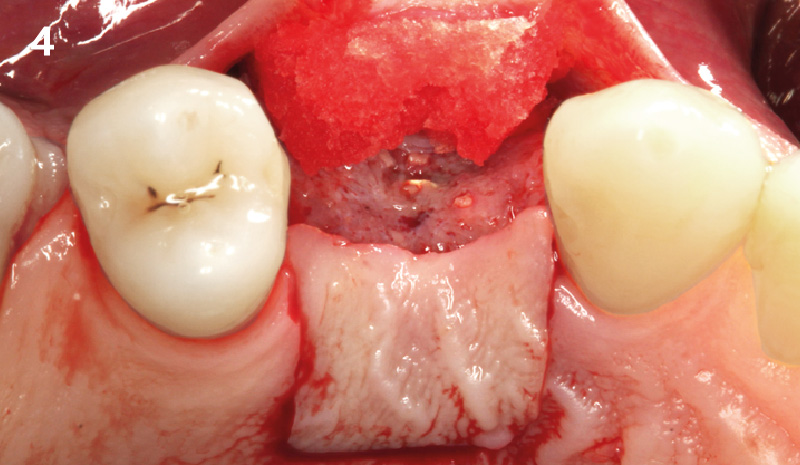
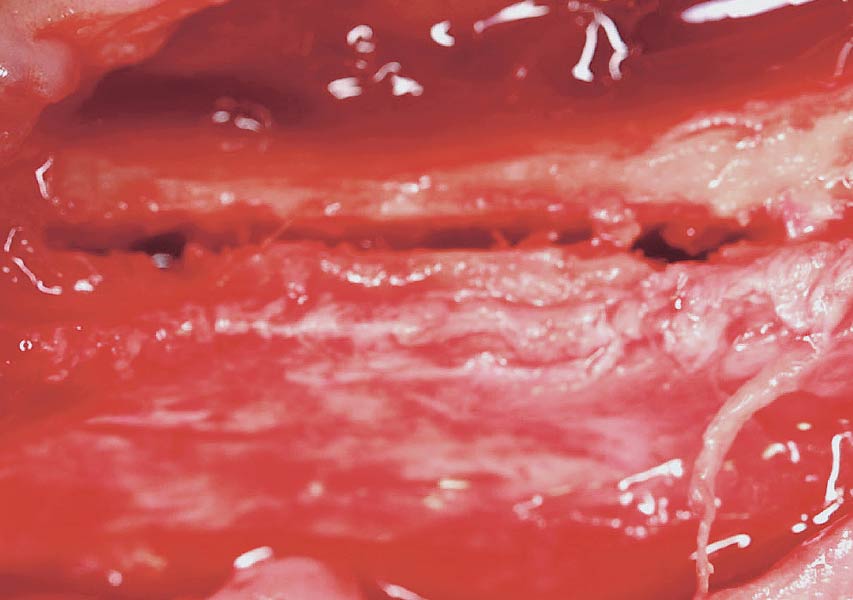
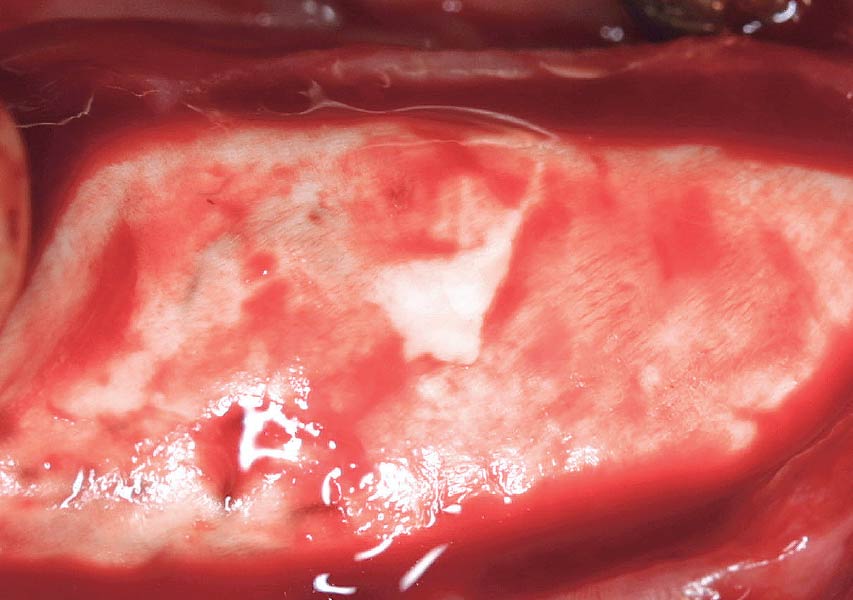
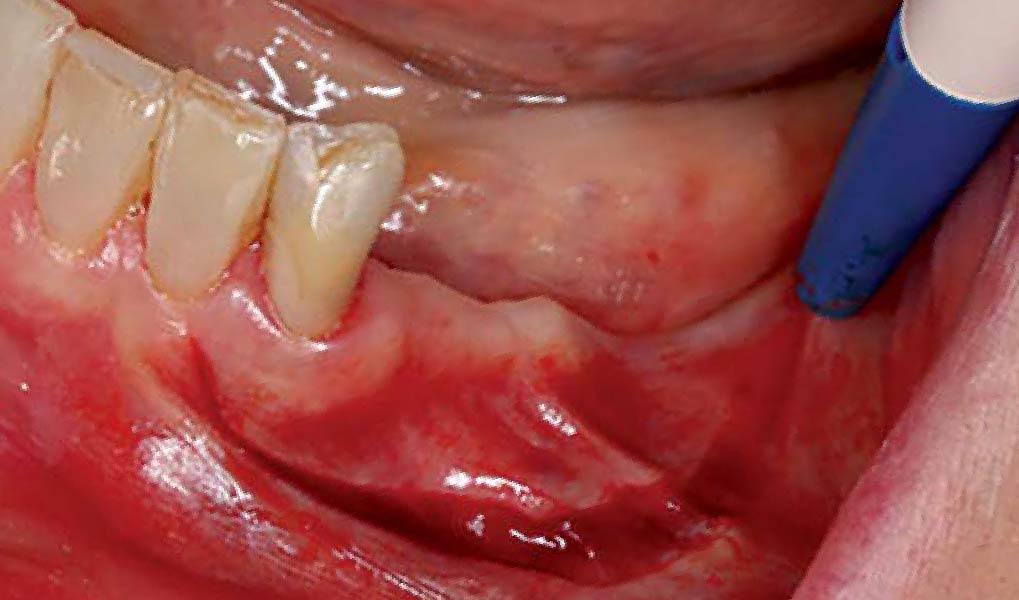
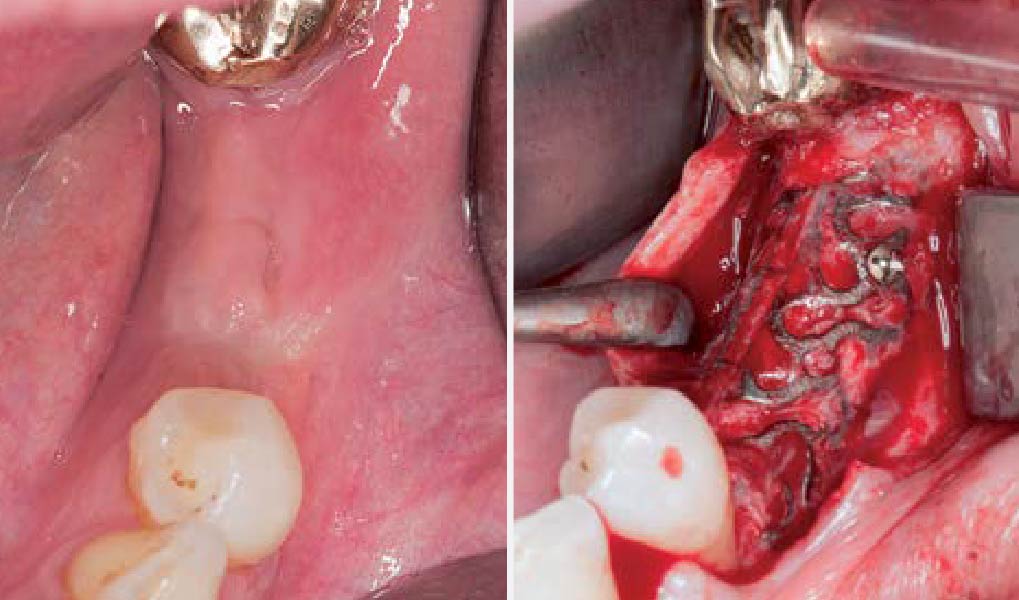
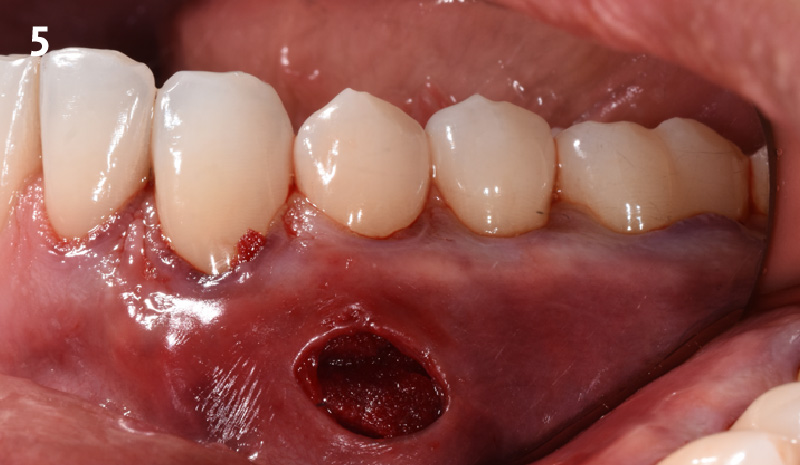
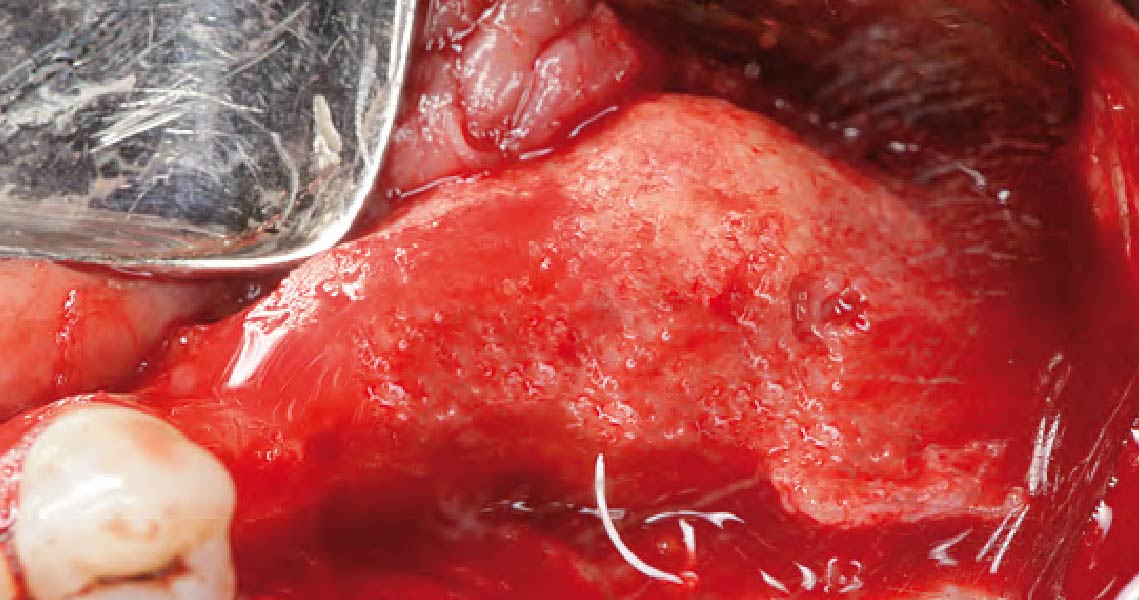
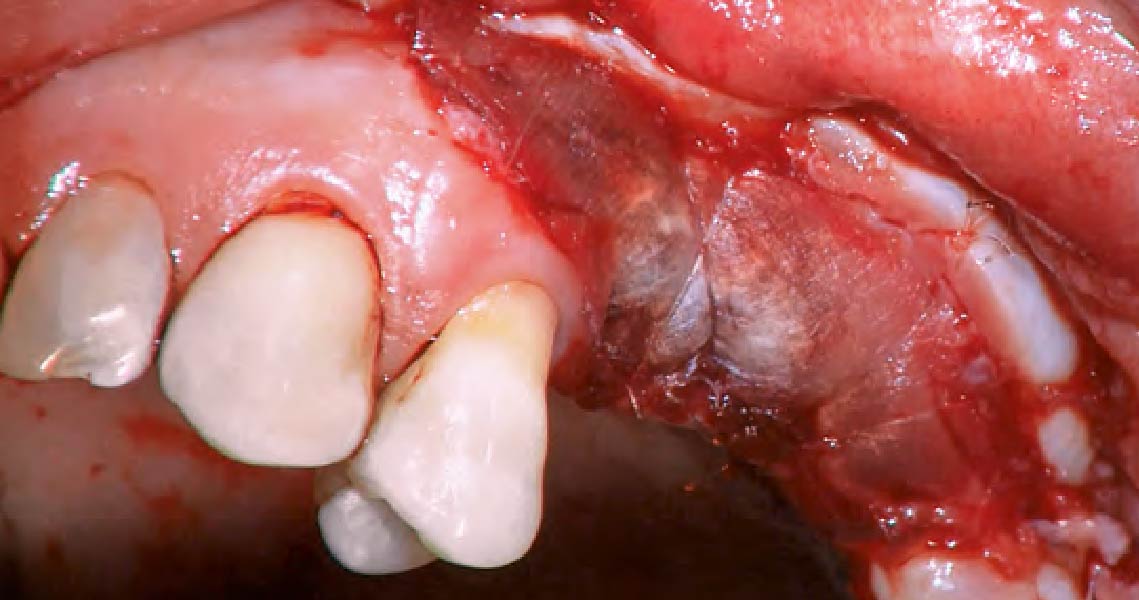
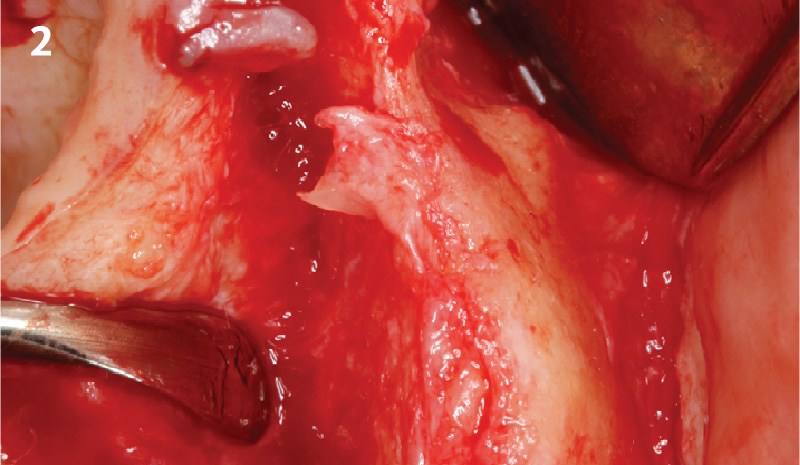
Four mucoperiosteal flaps were done with vertical releasing incisions and interosseous holes created to stimulate bone formation (RAP phenomenon).
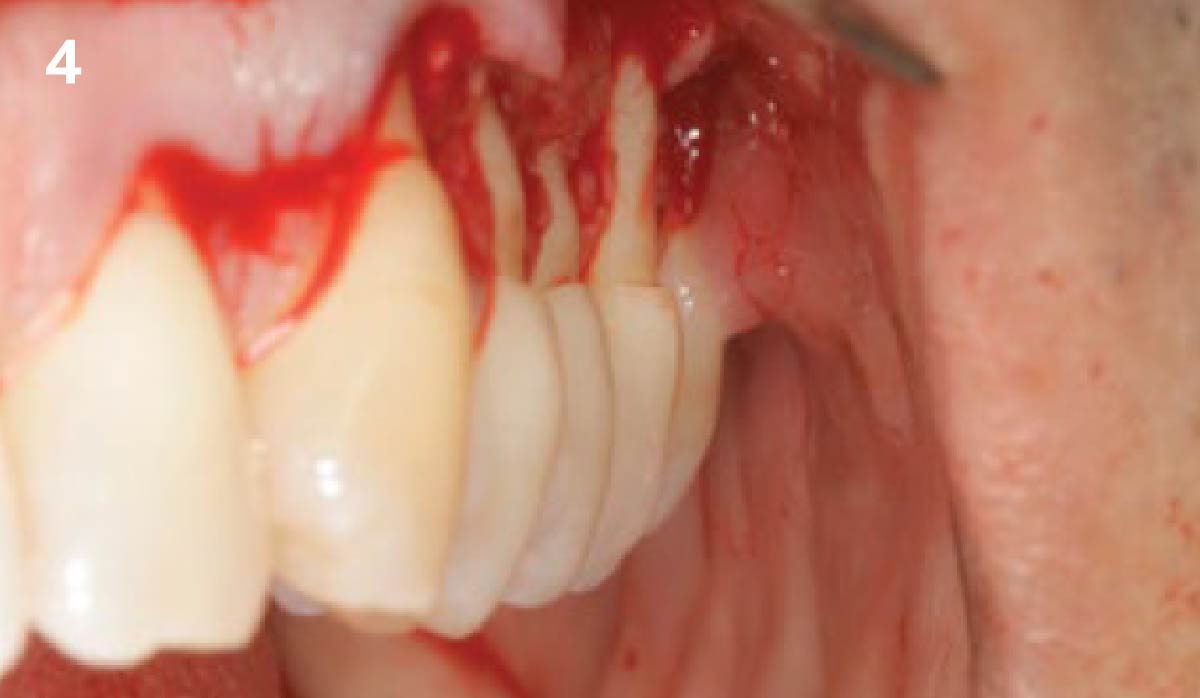
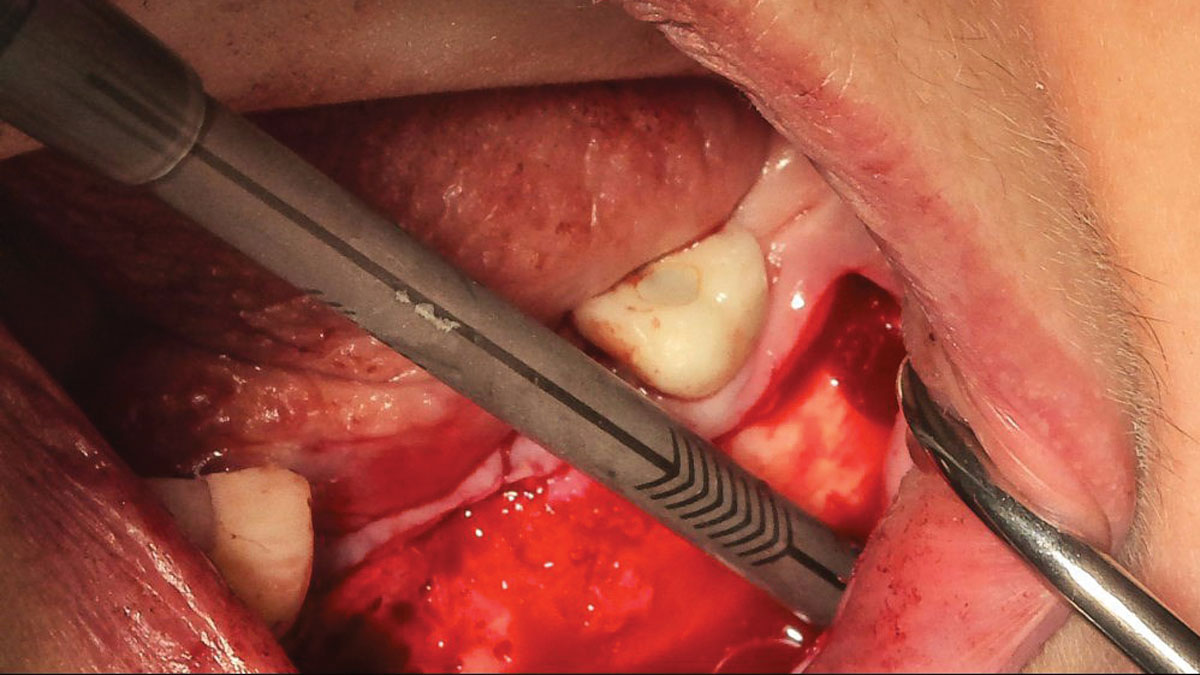
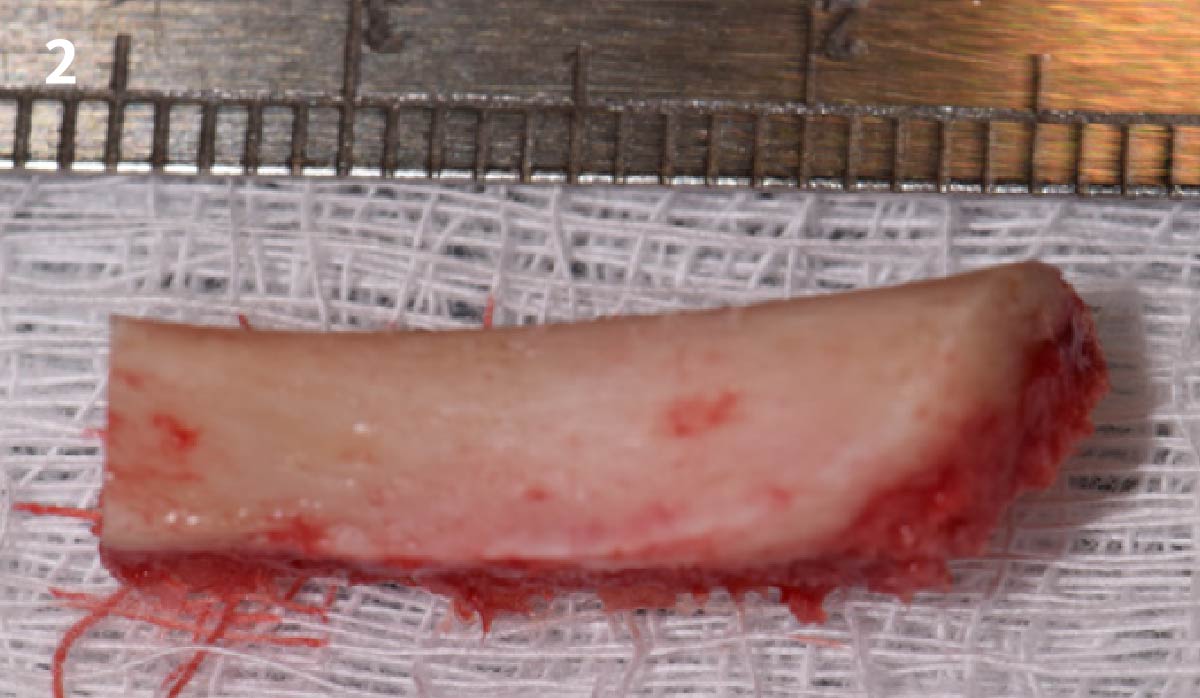
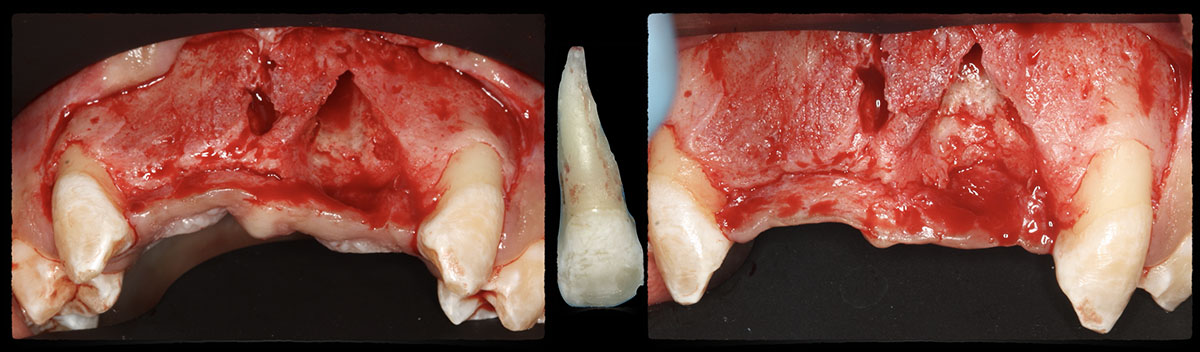
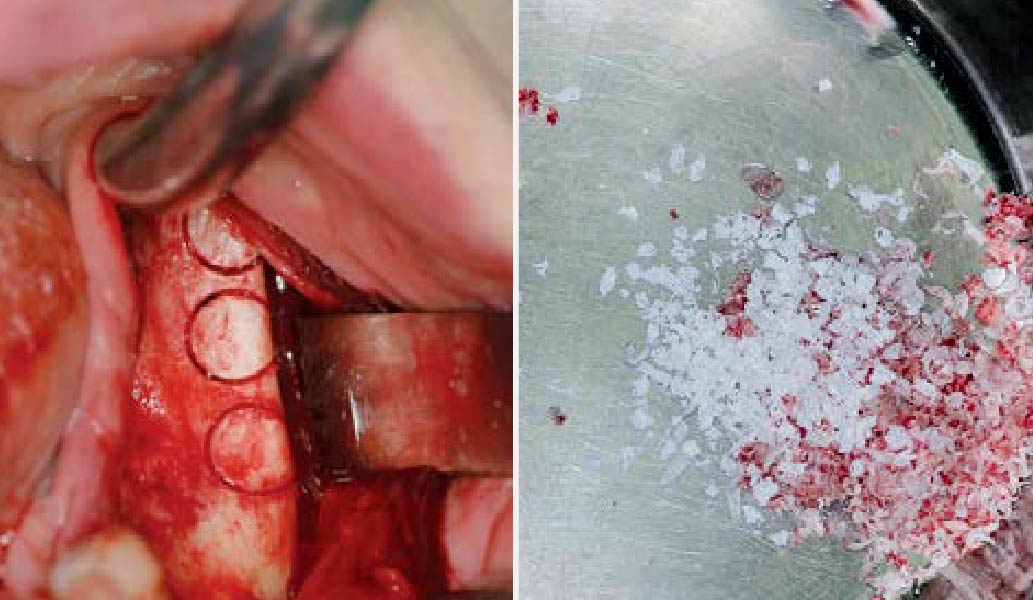
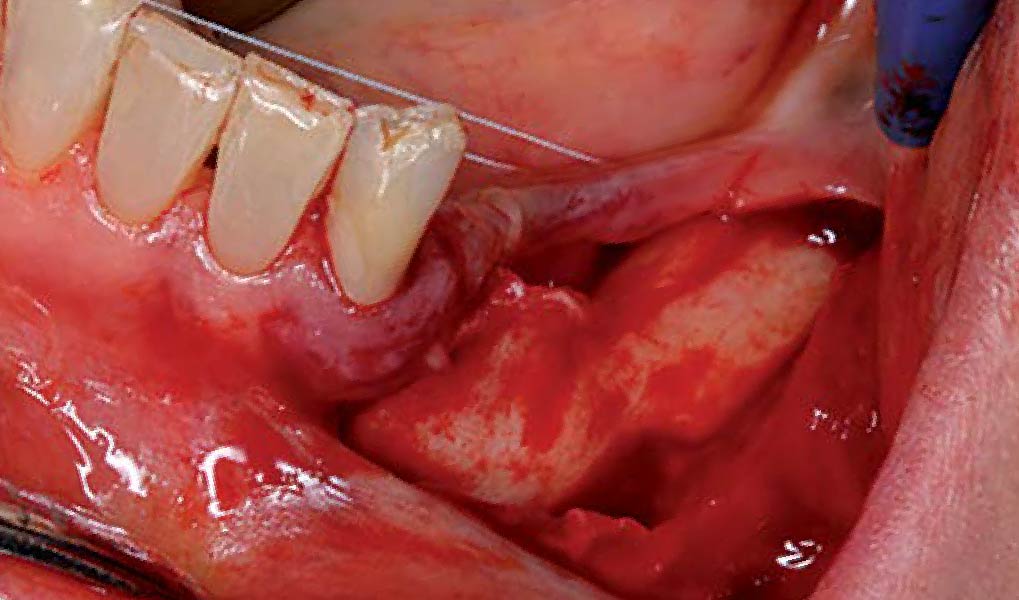
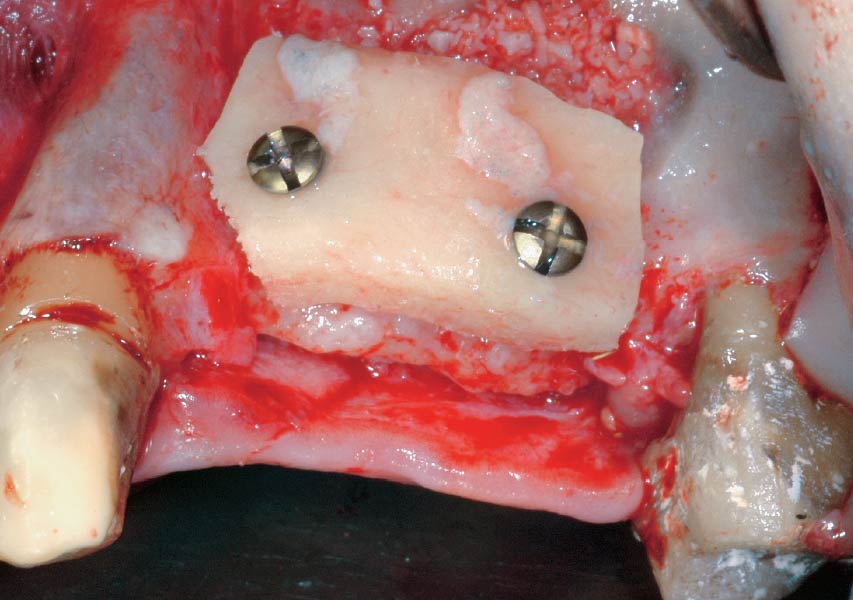
Harvesting of the autologous cortical bone from the lateral surface of the ramus, utilizing the Geistlich Micross.
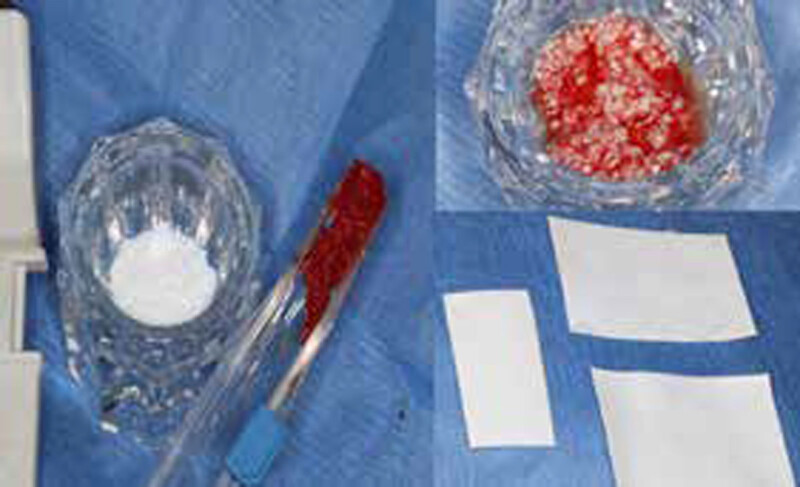
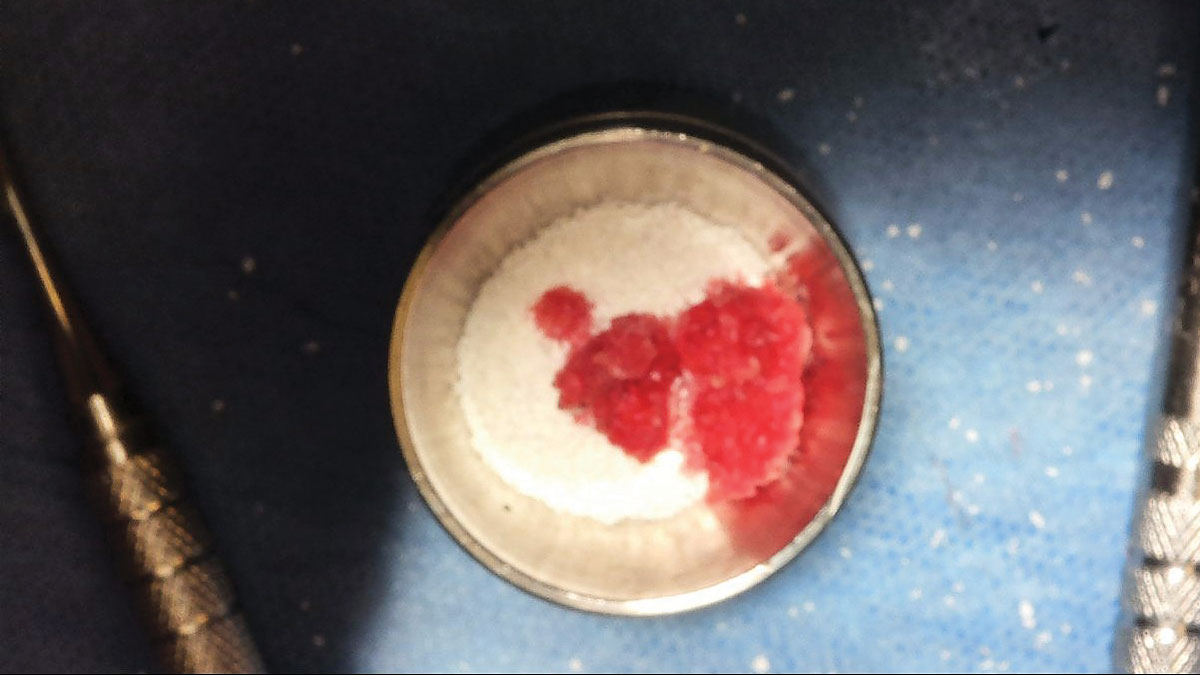
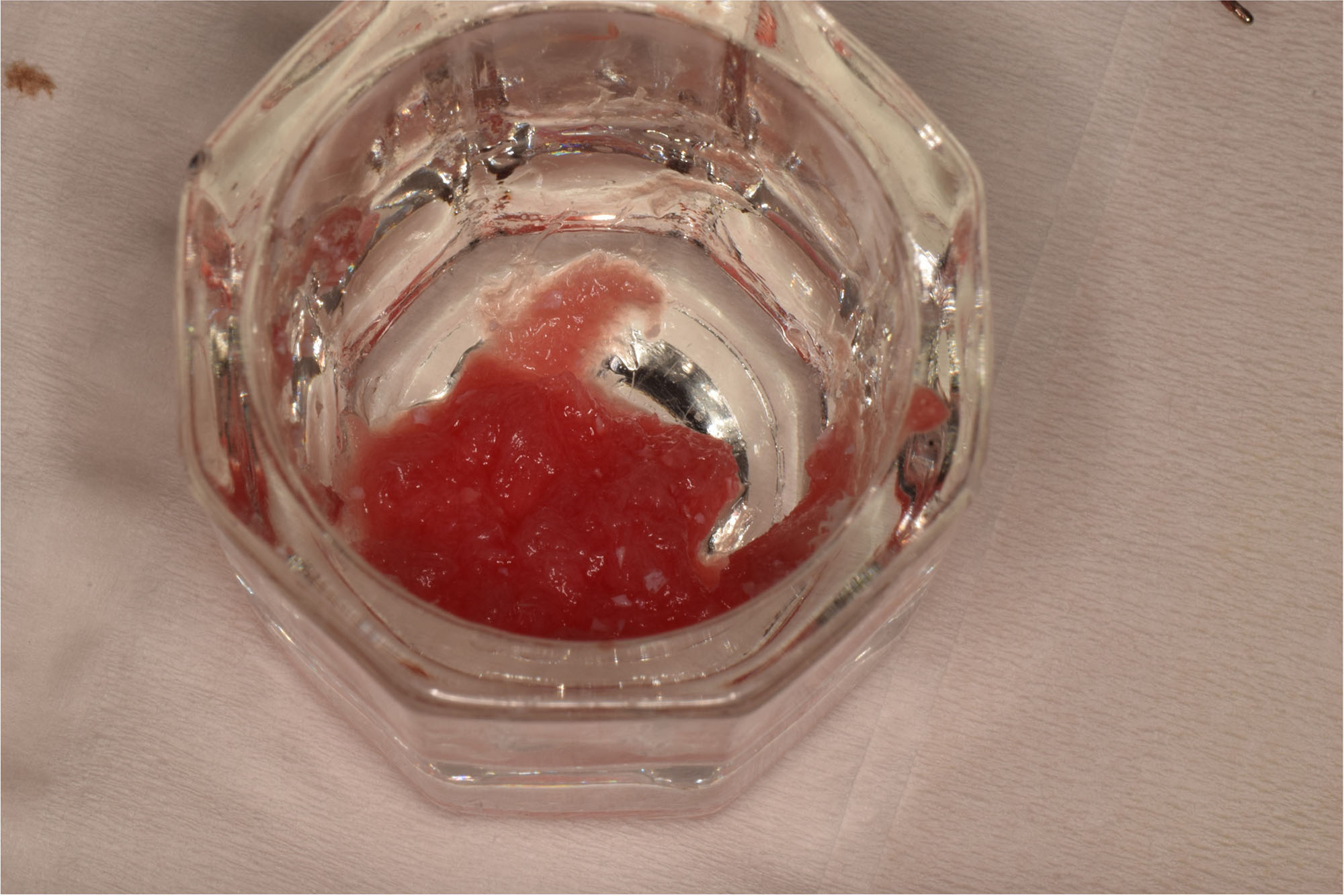
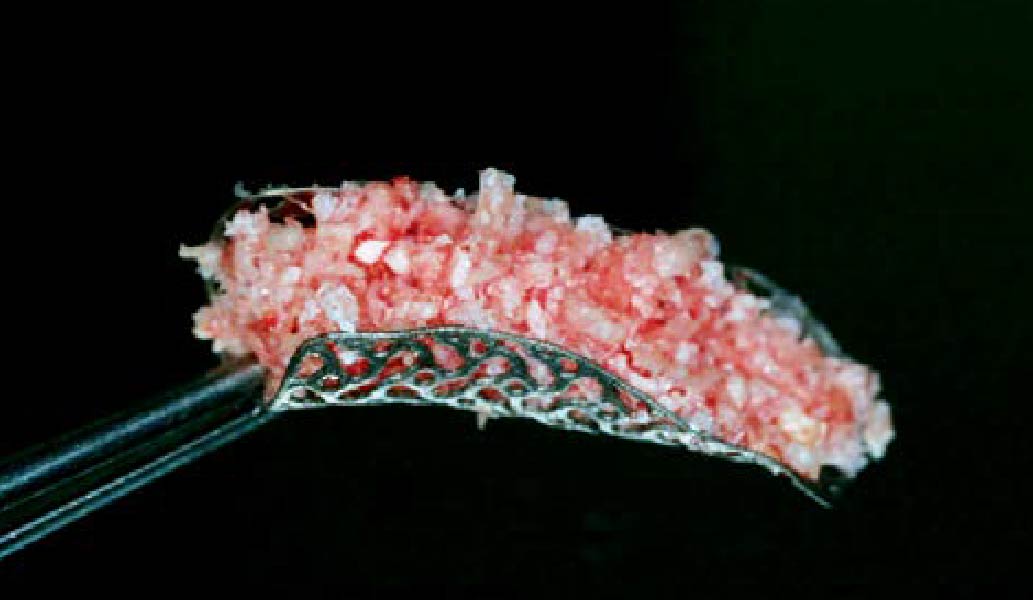
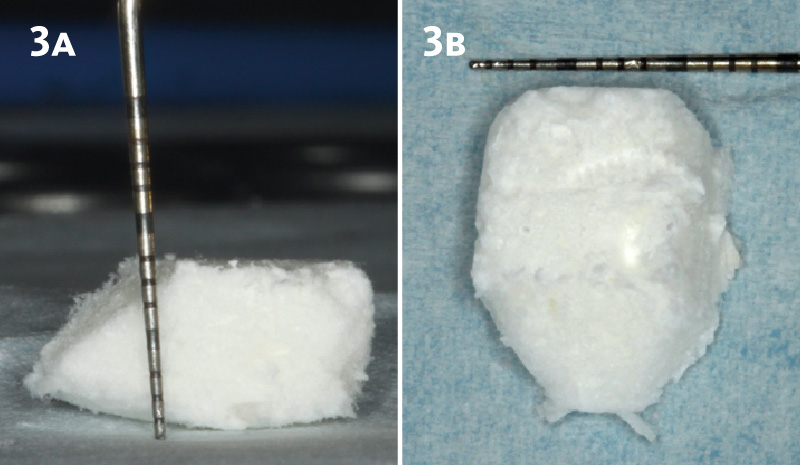
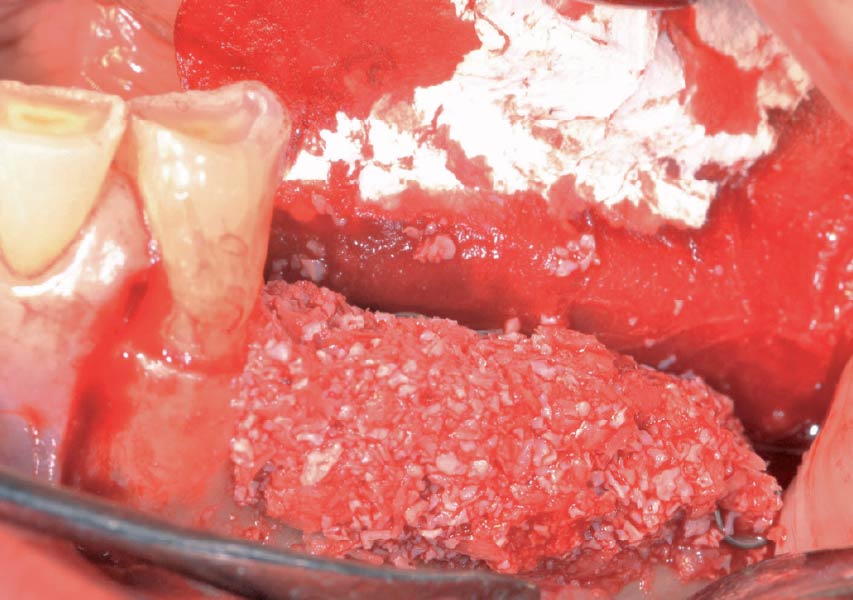
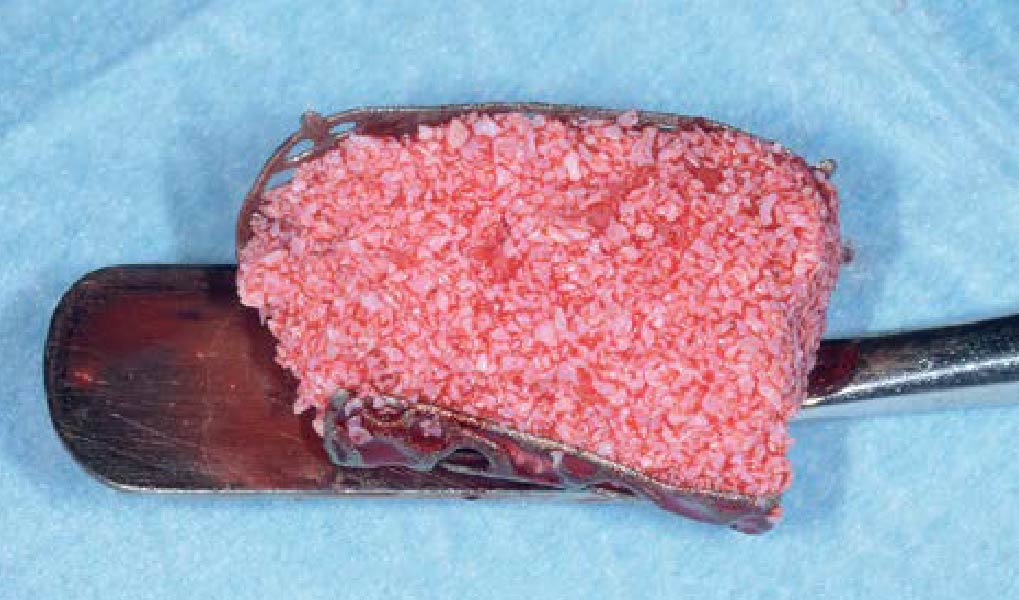
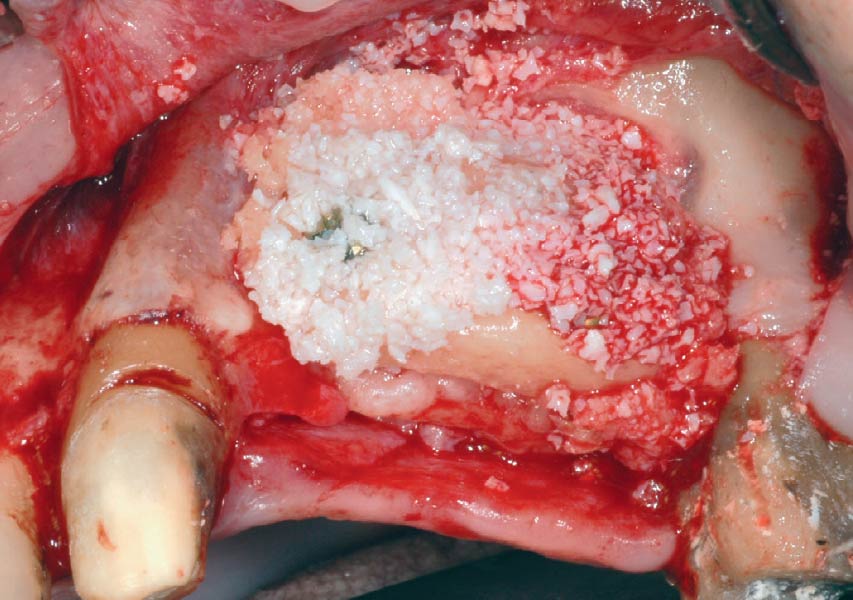
Geistlich Bio-Oss® granules mixed with harvested autologous bone chips.
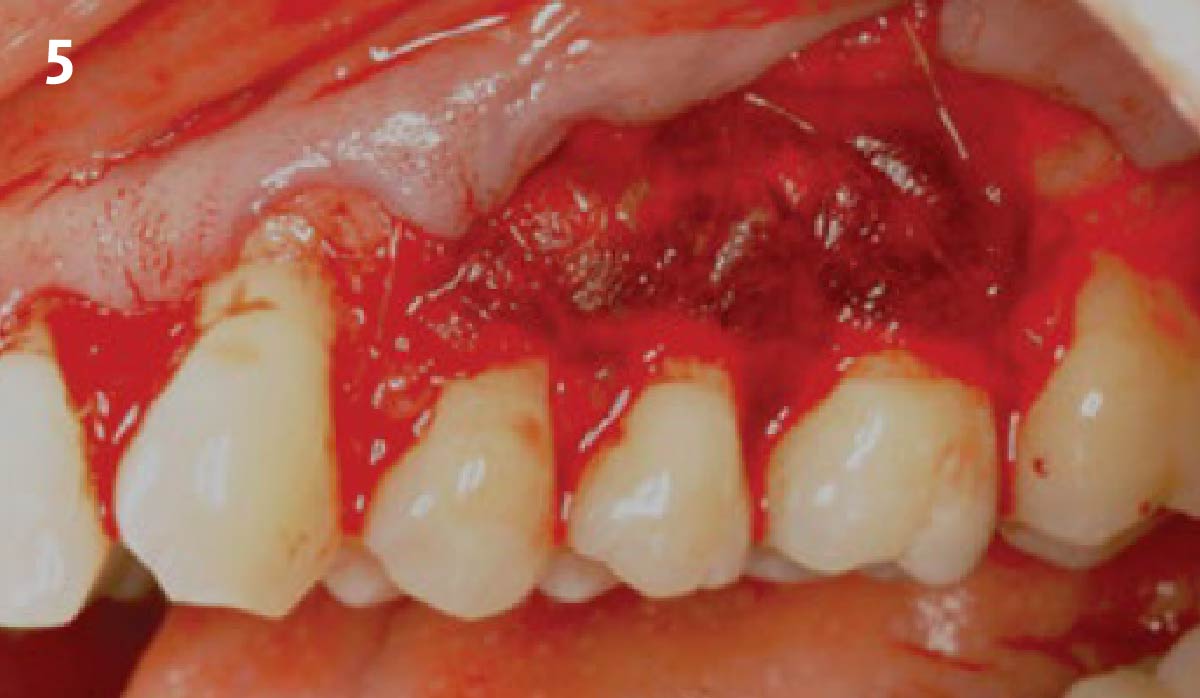
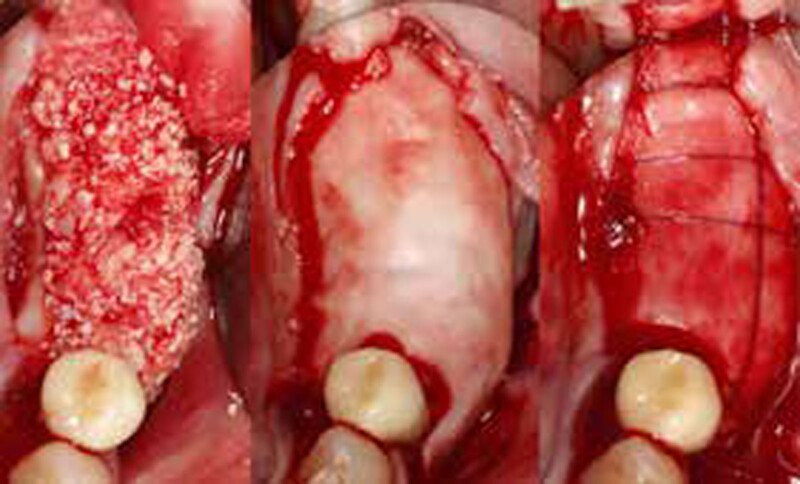
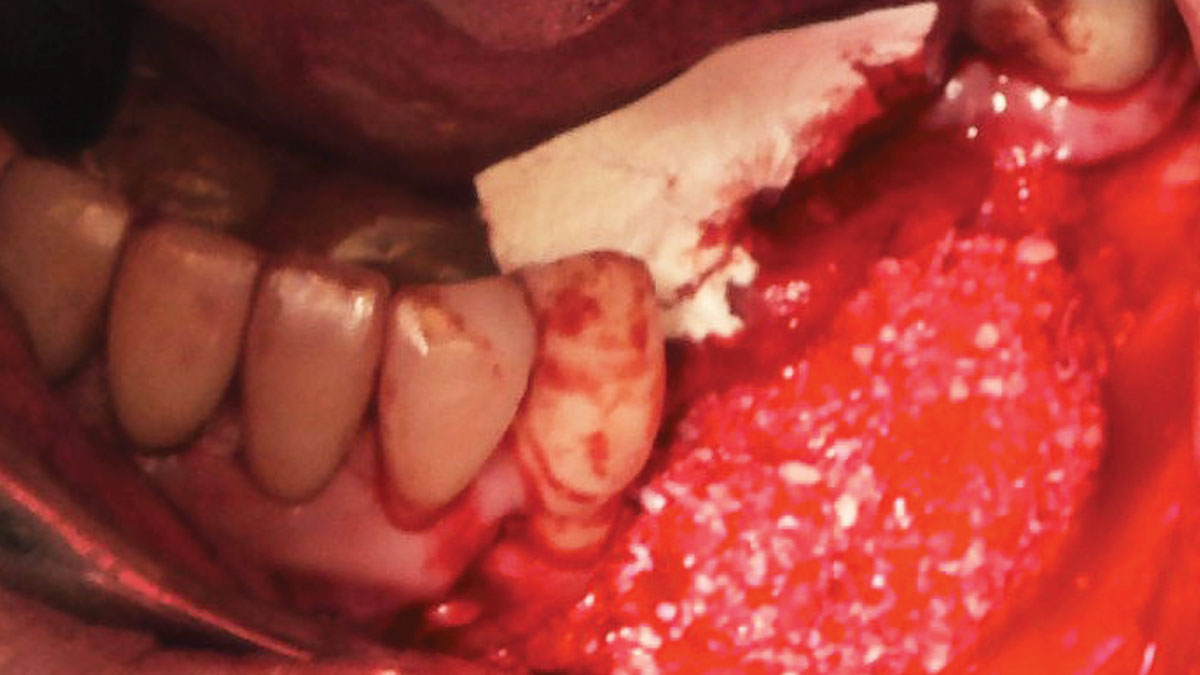
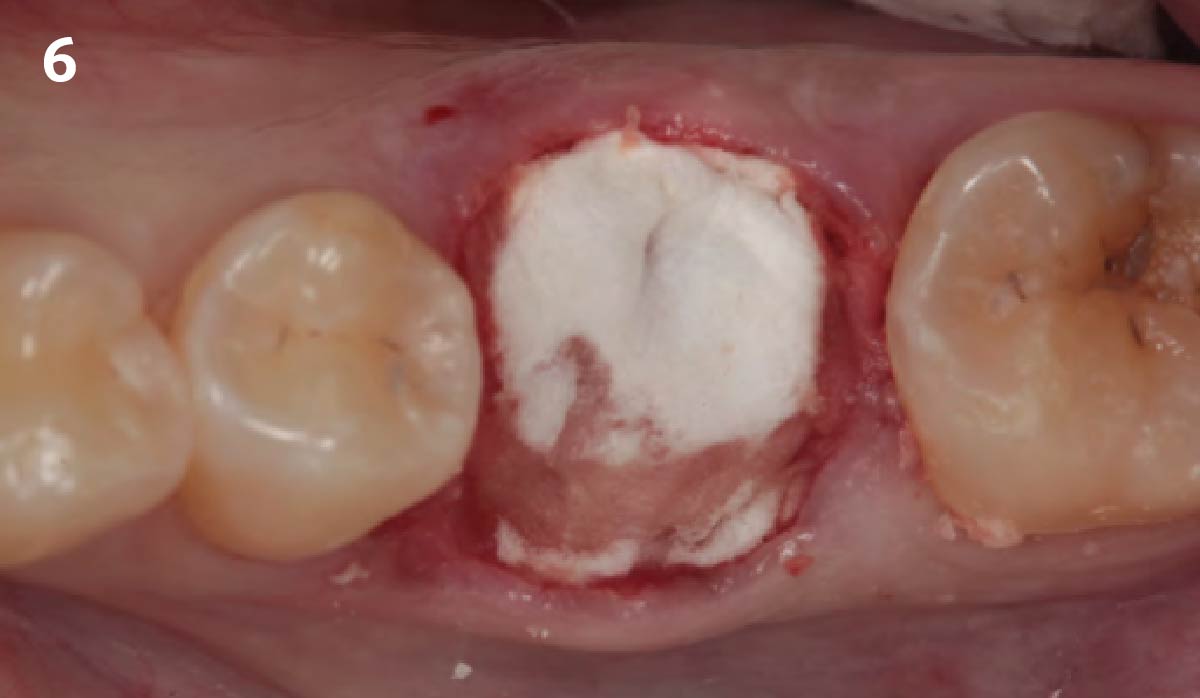
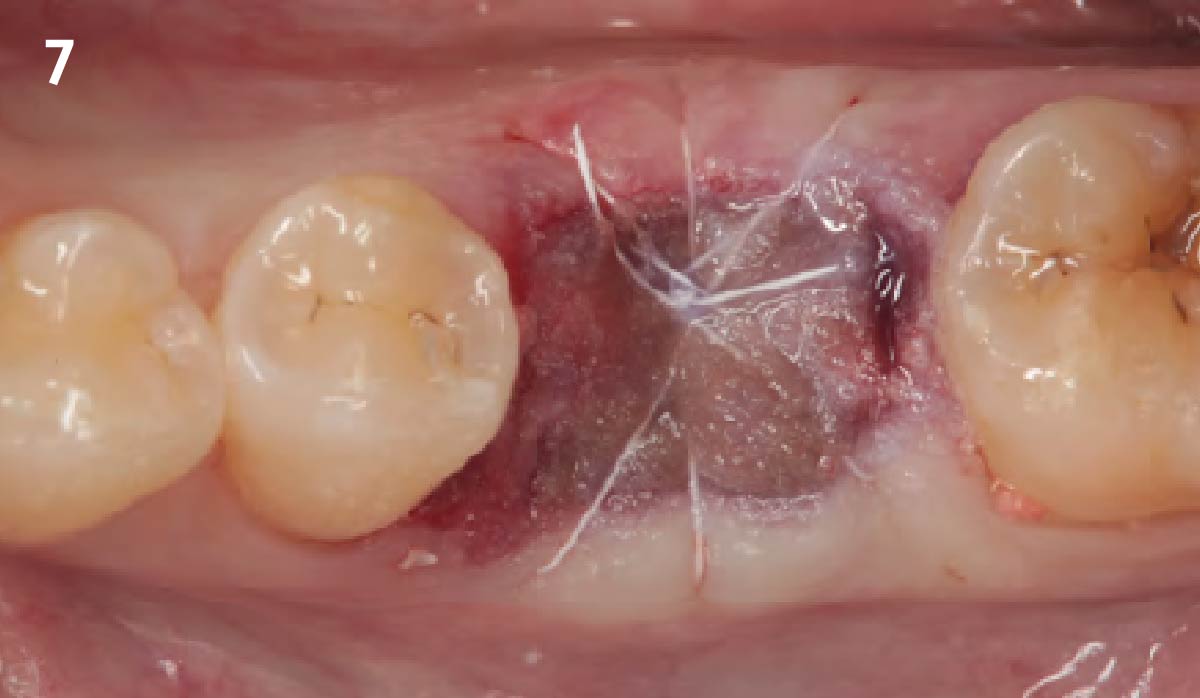
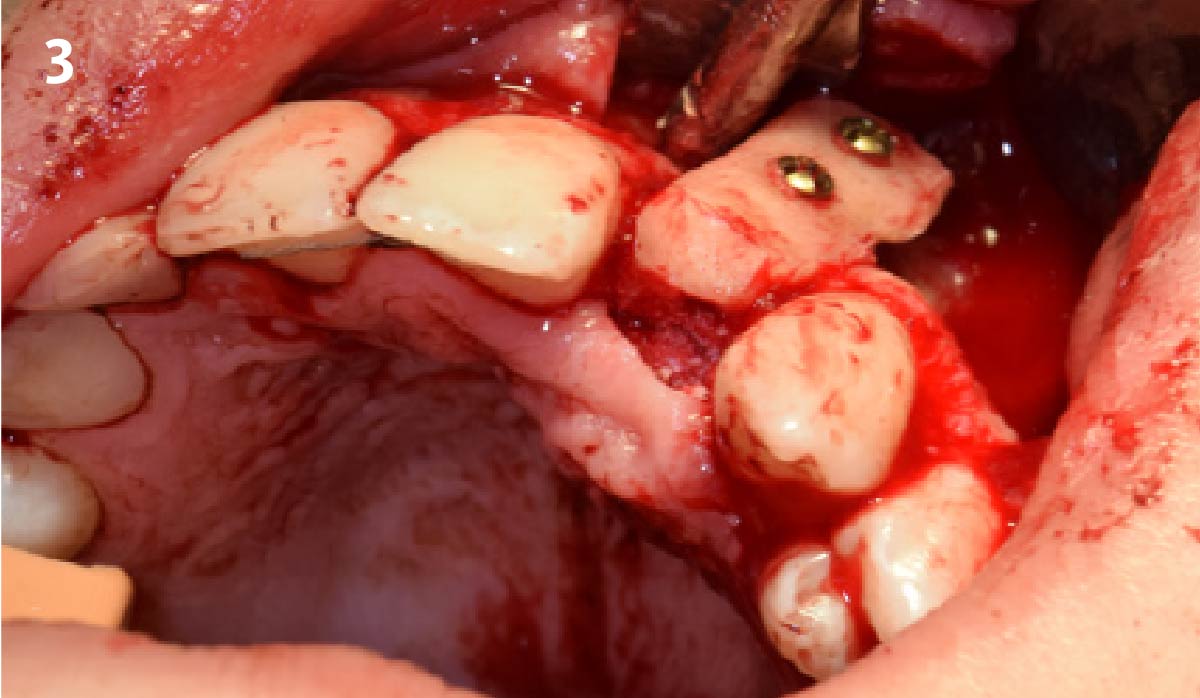
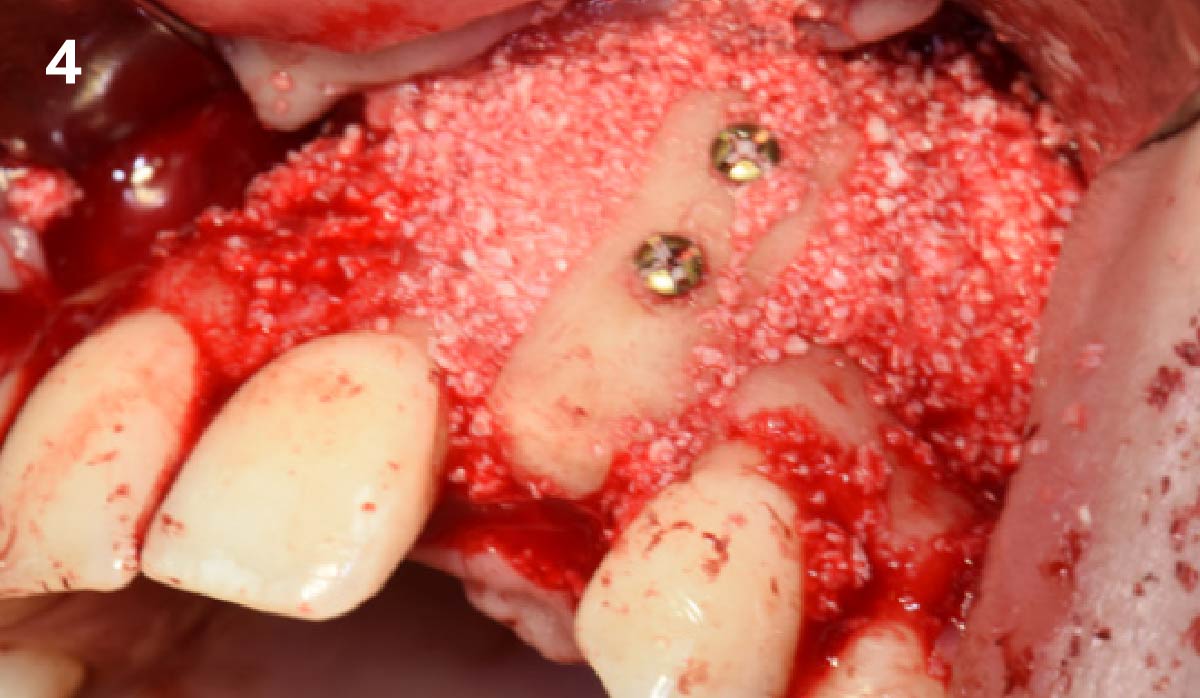
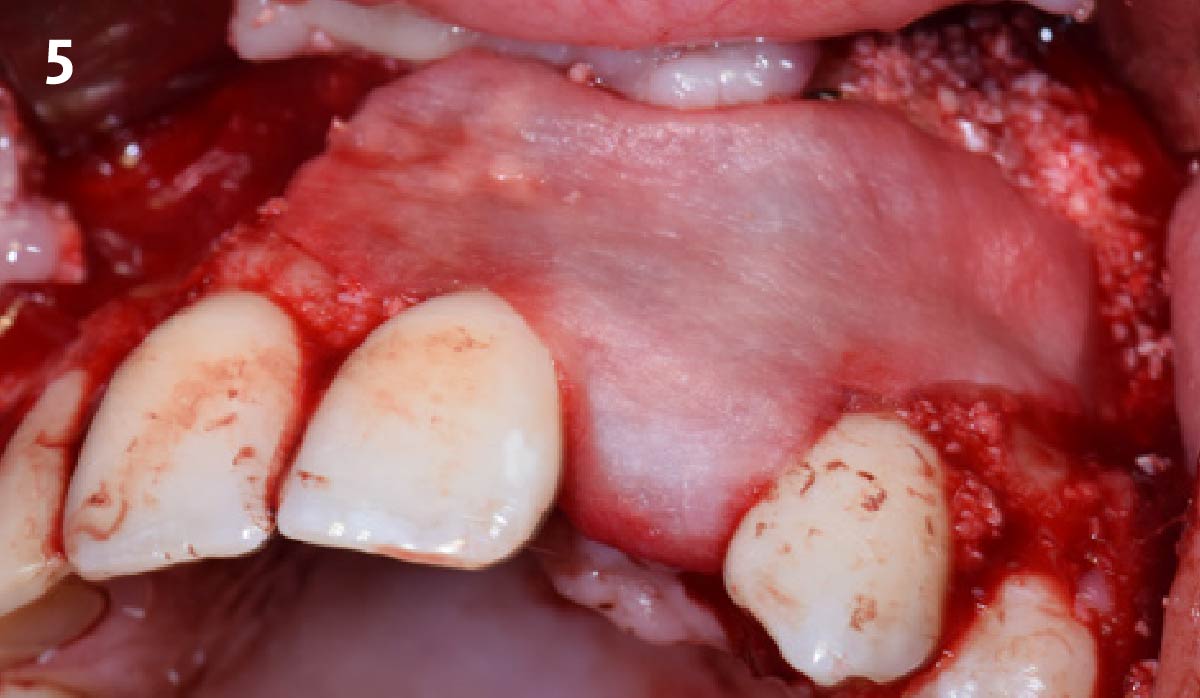
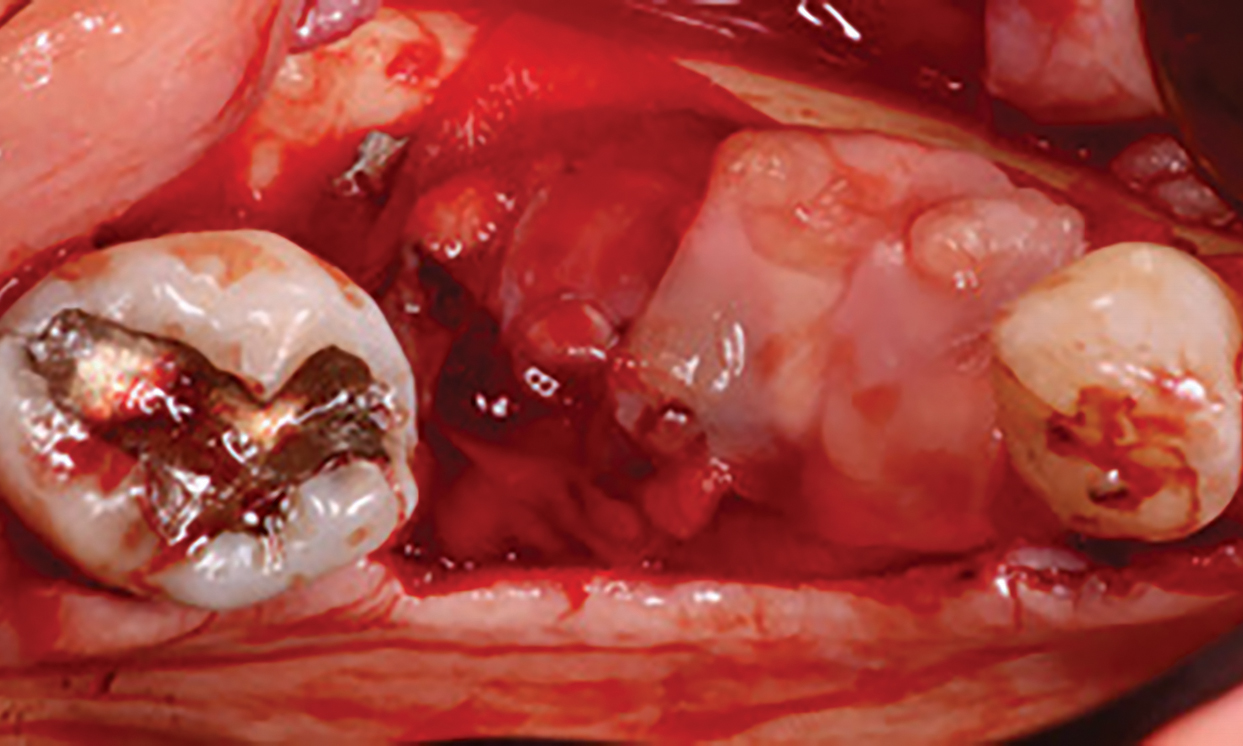
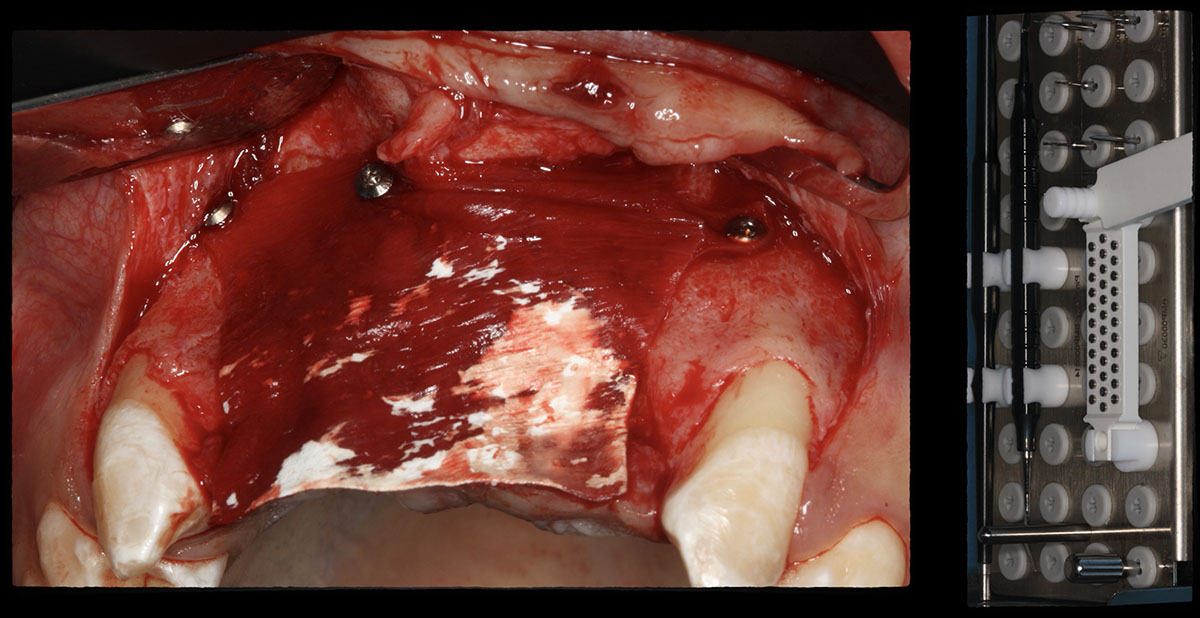
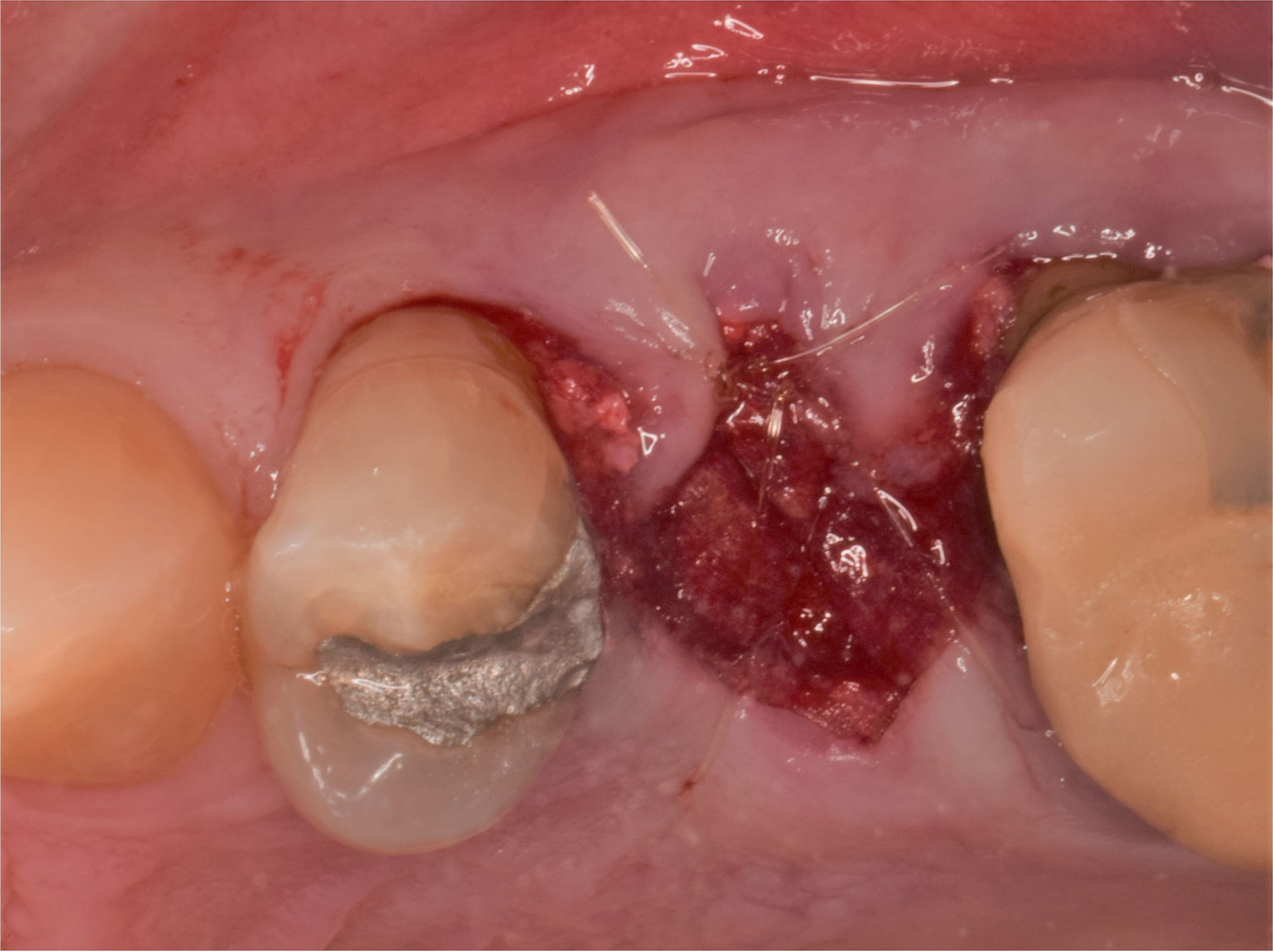
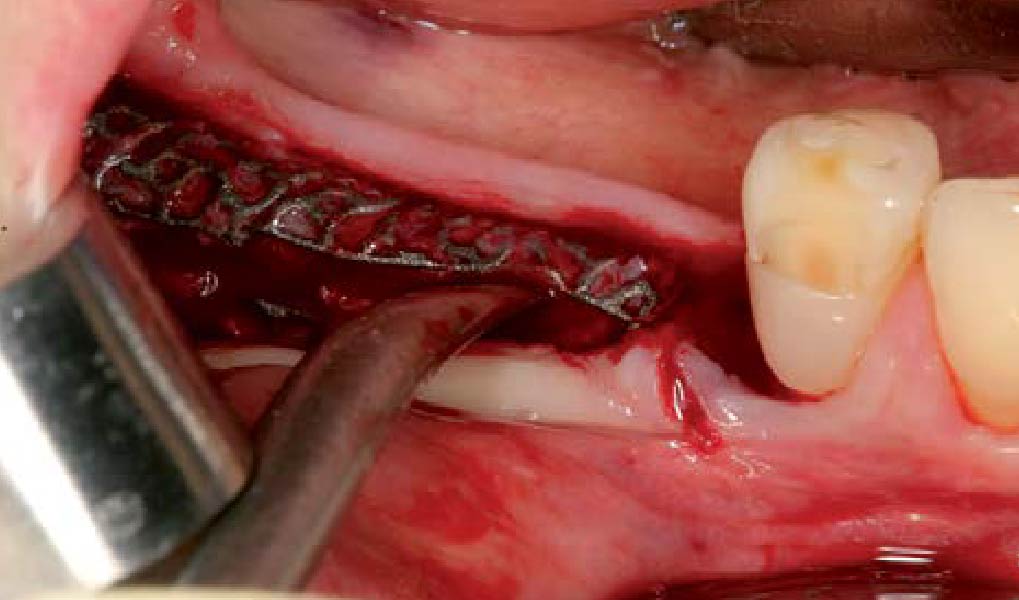
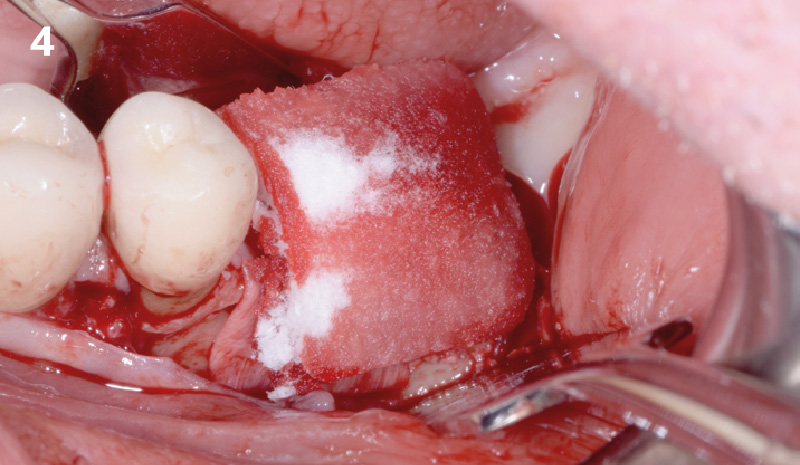
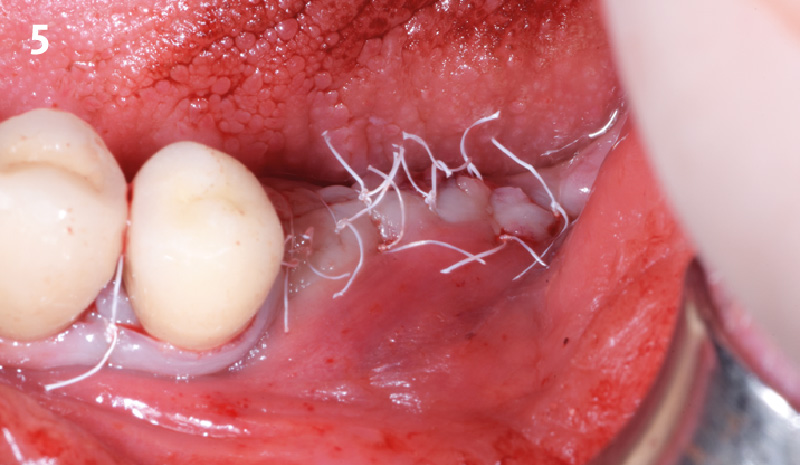
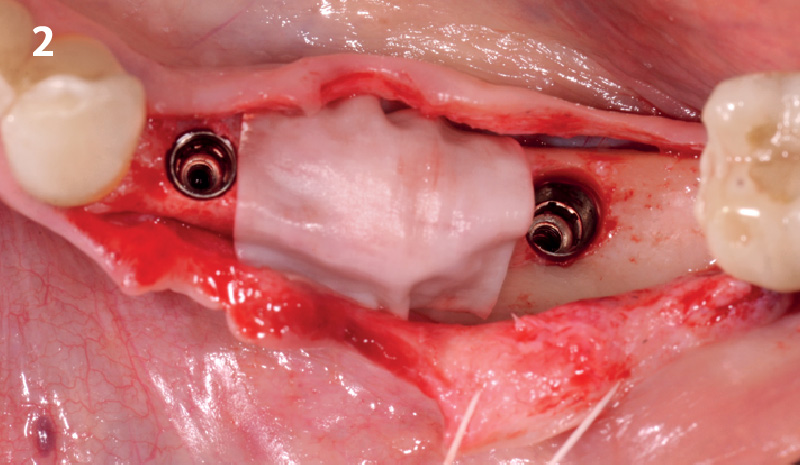
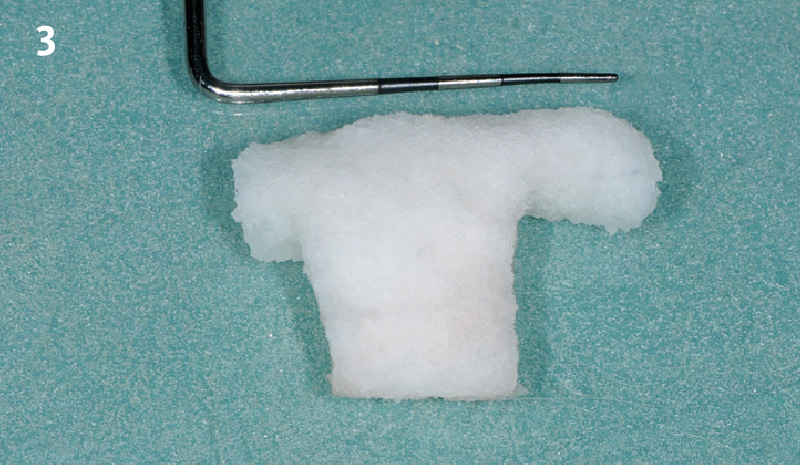
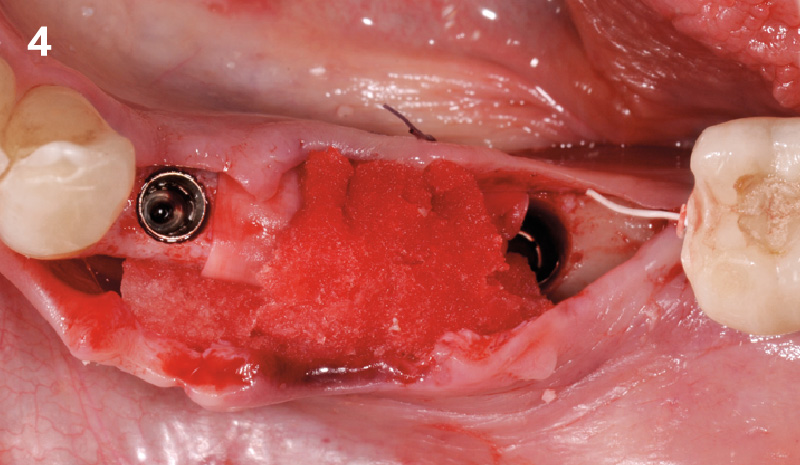
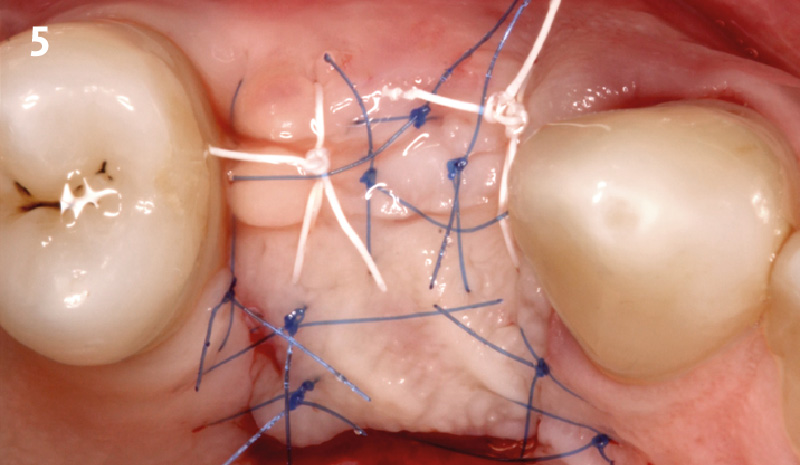
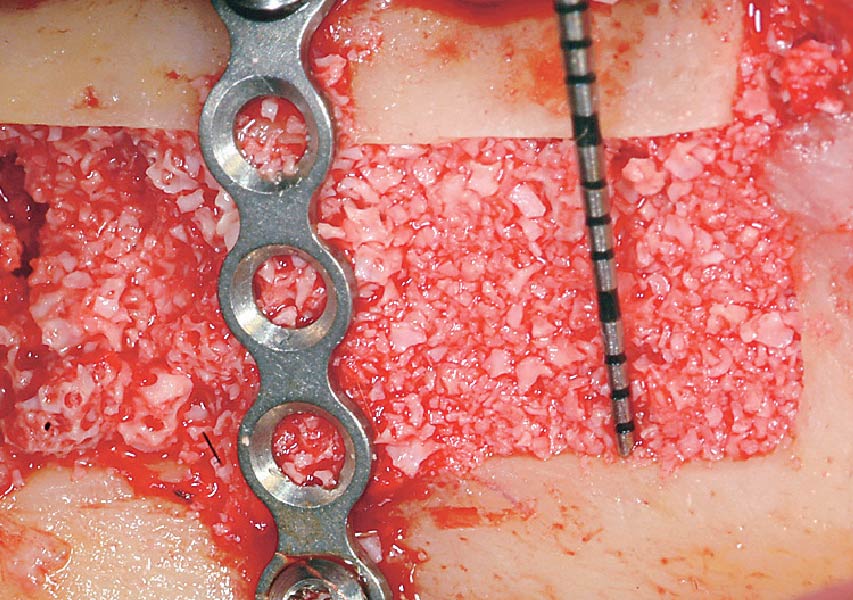
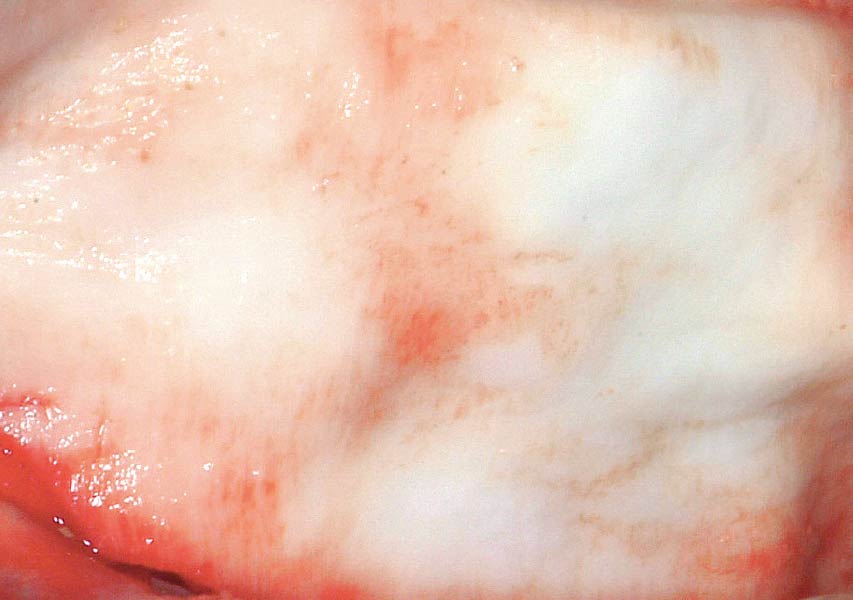
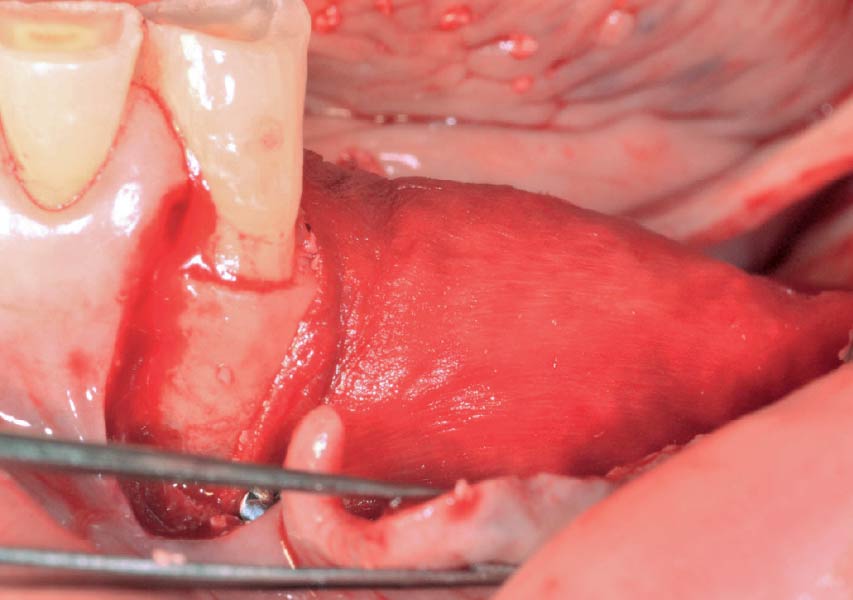
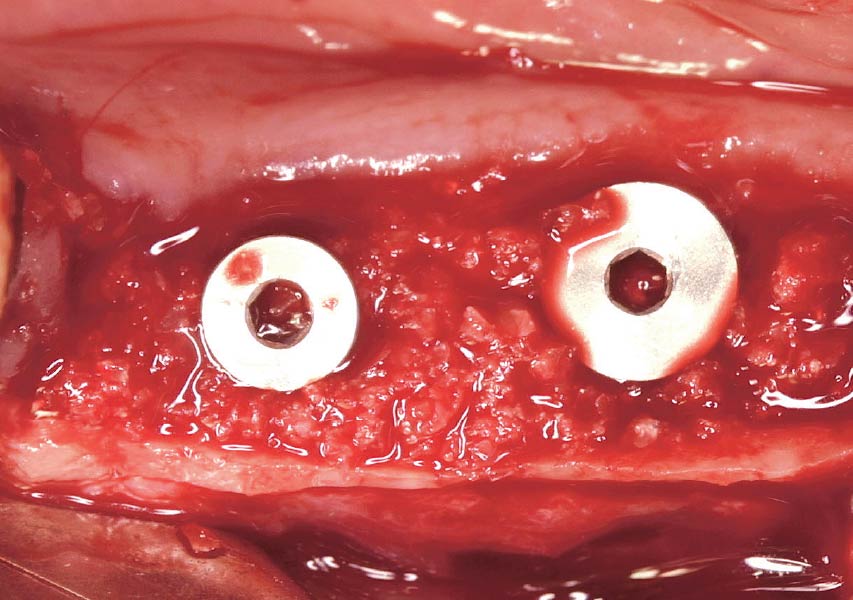
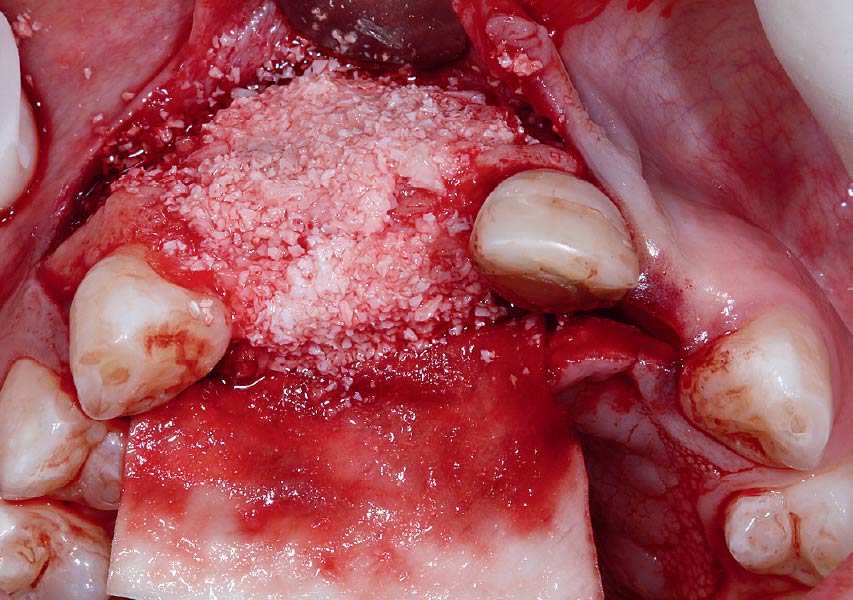
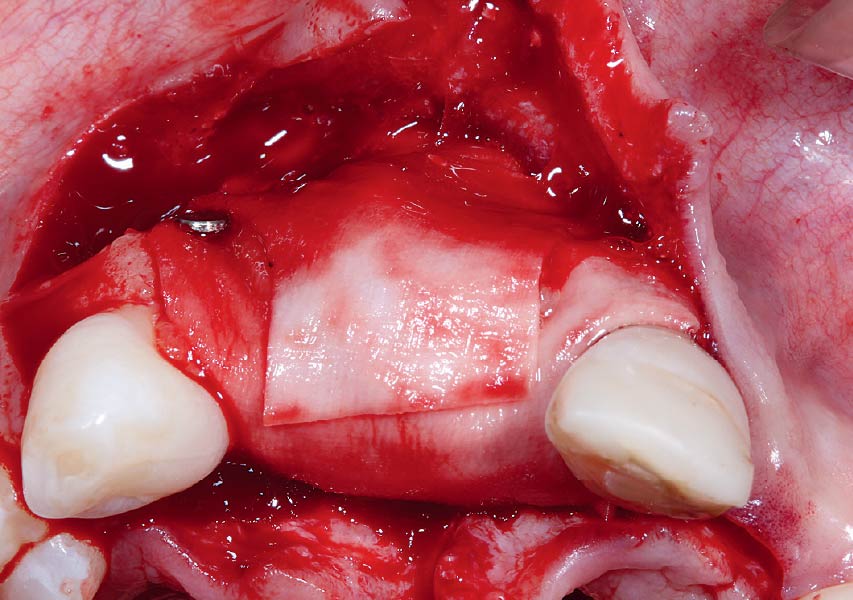
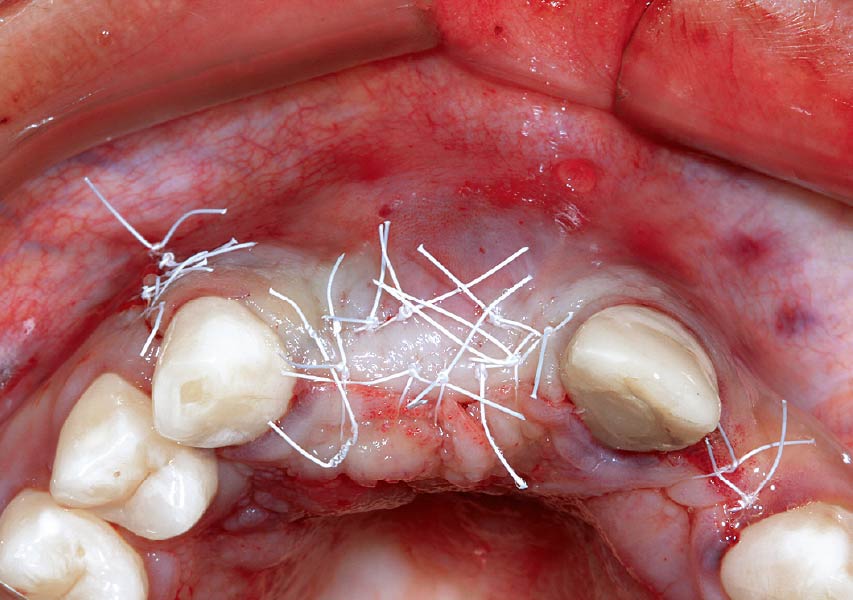
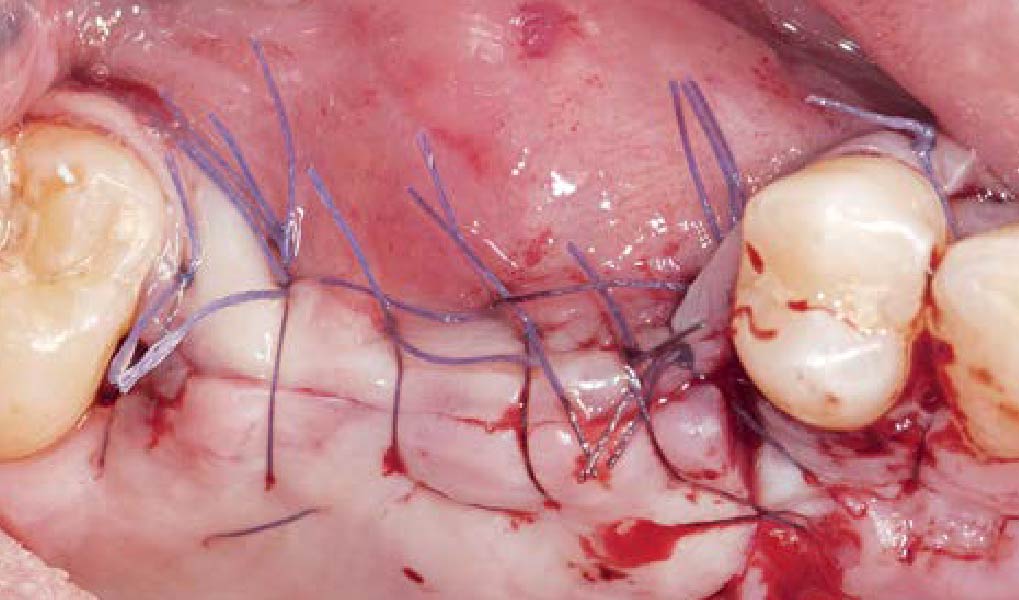
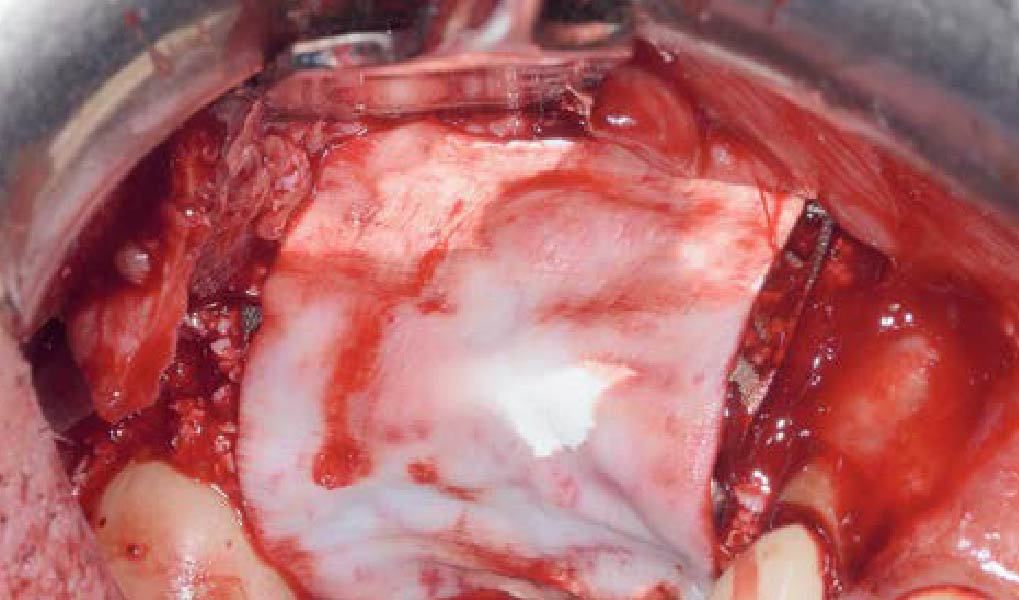
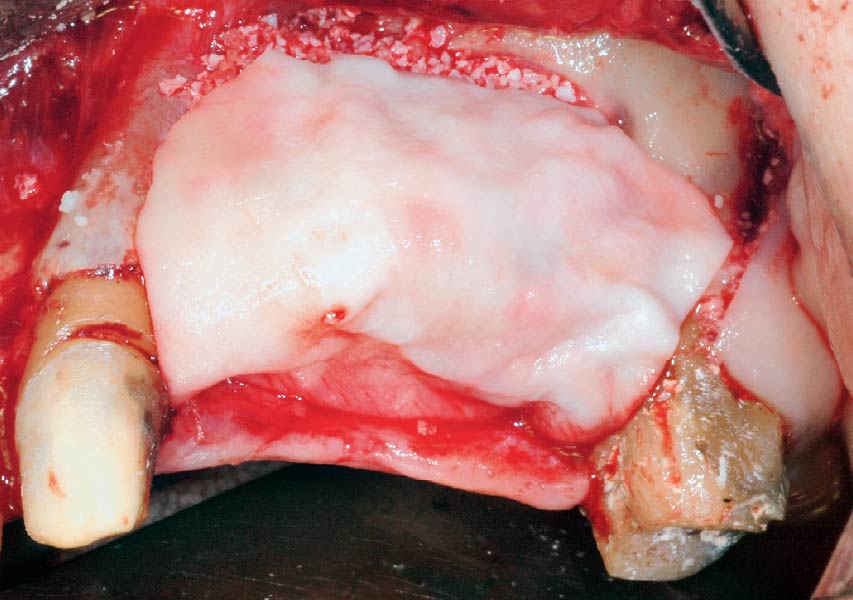
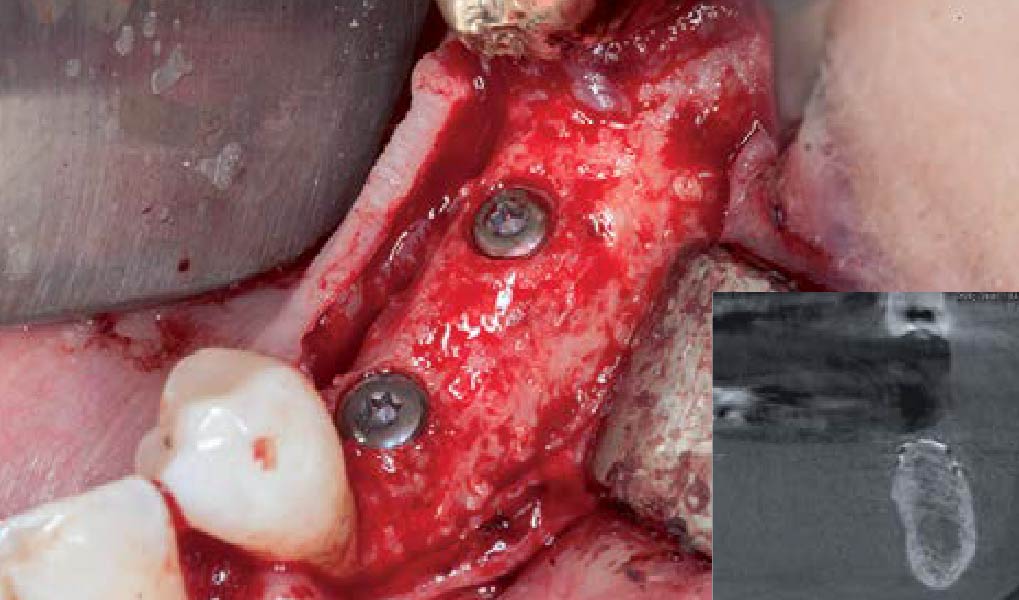
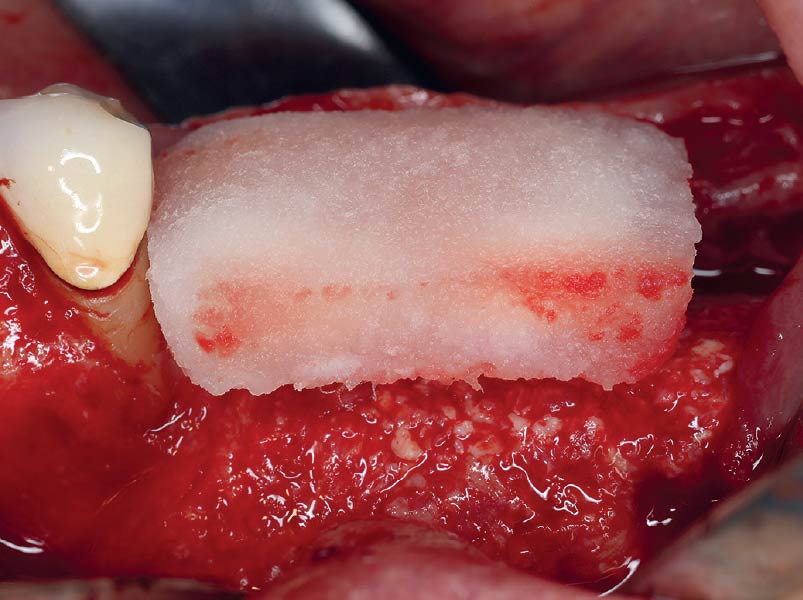
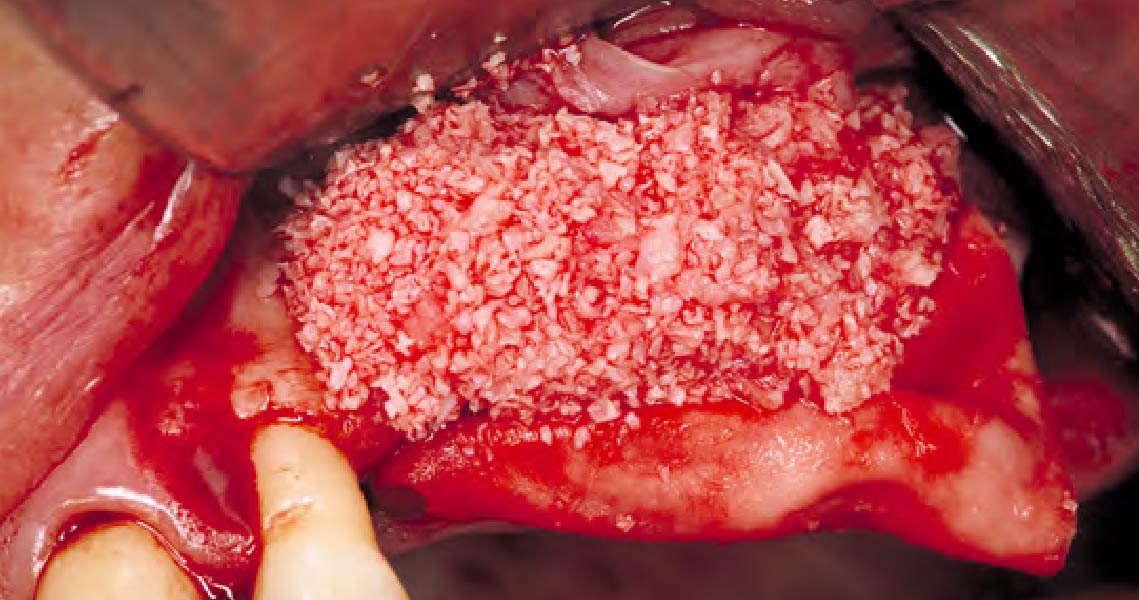
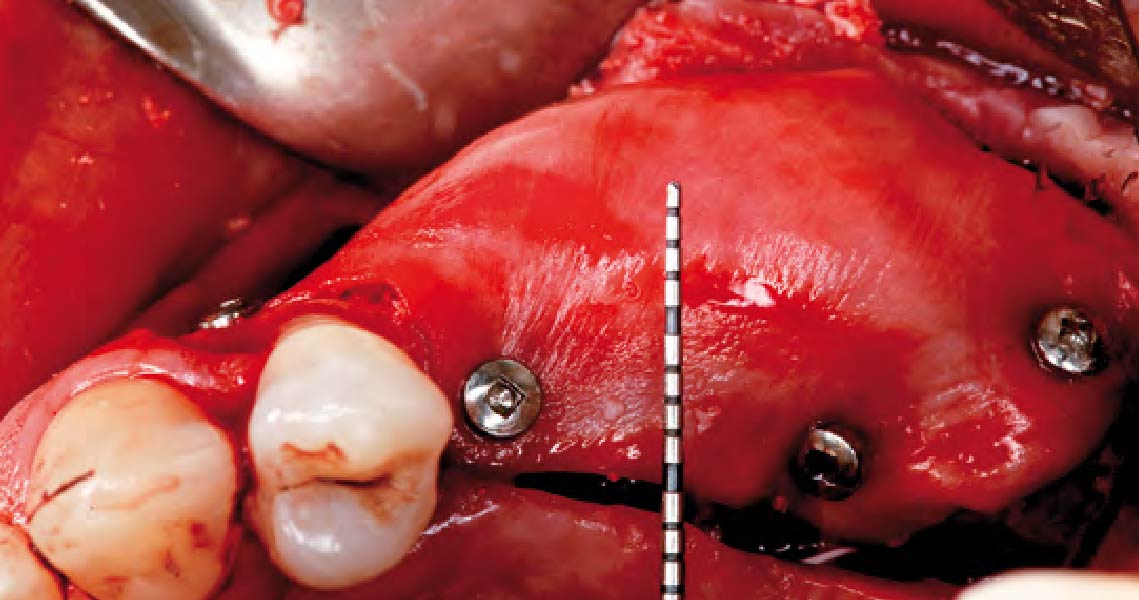
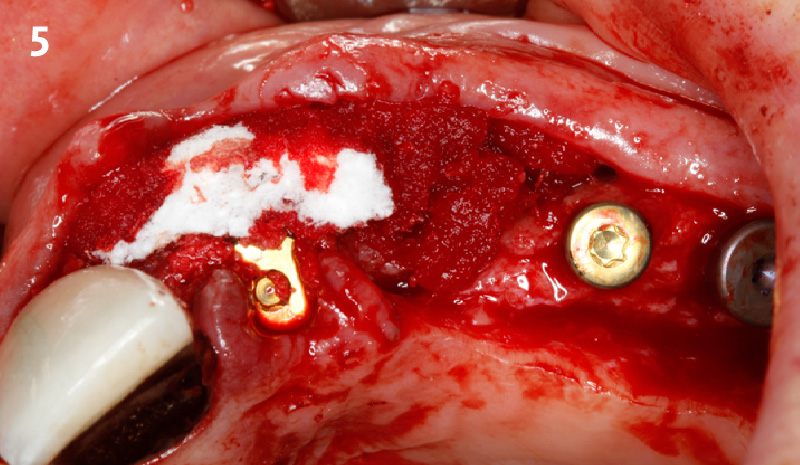
Geistlich Bio-Oss® and autologous bone mixture was placed and covered with Geistlich Bio-Gide®. Pins and screws were utilized for fixation to provide primary stability.
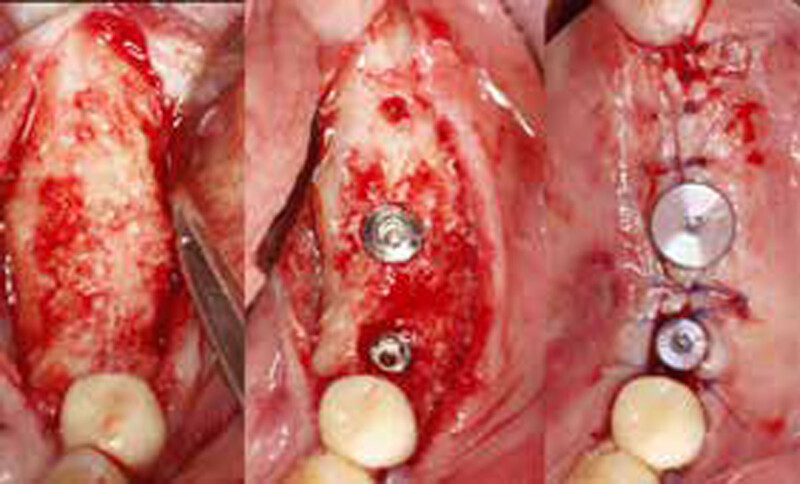
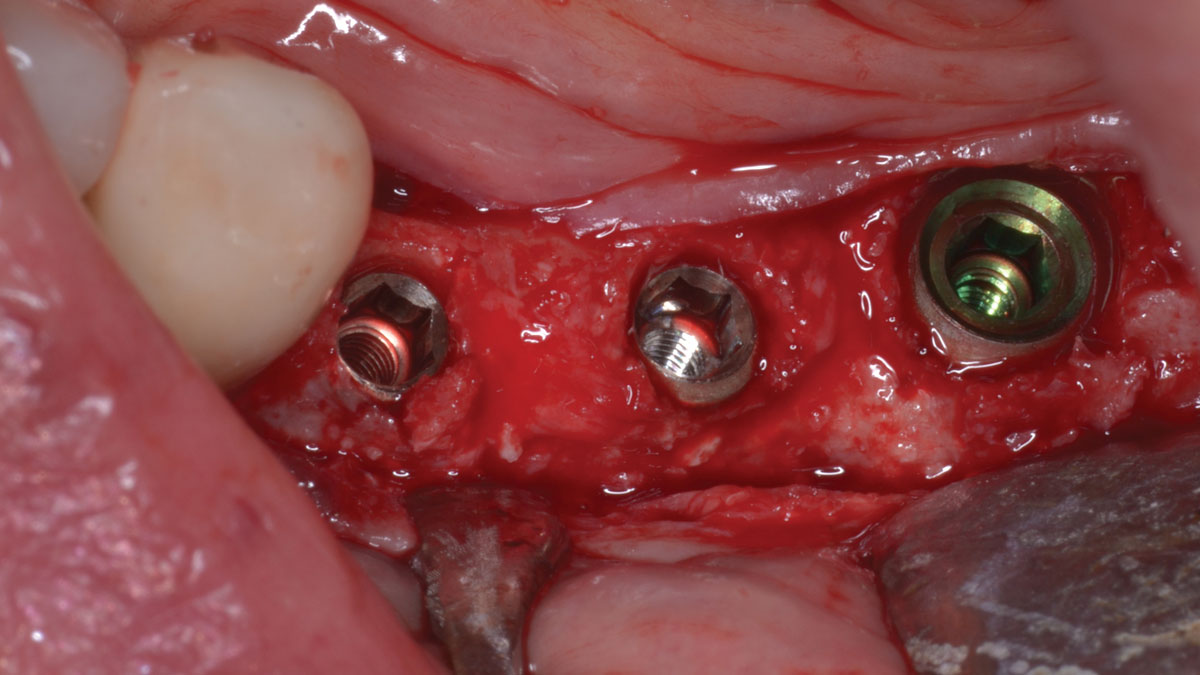
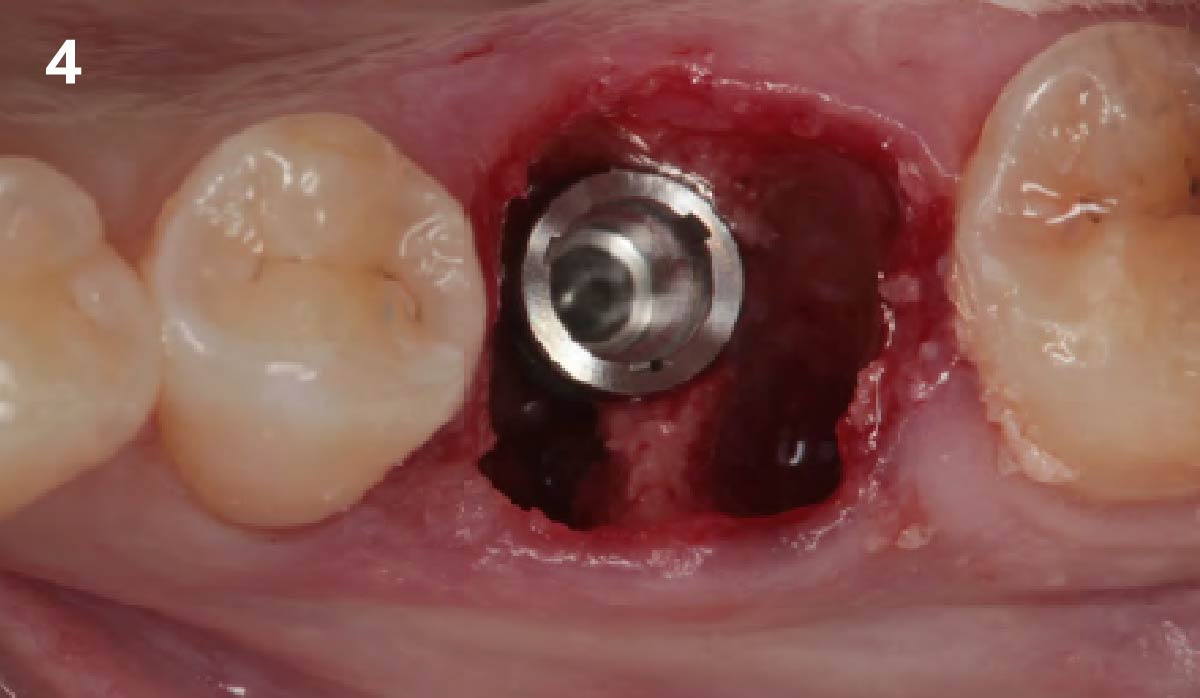
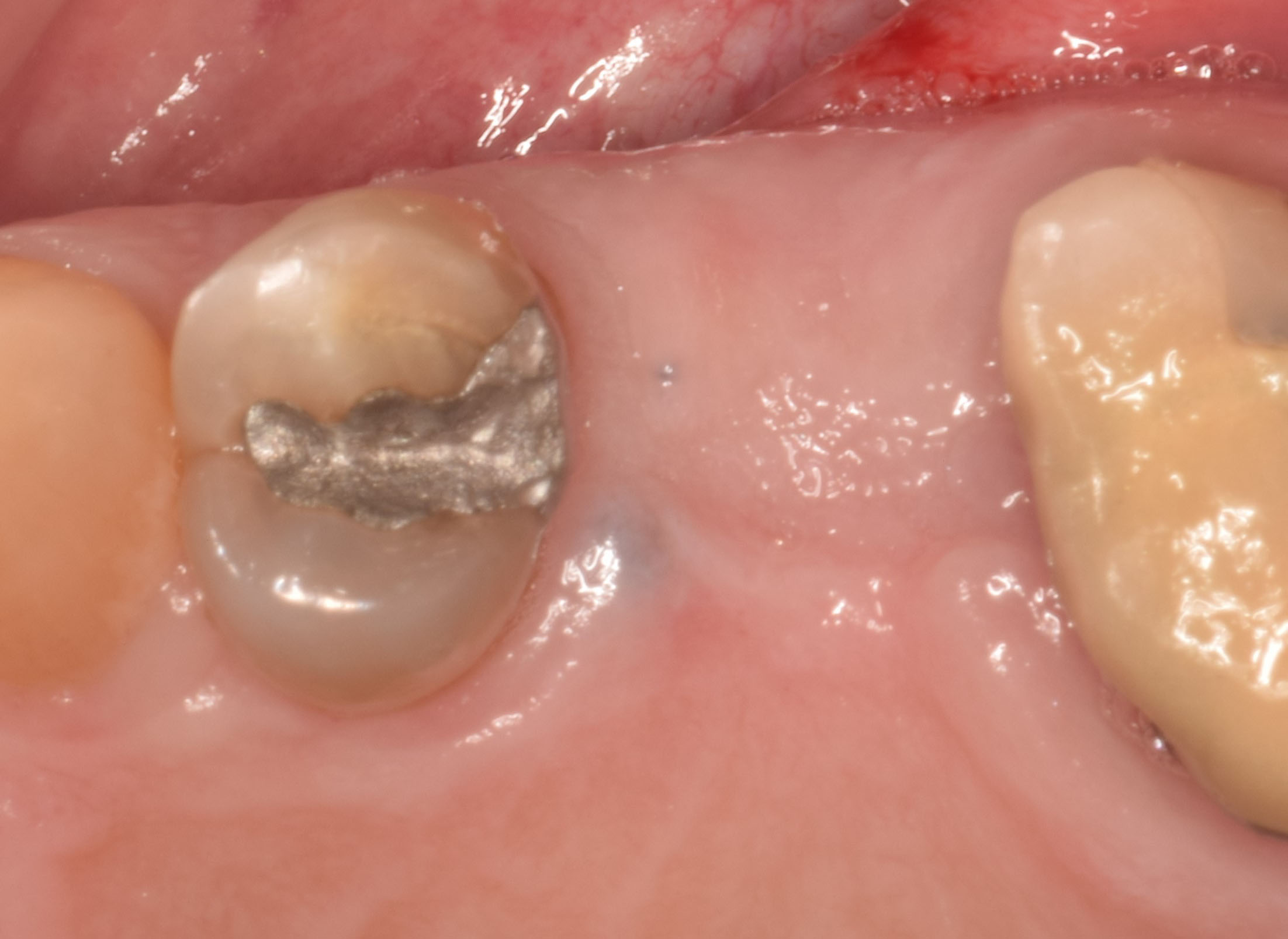
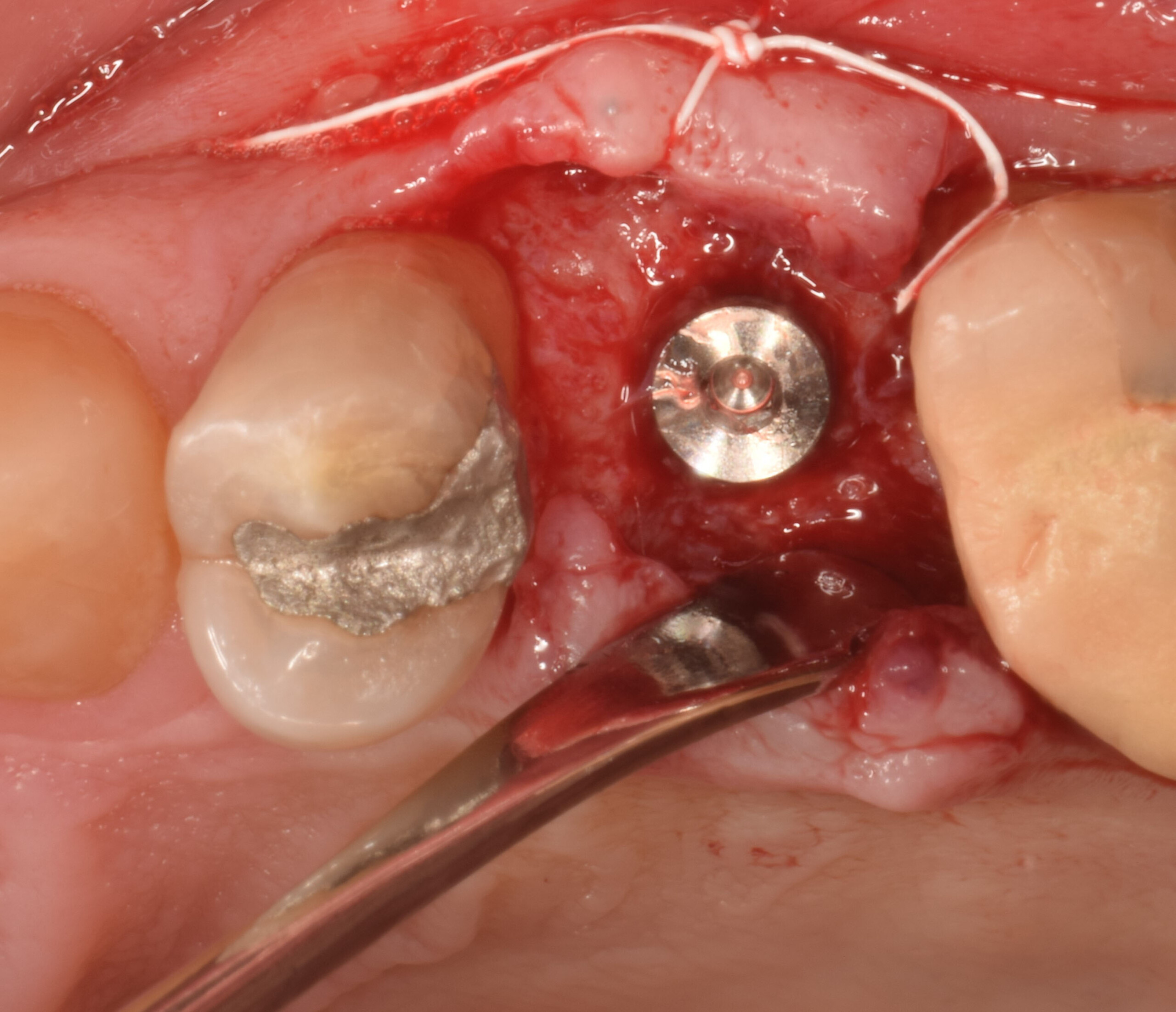
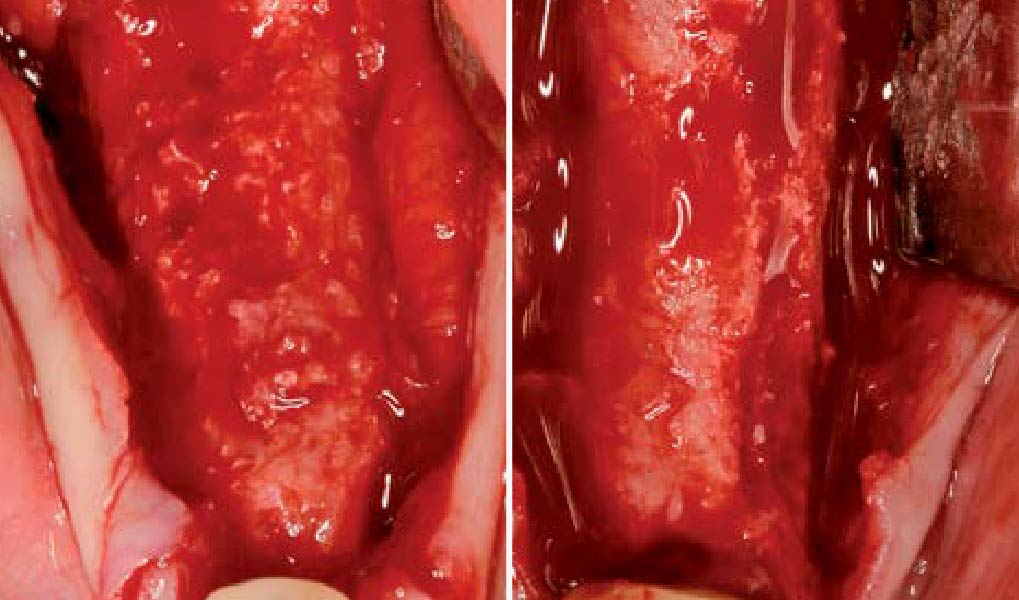
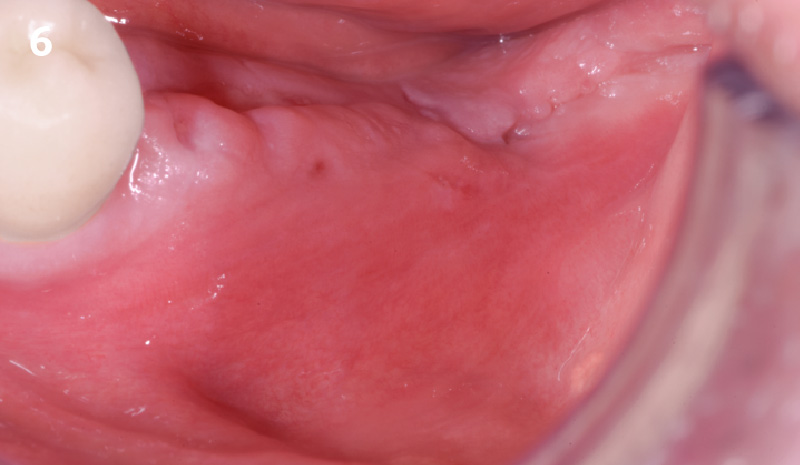
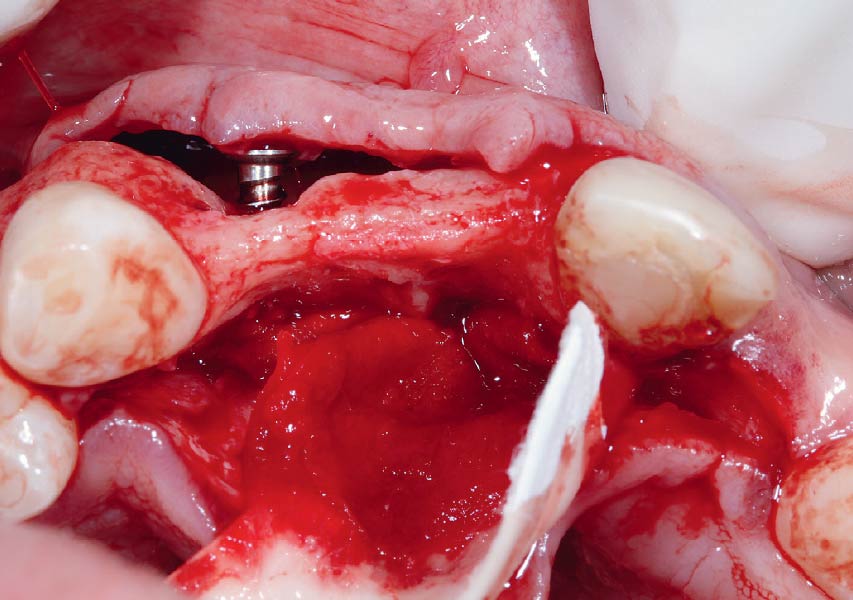
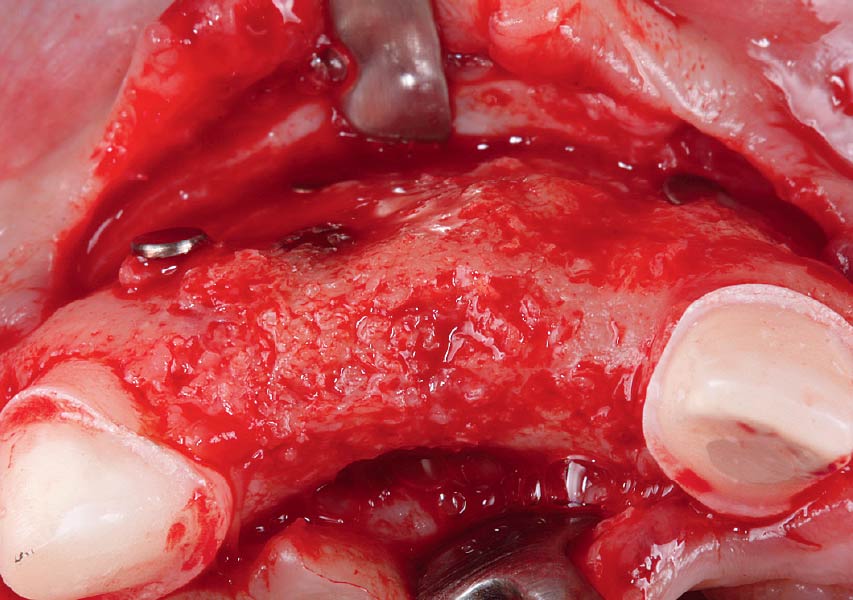
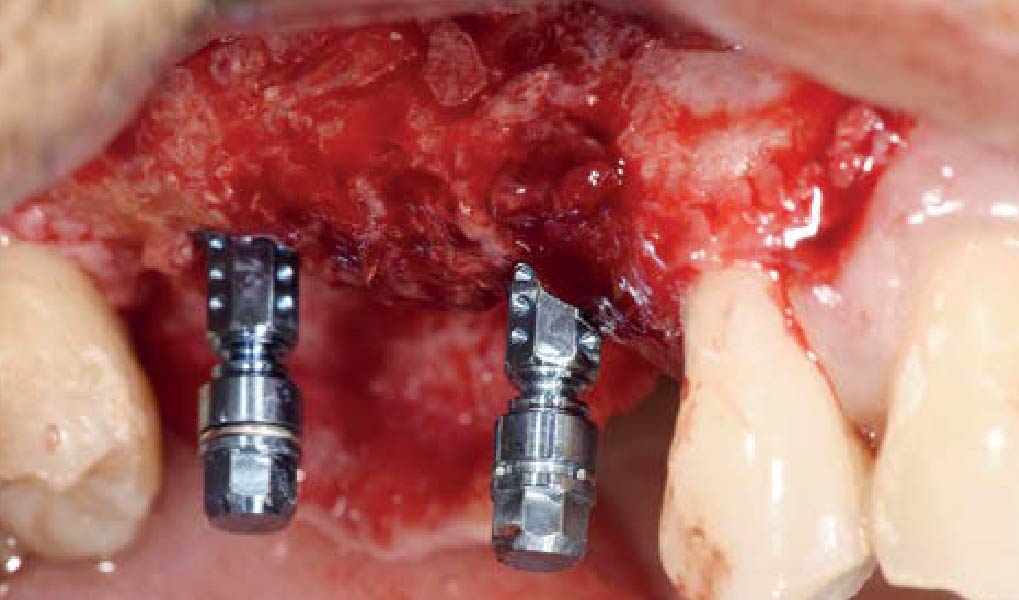
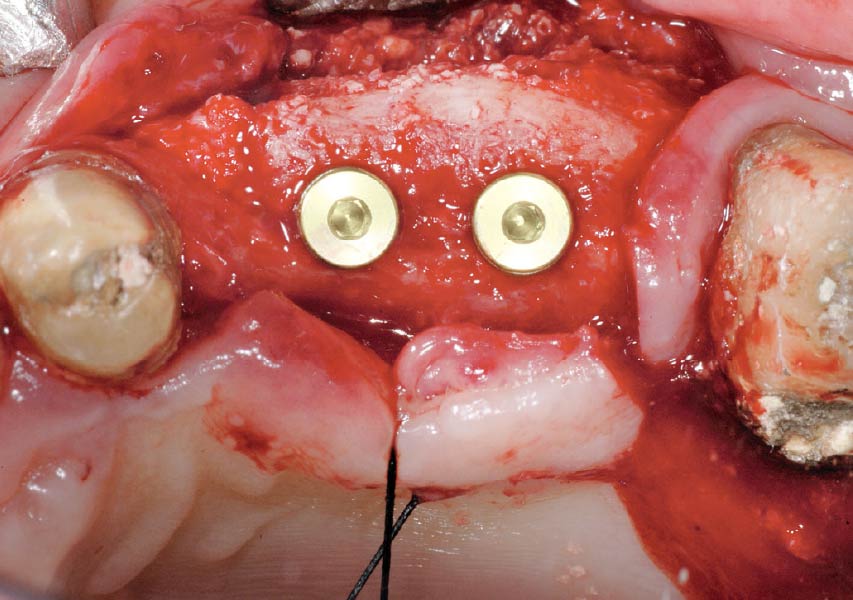
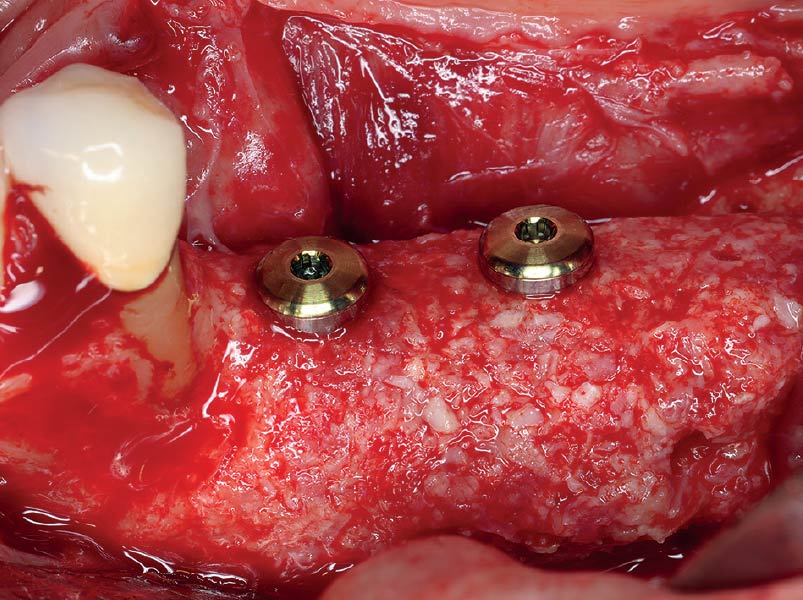
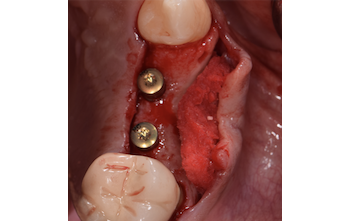
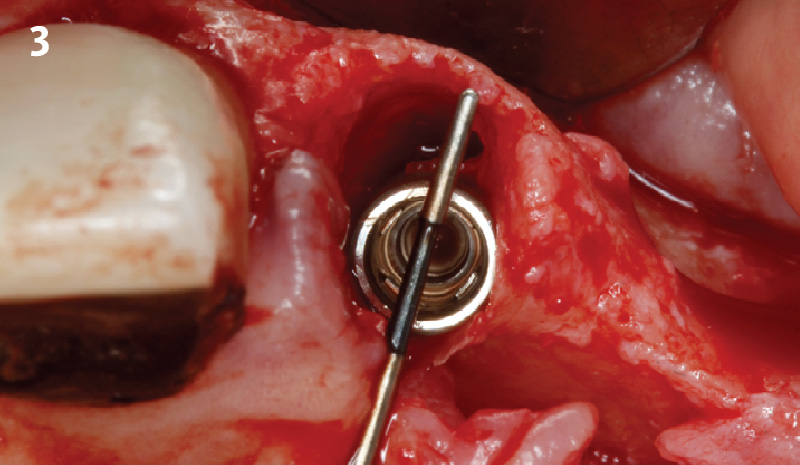
Re-entry 8 months post-grafting: sufficient bone has been regenerated to place implants in the desired positions.
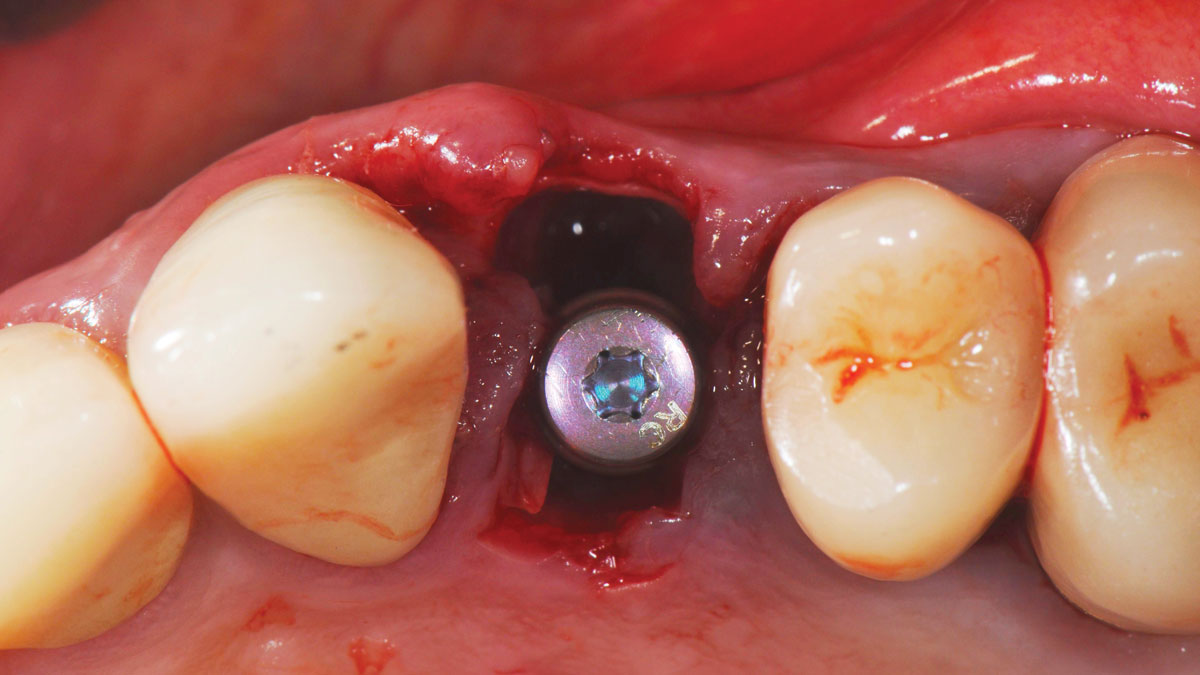
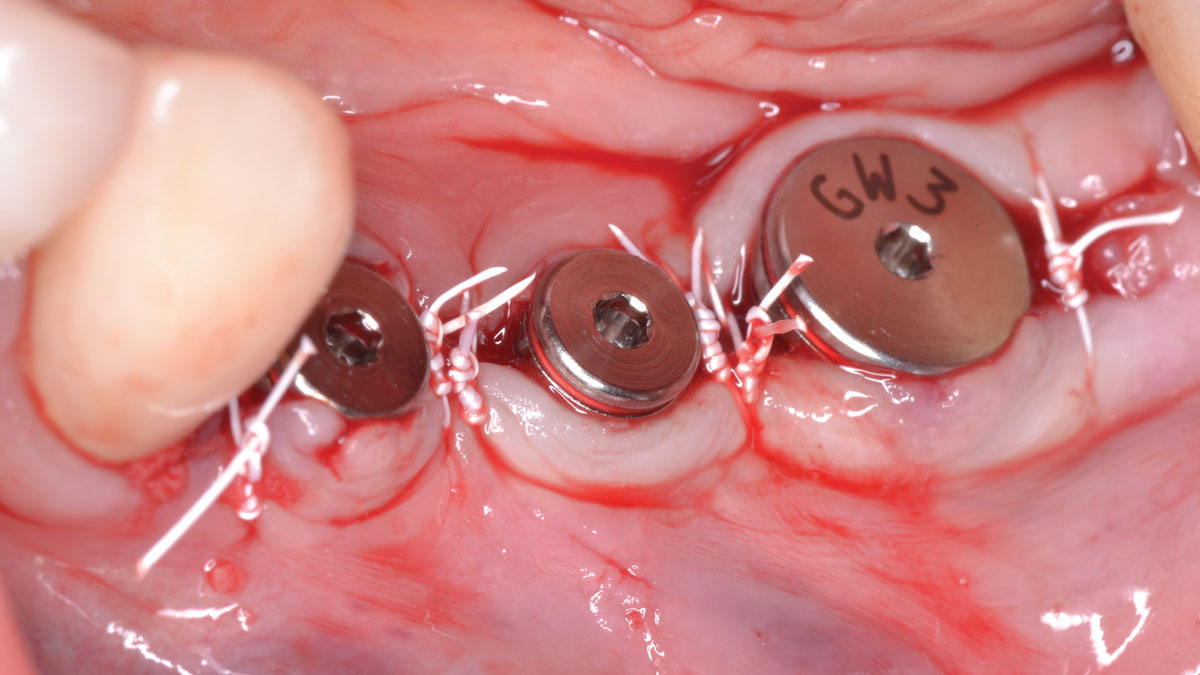
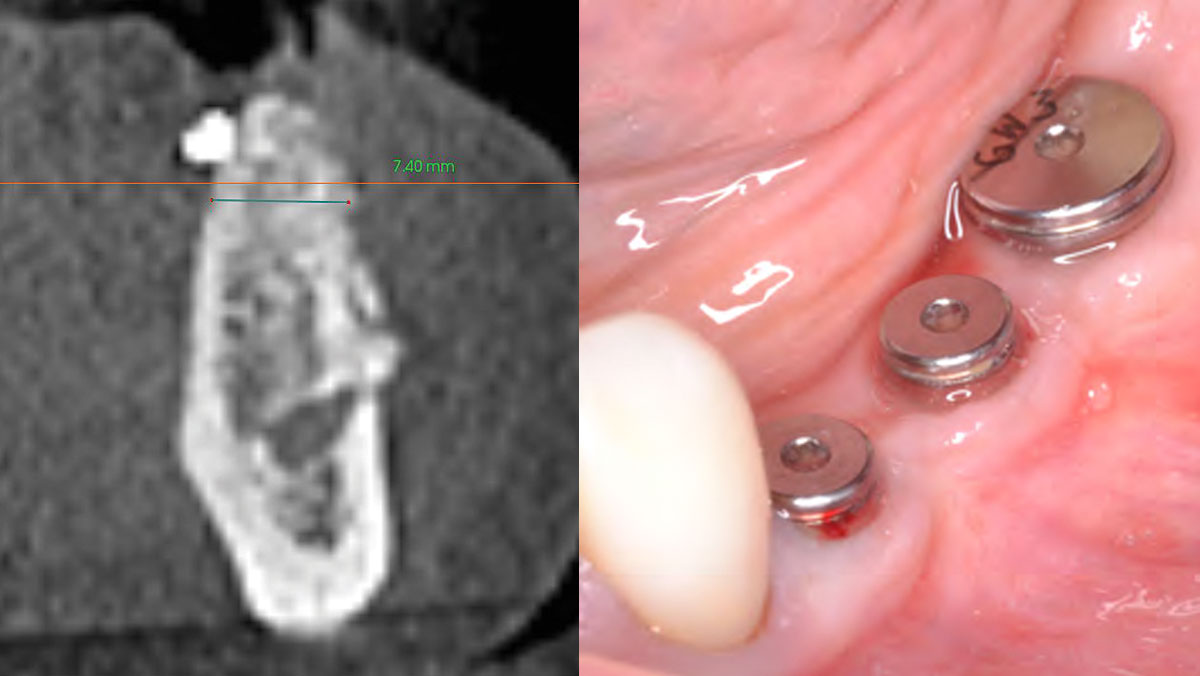
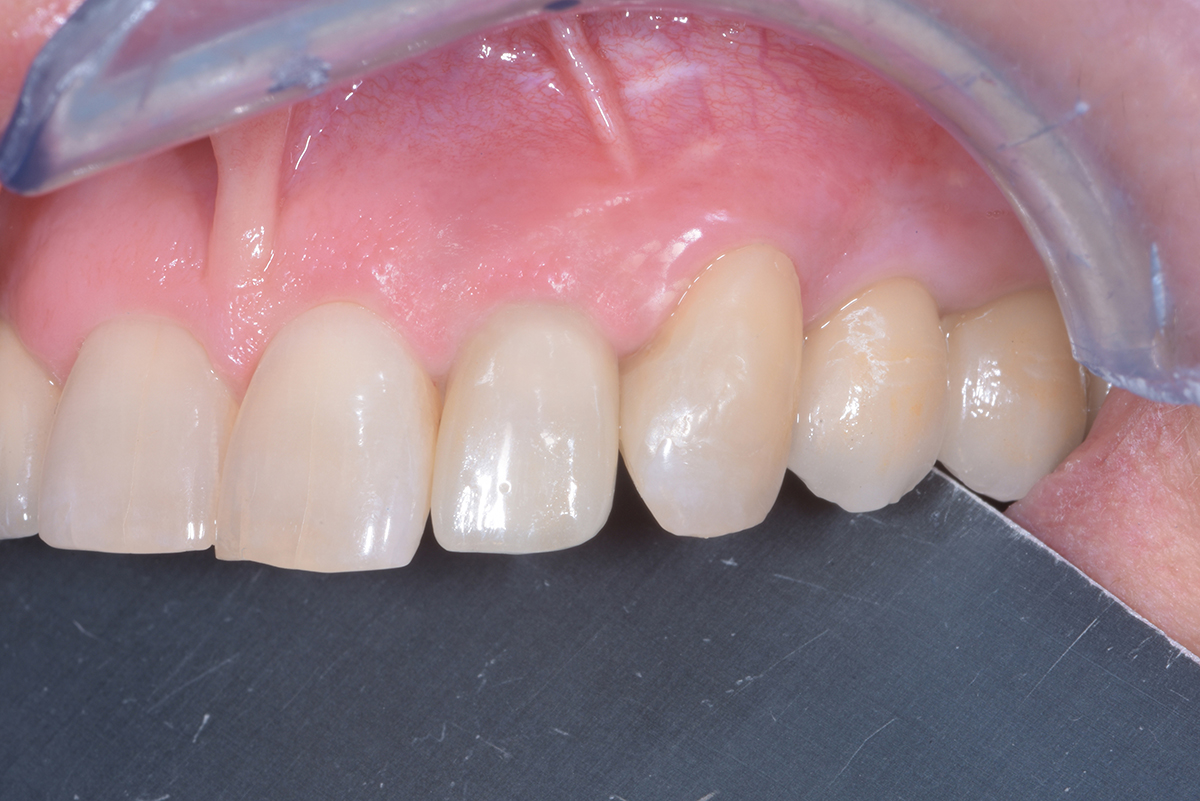
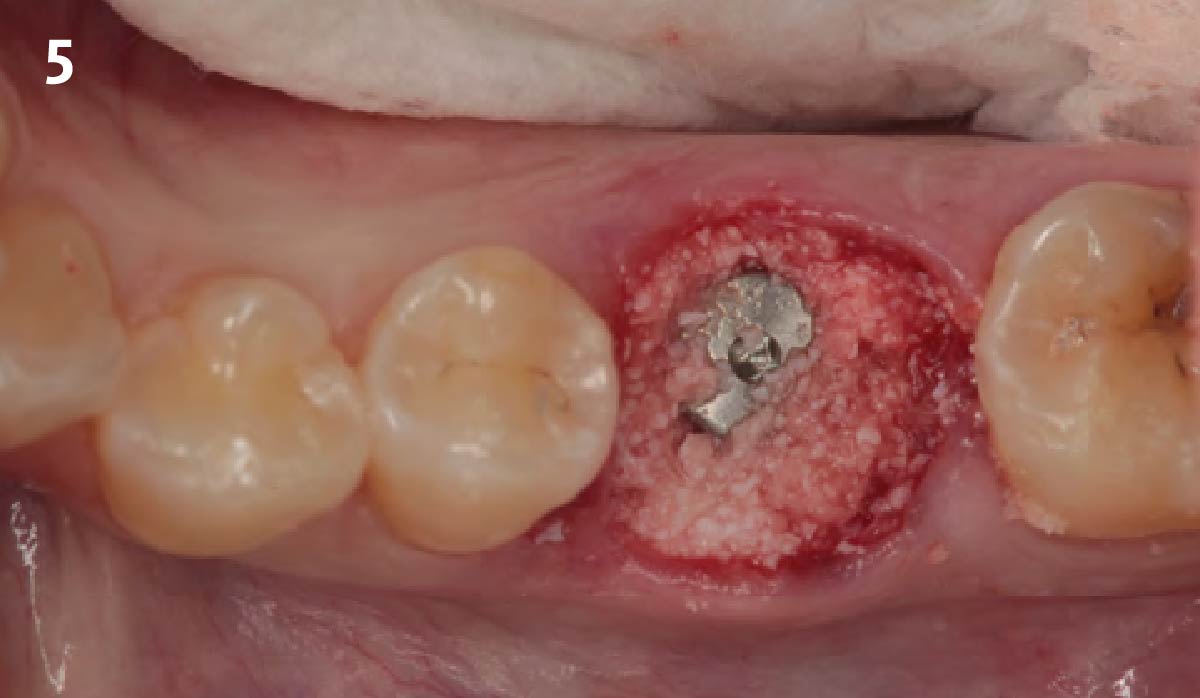
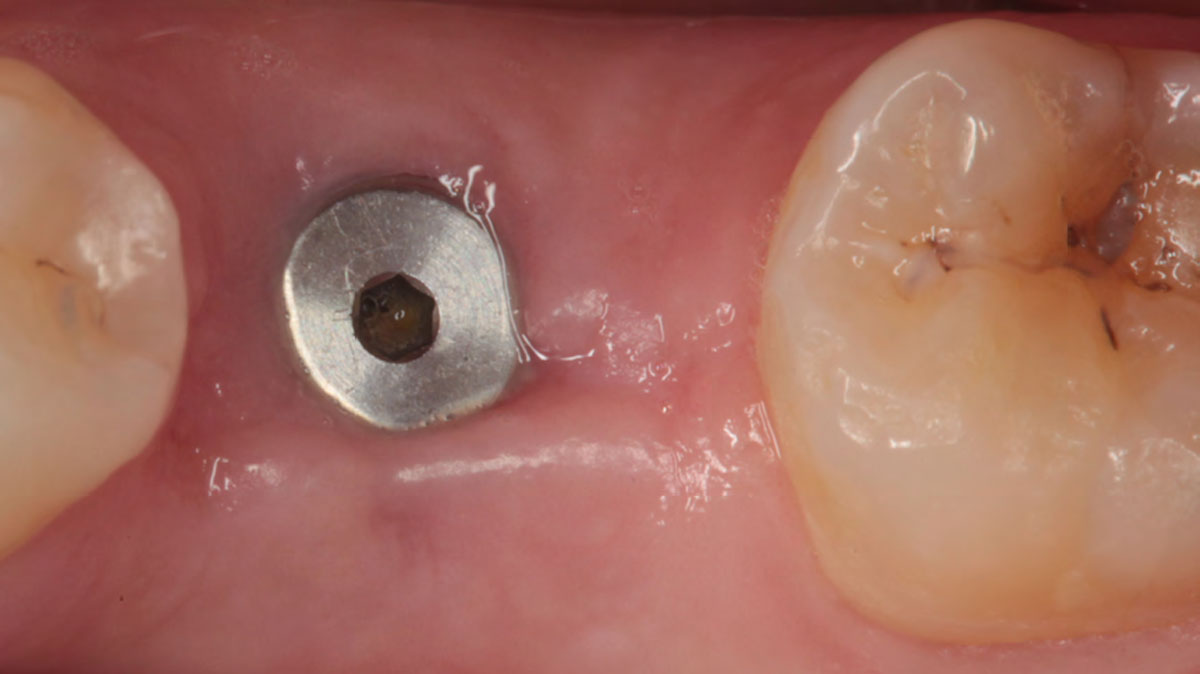
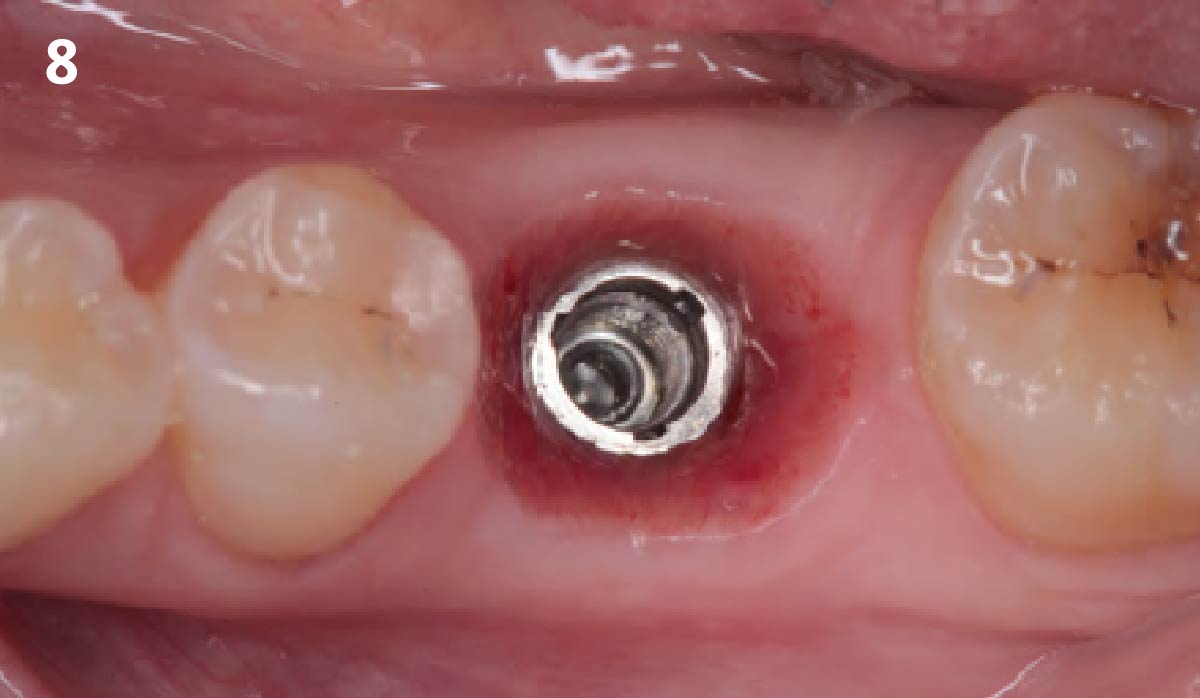
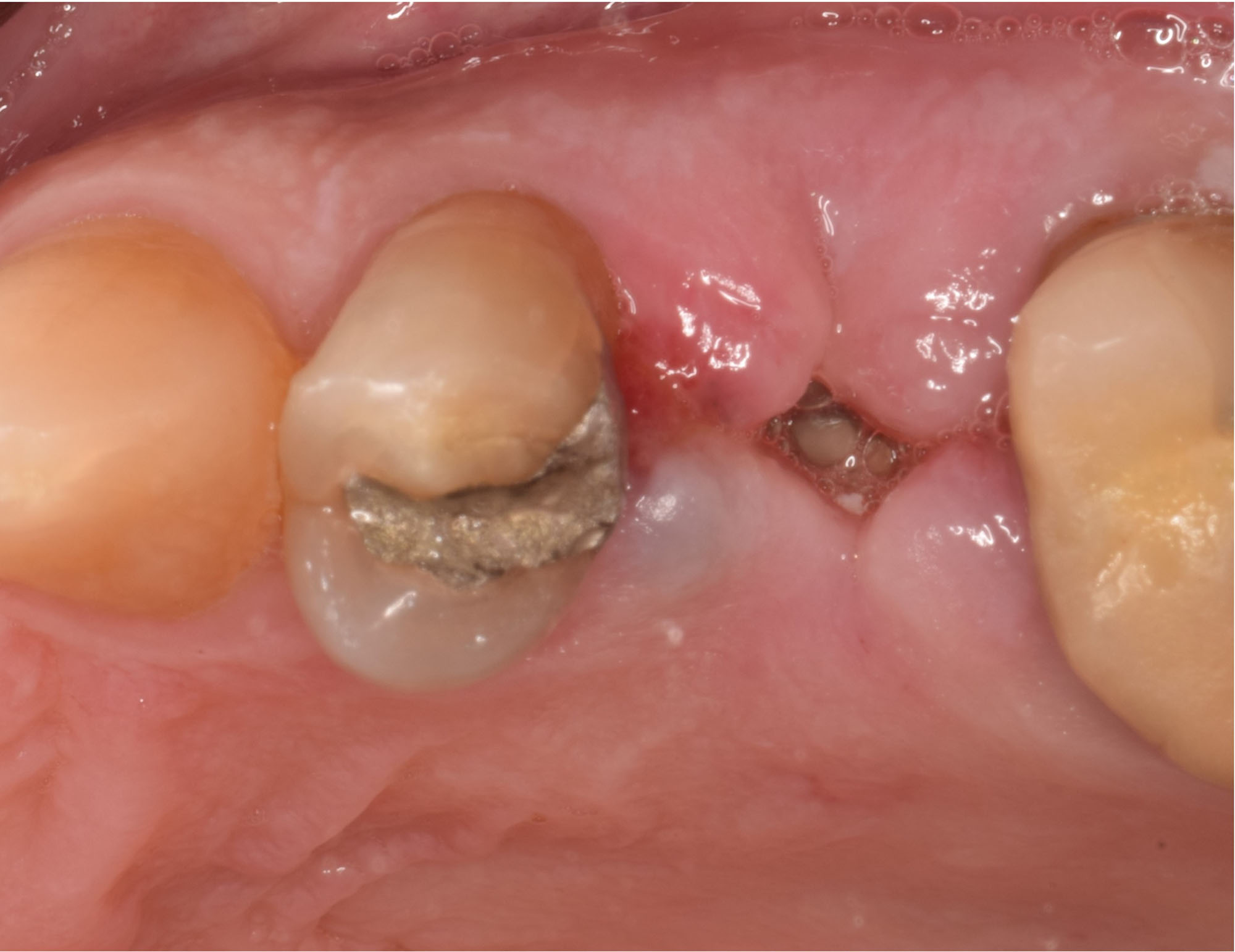
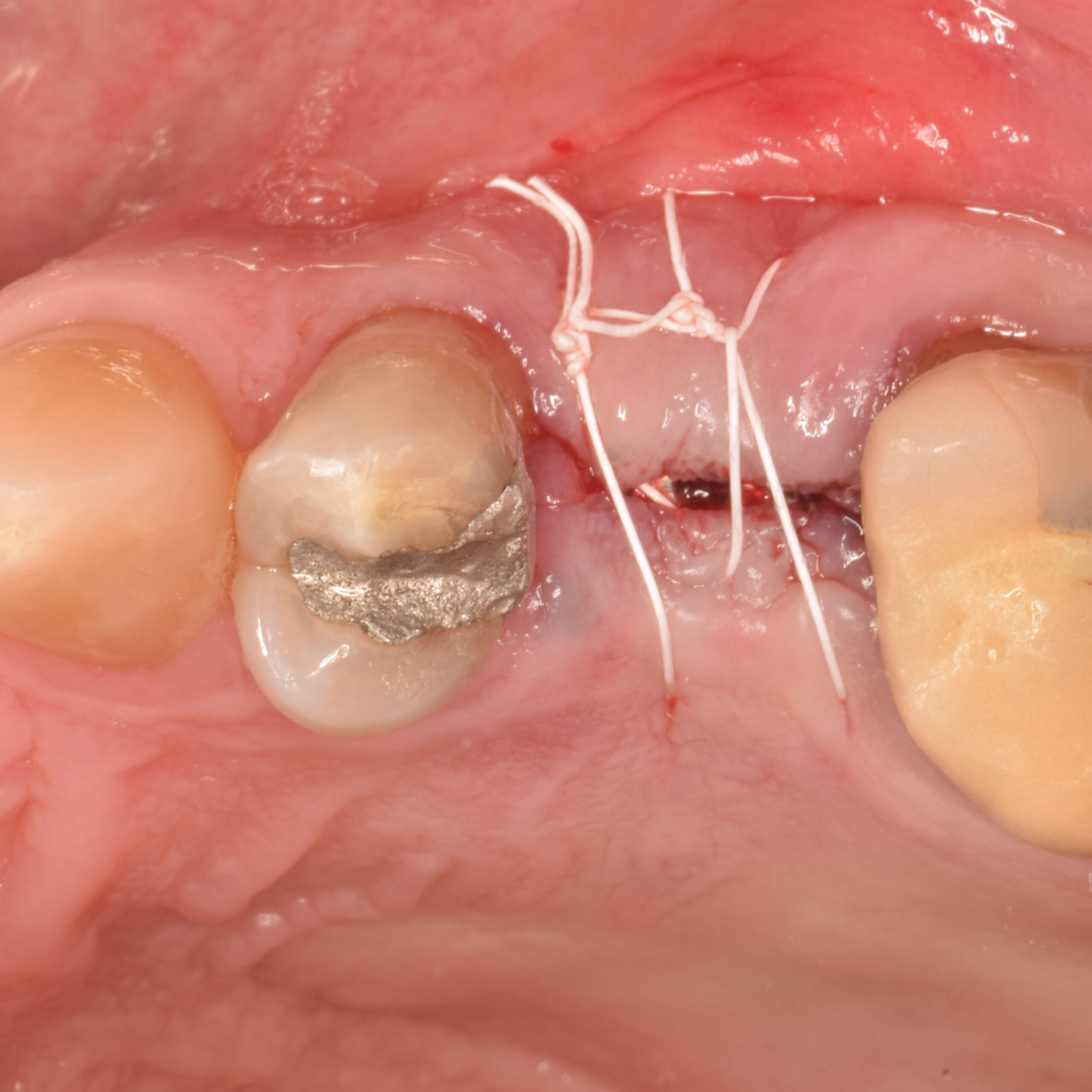
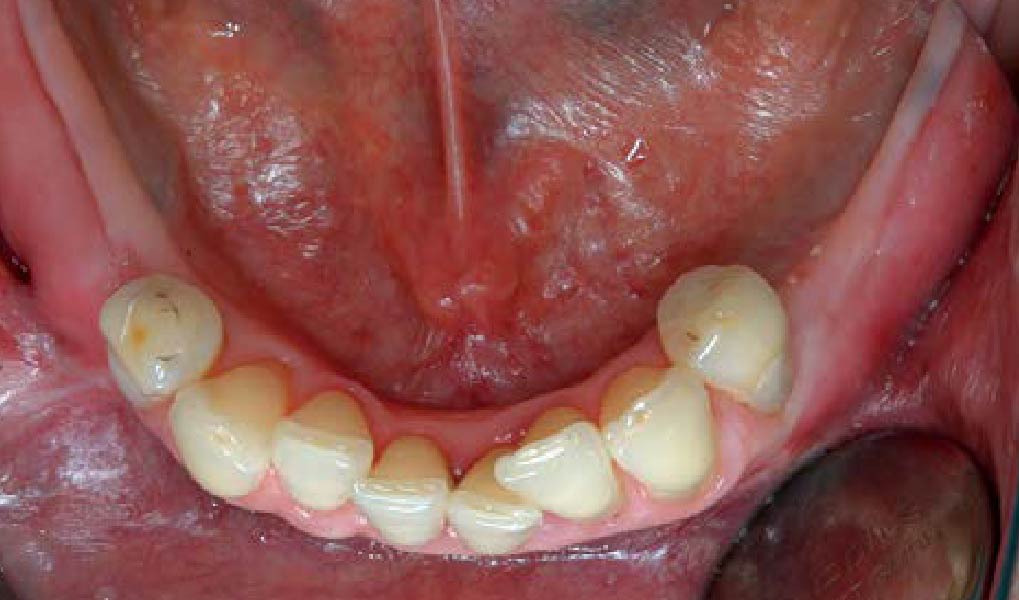
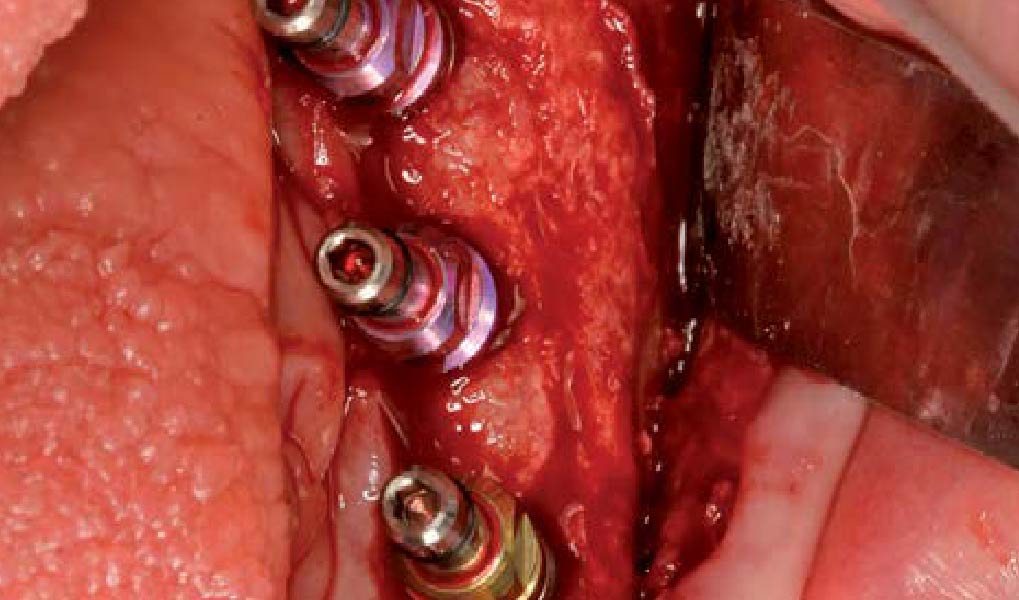
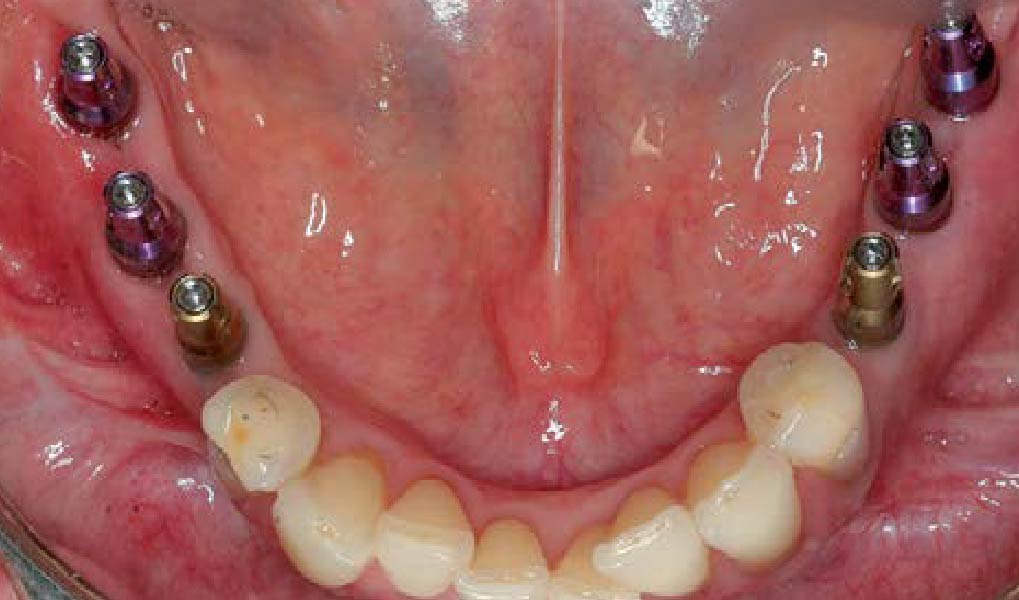
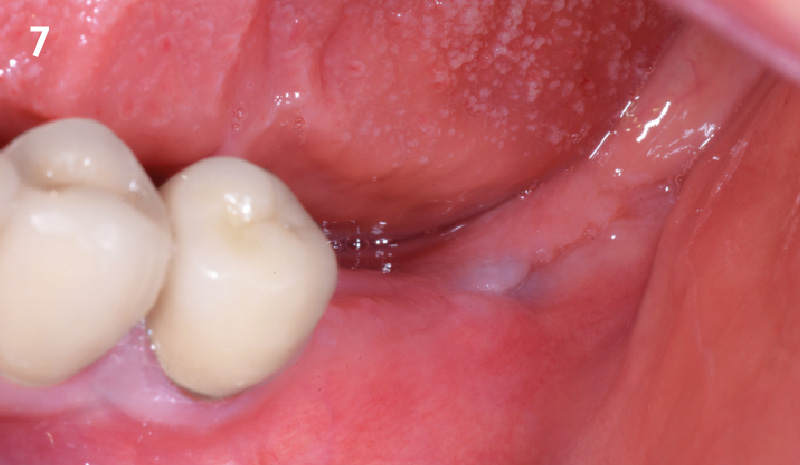
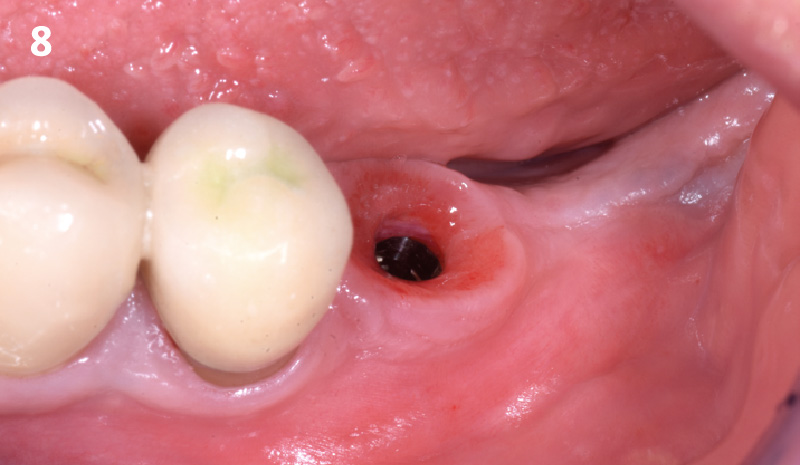
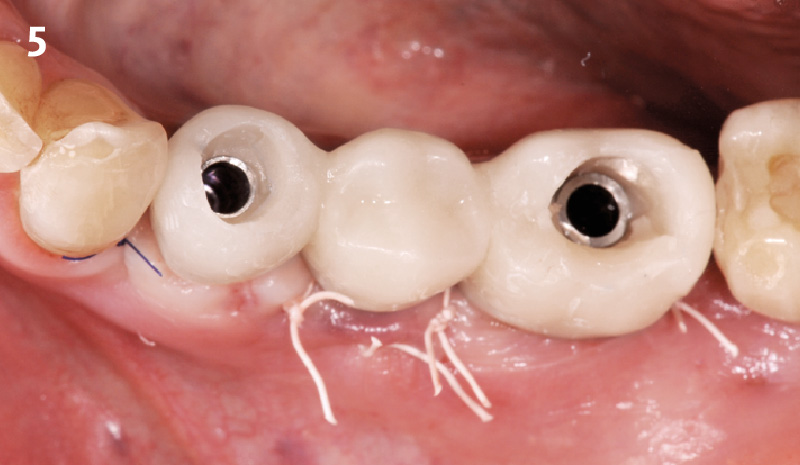
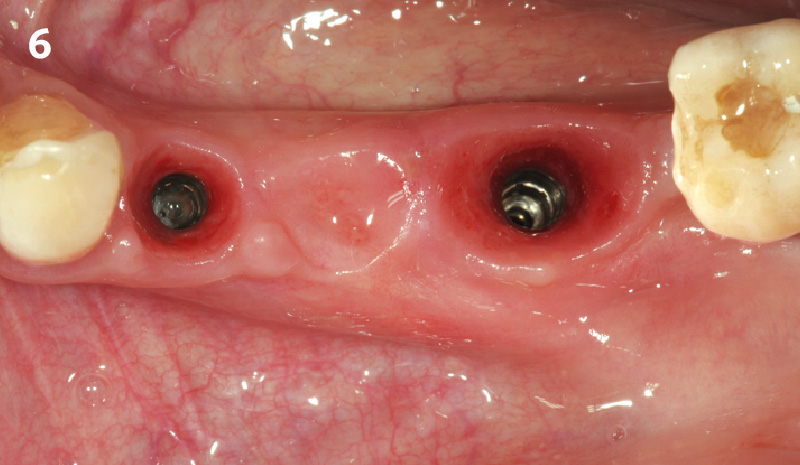
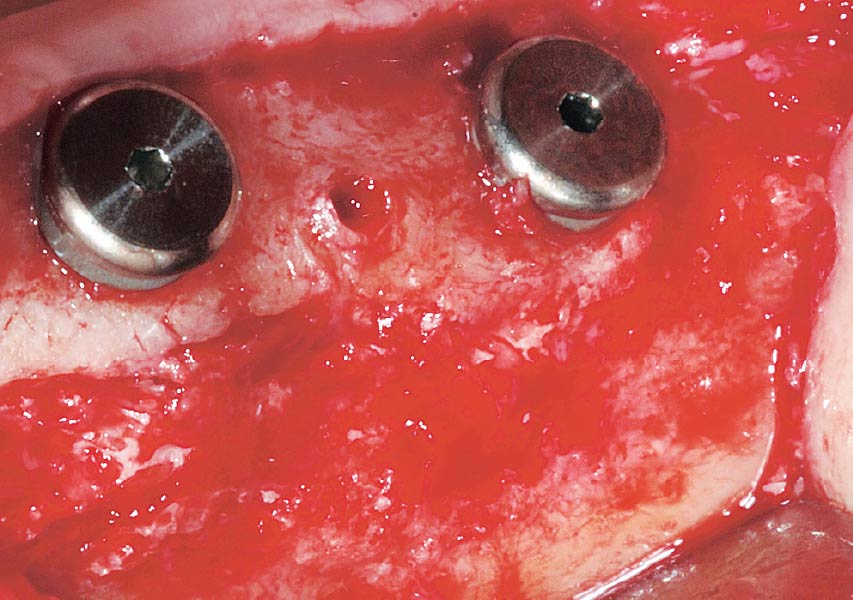
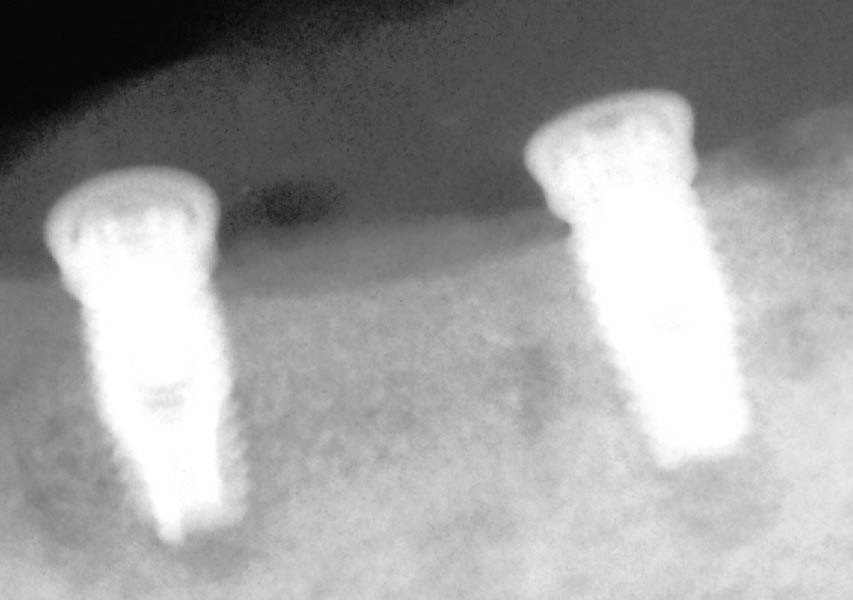
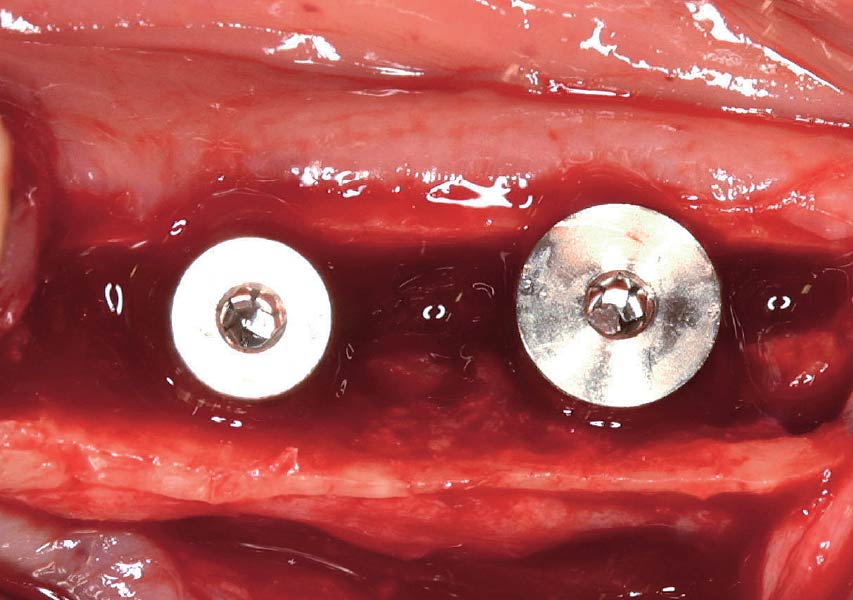
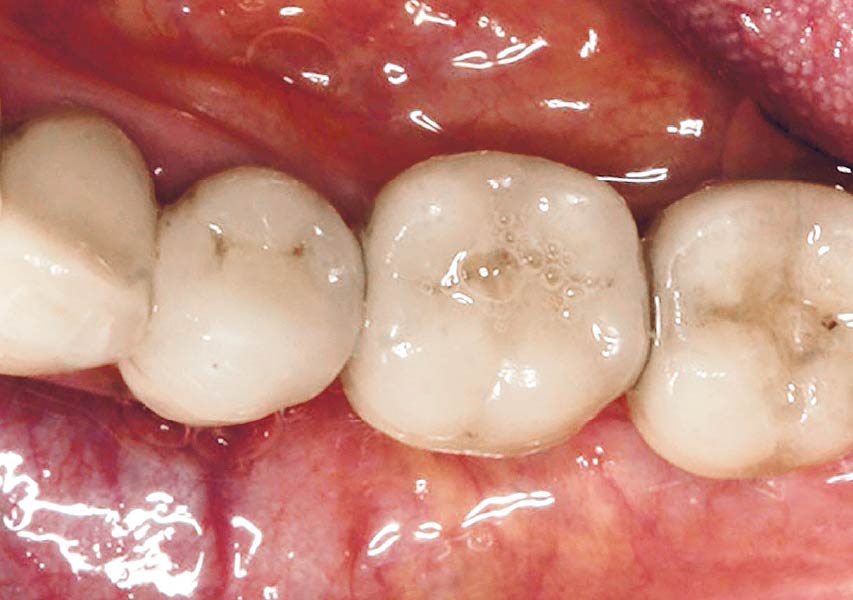
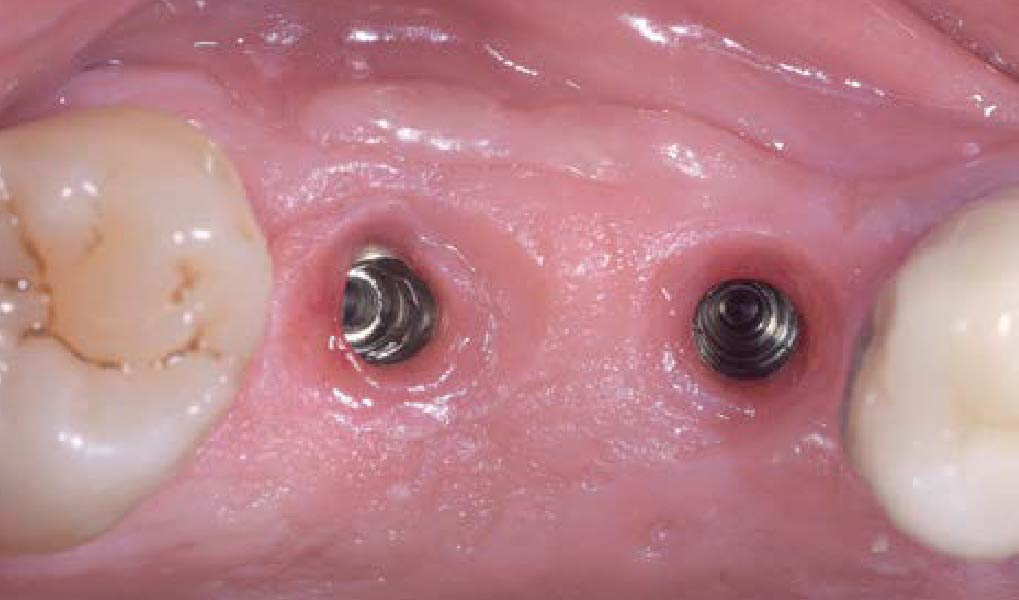
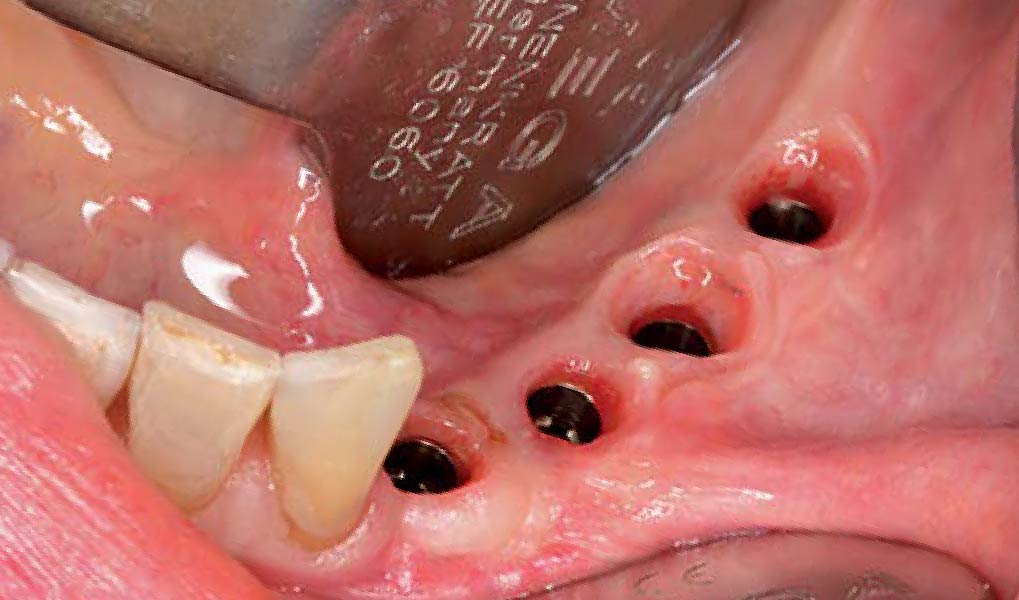
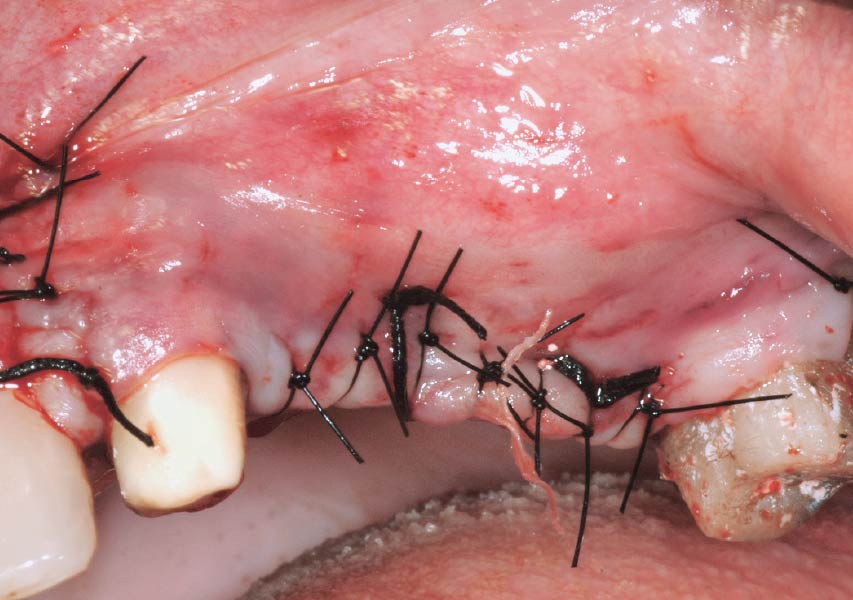
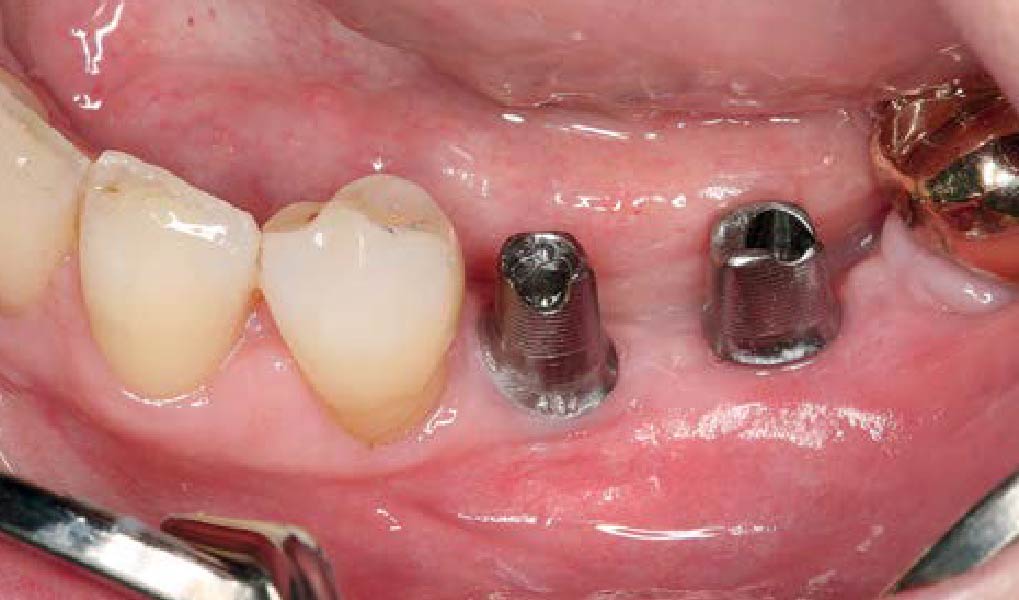
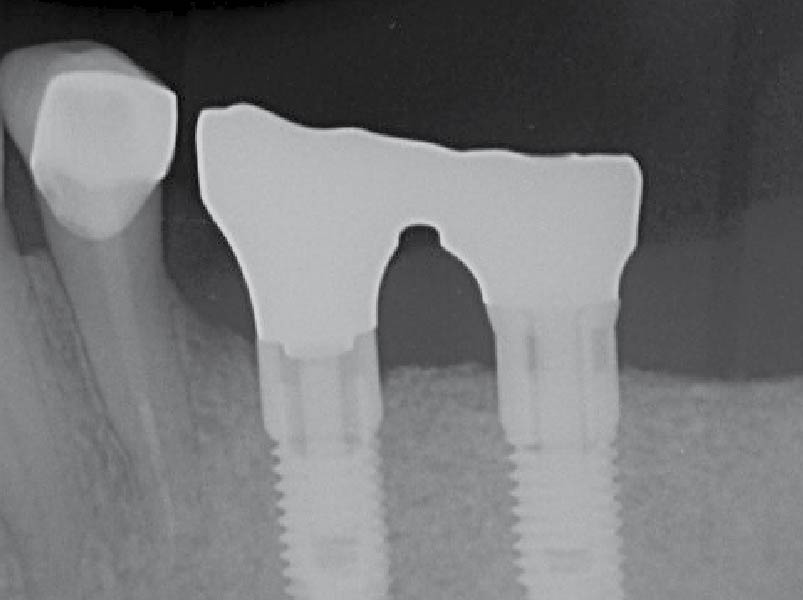
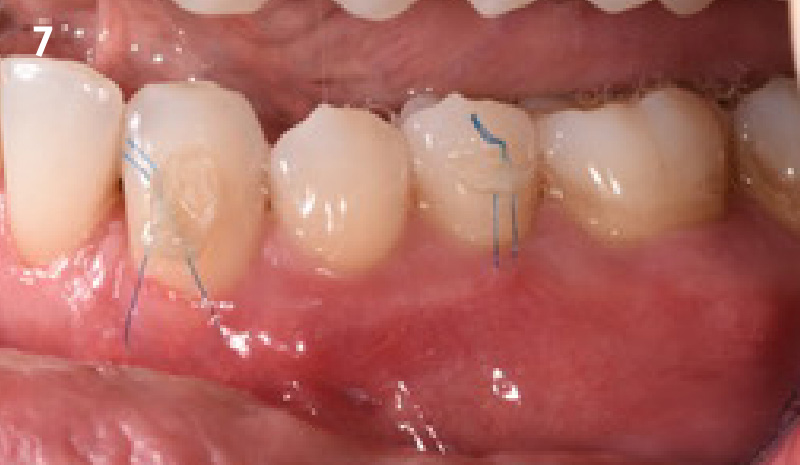
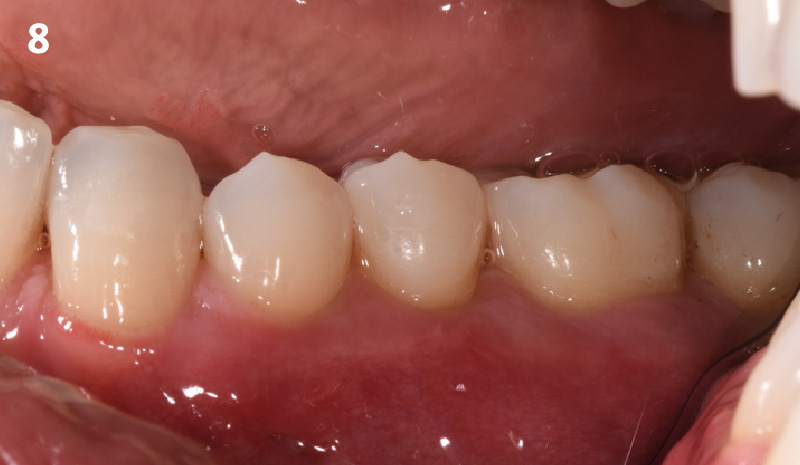
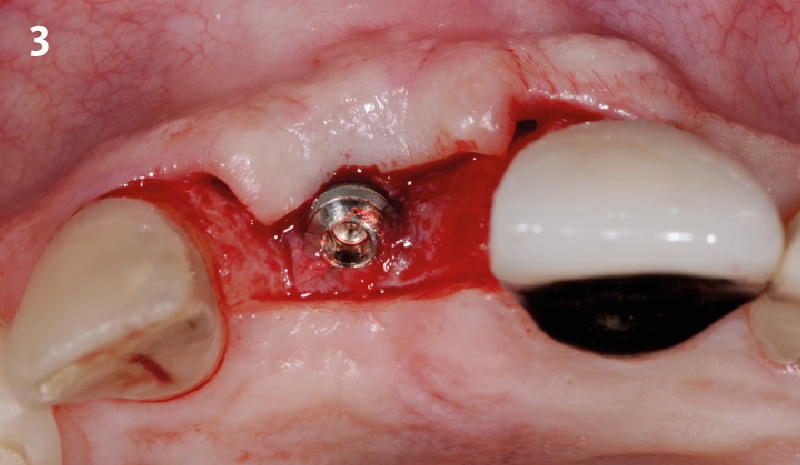
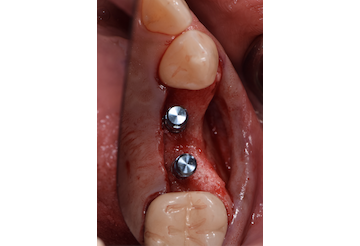
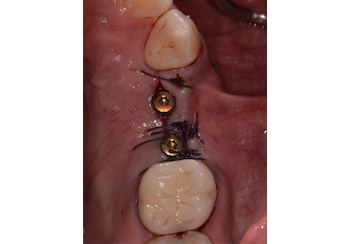
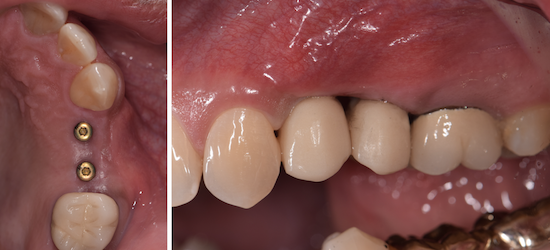
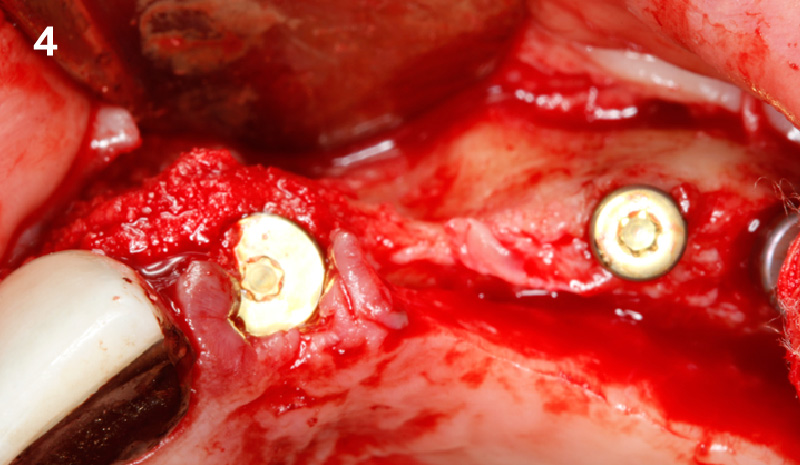
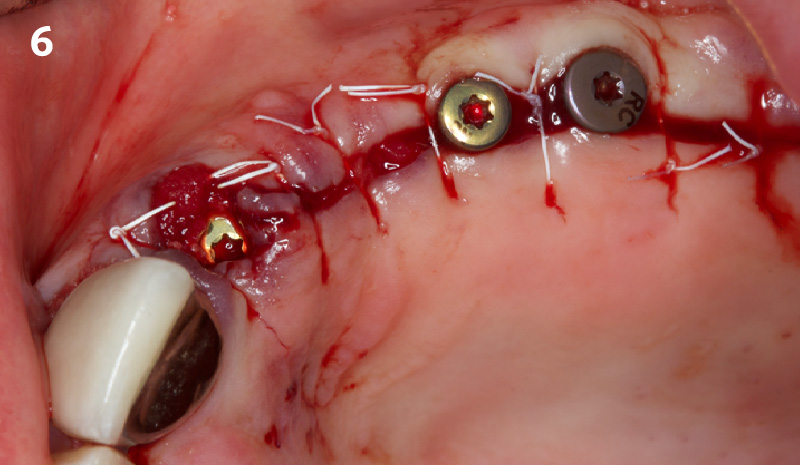
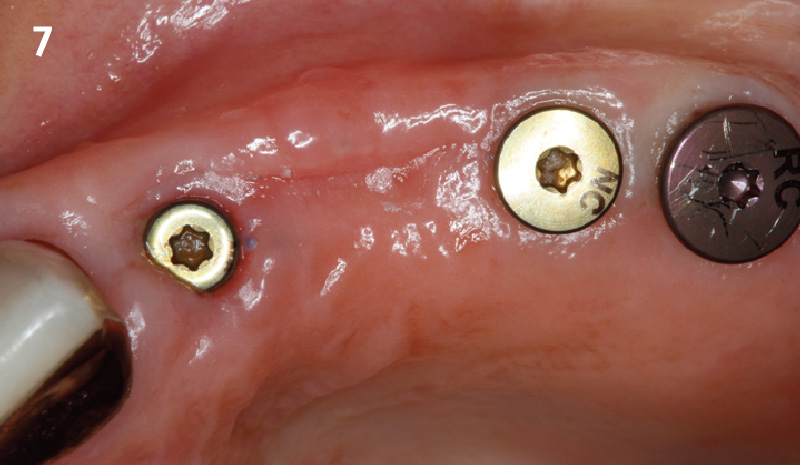
Follow-up at the time of implant uncovering and placement of the healing abutments, (4 months post- implant placement). All implants were successfully reverse torqued at 20ncm.
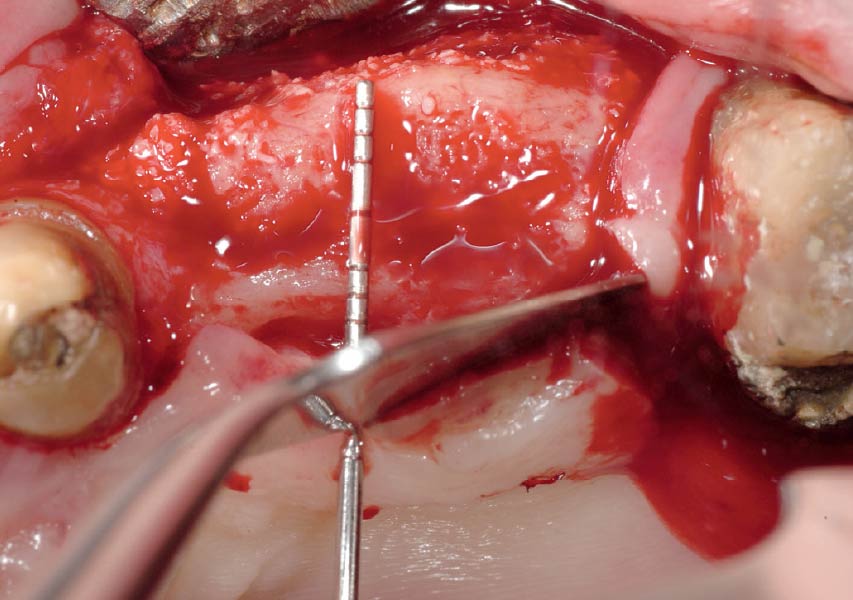
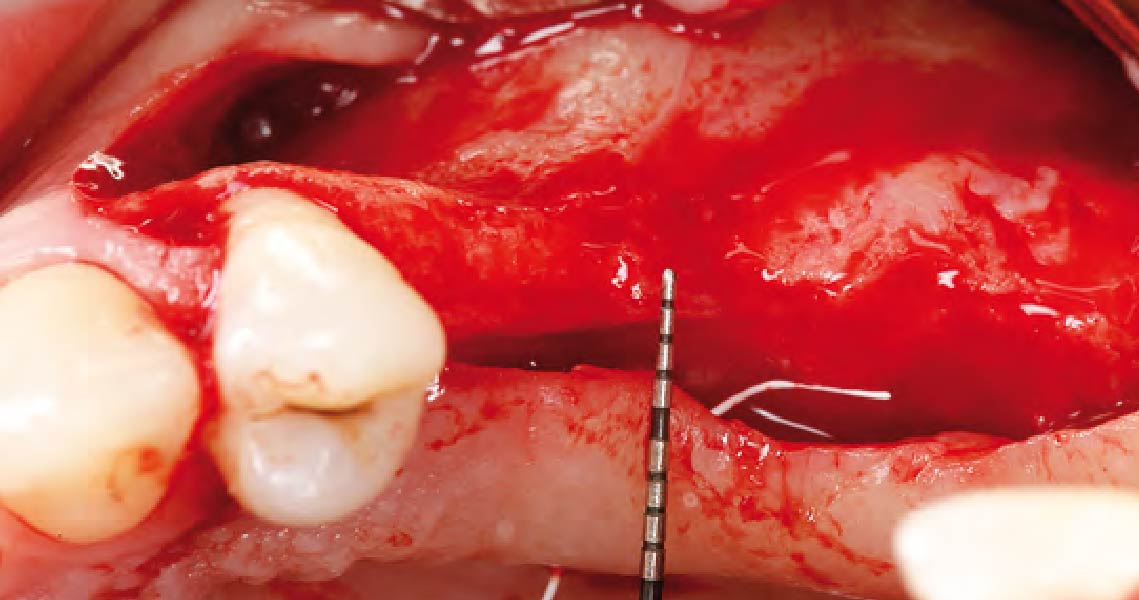
At re-entry eight months post-grafting, the width of the bone had increased significantly and measured 7.46mm at position #21.

“A bone graft was required to augment the ridge, a CBCT scan was performed prior to surgery to determine bone volume and the amount of bone required to graft.”

THE OUTCOME

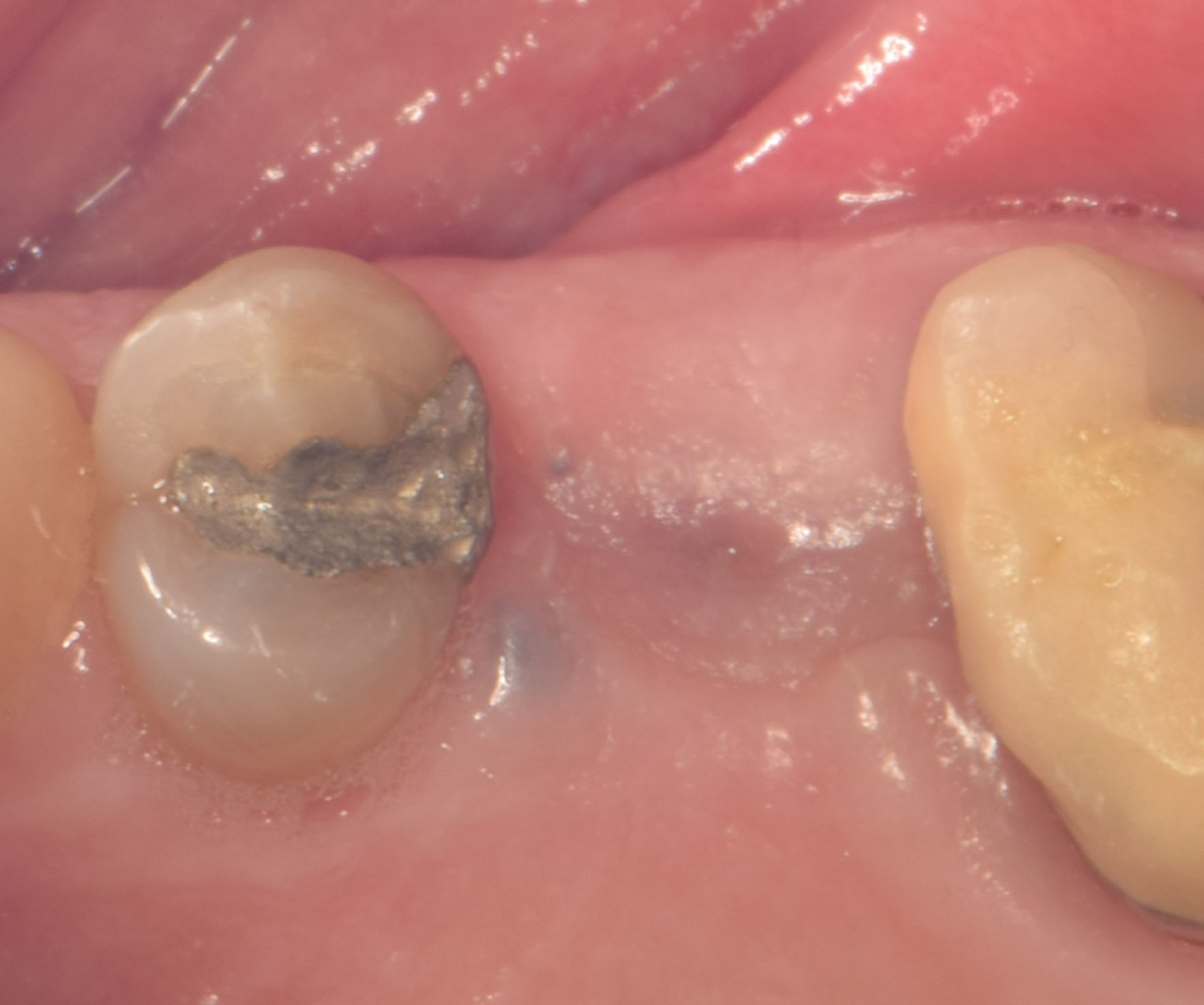
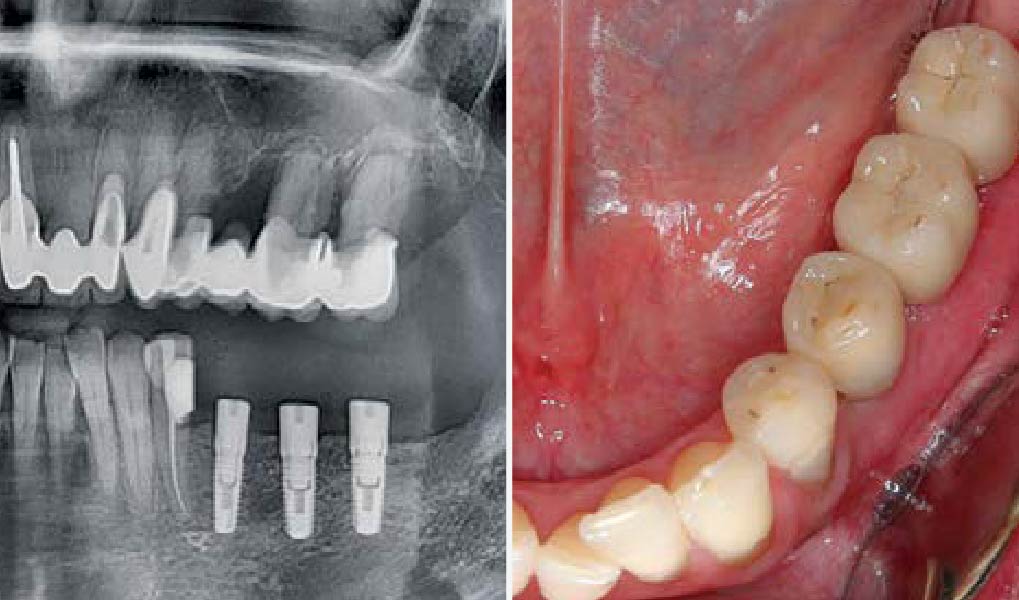
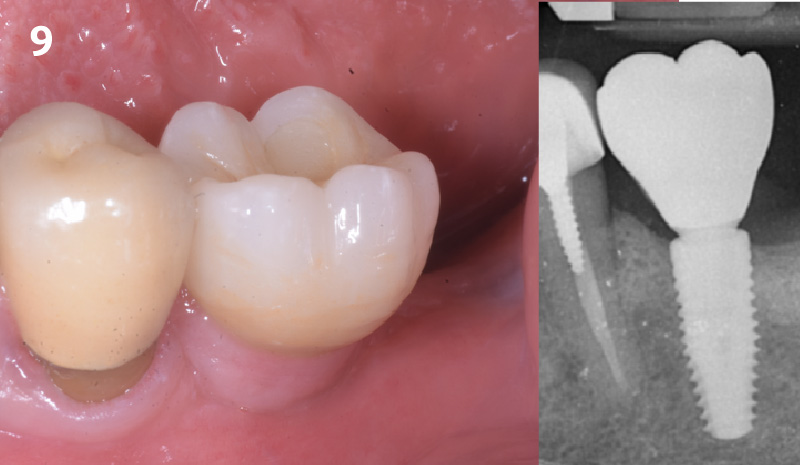
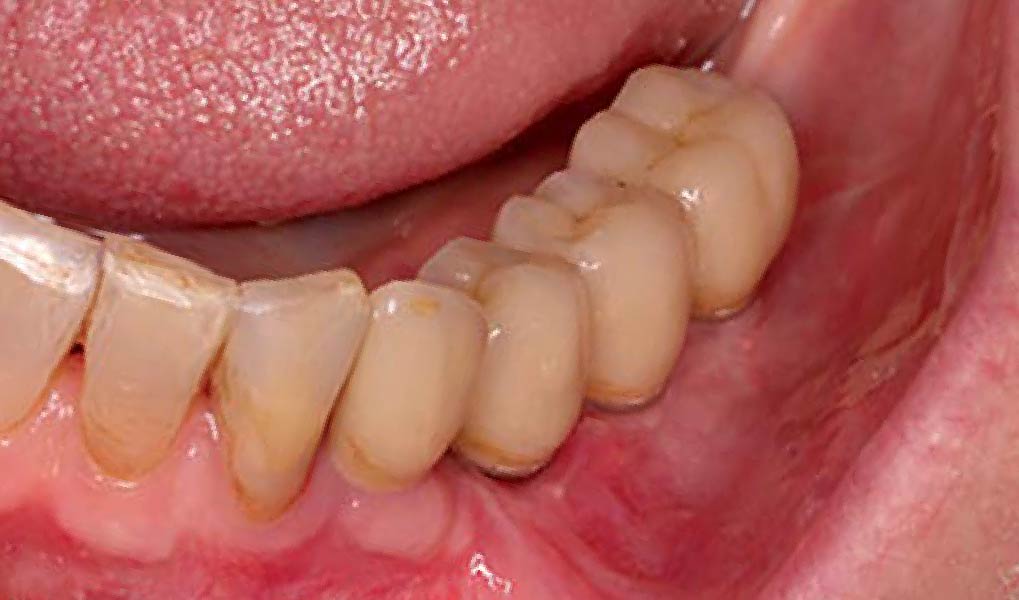
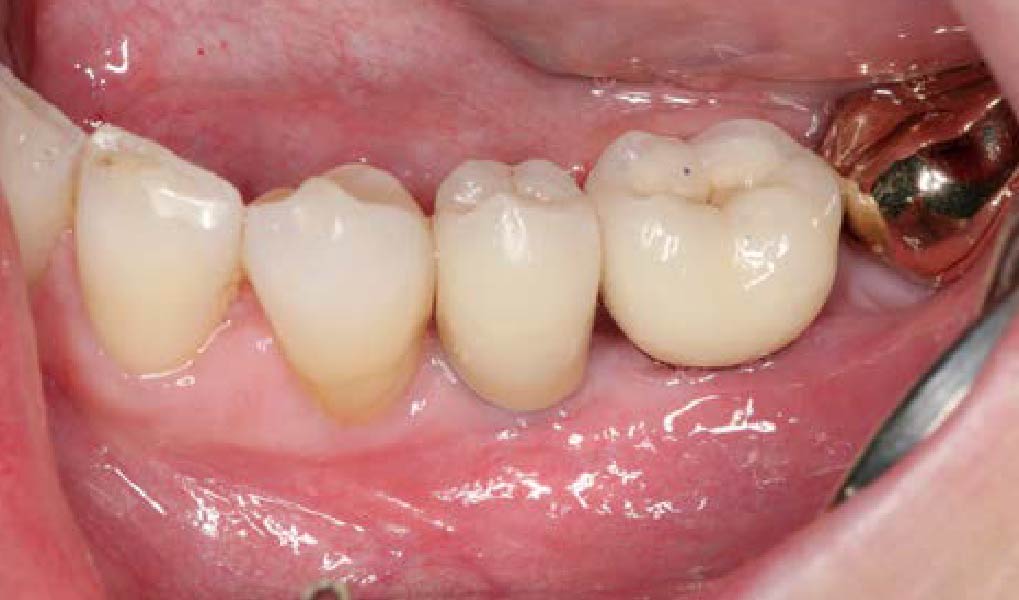
Following 8 months of healing, the augmented site showed sufficient bone width that was assessed with a CT scan. After examination, it was determined that the bone width was adequate for implant placement in the desired position to allow an esthetically pleasing and functional outcome for the patient.
The use of Geistlich Bio-Oss® in combination with autogenous bone provides an excellent recipient site for the placement of dental implants and long-term maintenance of bone volume for implant survival.”

Dr. John M. Sisto

The Geistlich Micross is essential in harvesting bone from the lateral ramus in an efficient and stress-free manner.”

Dr. John M. Sisto

Dr. John M. Sisto

Dr. John M. Sisto received his Doctorate in Dental Surgery degree from Loyola University and completed his residency and certification in Oral and Maxilofacial Surgery at the Cook County Hospital in Chicago. Dr. Sisto was the Director of Residency Education at Cook County Hospital from 1985 to 2010 and started the residency program in oral and maxillofacial surgery in 1990. He held teaching positions at both Northwestern and University of Illinois Dental schools as a clinical assistant professor, and also at Northwestern Medical School. He was the Division Chief of Oral and Maxillofacial Surgery at Cook County Hospital and Chairman of Dentistry at Resurrection Medical Center. Dr. Sisto has published papers on dental implant surgery, trauma surgery, orthognathic surgery and maxillofacial infections. He has lectured both locally and nationally at various educational forums.

BIOBRIEF

Bone Augmentation L-Shape Technique with Early Implant Placement

Prof. Dr. Ronald E. Jung

THE SITUATION

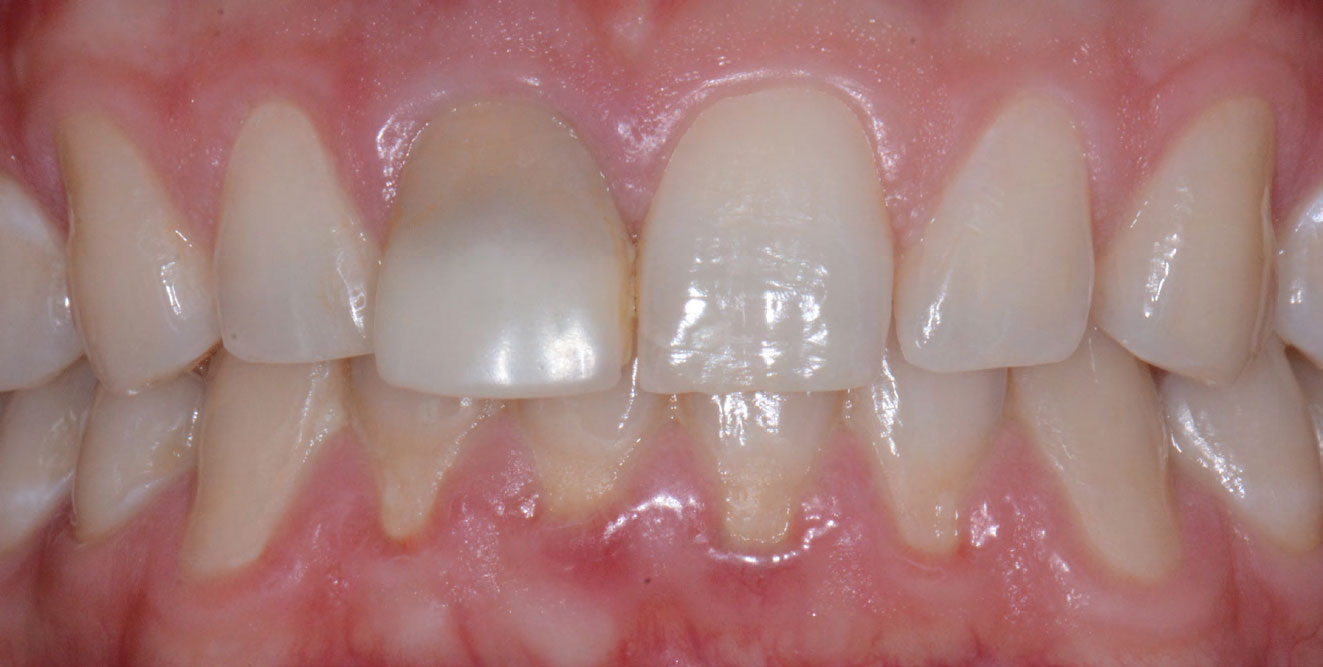
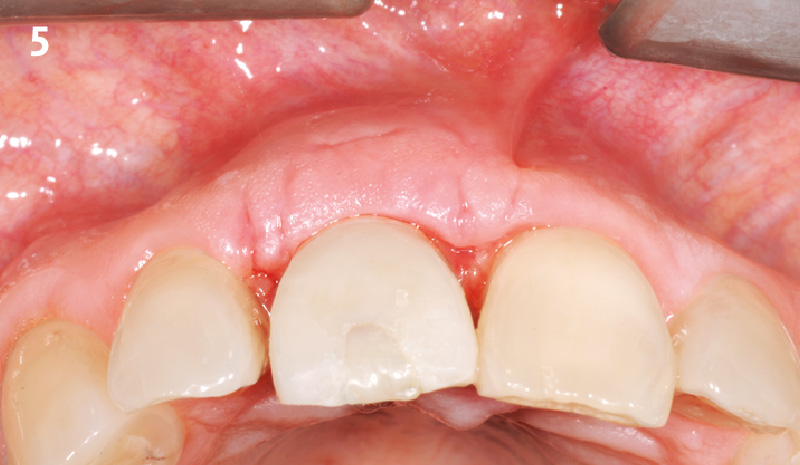
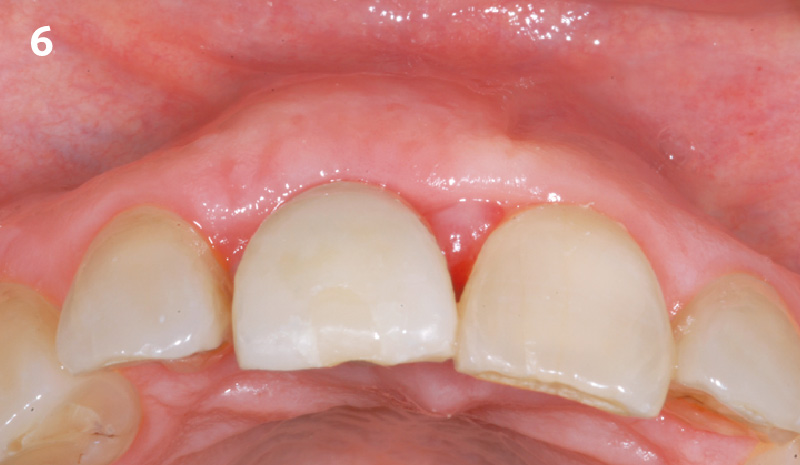
The patient presented to the clinic with a discolored tooth #8, with mobility and a history of trauma. The tooth has a horizontal fracture in the apical third of the root and has recurrent infection after the root canal treatment. The patient feels discomfort and dislikes his esthetic appearance. He would like the fractured tooth #8 removed and replaced with a fixed solution.

THE RISK PROFILE

Low RiskMedium RiskHigh Risk
Patient’s healthIntact immune system Light smokerImpaired immune system 
Patient’s esthetic requirementsLowMediumHigh
Height of smile lineLowMediumHigh
Gingival biotypeThick – “low scalloped”Medium – “medium scalloped”Thin – “high scalloped”
Shape of dental crownsRectangularTriangular
Infection at implant sightNoneChronicAcute
Bone height at adjacent tooth site≤ 5 mm from contact point5.5 – 6.5 mm from contact point≥ 7 mm from contact point
Restorative status of adjacent toothIntactRestored
Width of tooth gap1 tooth (≥ 7 mm)1 tooth (≤ 7 mm)2 teeth or more
Soft-tissue anatomyIntactCompromised
Bone anatomy of the alveolar ridgeNo defectHorizontal defectVertical defect
Note: The fractured tooth has a periapical lesion together with a severe bone defect around the horizontal fracture.
watch video download pdf

THE APPROACH

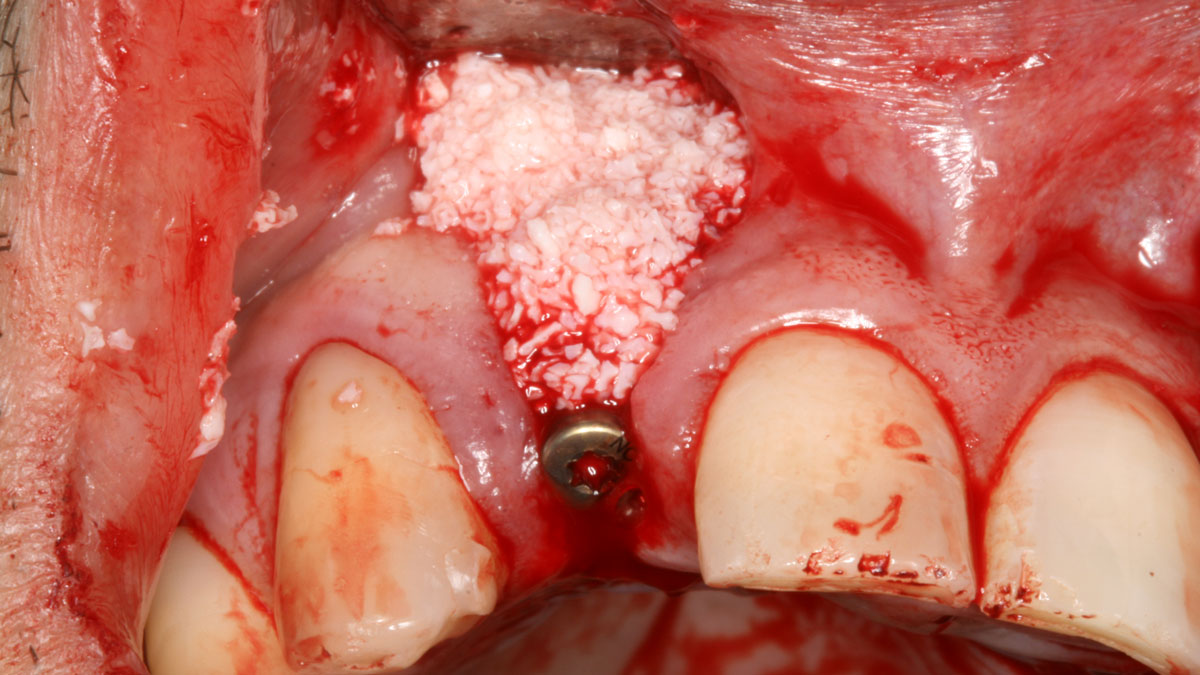
To carefully extract tooth #8 and to replace it with an early-stage implant placed with simultaneous guided bone regeneration through the use of Geistlich Bio-Oss Collagen® trimmed in an “L-Shape” under the protection of a Geistlich Bio-Gide® membrane. To augment the peri-implant soft-tissue with the use of a connective tissue graft during implant healing time, increasing the overall volume of site #8. To provisionalize the implant for the development of a proper emergence profile. To deliver a definitive reconstruction which is functional and esthetic for the patient.

The patient presented to the clinic with a discolored tooth #8, with mobility and a history of trauma. The tooth has a horizontal fracture in the apical third of the root and has recurrent infection after the root canal treatment.
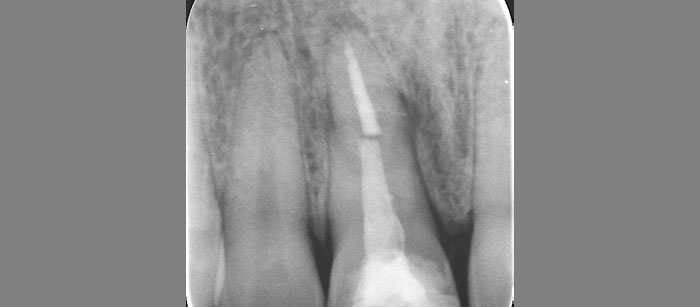
The tooth has had root canal treatment, has a horizontal root fracture in the apical third and exhibits with a periapical lesion.
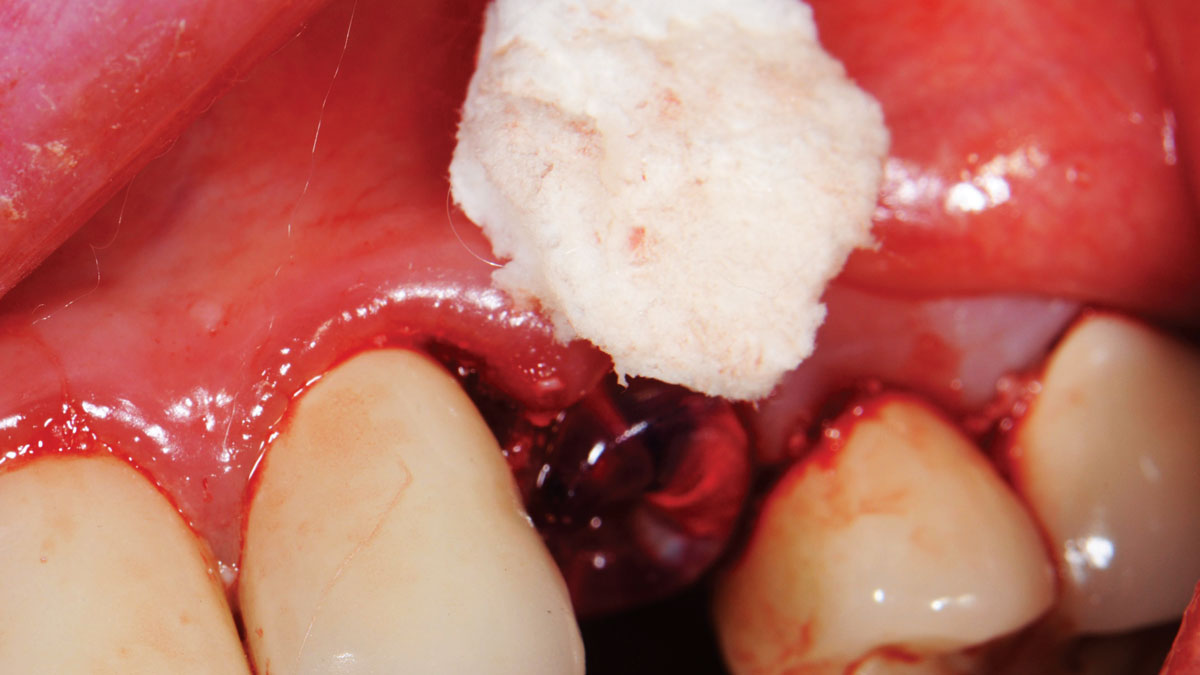
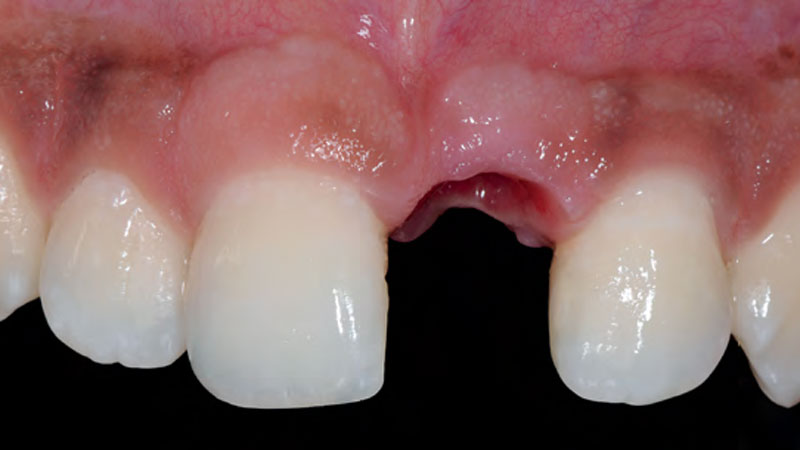
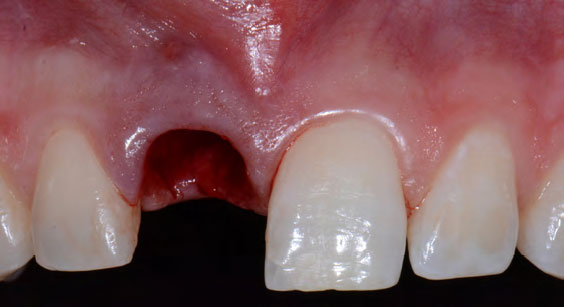
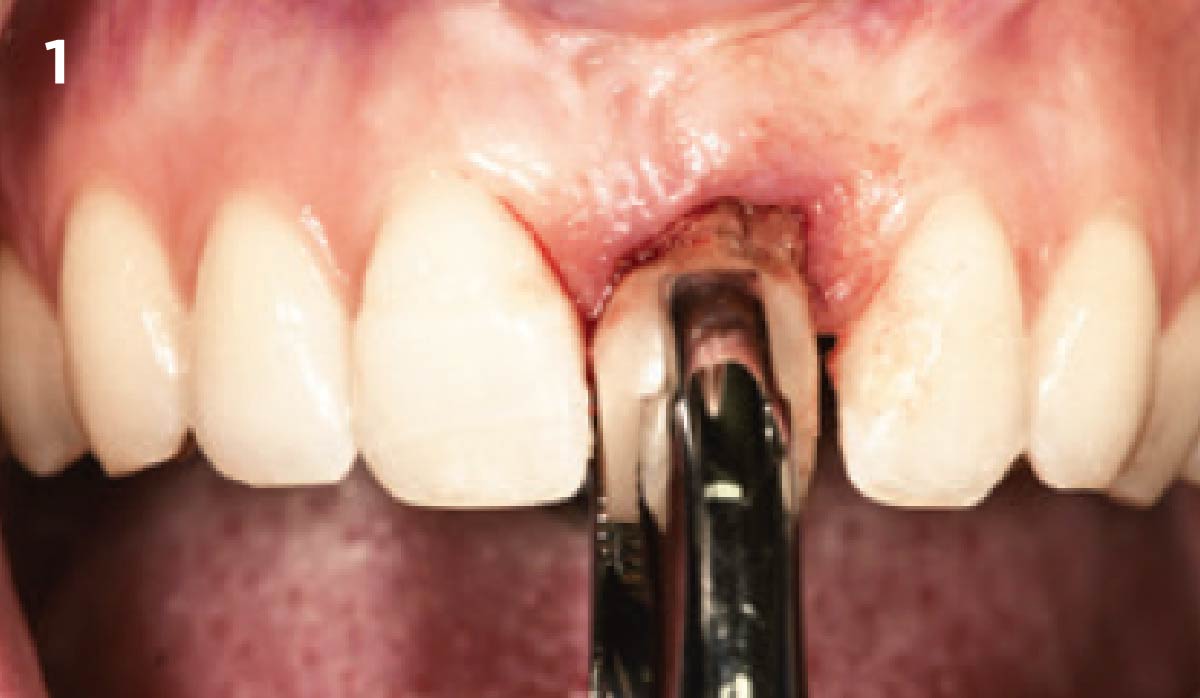
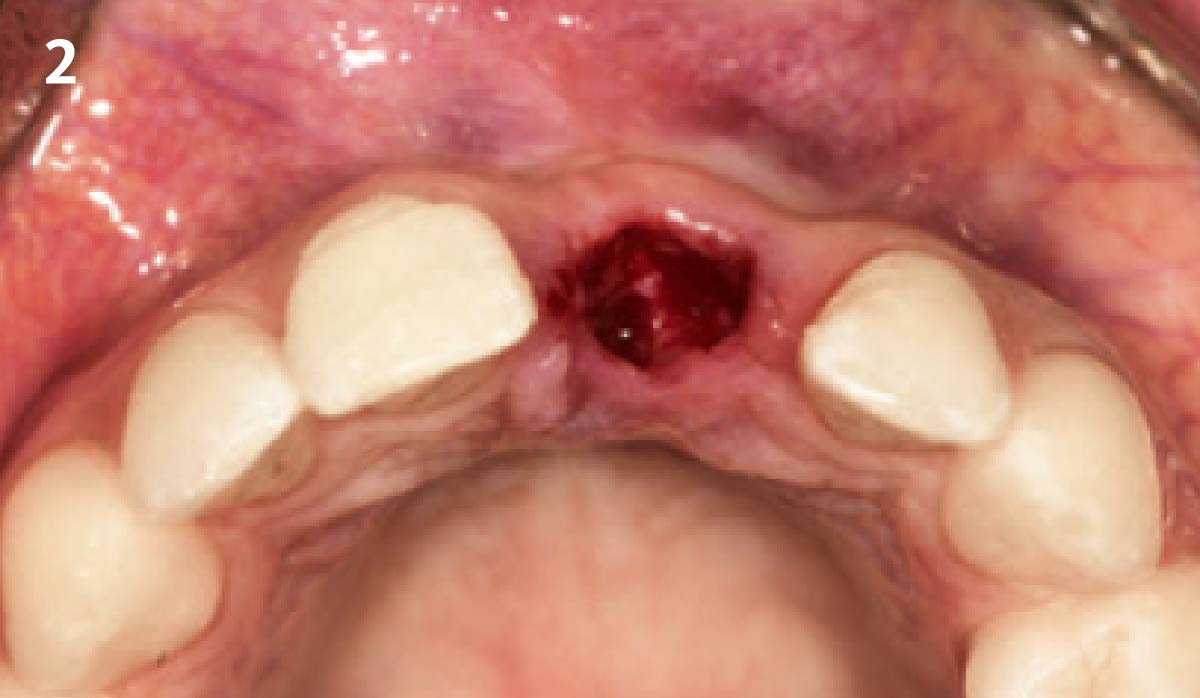
The tooth is carefully extracted and the socket is left to heal through unassisted healing.
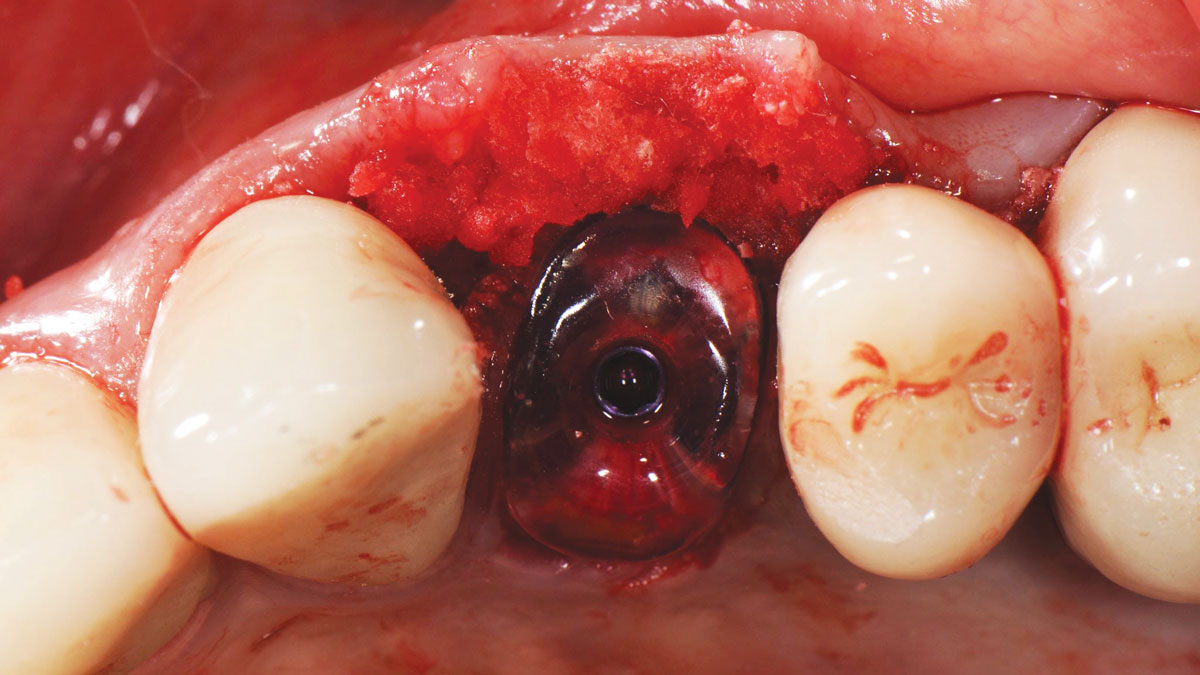
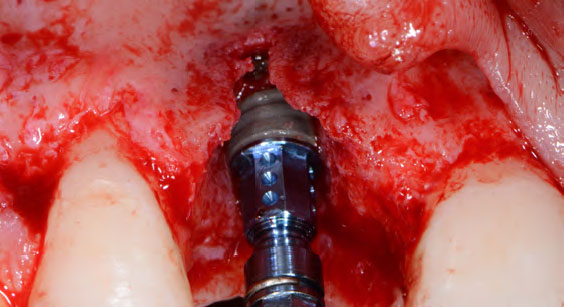
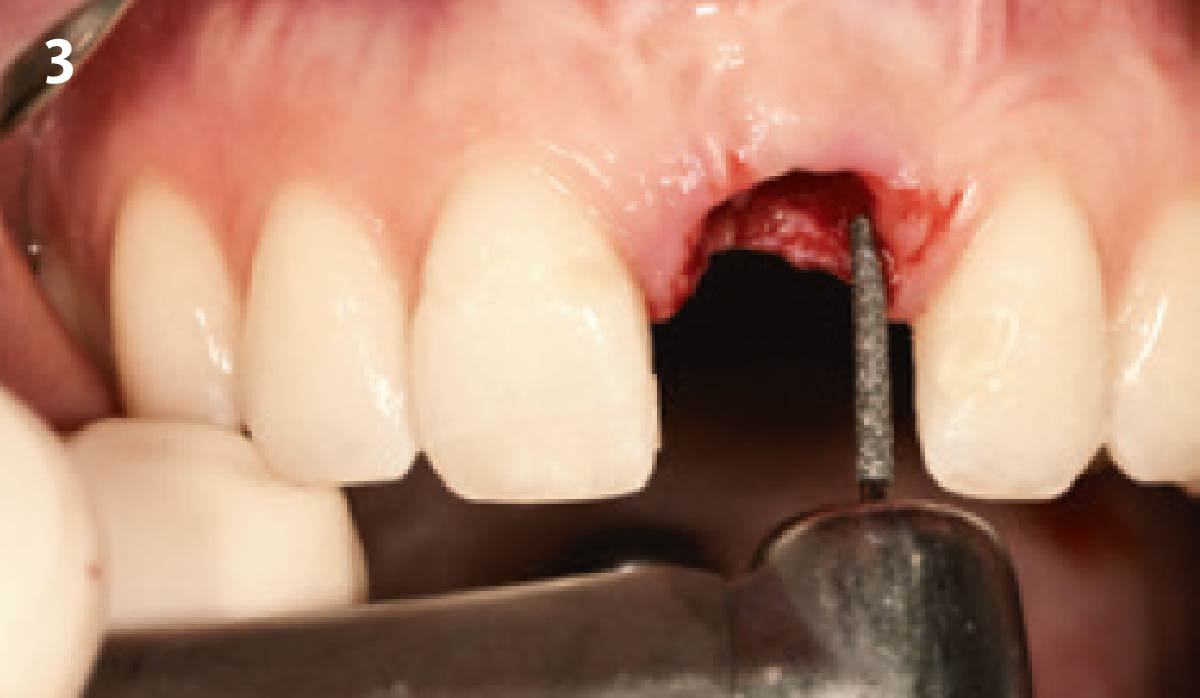
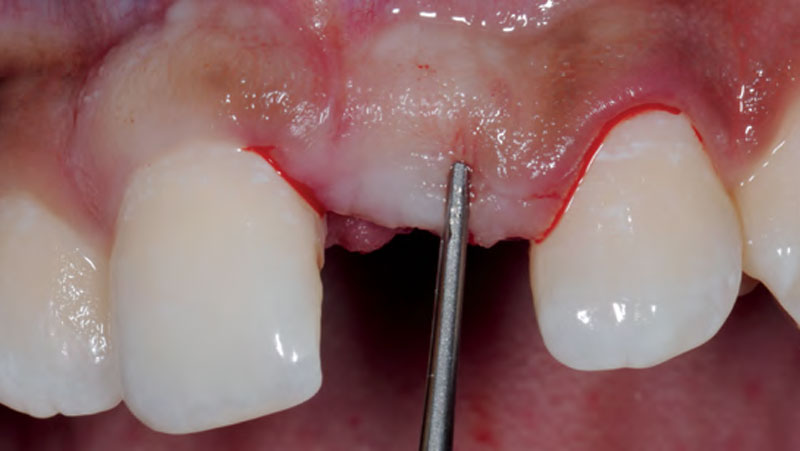
After 6 weeks a full thickness flap is elevated with a distal releasing vertical incision. A bone level implant is placed according to the prosthetic plan through a surgical guide. Notice the buccal dehiscence.
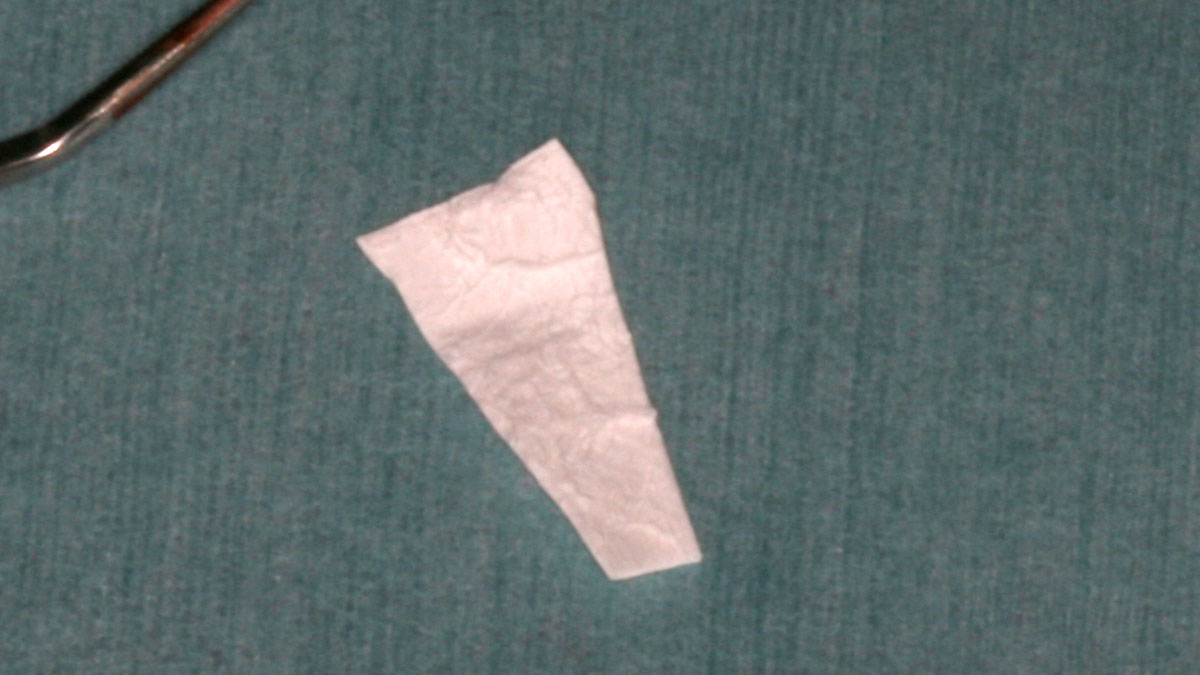
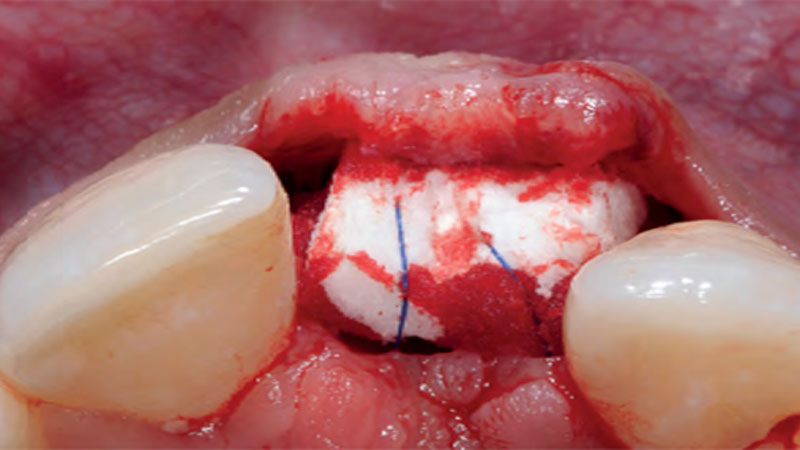
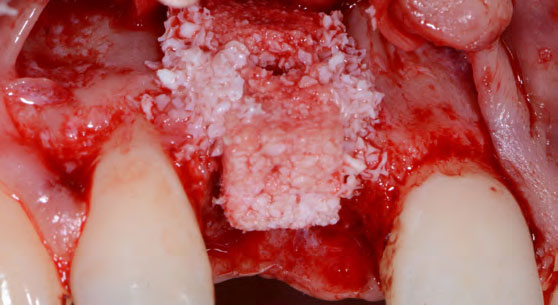
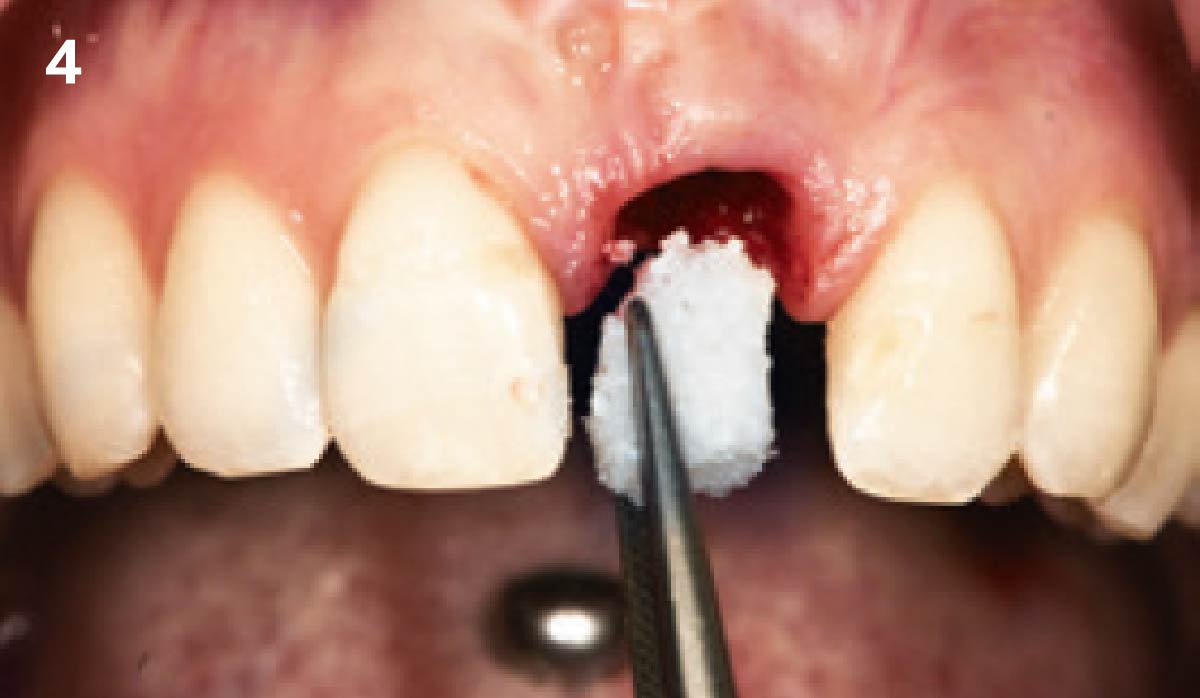
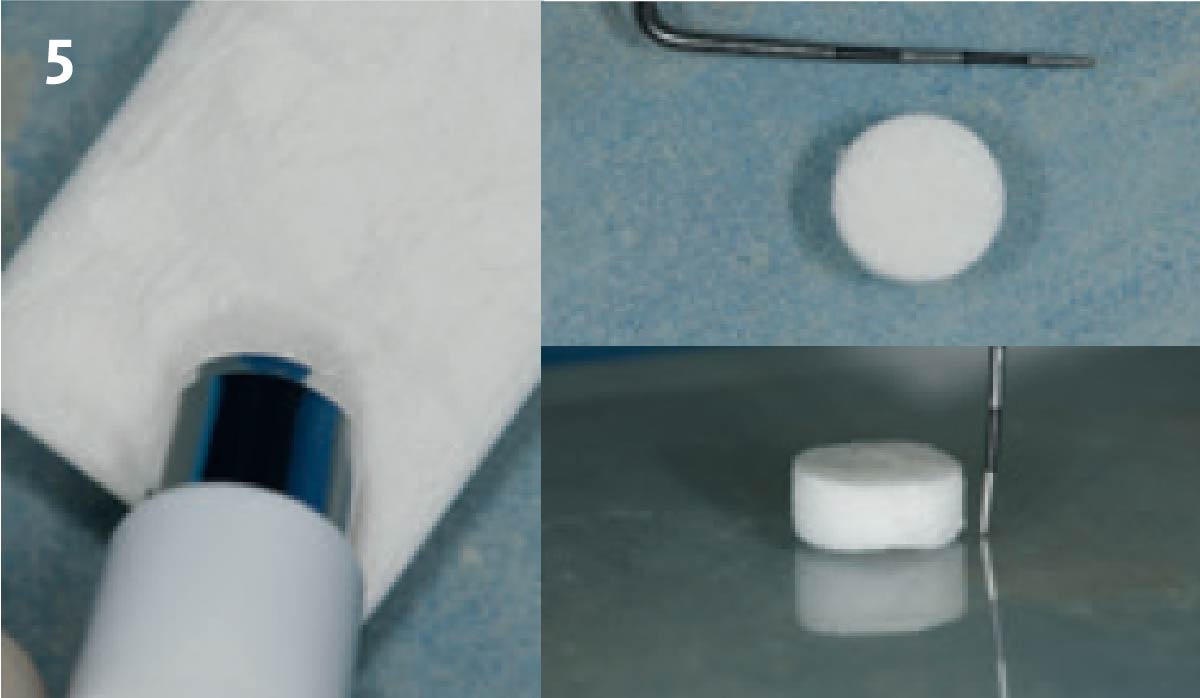
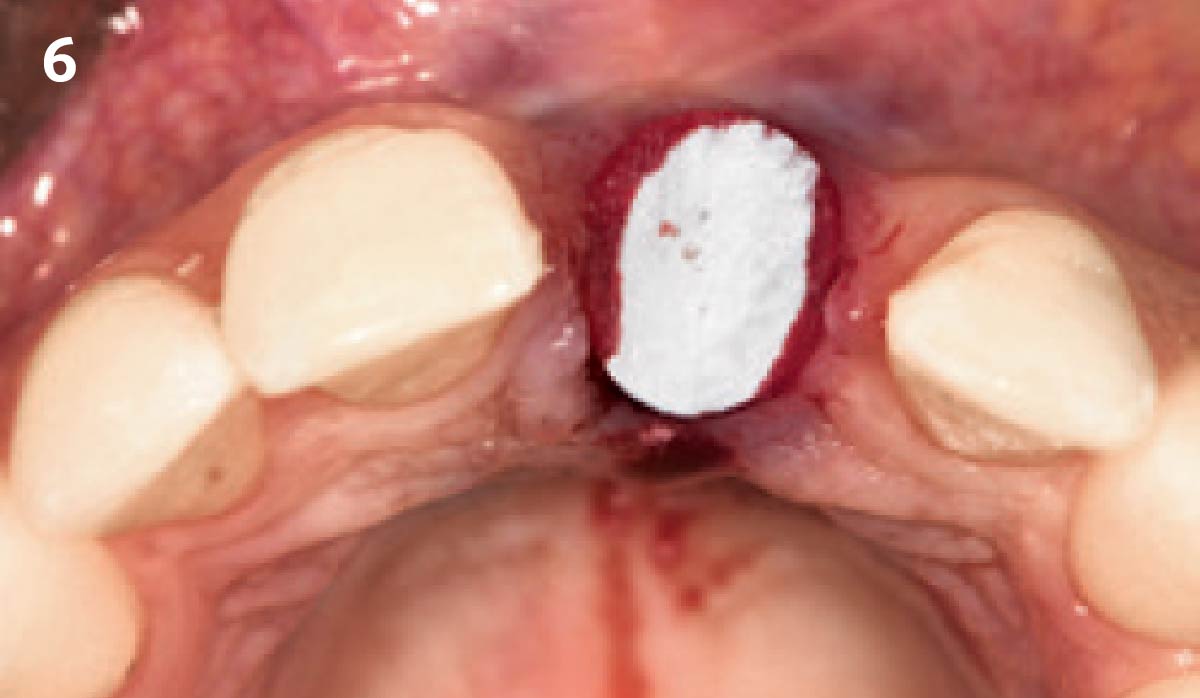
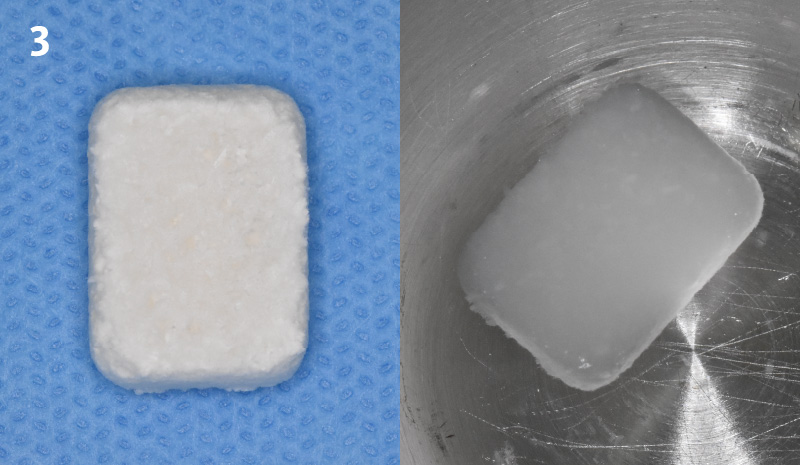
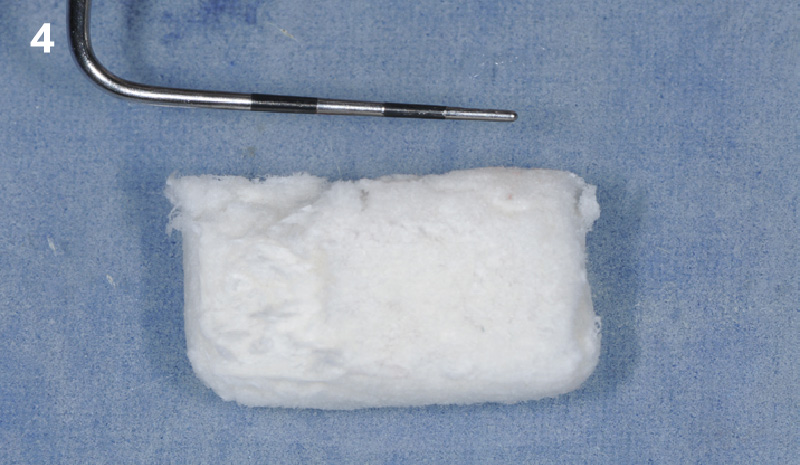
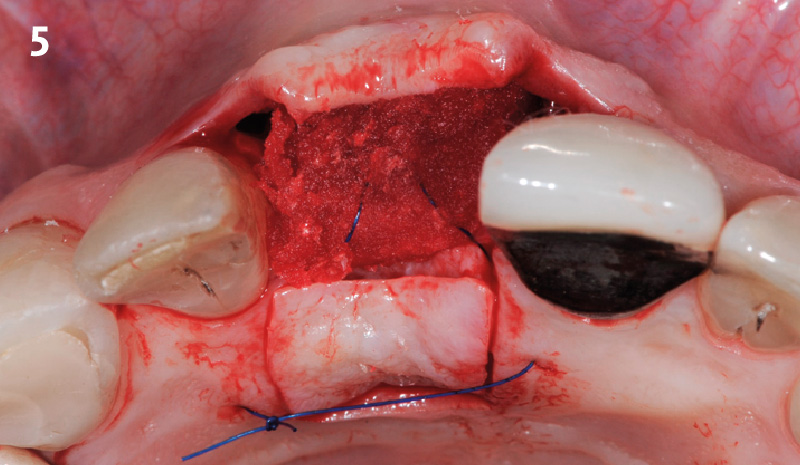
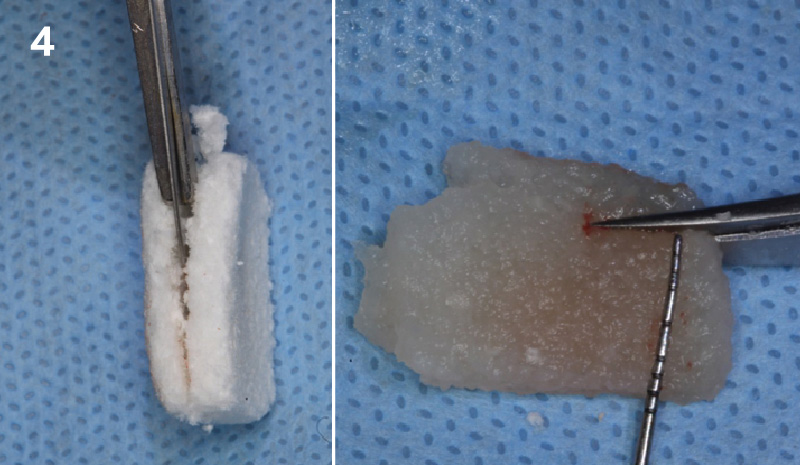
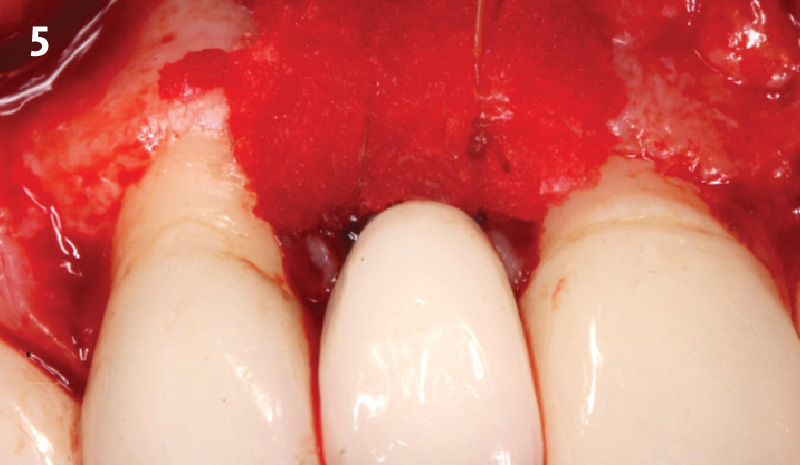
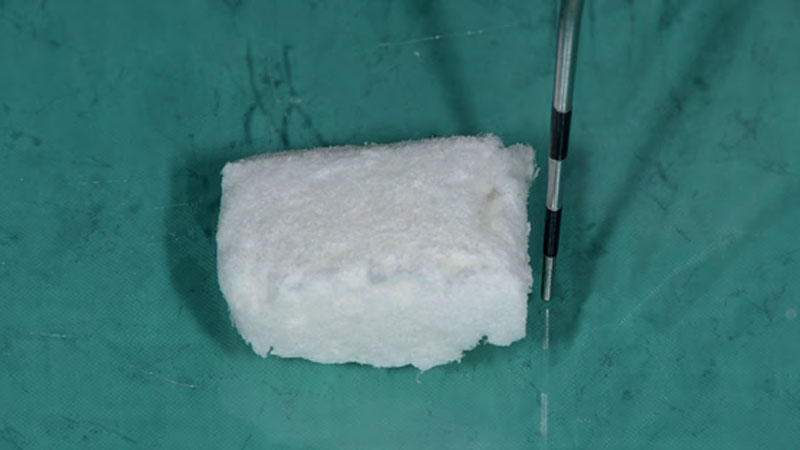
Geistlich Bio-Oss Collagen® is trimmed to an “L-Shape” and is placed on the buccal-occlusal side of the implant. Additional Geistlich Bio-Oss® granules are placed around the remaining gaps.
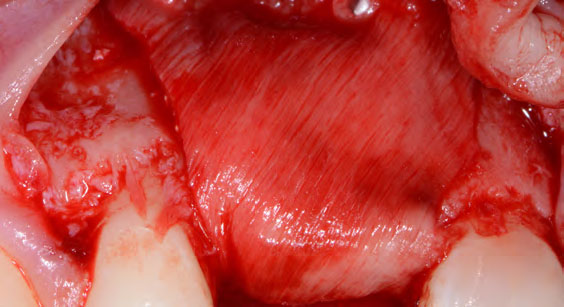
To stabilize the grafted area the bone augmentation is covered with Geistlich Bio-Gide®, which is fixated apically with two resorbable pins.
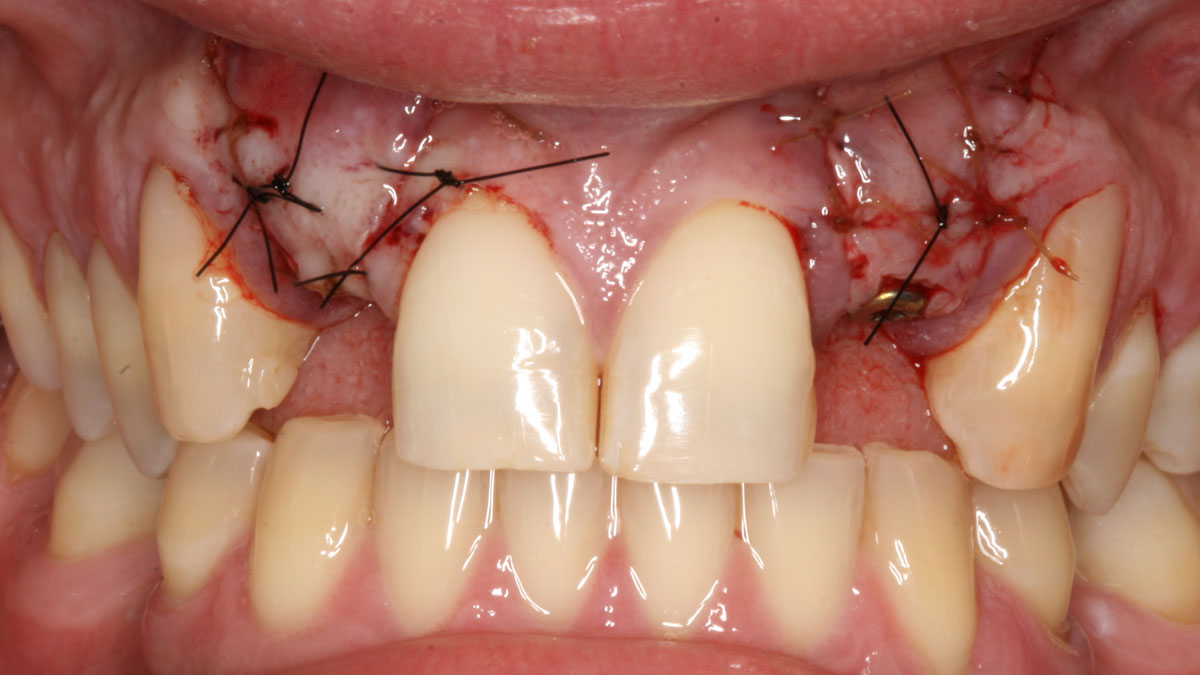
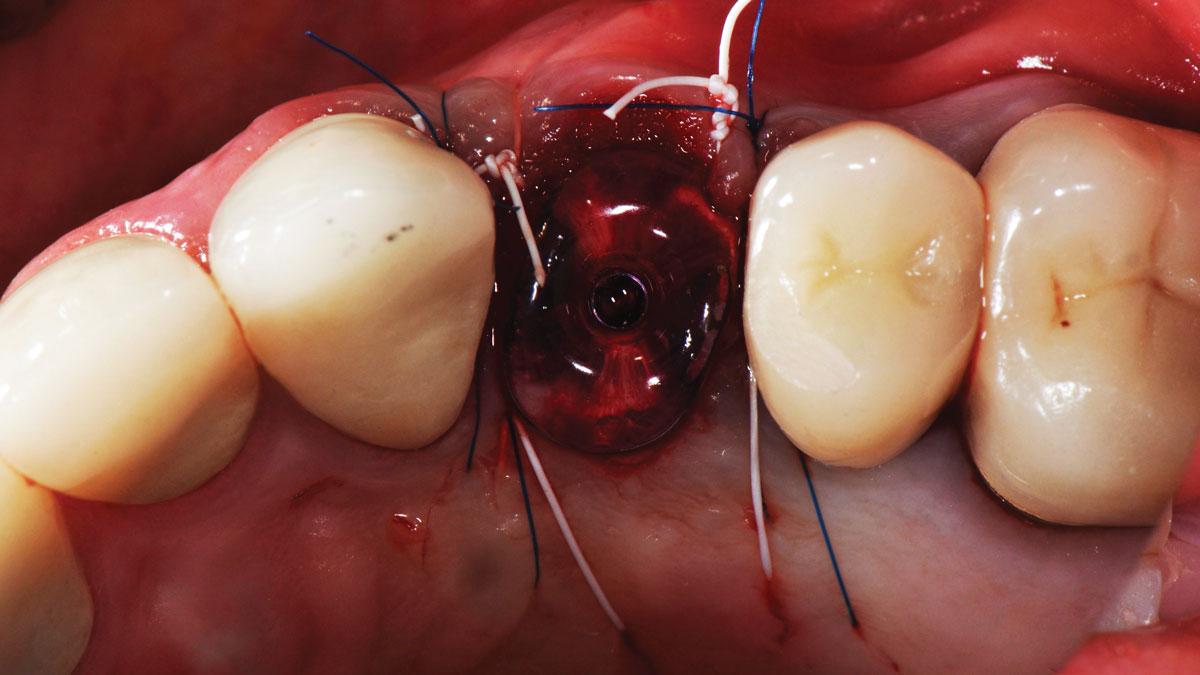
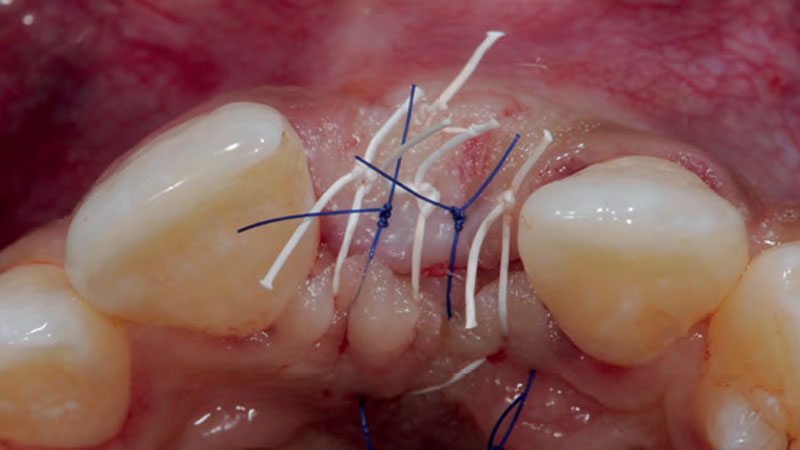
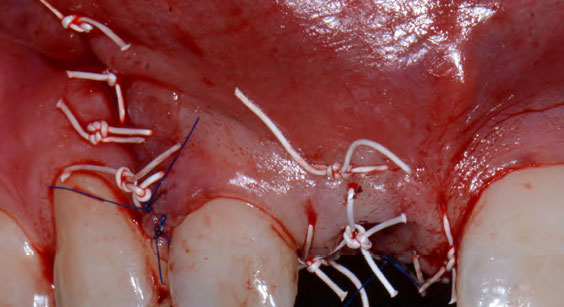
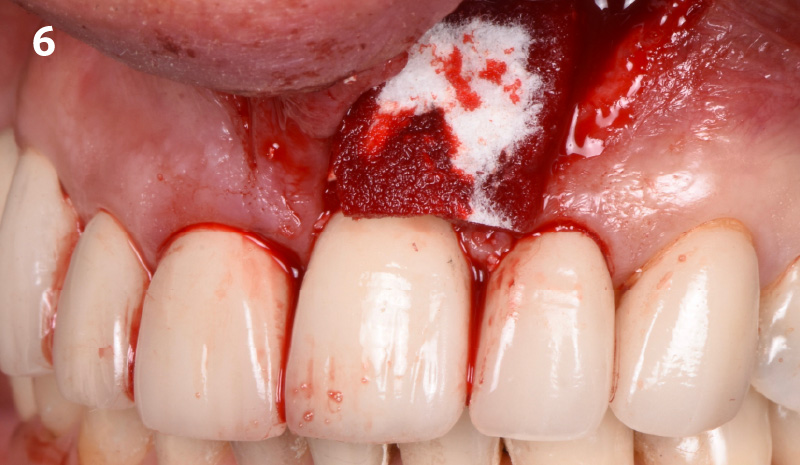
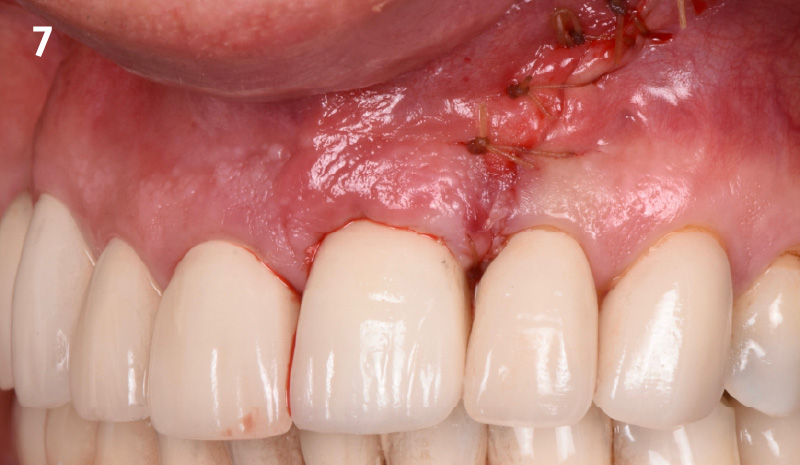
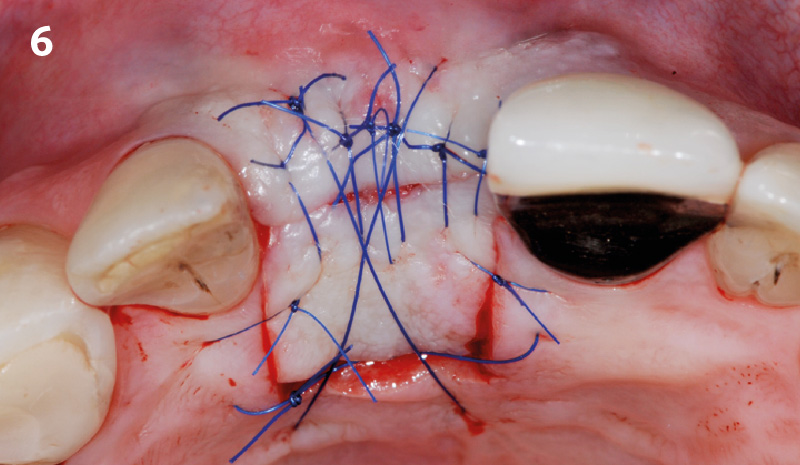
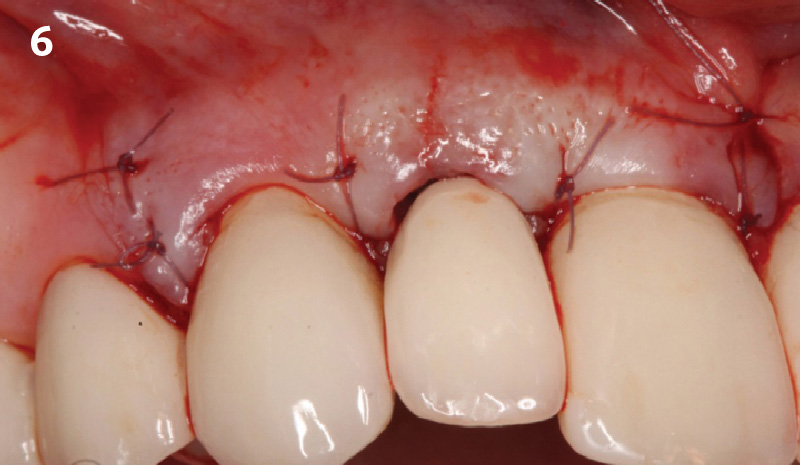
The flap is sutured with horizontal mattress and single interrupted sutures and primary closure is achieved.
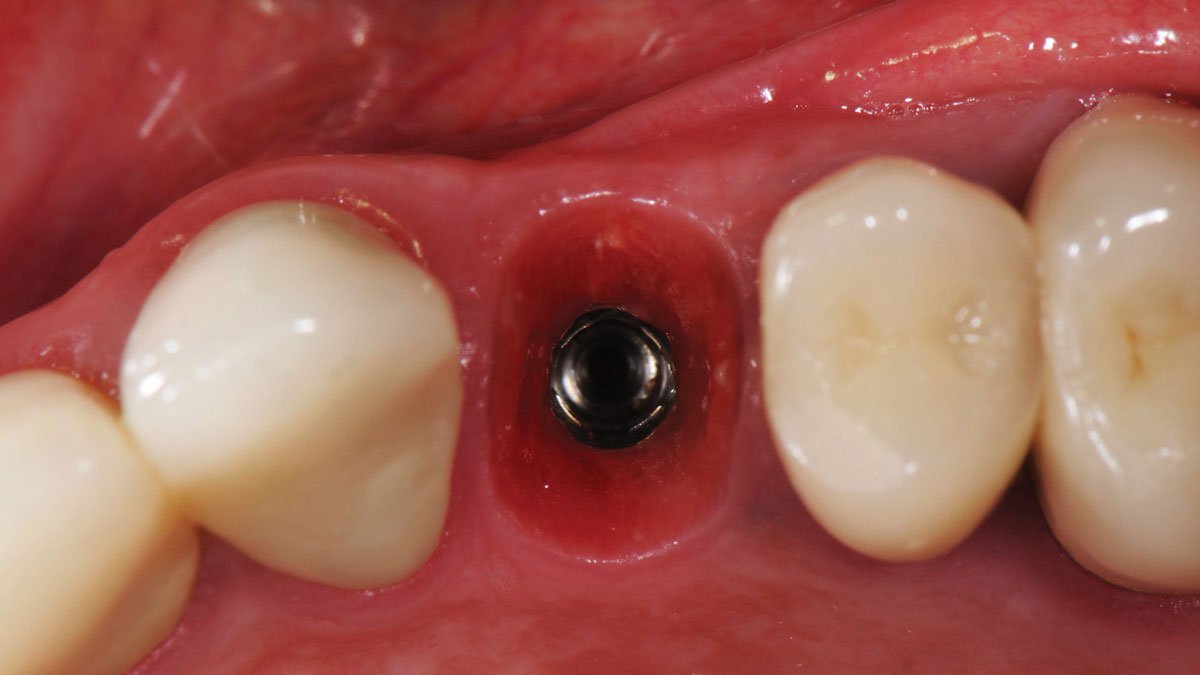
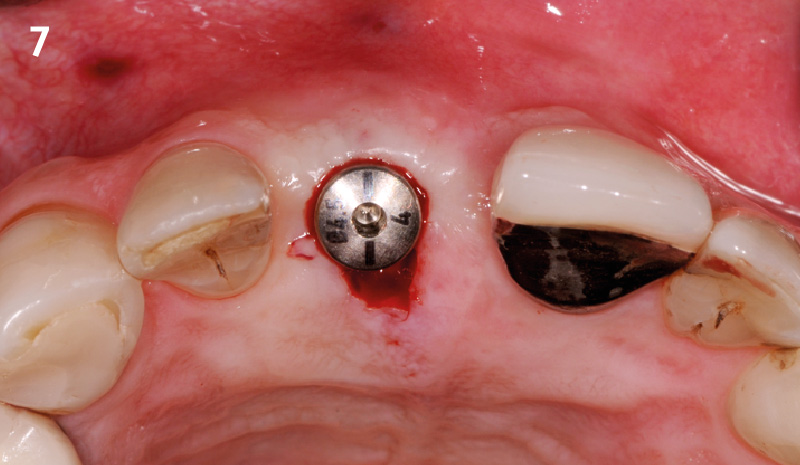
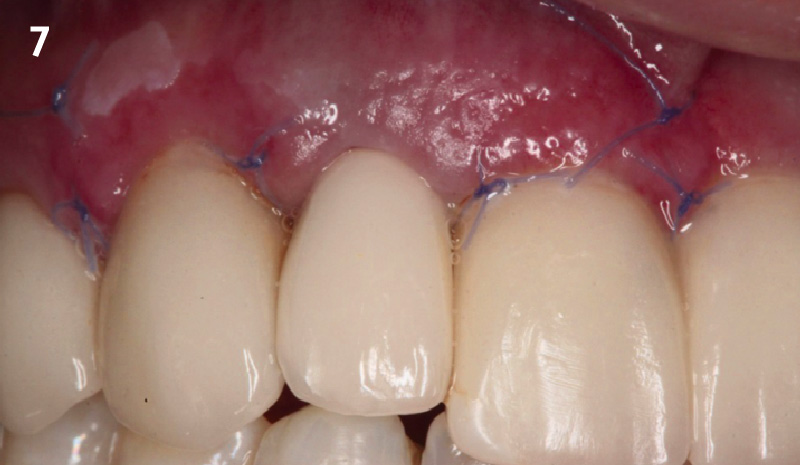
Four months after implant placement, a limited access “U”-flap was created and an implant impression was taken. The tissue was rolled to the buccal side and the abutment connection was performed.
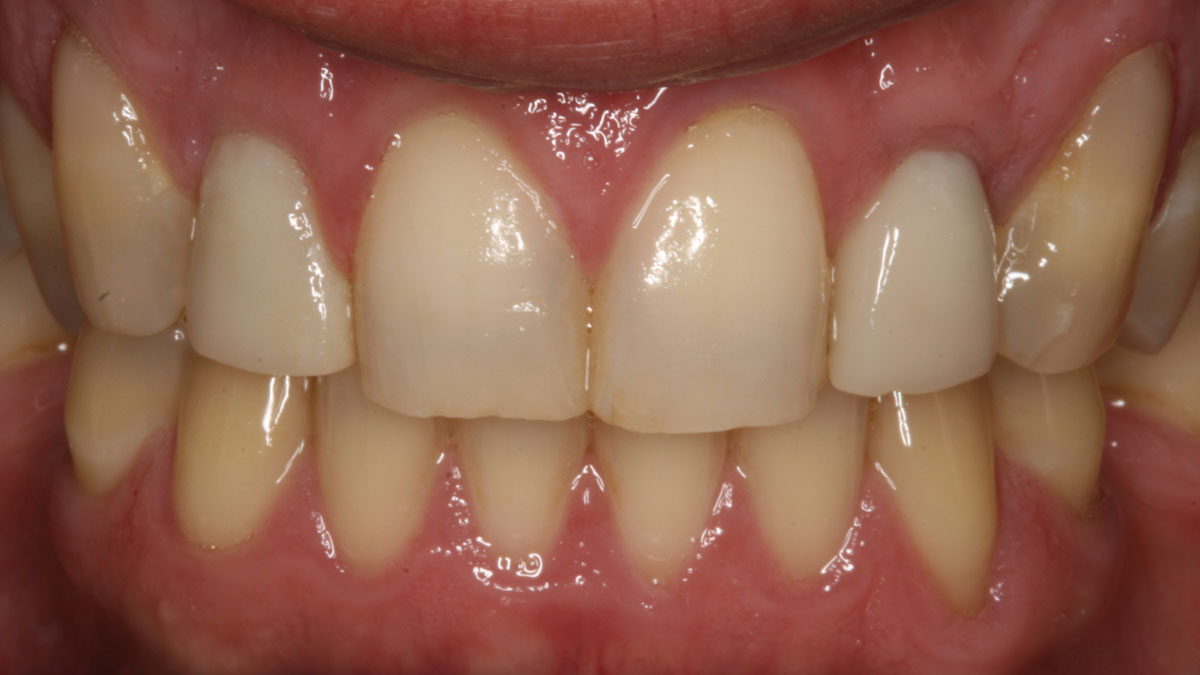
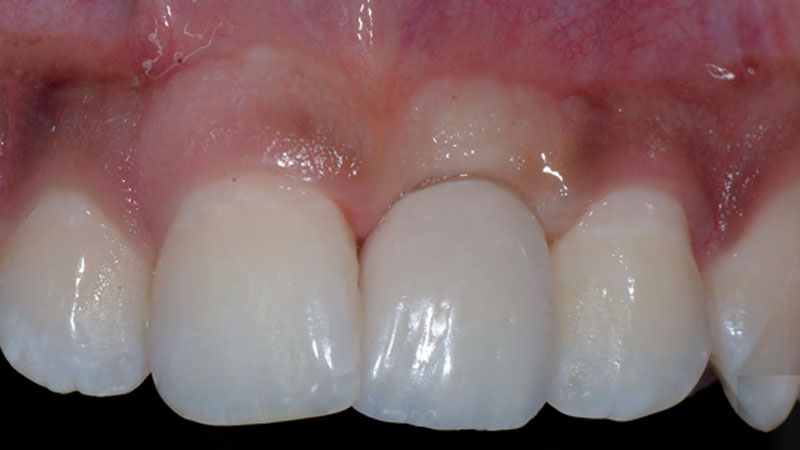
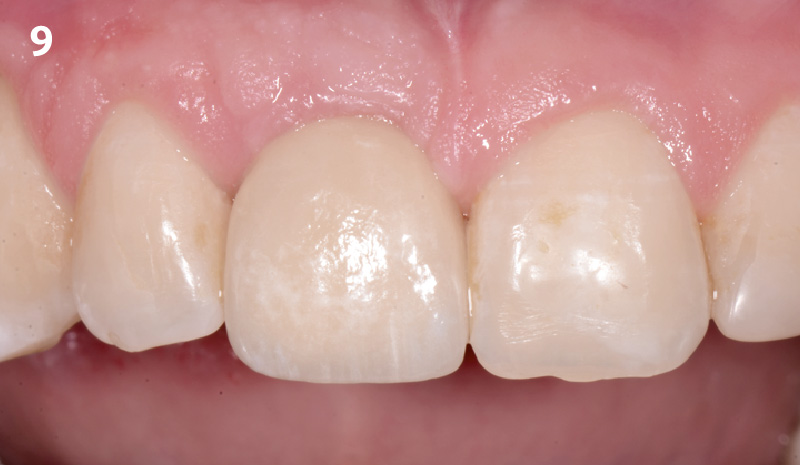
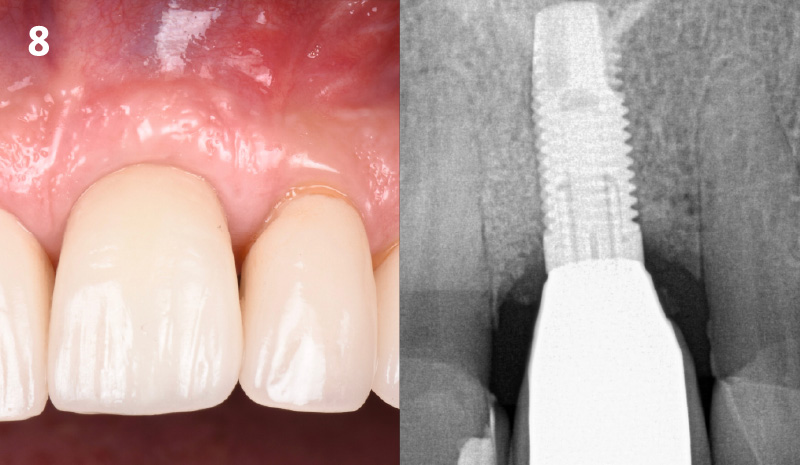
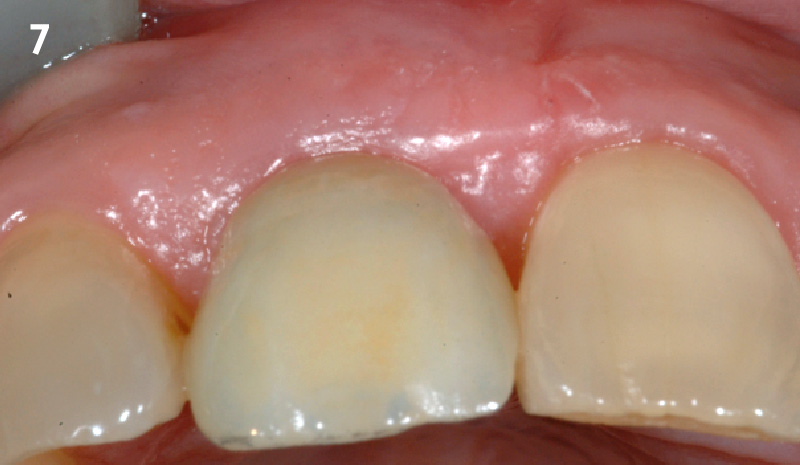
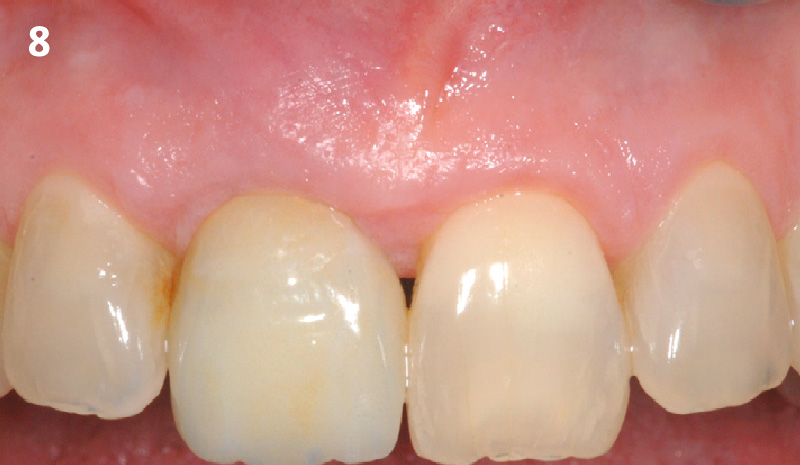
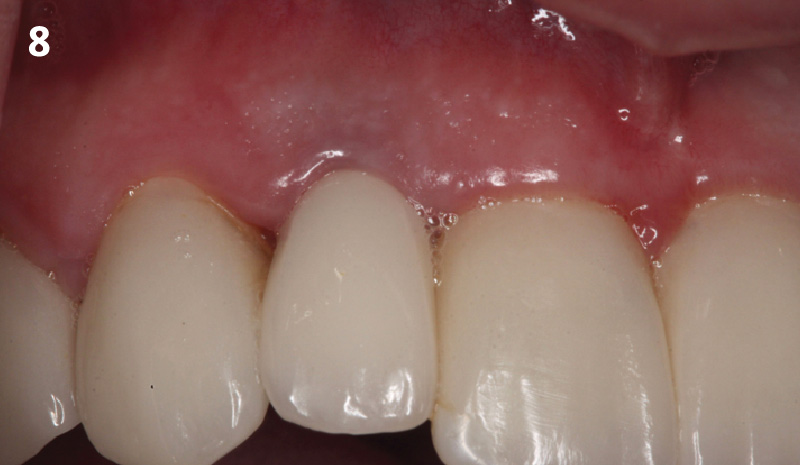
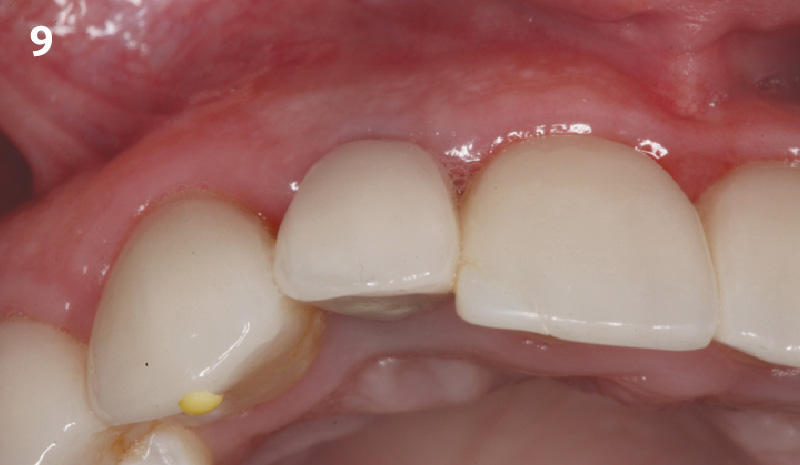
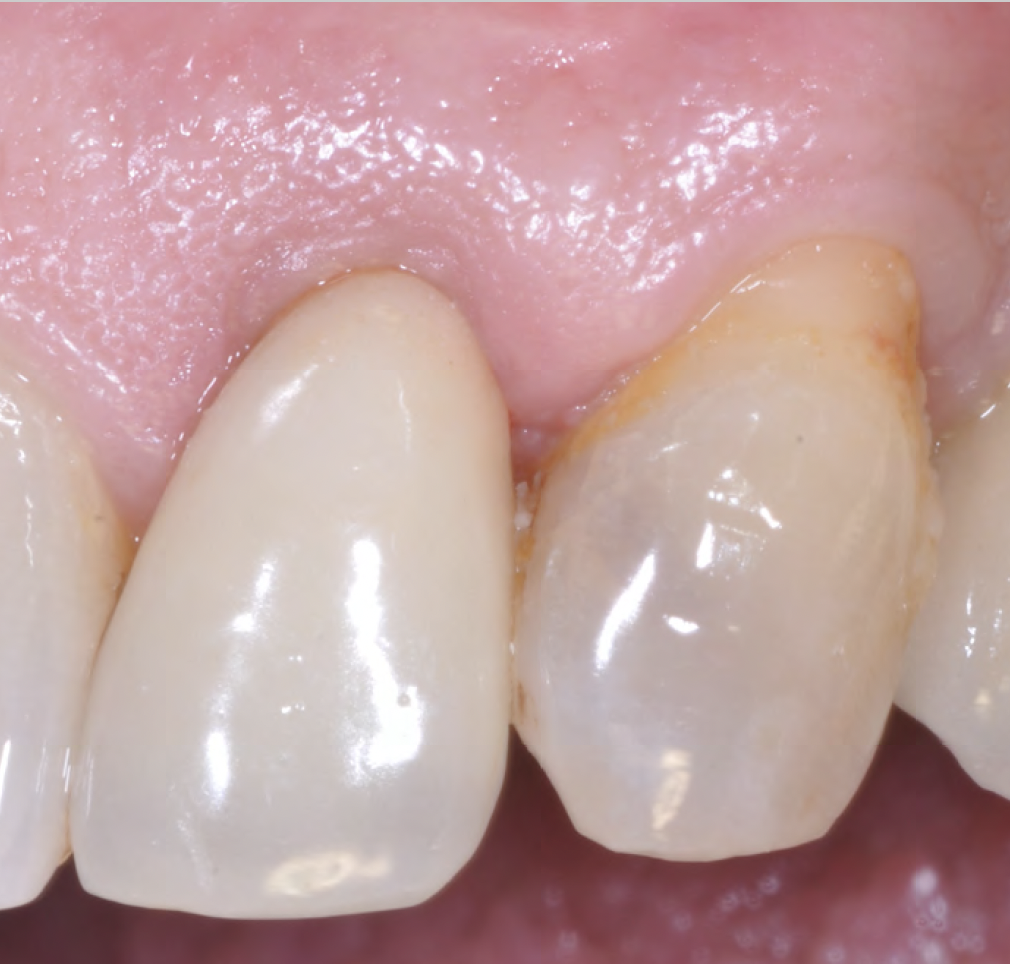
The definitive layered zirconia crown was fabricated and placed. The clinical situation 5 months after implant placement, shows harmonious soft tissue and a well-integrated implant crown. The patient is satisfied with the esthetic result.
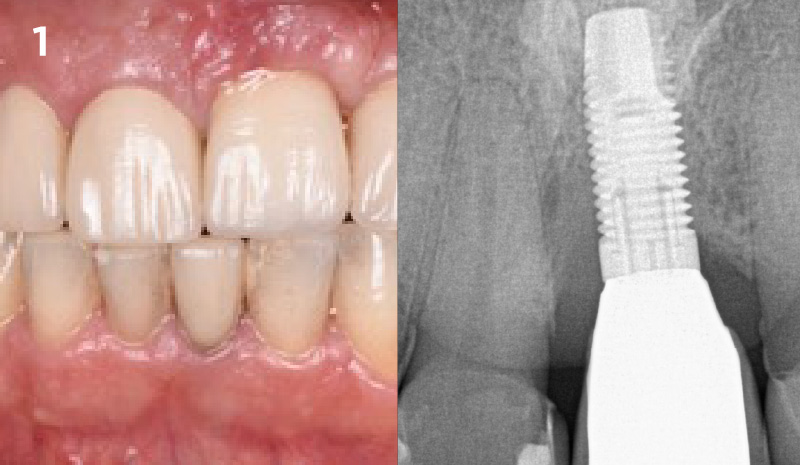
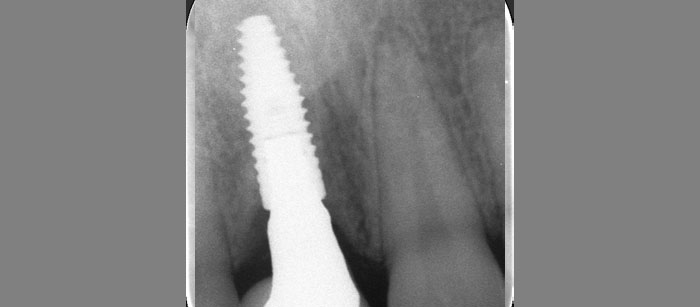
The periapical radiograph taken at the one-year follow-up shows stable marginal bone levels.

“A fractured anterior tooth needs to be replaced with an implant-supported reconstruction.”

THE OUTCOME

The implant and its prosthetic reconstruction were successful because they provided the patient with a fixed solution with adequate function and esthetics. The implant shows stable marginal bone levels due to the proper implant placement together with the guided bone regeneration procedure. The peri-implant soft-tissue is healthy and stable with sufficient volume created by the soft-tissue augmentation. The definitive reconstruction meets the patient’s esthetic demands and is functional in occlusion.

By using Geistlich Bio-Oss Collagen® trimmed into an “L-Shape” covered with Geistlich Bio-Gide® a very stable horizontal and vertical bone volume around the implant is provided. This results in a stable hard and soft-tissue condition following healing. This is key for the long-term performance of an implant especially in the esthetic zone.”

Prof. Dr. Ronald Jung

Four months after implant placement a limited access “U”-flap was created and an implant impression was taken. The tissue was rolled to the buccal side and the abutment connection was performed.”

Prof. Dr. Ronald Jung

Primary stability of the augmented bone volume is the clinical challenge in guided bone regeneration after flap closure. In this case Geistlich Bio-Oss Collagen® has been used to augment on the buccal side of the implant.”

Prof. Dr. Ronald Jung

Prof. Dr. Ronald E. Jung

Prof. Dr. Jung is currently Head of the Division of Implantology, Clinic for Fixed and Removable Prosthodontics and Dental Material Science, Center of Dental Medicine at the University of Zürich. In 2006 he worked as Visiting Associate Professor at the Department of Periodontics at the University of Texas Heath Science center at San Antonio, USA (Chairman: Prof. D. Cochran). In 2008 he finalized his “Habilitation” (venia legendi) in dental medicine and was appointed associate professor at the University of Zürich. In 2011 he received his PhD degree from the University of Amsterdam, ACTA dental school, The Netherlands. He is an accomplished and internationally renowned lecturer and researcher, best known for his work in the field of hard- and soft-tissue management and his research on new technologies in implant dentistry.

BIOBRIEF

Ridge Augmentation and Delayed Implant Placement on an Upper Lateral Incisor

Dr. Daniele Cardaropoli

THE SITUATION

An adult female patient presented with an endodontic/prosthetic failure on the maxillary left lateral incisor. The patient‘s request was to have a definitive implant-supported single crown. The clinical situation revealed recession of the free gingival margin, while the CBCT evaluation showed the missing buccal bone plate, which contra-indicated an immediate implant placement. The treatment plan included a staged approach with a ridge augmentation procedure at the time of tooth extraction, in order to recreate the buccal bone plate and reduce the gingival recession. By moving the free gingival margin, keratinized tissue was gained through an open-healing approach.

THE RISK PROFILE

Low RiskMedium RiskHigh Risk
Patient’s healthIntact immune system
Non-smoker 
Light smokerImpaired immune system 
Patient’s esthetic requirementsLowMediumHigh
Height of smile lineLowMediumHigh
Gingival biotypeThick – “low scalloped”Medium – “medium scalloped”Thin – “high scalloped”
Shape of dental crownsRectangularTriangular
Infection at implant sightNoneChronicAcute
Bone height at adjacent tooth site≤ 5 mm from contact point5.5 – 6.5 mm from contact point≥ 7 mm from contact point
Restorative status of adjacent toothIntactRestored
Width of tooth gap1 tooth (≥ 7 mm)1 tooth (≤ 7 mm)2 teeth or more
Soft-tissue anatomyIntactCompromised
Bone anatomy of the alveolar ridgeNo defectHorizontal defectVertical defect
Note: The compromised soft-tissue created a high risk situation for esthetic failure and the need for a staged approach, in order to coronalize the free gingival margin.
watch video download pdf

THE APPROACH

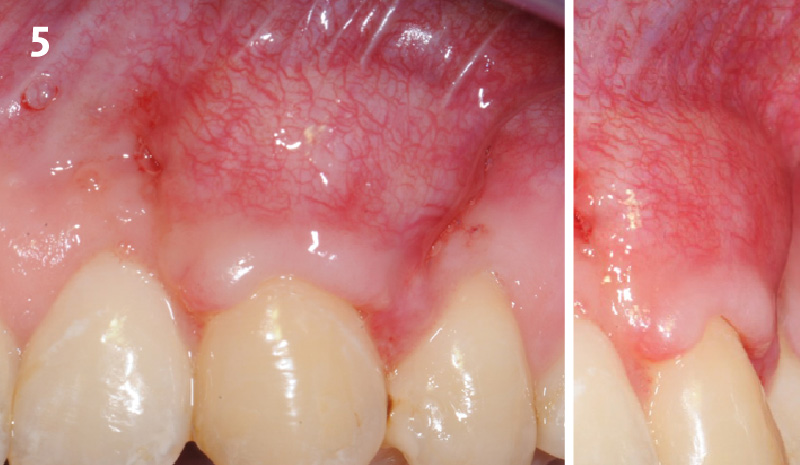
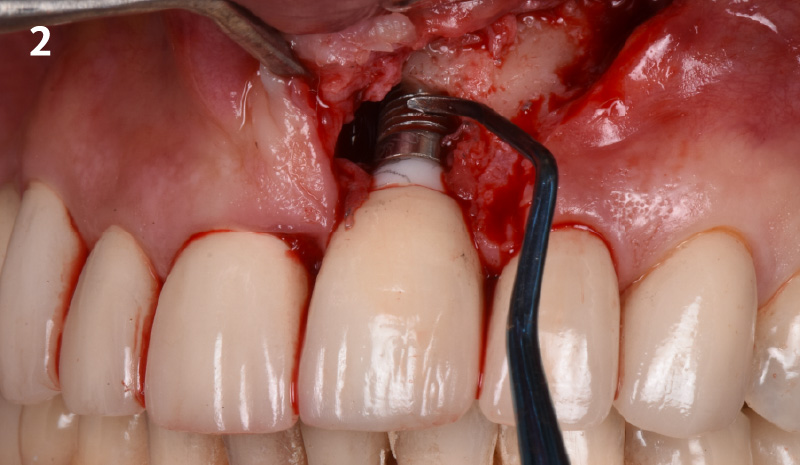
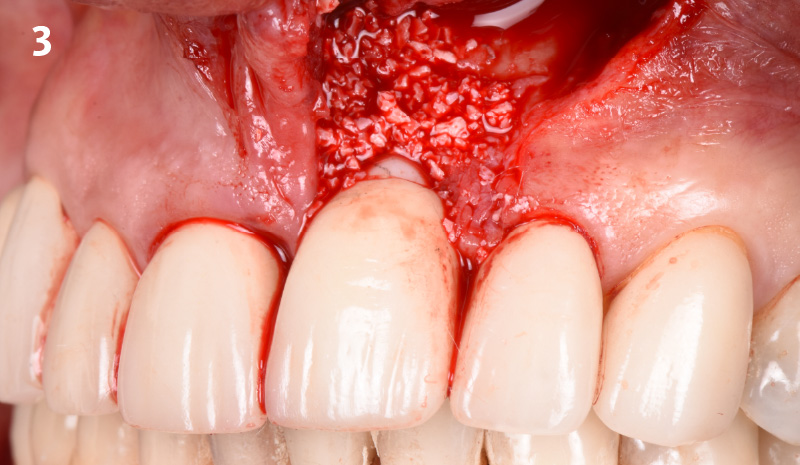
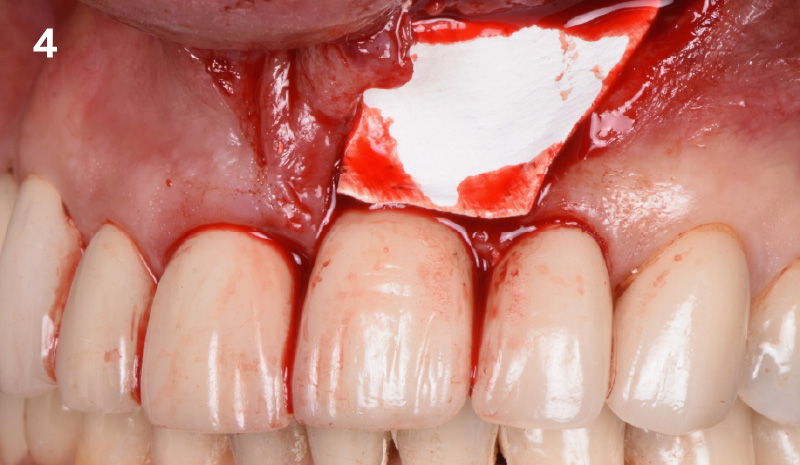
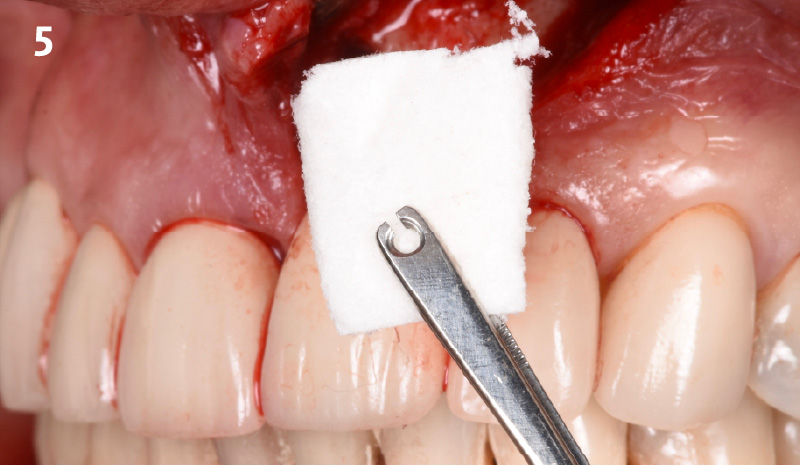
The treatment goals were to improve the soft-tissue levels and regenerate the buccal bone plate. After performing a flapless extraction procedure, a specifically designed resorbable bilayer collagen membrane, Geistlich Bio-Gide® Shape, was inserted into the socket with the long wing in contact with the buccal surface and the smooth, compact upper layer facing outward. The alveolus was then grafted with Geistlich Bio-Oss Collagen®. The three smaller wings of the membrane were folded on top of the graft material and sutured to the surrounding soft-tissue, allowing for open-healing.

Baseline: endodontic/prosthetic failure on the maxillary left lateral incisor.
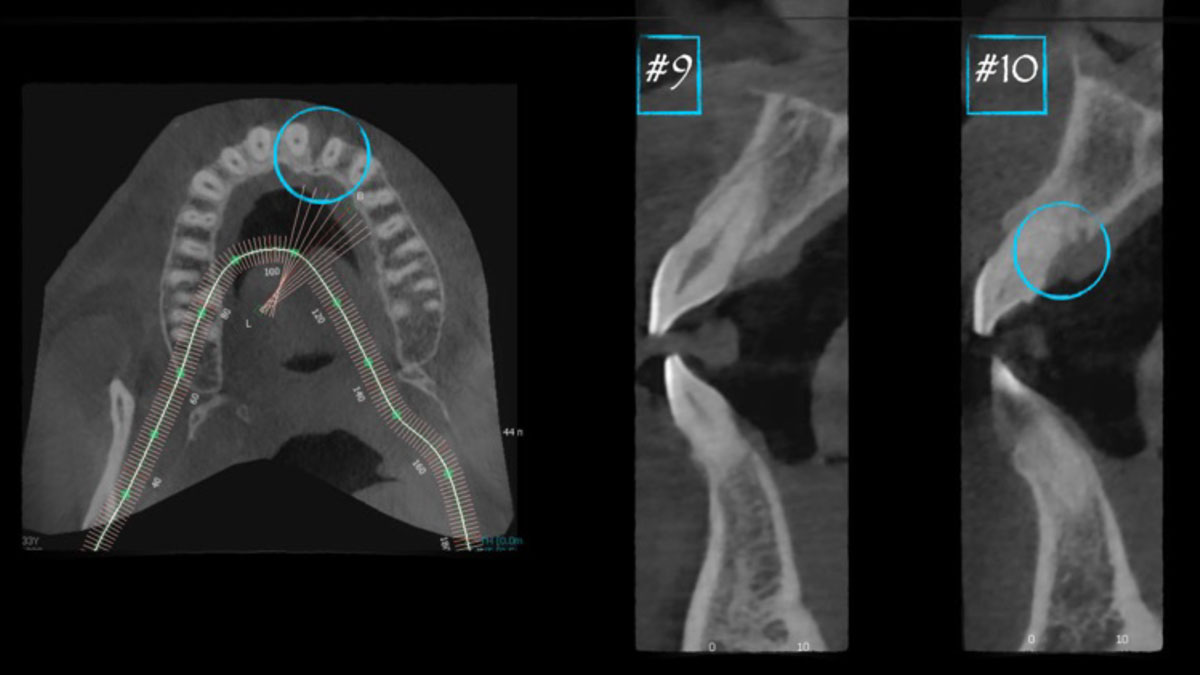
The cone beam image shows the missing bony buccal plate.
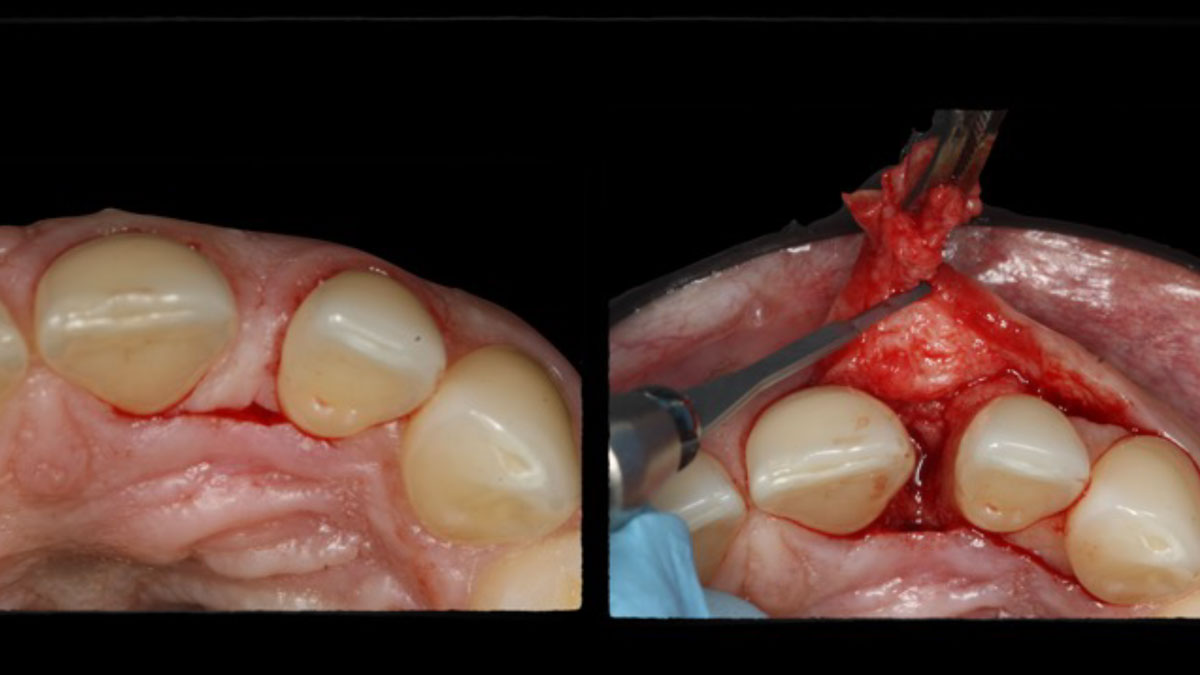
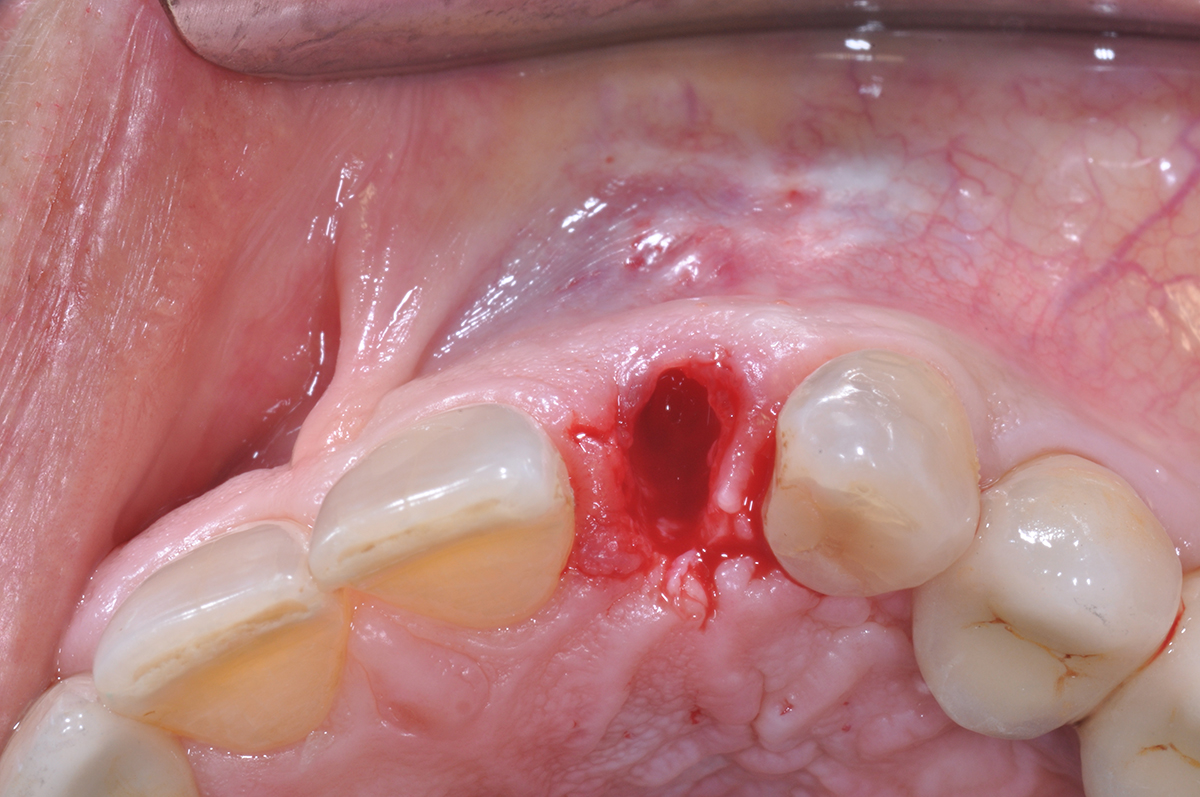
Clinical situation following a minimally invasive, flapless extraction approach.
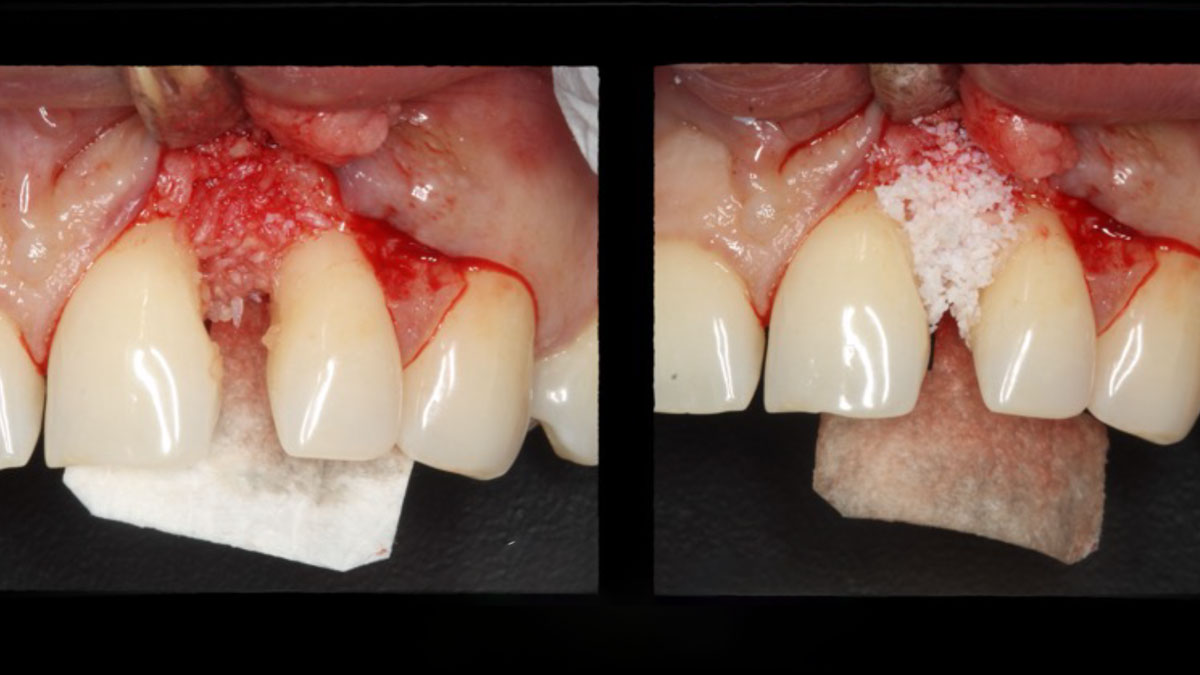
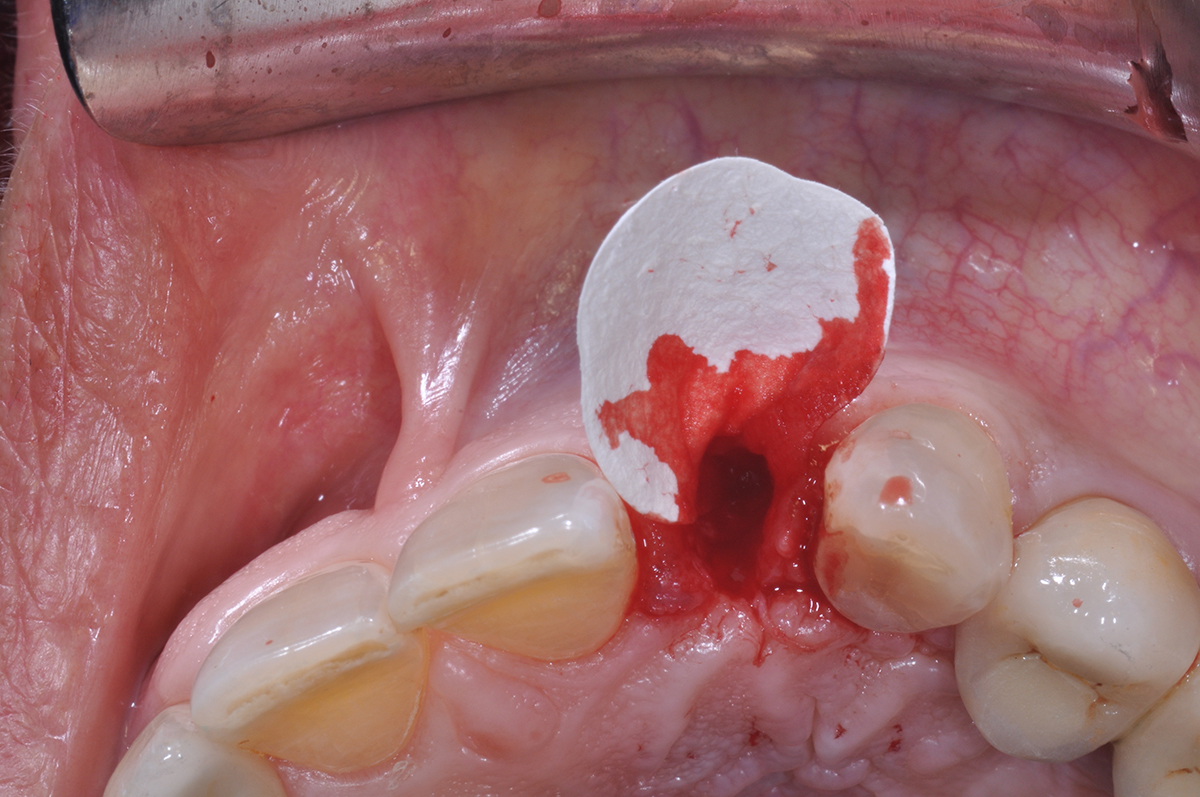
Geistlich Bio-Gide® Shape is inserted into the socket, with the long wing in contact with the buccal surface in order to recreate the cortical bone.
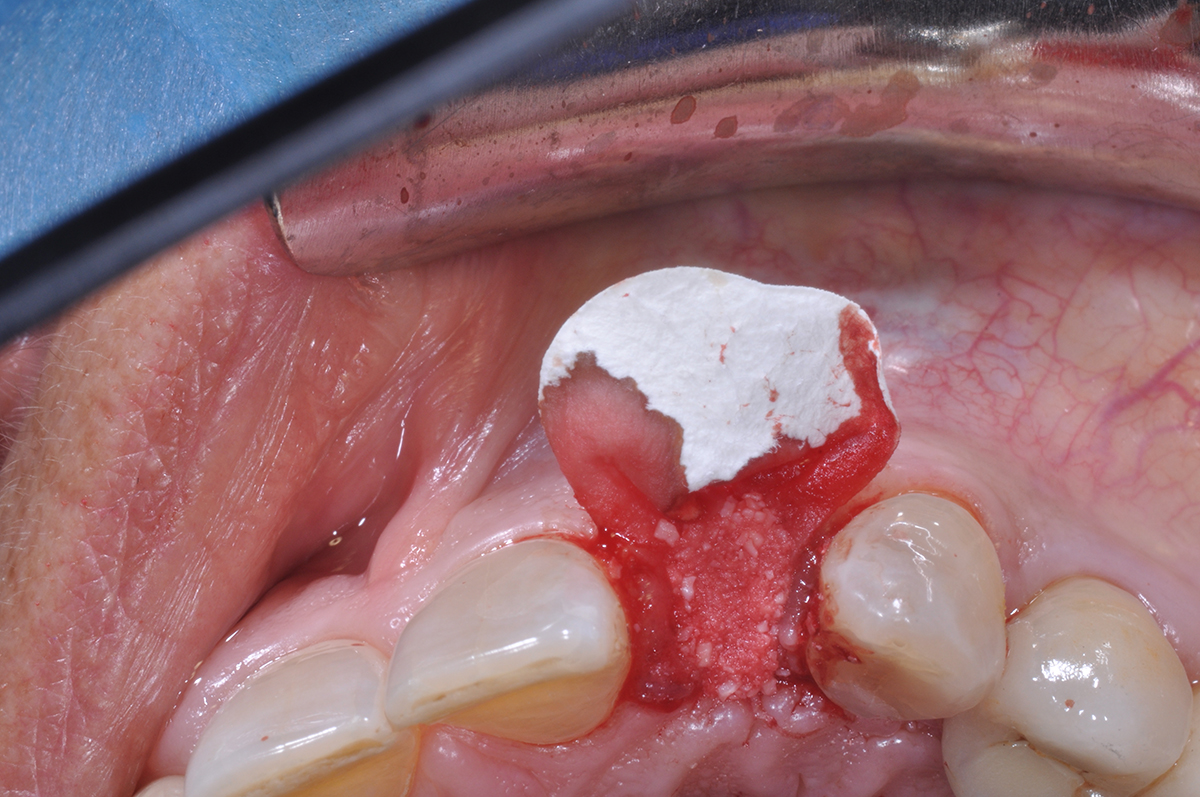
The socket is carefully grafted with Geistlich Bio-Oss Collagen®.
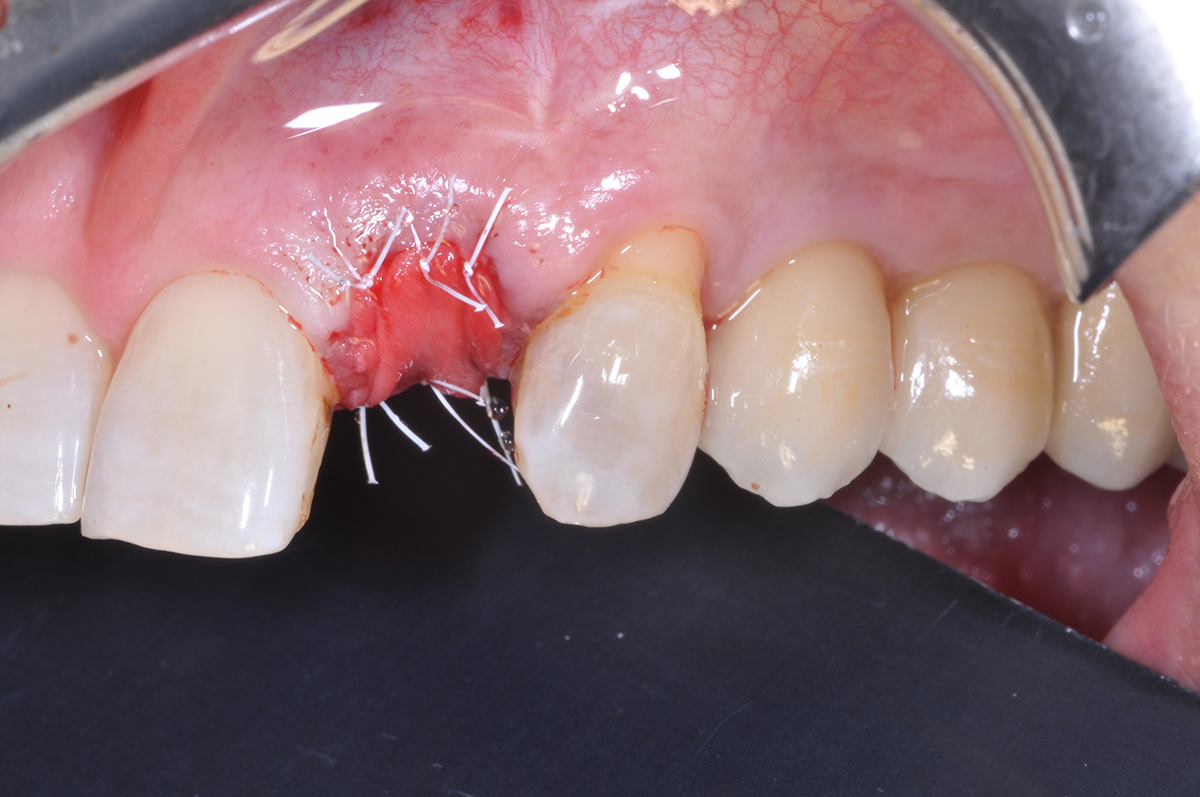
The three remaining wings of Geistlich Bio-Gide® Shape are folded over the bone graft and gently secured inside the gingival sulcus. The membrane is then sutured to the surrounding soft-tissue with six single-interrupted sutures.
Implant placement can be planned 4 months after the ridge augmentation procedure.
4 weeks post-operative view with an open-healing approach, showing a positive soft-tissue response.
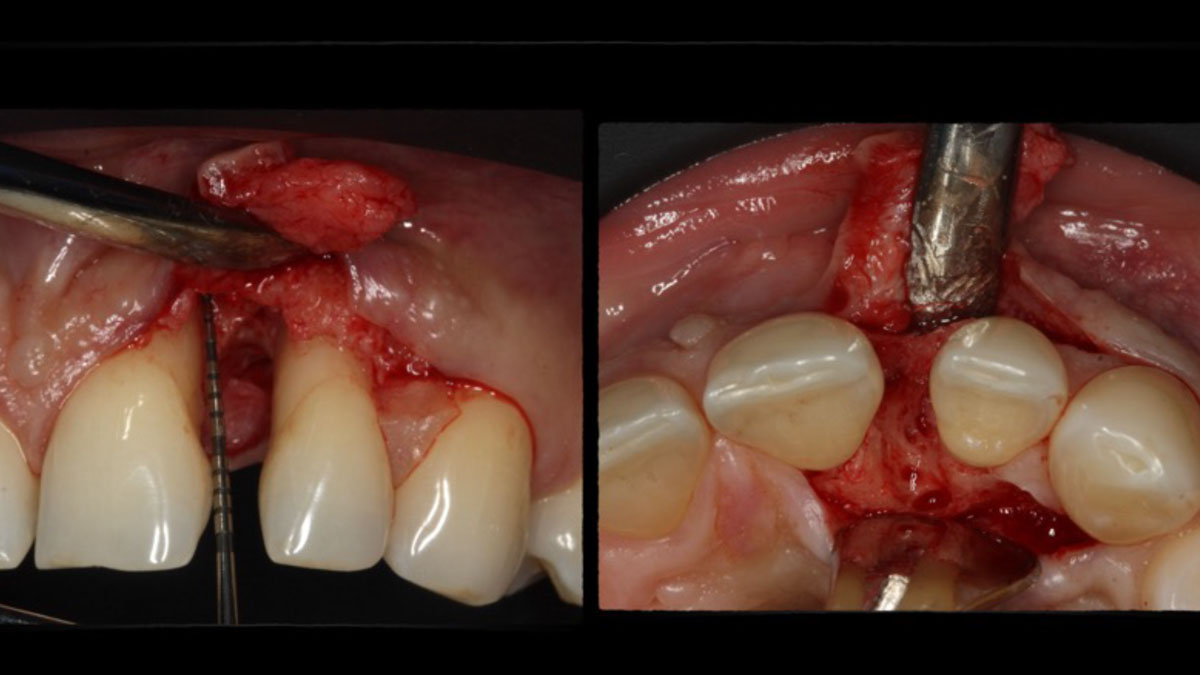
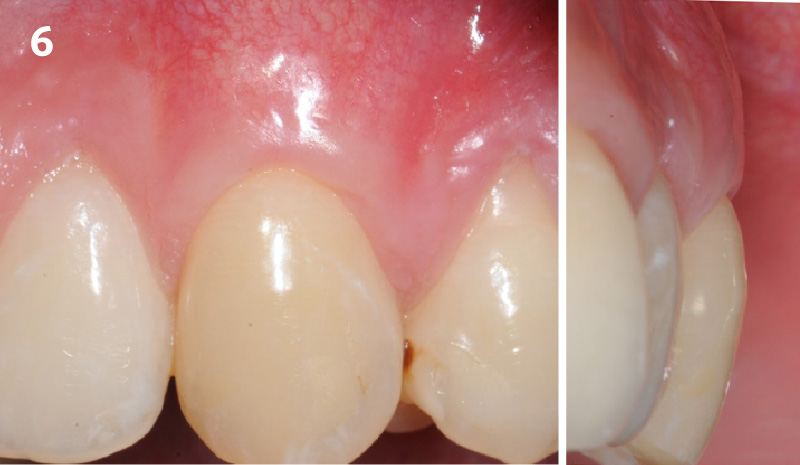
After flap elevation at 4 months, the new buccal bone plate can be detected, together with a completely filled alveolus. An implant can now be easily inserted into a fully healed ridge.
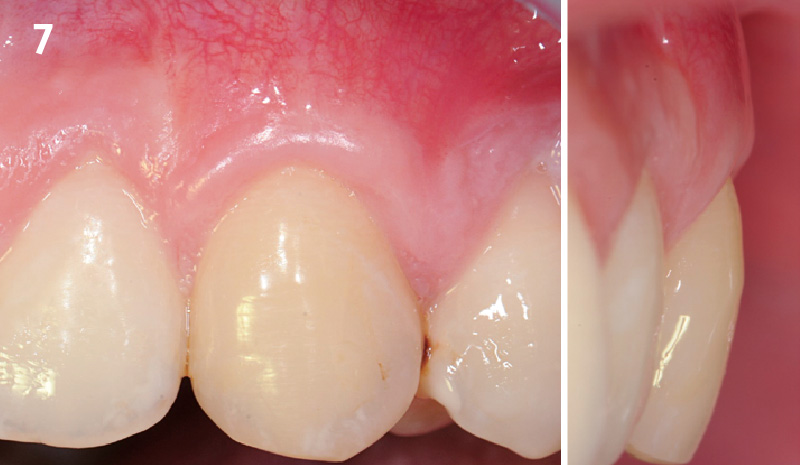
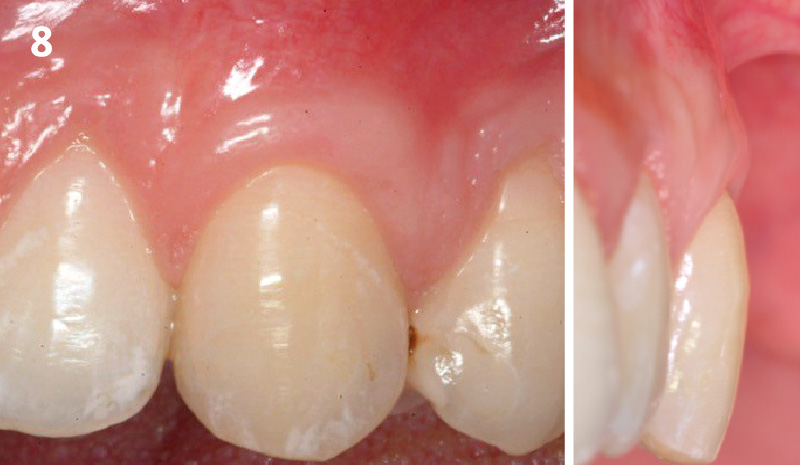
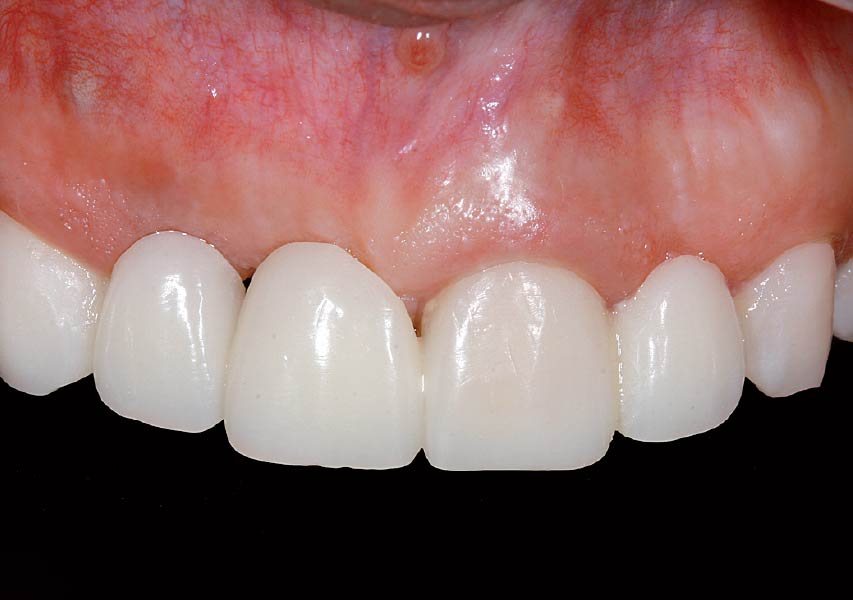
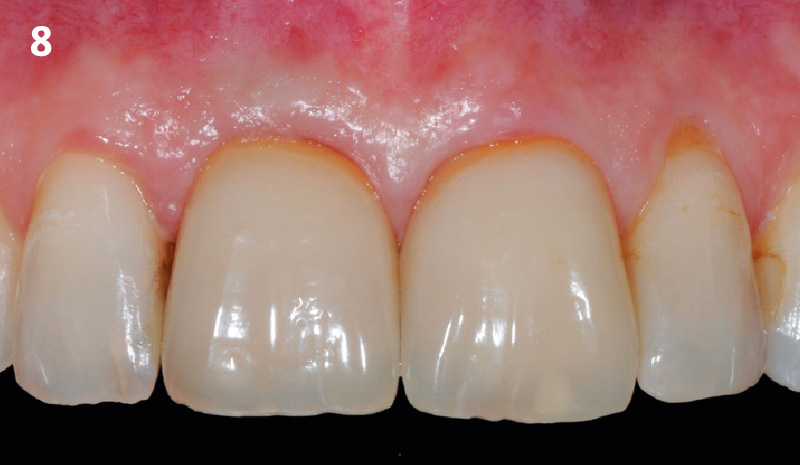
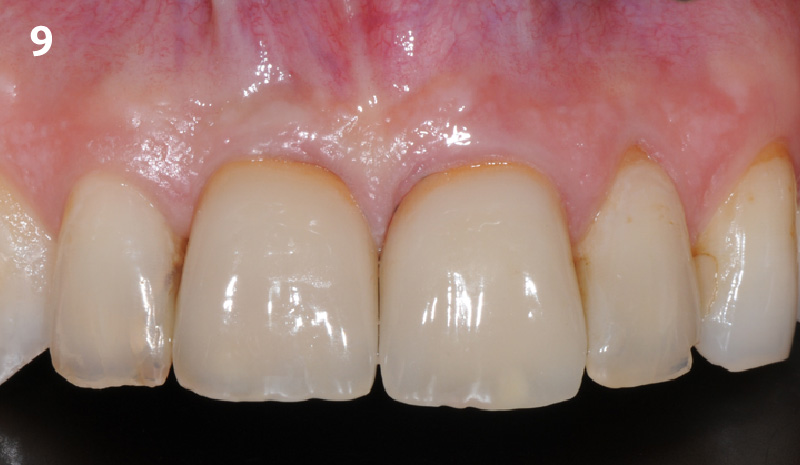
Clinical image of the final ceramic crown. An esthetic improvement can be noted when compared with the baseline image. The free gingival margin has been shifted in a coronal direction.

“The patient had a failing crown with compromised soft tissue and requested a single crown rehabilitation with improved esthetics.”

THE OUTCOME

This case demonstrates how it is possible to improve the clinical and esthetic situation that was presented at baseline. Despite missing the buccal bone plate and the recession of the free gingival margin, the ridge augmentation procedure performed with the combination of Geistlich Bio-Gide® Shape and Geistlich Bio-Oss Collagen® was able to create a positive volume of the ridge, allowing for a prosthetically guided implant placement.

Clinical image of the final ceramic crown

Ridge augmentation combining the use of Geistlich Bio-Oss Collagen® and Geistlich Bio-Gide® Shape is a predictable minimally invasive regenerative procedure able to create sufficient ridge volume suitable for prosthetically driven implant placement.”

Dr. Daniele Cardaropoli

Prosthetically guided implant placement can be planned 4 months after the ridge augmentation procedure. The specifically designed Geistlich Bio-Gide® Shape was able to protect the Geistlich Bio-Oss Collagen®, not only in the coronal position but also aided in recreating the missing buccal bone.”

Dr. Daniele Cardaropoli

The use of the Cardaropoli Compactor instrument helped to carefully adapt Geistlich Bio-Gide® Shape onto the inner buccal surface of the alveolus and to properly compact Geistlich Bio-Oss Collagen® inside the socket.”

Dr. Daniele Cardaropoli

Dr. Daniele Cardaropoli

Periodontist – PRoED, Institute for Professional Education in Dentistry, Torino

Doctor of Dentistry and Certificate in Periodontology from the University of Torino, Italy.
Active member of the Italian Society of Periodontology, European Federation of Periodontology, Italian Academy of osseointegration and Academy of osseointegration. International member of the American Academy of Periodontology. Scientific Director of Institute for Professional Education in Dentistry (PRoED), Torino. Member of the Editorial Board of The International Journal of Periodontics and Restorative Dentistry. Private practice in Torino, Italy.

BIOBRIEF

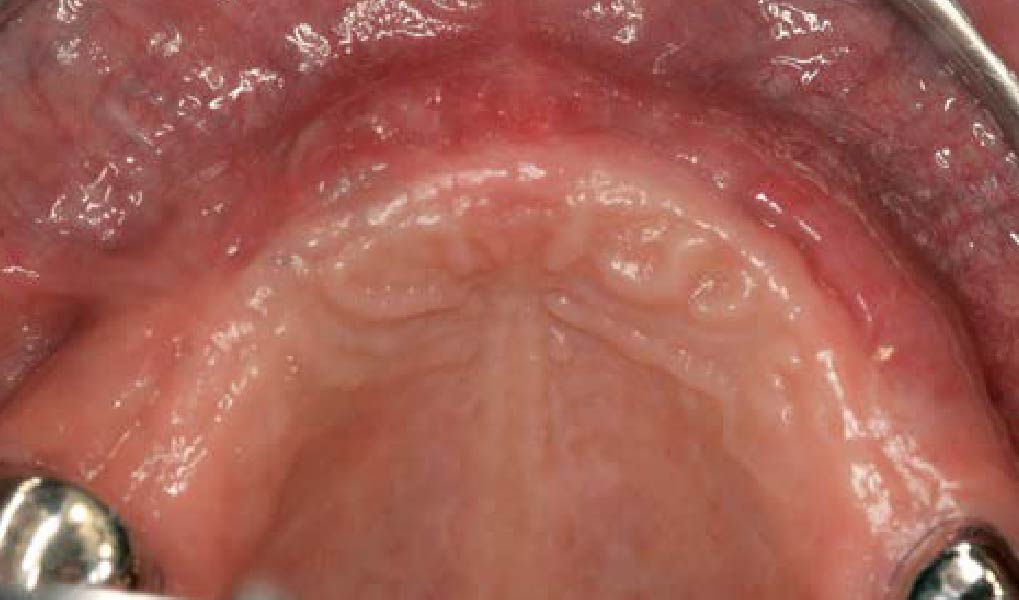
Combined Horizontal and Vertical Regeneration Using a CAD-CAM Titanium Scaffold

Dr. Gian Maria Ragucci
Prof. Federico Hernández-Alfaro

THE SITUATION

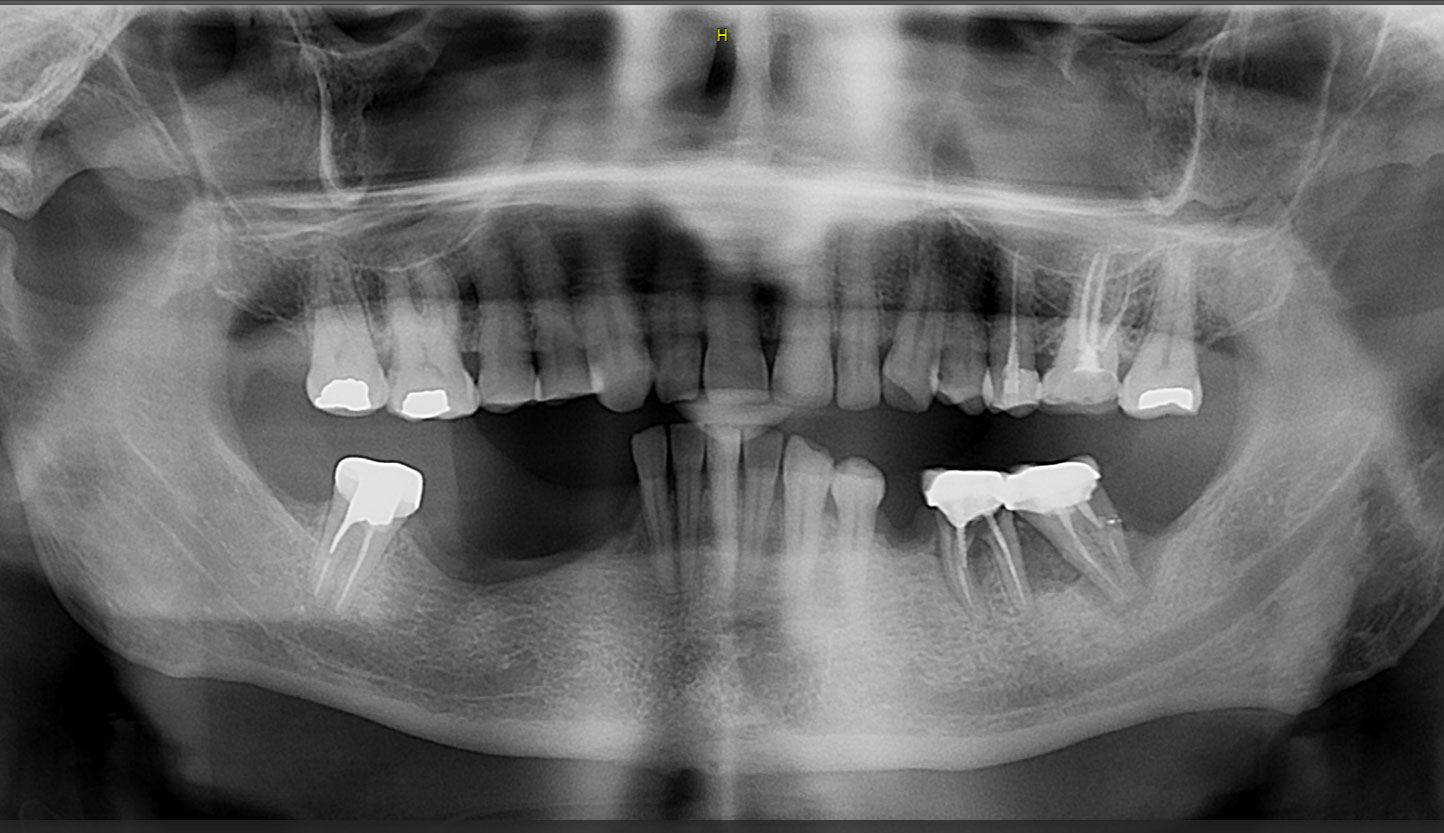
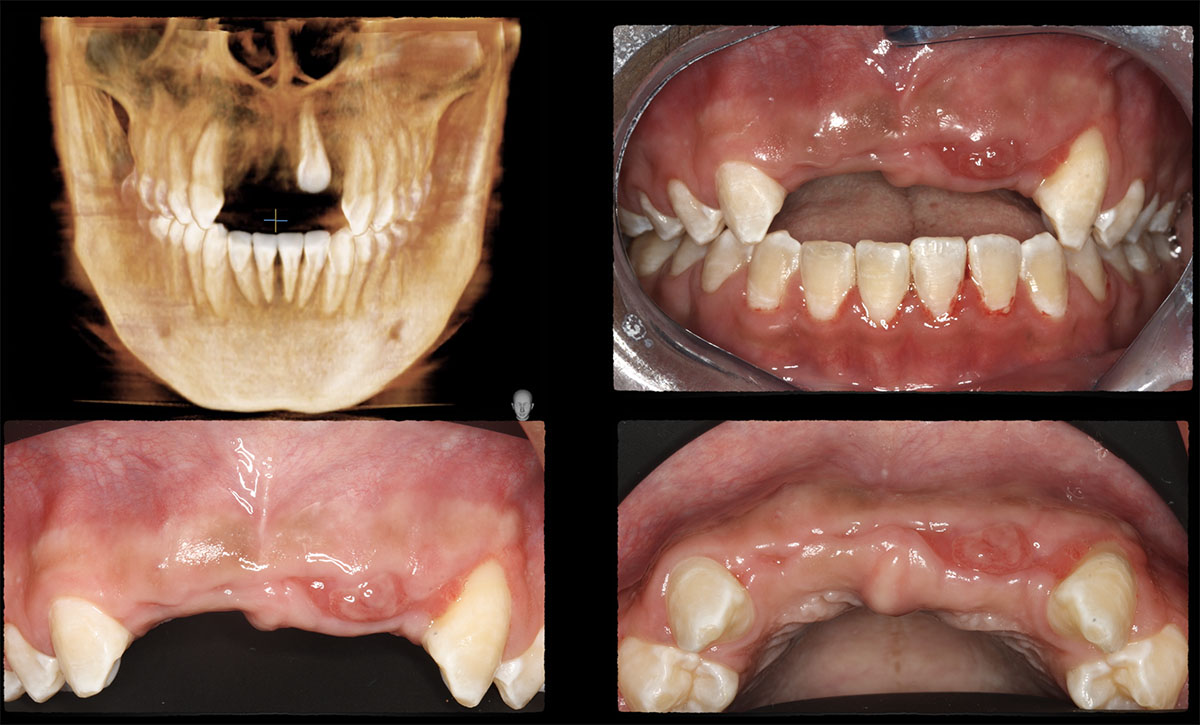
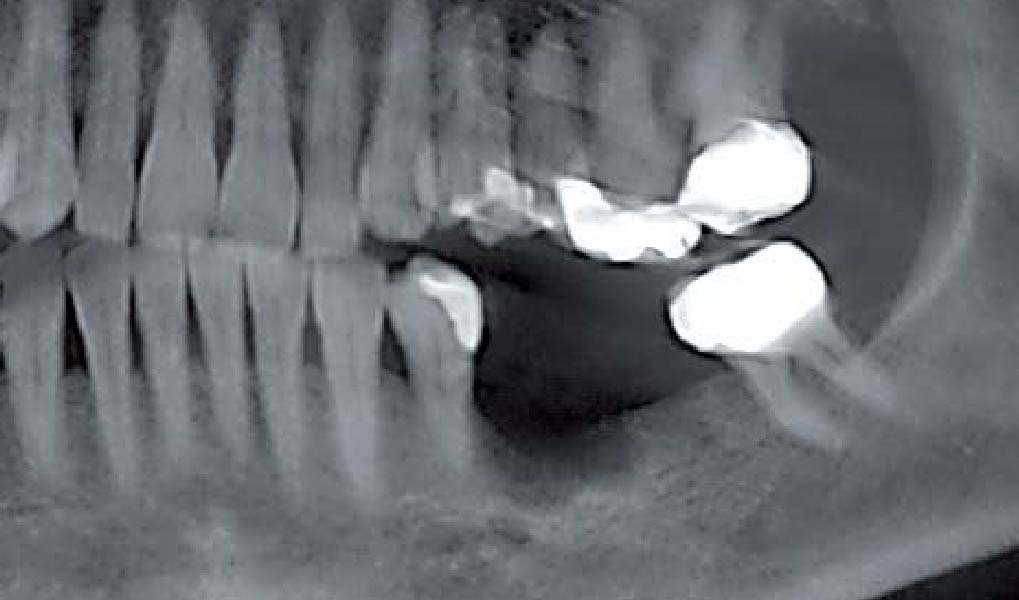
A 54-year-old, systematically healthy male patient (*ASA) came to our attention presenting with partial edentulism in the lower jaw and requiring a fixed and esthetic rehabilitation, refusing any removable solution. The clinical and radiographic evaluation resulted in significant bone atrophy both in the vertical and horizontal components; which makes it impossible to place both conventional implants and short or narrow implants.

*American Society of Anesthesiologists Physical Status Classification System

THE RISK PROFILE

Low RiskMedium RiskHigh Risk
Patient’s healthIntact immune system
Non-smoker 
Light smokerImpaired immune system 
Patient’s esthetic requirementsLowMediumHigh
Height of smile lineLowMediumHigh
Gingival biotypeThick – “low scalloped”Medium – “medium scalloped”Thin – “high scalloped”
Shape of dental crownsRectangularTriangular
Infection at implant sightNoneChronicAcute
Bone height at adjacent tooth site≤ 5 mm from contact point5.5 – 6.5 mm from contact point≥ 7 mm from contact point
Restorative status of adjacent toothIntactRestored
Width of tooth gap1 tooth (≥ 7 mm)1 tooth (≤ 7 mm)2 teeth or more
Soft-tissue anatomyIntactCompromised
Bone anatomy of the alveolar ridgeNo defectHorizontal defectVertical defect
watch video download pdf

THE APPROACH

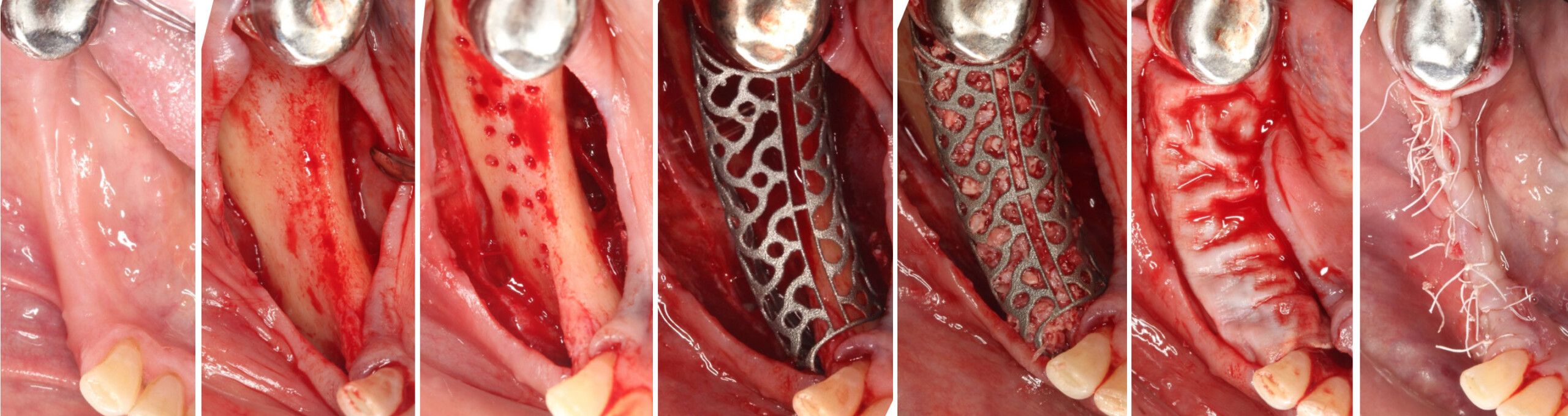
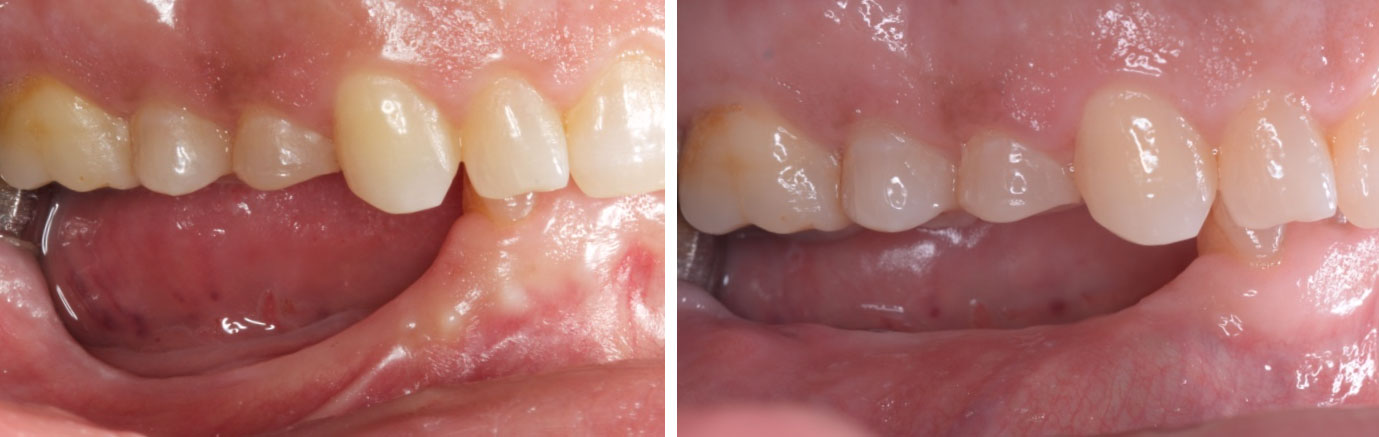
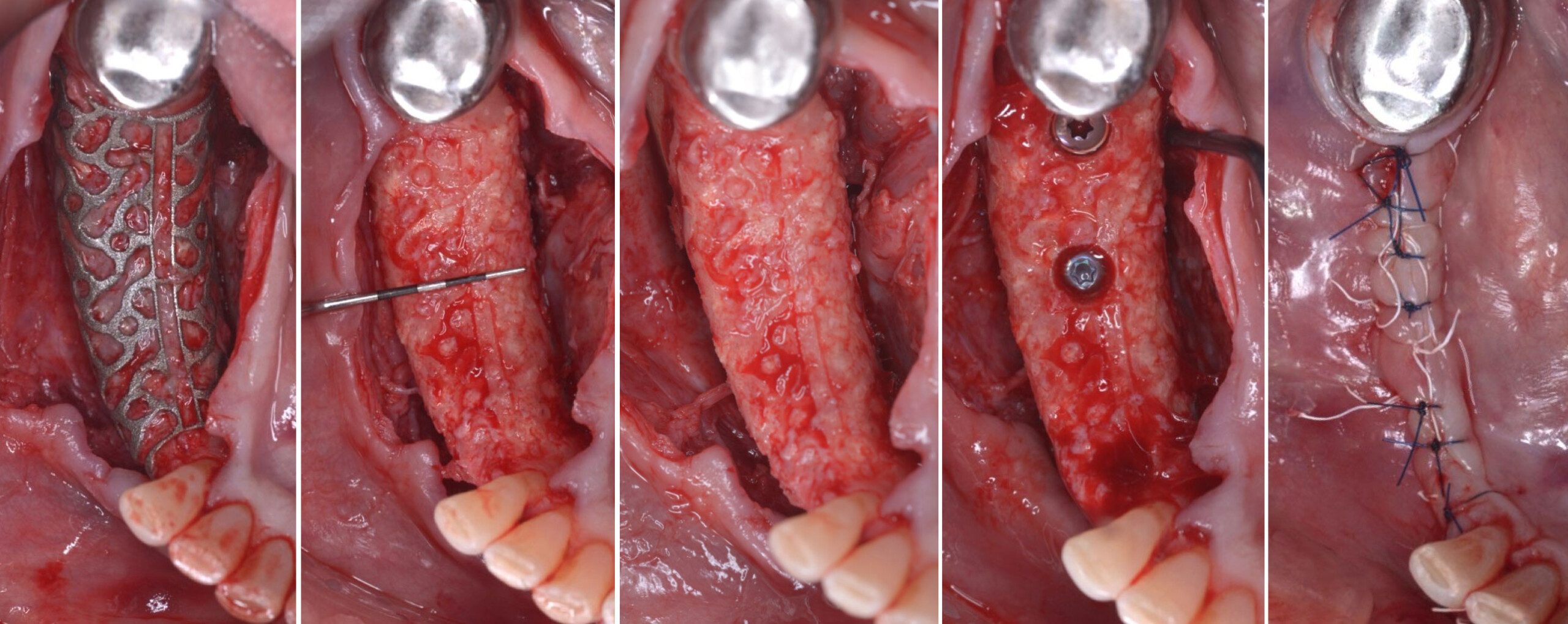
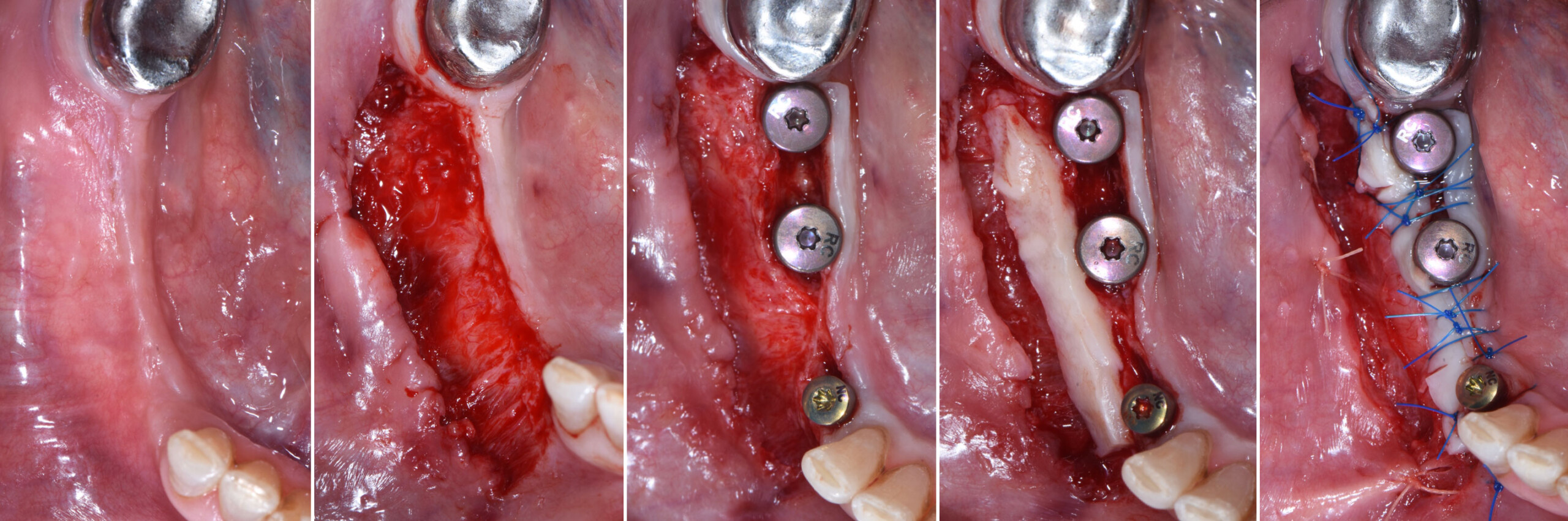
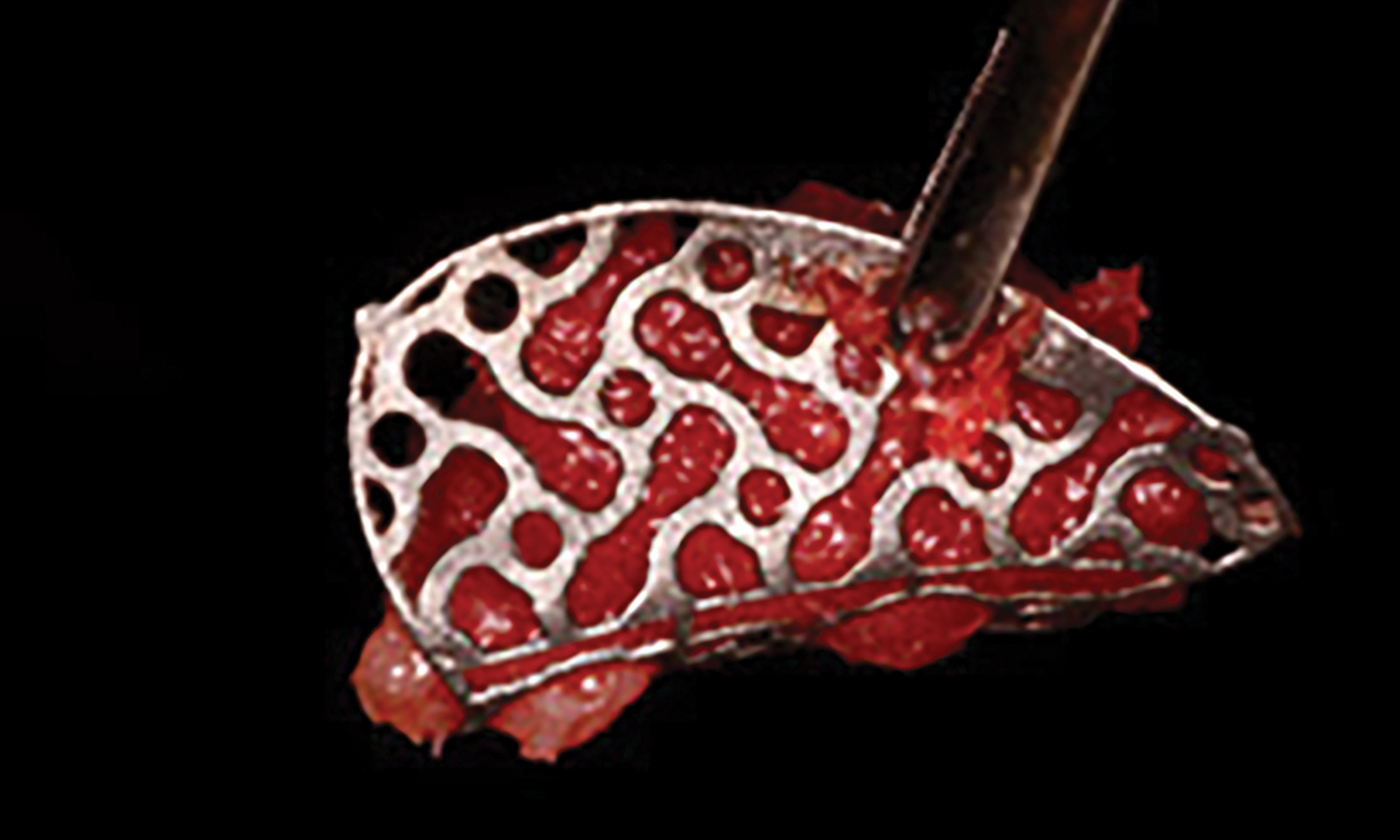
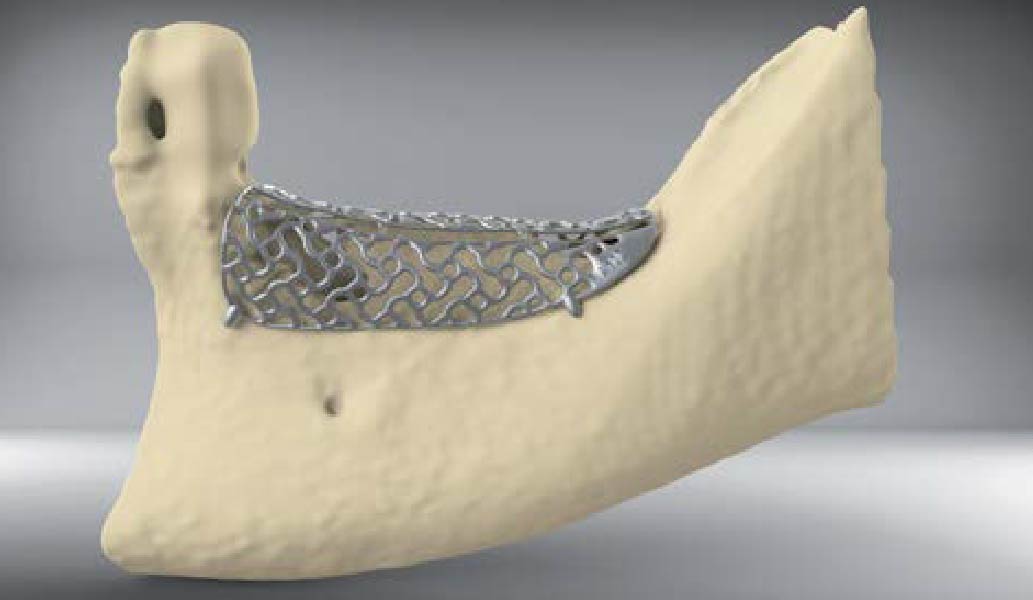
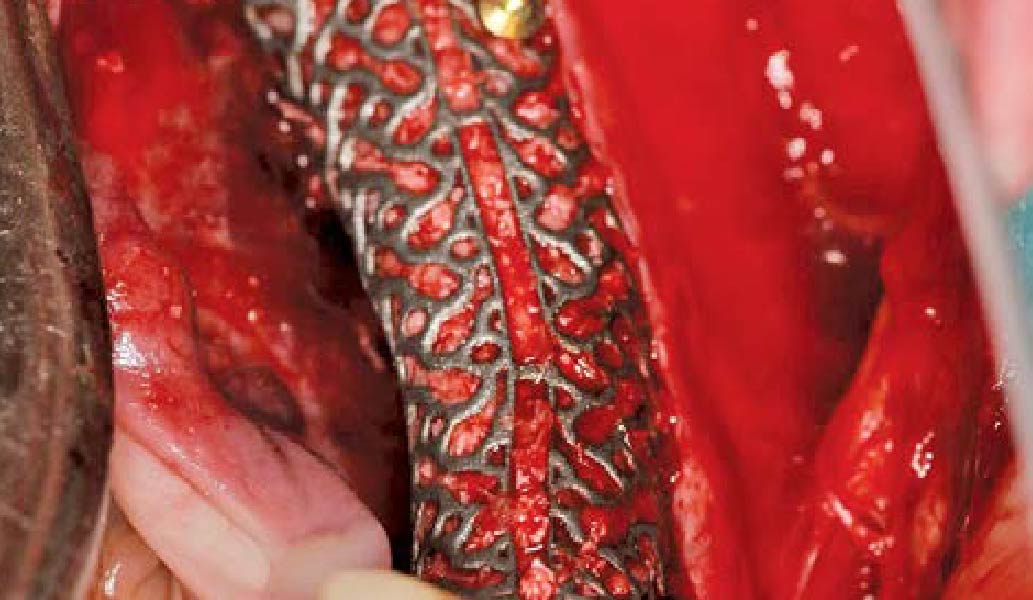
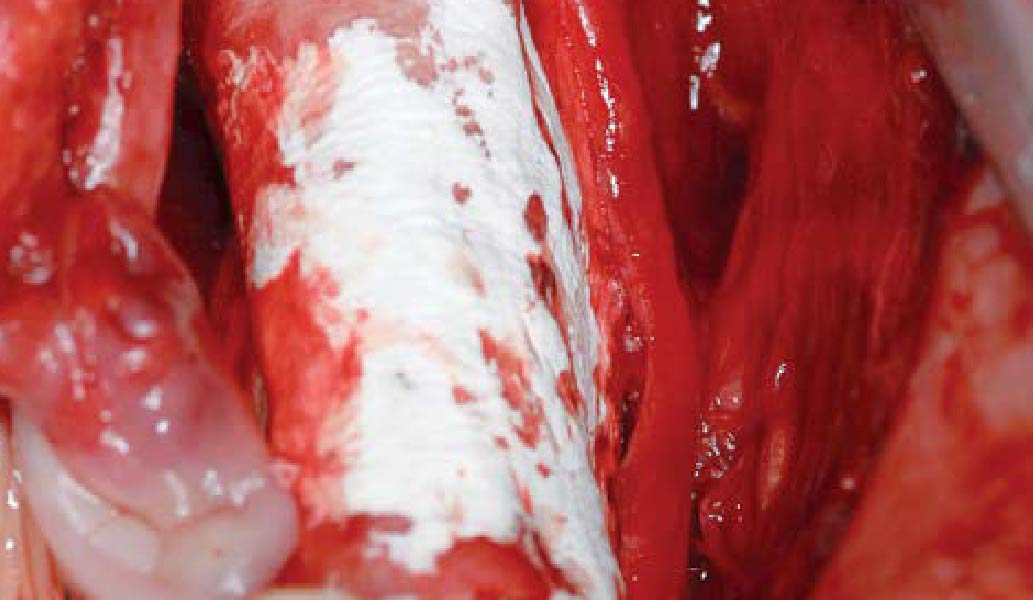
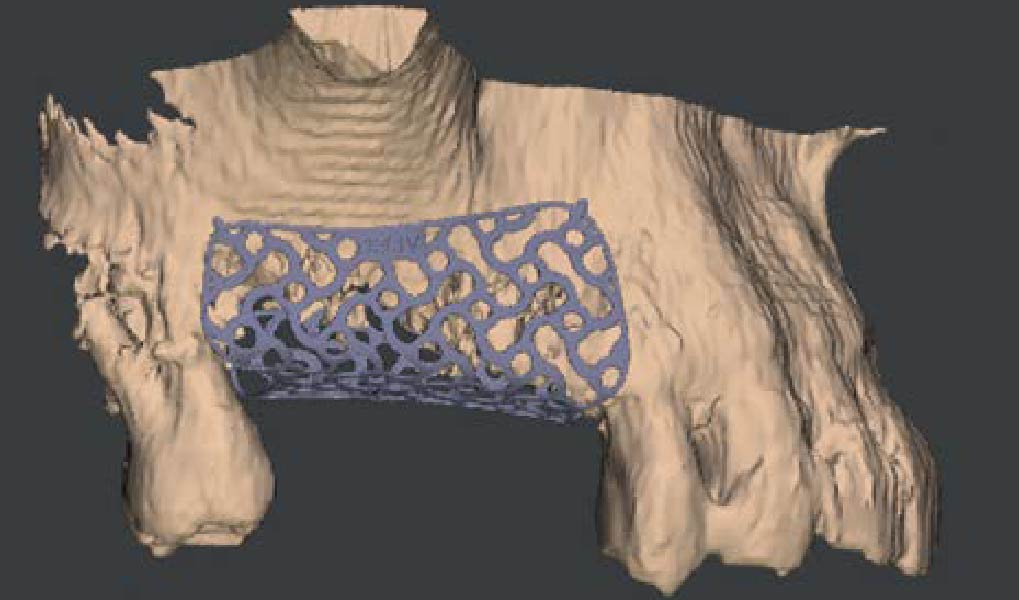
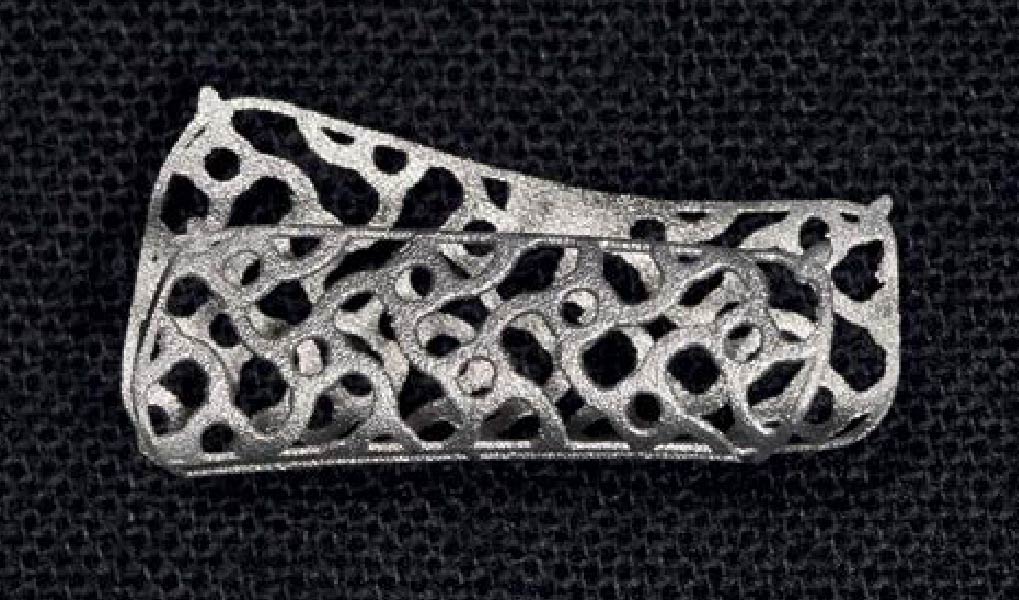
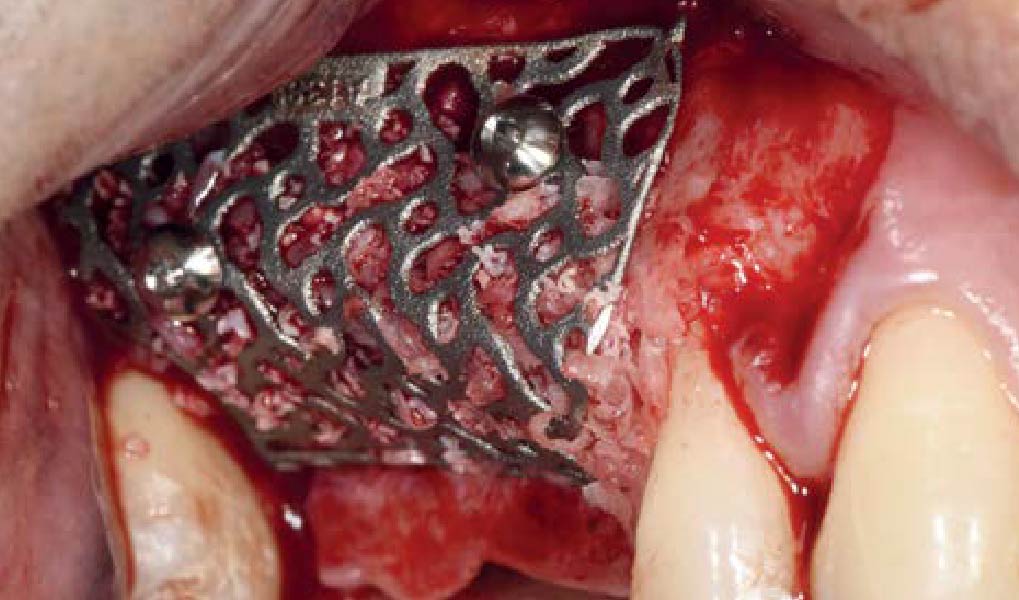
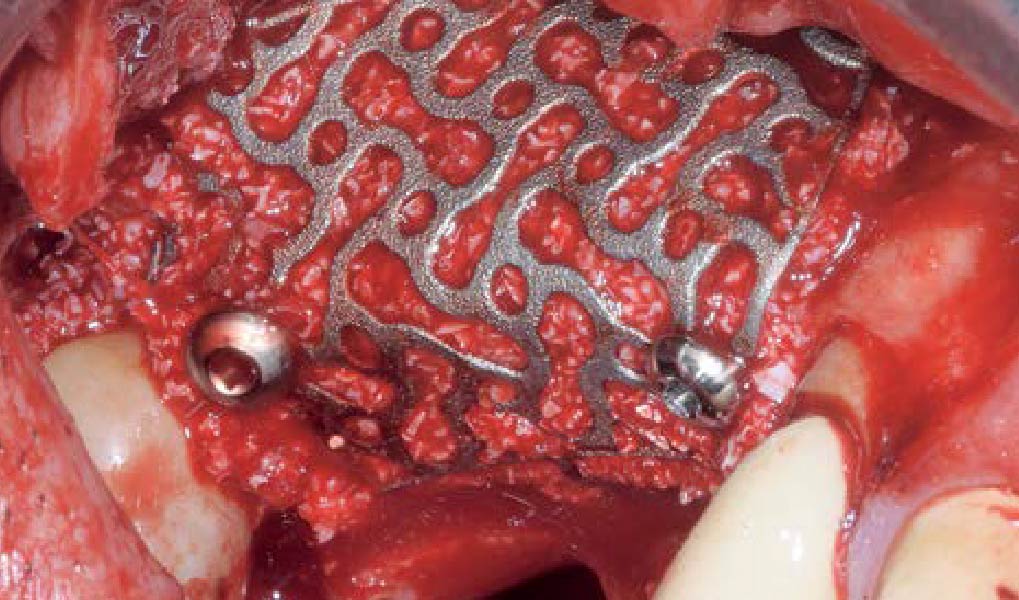
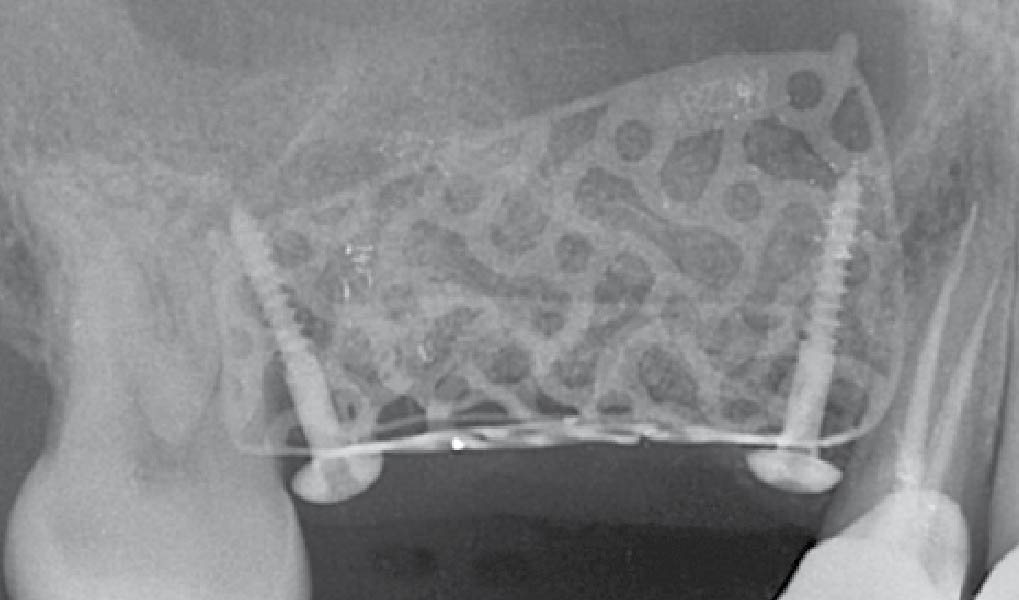
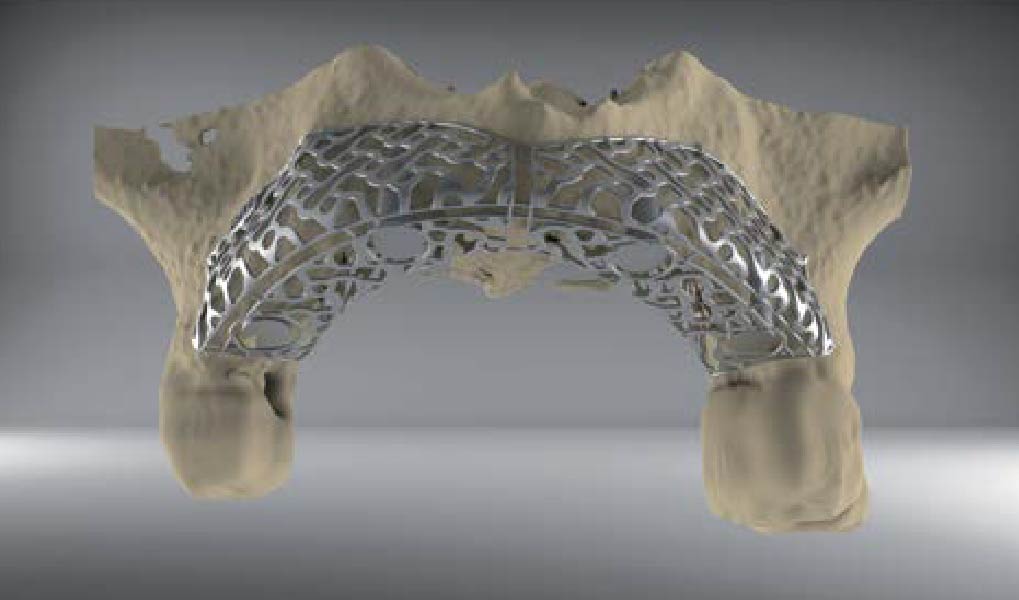
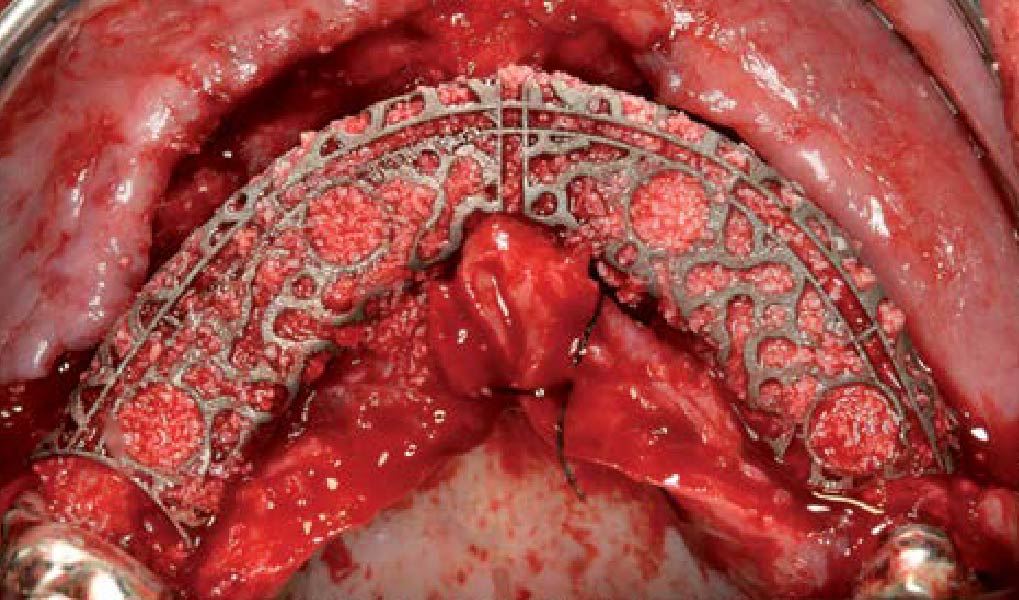
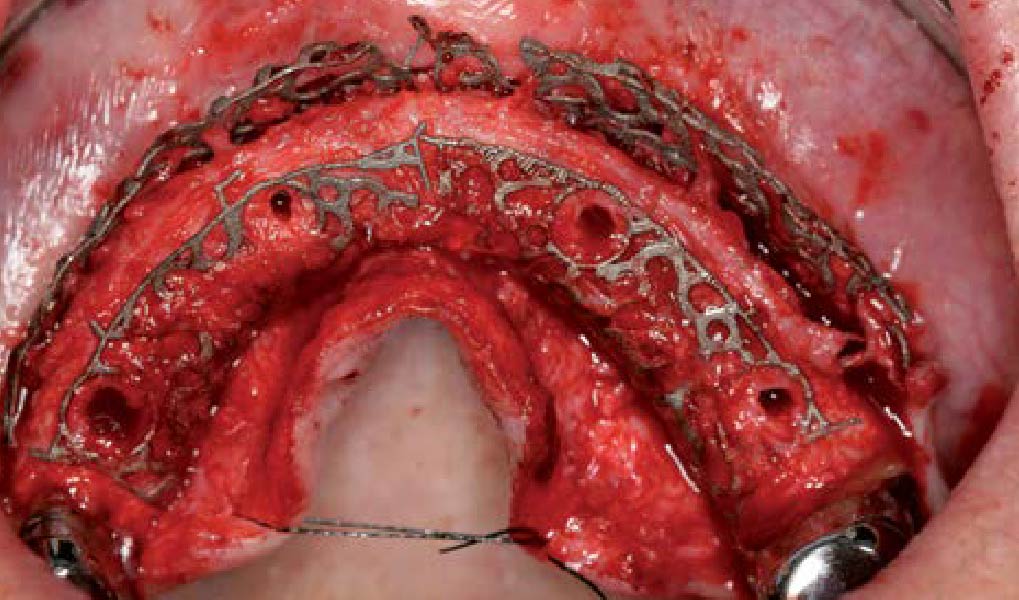
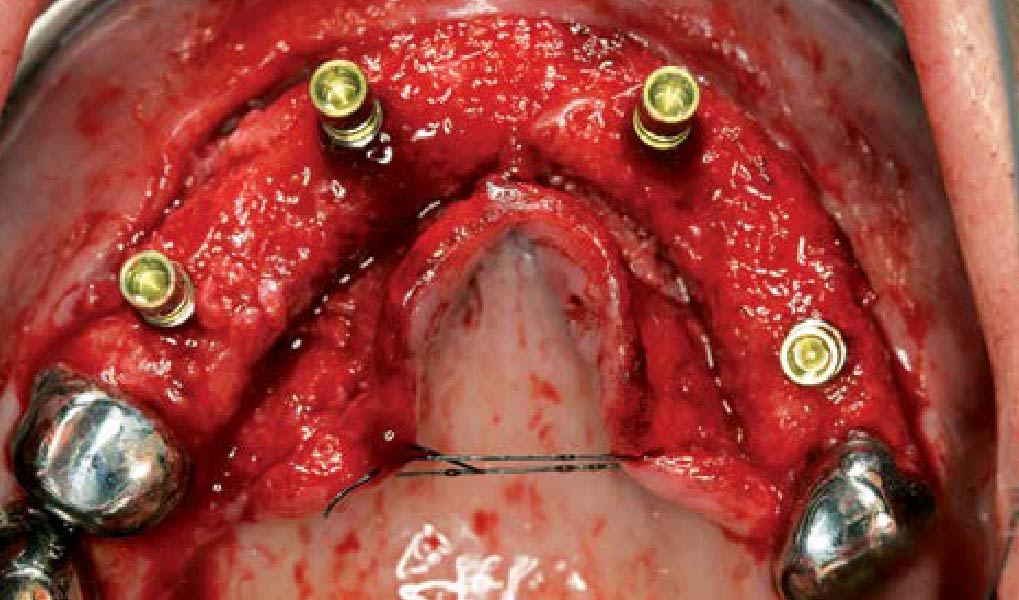
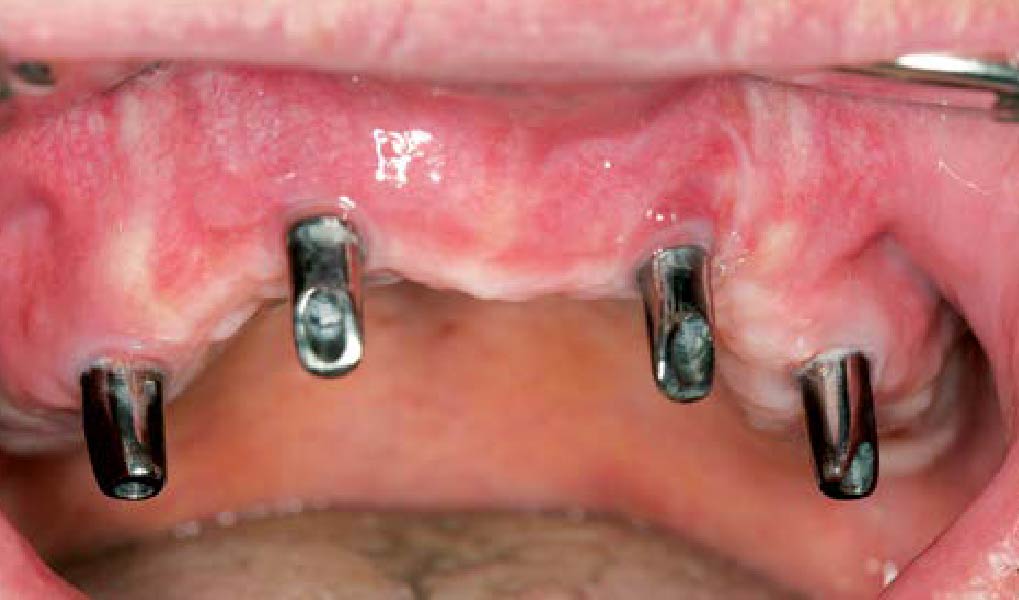
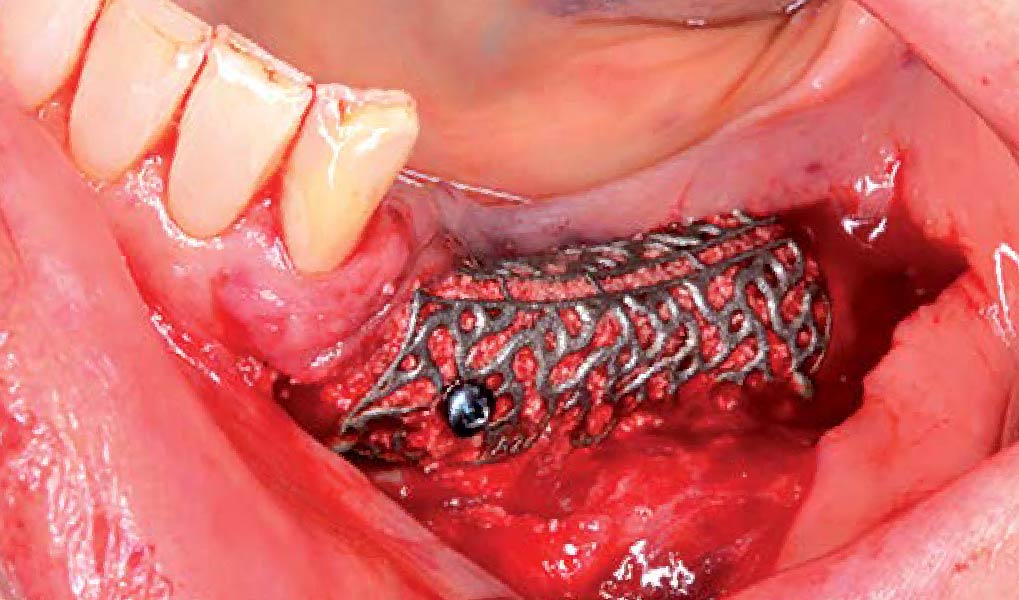
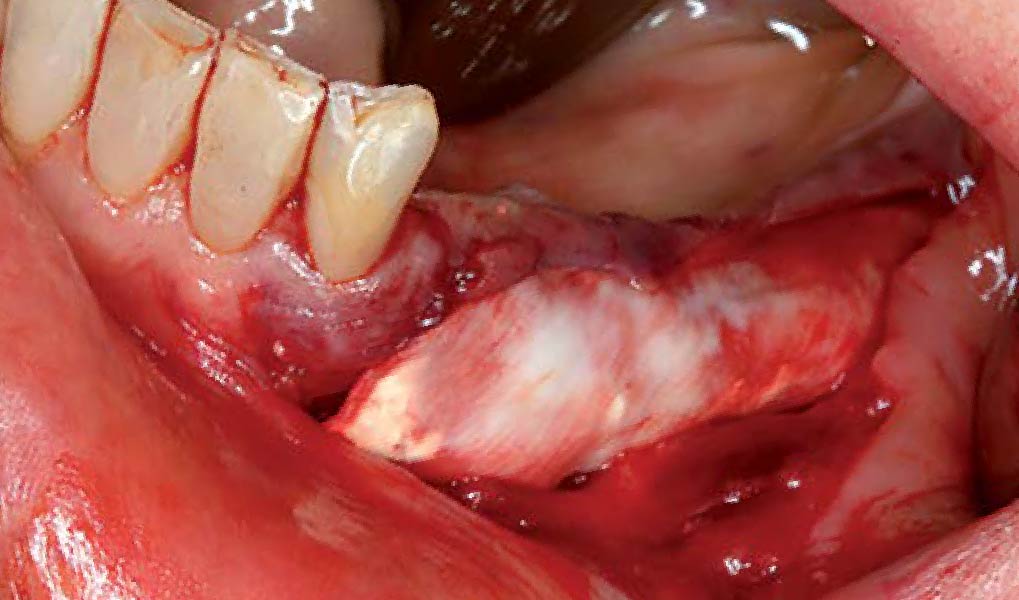
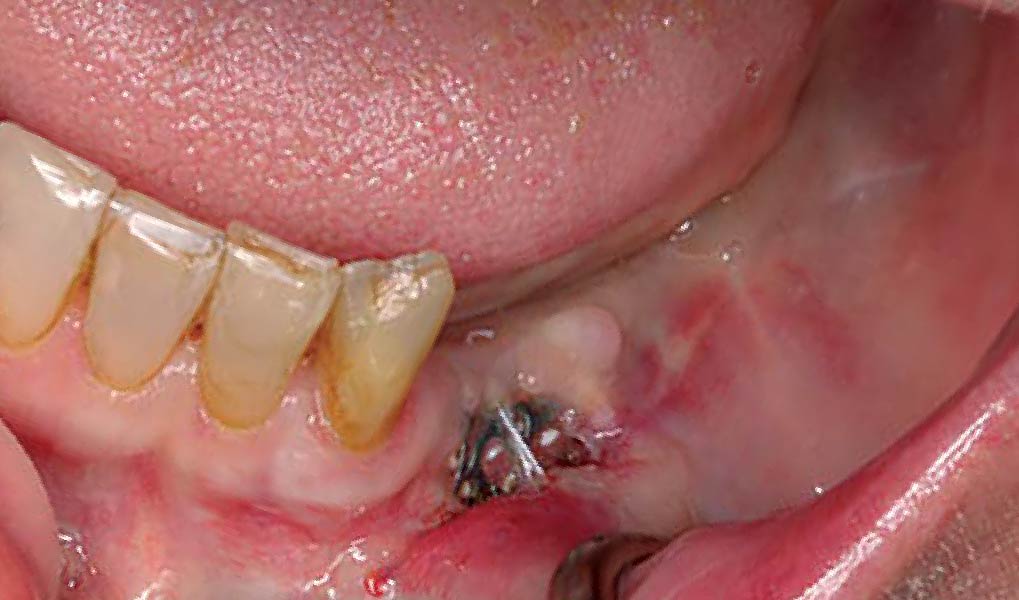
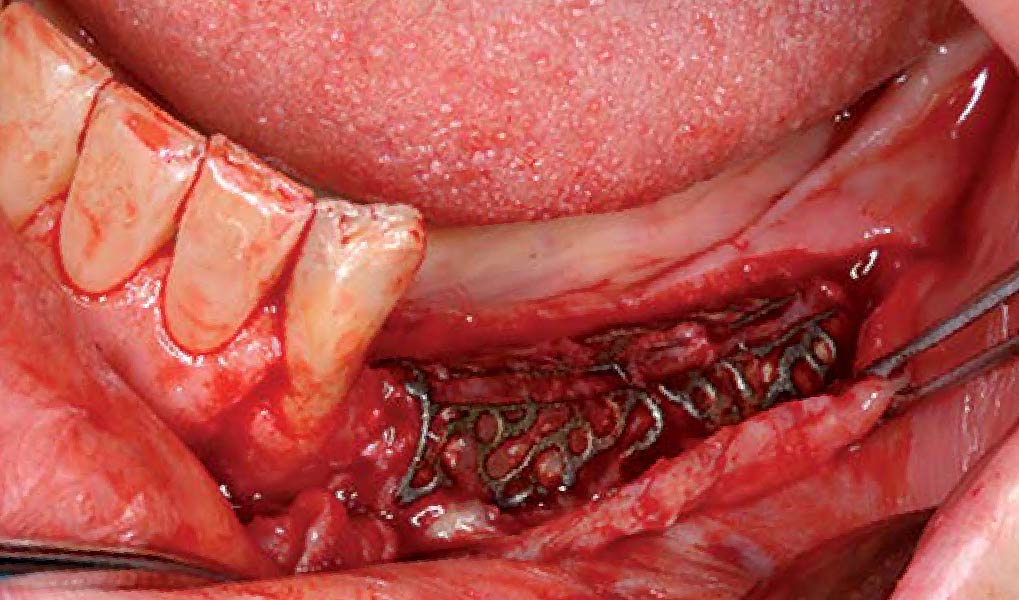
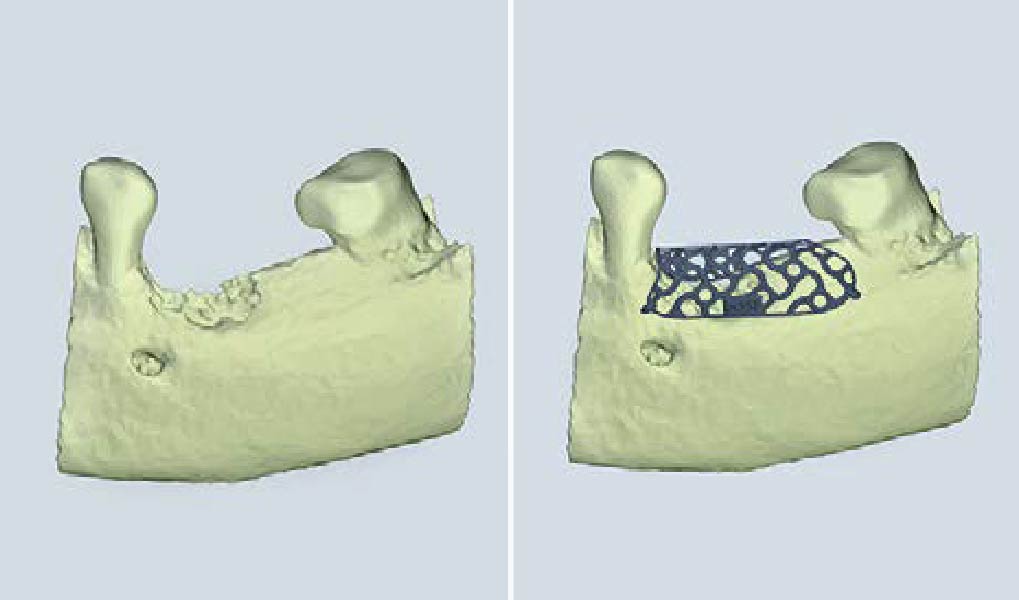
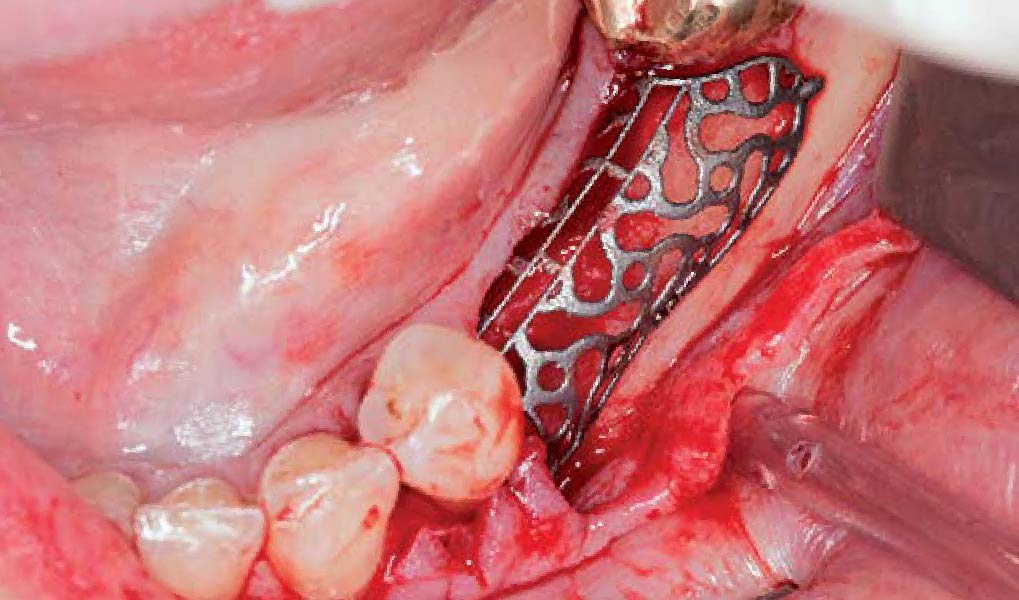
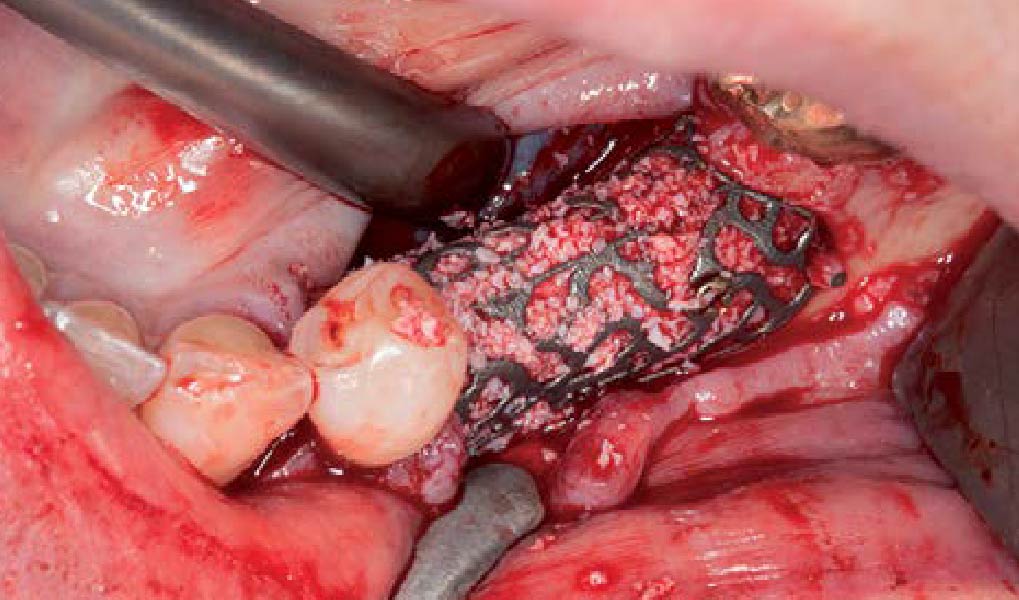
Solving the case was developed in two steps: first bone reconstruction to restore the ideal anatomy, second positioning of the prosthetically guided implants. An individualized regeneration technique was chosen using a CAD-CAM titanium scaffold (Yxoss CBR®) in conjunction with a mix of 60% autogenous bone and 40% Geistlich Bio-Oss®, covered by Geistlich Bio-Gide®. At 9 months, the titanium scaffold was easily removed and 3 prosthetically guided implants were placed, completely surrounded by bone. At 12 months, a free gingival graft was performed to re-establish the missing amount of keratinized mucosa. Finally, at 16 months, the final rehabilitation was carried out with a fixed prosthesis on implants.

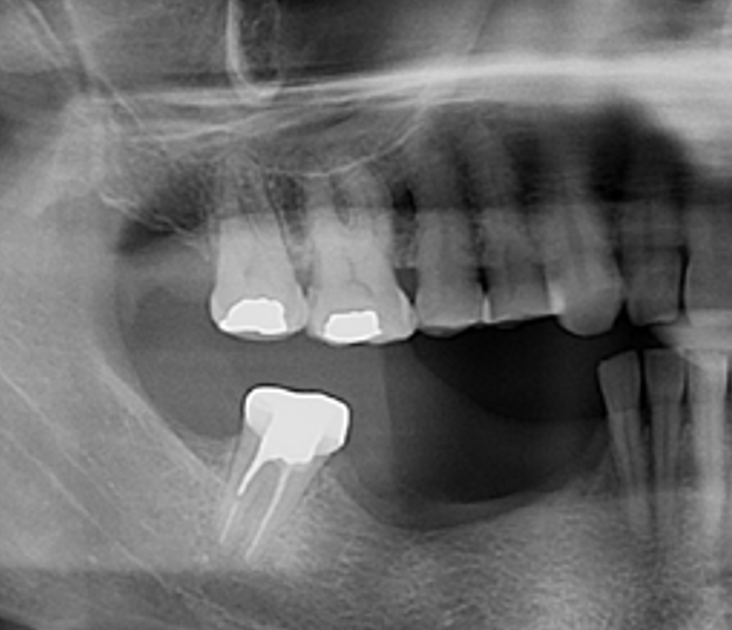
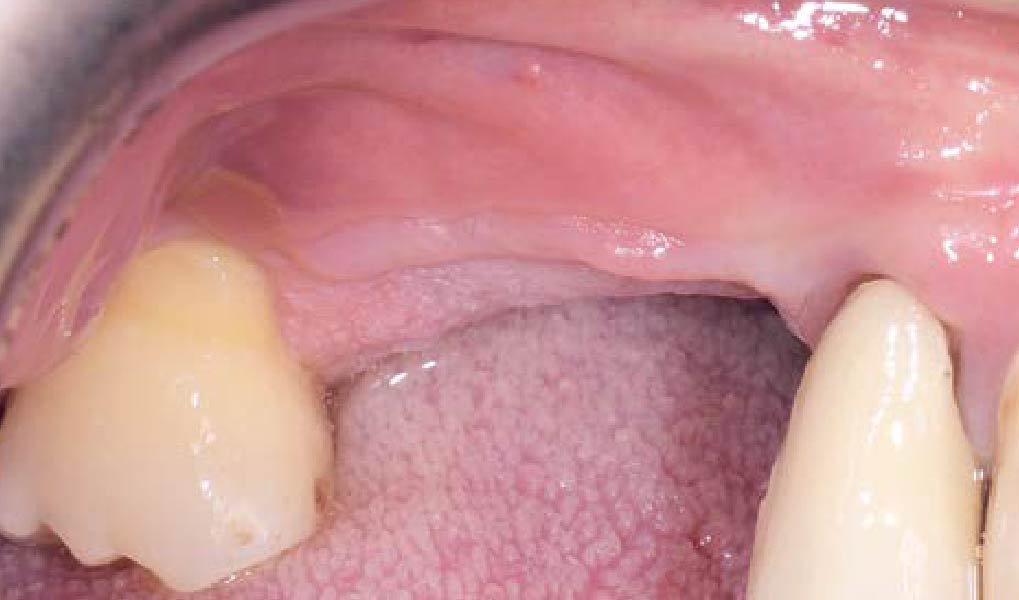
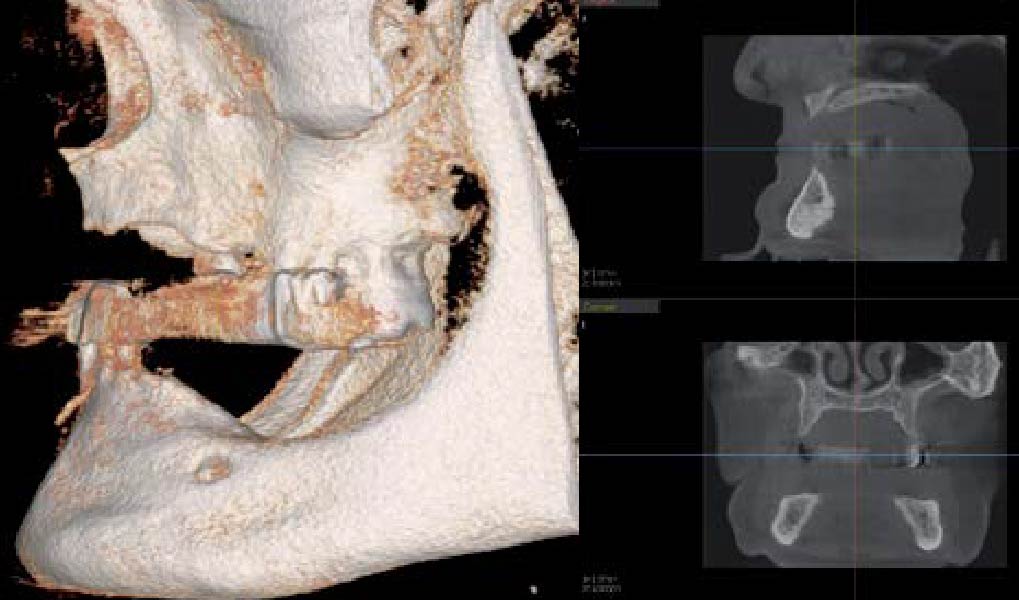
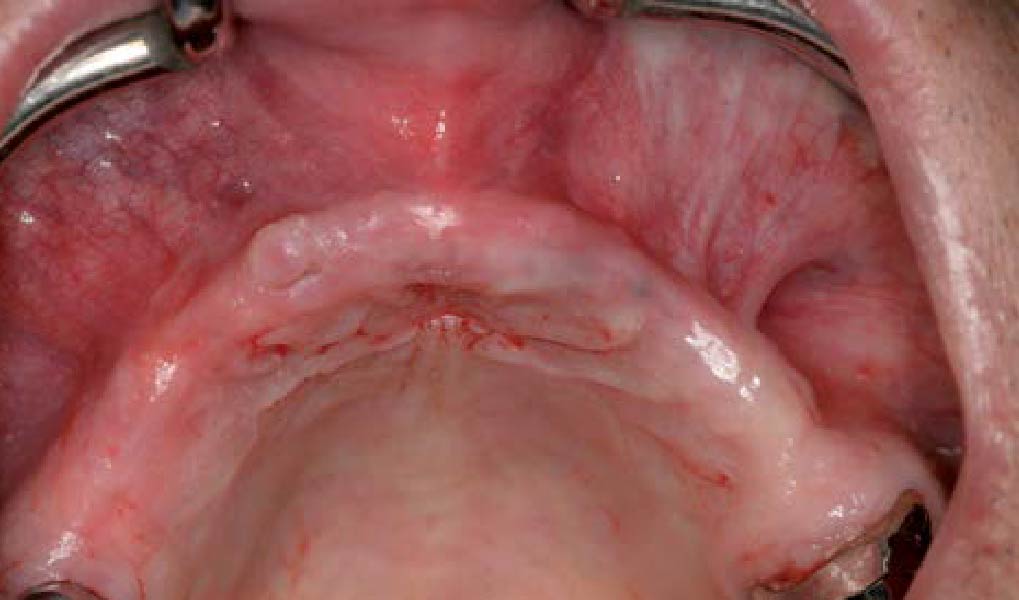
Panoramic radiographic view of the defect
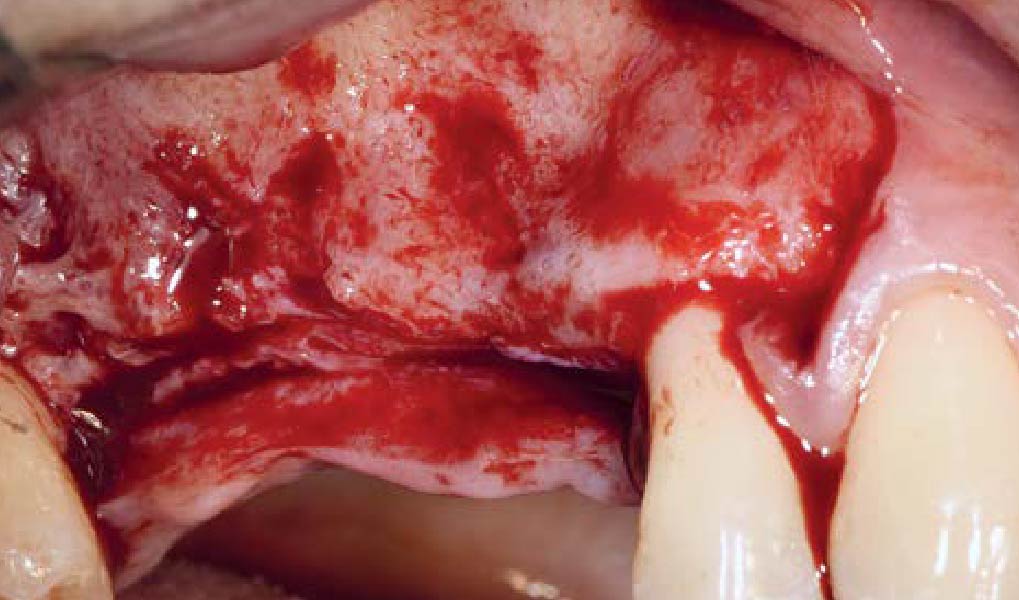
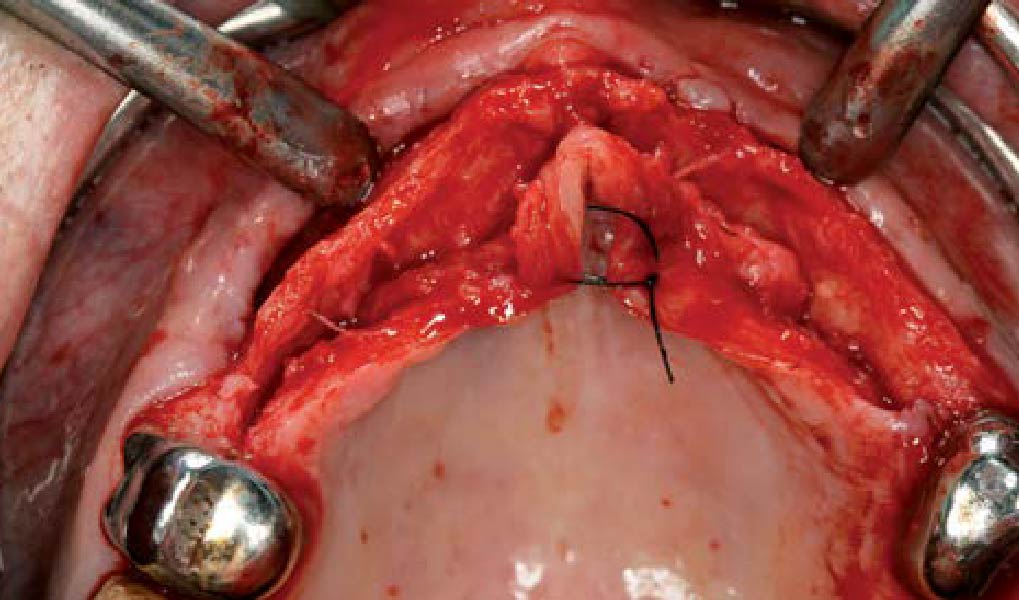
Horizontal and vertical augmentation step by step
Baseline situation (left) and 9-month follow-up (right)
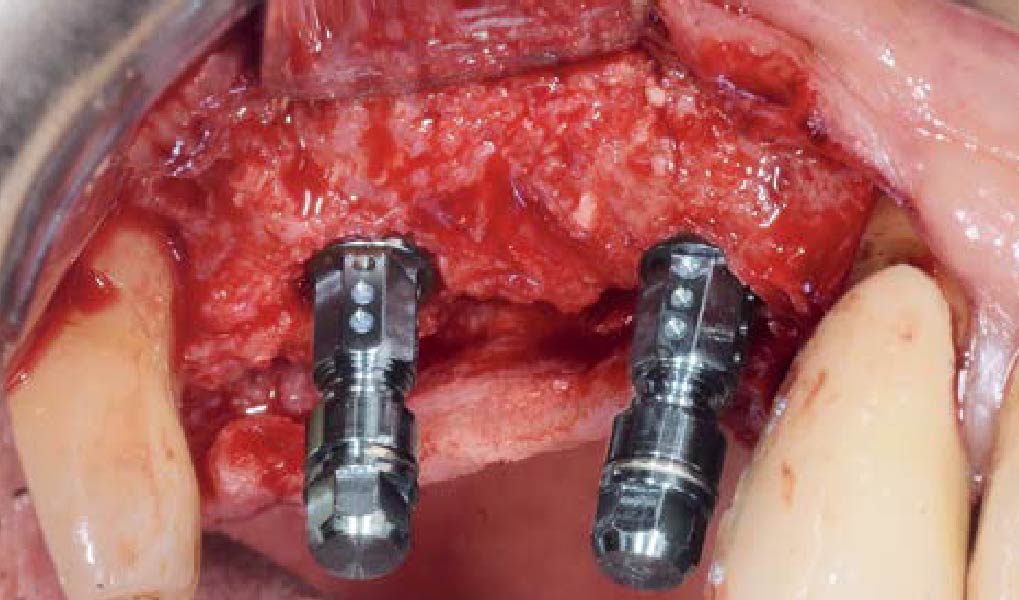
Scaffold removal and implant placement step by step
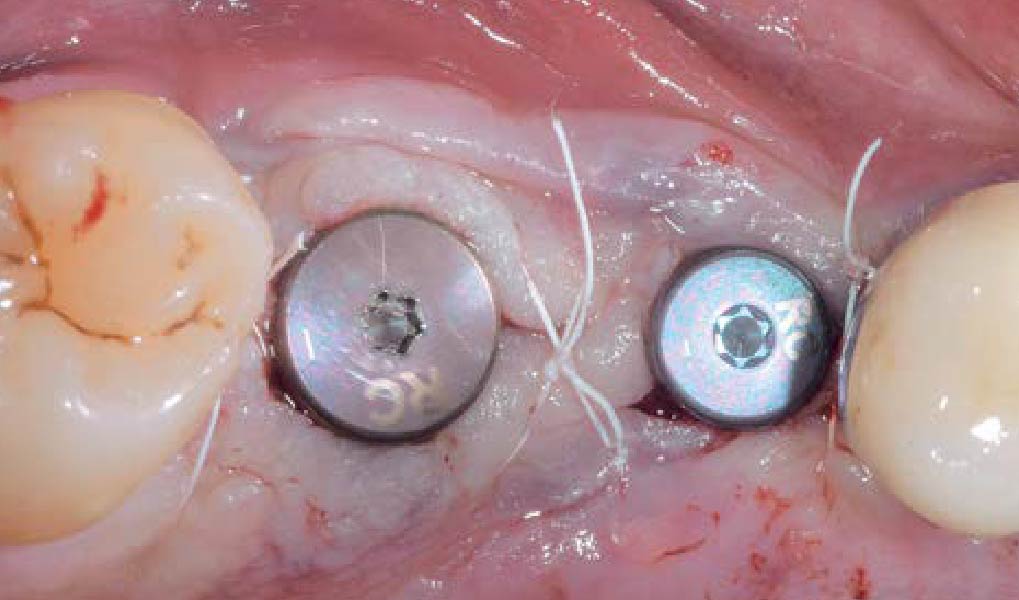
Soft-tissue management with free gingival graft
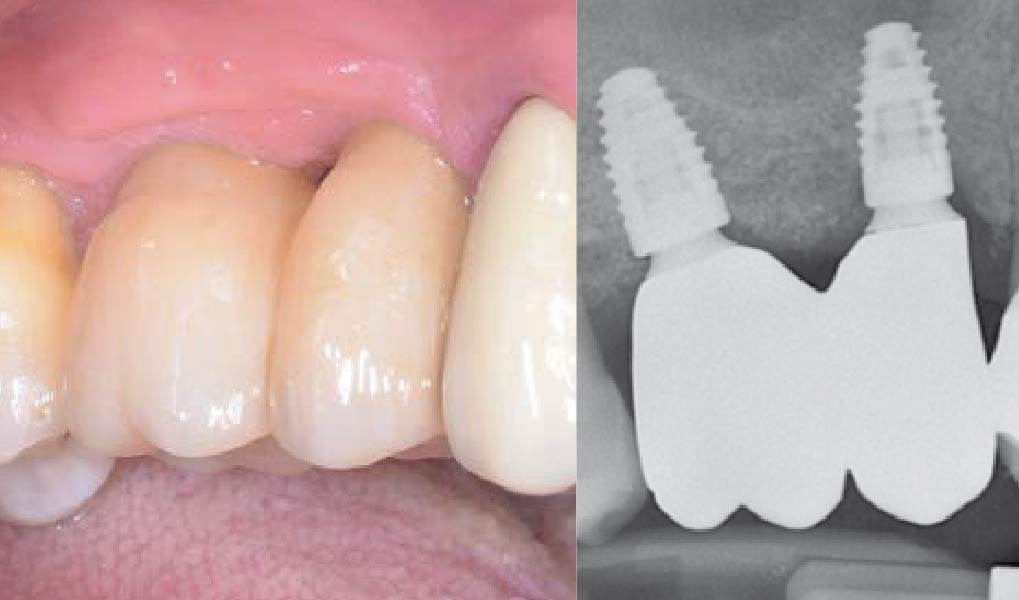
Final restoration
Periapical radiographs of implants and prosthesis
Final restoration at 16 months

“Combined horizontal and vertical bone augmentation utilizing a CAD CAM titanium scaffold can be achieved with less surgical time and less complications.”

THE OUTCOME

The final resolution of the case was very satisfactory. There were no complications during all the procedures performed. The Yxoss CBR® allowed for easier reconstructive surgery and a significant reduction in surgical times, thanks to the precise dimensions of the scaffold. This resulted in a favorable post- operative situation for the patient and complications were prevented.

Final restoration at 16 months

Vertical bone reconstruction combining the use of Yxoss CBR®, Geistlich Bio-Oss® and Geistlich Bio-Gide® allows a predictable regenerative procedure that is able to create sufficient bone volume suitable for prosthetically guided implant placement.”

Dr. Gian Maria Ragucci

The use of CAD-CAM Titanium scaffold Yxoss CBR® allows an ideal bone regeneration and a faster and easier surgery.”

Dr. Gian Maria Ragucci

Dr. Gian Maria Ragucci

Universitat Internacional de Catalunya (UIC), Barcelona Dental degree at Universidad Europea de Madrid 2015
International Master in oral surgery at UIC, Barcelona 2018
PhD student at UIC, Barcelona 2018
EAO Certification program in implant dentistry 2018
EAO European prize in implant dentistry 2019

Prof. Federico Hernández-Alfaro

Full professor & Chairman, Department of Oral and Maxillofacial Surgery, UIC, Barcelona
Institute of Maxillofacial Surgery, Teknon Medical Center, Barcelona

BIOBRIEF

Immediate Mandibular Molar Transition

Dr. Peter Hunt

THE SITUATION

The case here is typical enough, a failing mandibular molar with a vertical sub-osseous fracture. Traditionally, the replacement process can take three or more surgical exposures (extraction and regeneration), (implant placement), (second stage exposure) and more than a year of therapy.

THE RISK PROFILE

Low RiskMedium RiskHigh Risk
Patient’s healthIntact immune system
Non-smoker 
Light smokerImpaired immune system 
Patient’s esthetic requirementsLowMediumHigh
Height of smile lineLowMediumHigh
Gingival biotypeThick – “low scalloped”Medium – “medium scalloped”Thin – “high scalloped”
Shape of dental crownsRectangularTriangular
Infection at implant sightNoneChronicAcute
Bone height at adjacent tooth site≤ 5 mm from contact point5.5 – 6.5 mm from contact point≥ 7 mm from contact point
Restorative status of adjacent toothIntactRestored
Width of tooth gap1 tooth (≥ 7 mm)1 tooth (≤ 7 mm)2 teeth or more
Soft-tissue anatomyIntactCompromised
Bone anatomy of the alveolar ridgeNo defectHorizontal defectVertical defect
watch video download pdf

THE APPROACH

Immediate molar replacement requires atraumatic removal of the fractured tooth, careful socket debridement and development of a channel for an ideally positioned implant. The implant then needs to be placed down in the bone channel with the implant platform positioned just below the socket walls. It needs to be stable. Channel deficiency augmentation is achieved with Geistlich Bio-Oss Collagen® which is covered with a collagen matrix, Geistlich Mucograft® with the edges tucked under the gingival margins and sealed over with tissue glue.

Initial Situation: a failing mandibular molar with a vertical sub-osseous fracture.
A pre-operative radiograph and CBCT showing the cross-section of the involved tooth.
An implant site was developed by placing a pilot drill down the mesial root space, then uprighting it. This was continued up through the drill sequence. The mesial radicular septum is moved in the process.
A Camlog® 5.0 x 11 mm implant was placed with the platform set just down below the bone height of the socket walls.
After placing a 4.0 mm height cylindrical gingiva former in the implant, 250 mg of Geistlich Bio-Oss Collagen® was packed down in the socket around the implant.
Geistlich Mucograft® was adapted to the region then tucked down under the gingival margin.
The gingival margins were adapted and closed together with 4.0 teflon sutures (Cytoplast™, Osteogenics). The region was then covered with Glustich – PeriAcryl®90 Oral Tissue Adhesive.
After 3 months of healing, the top of the gingiva former is exposed and the situation is ready for Emergence Profile Development. This is quite standard.
4 months later following Emergence Profile Development.
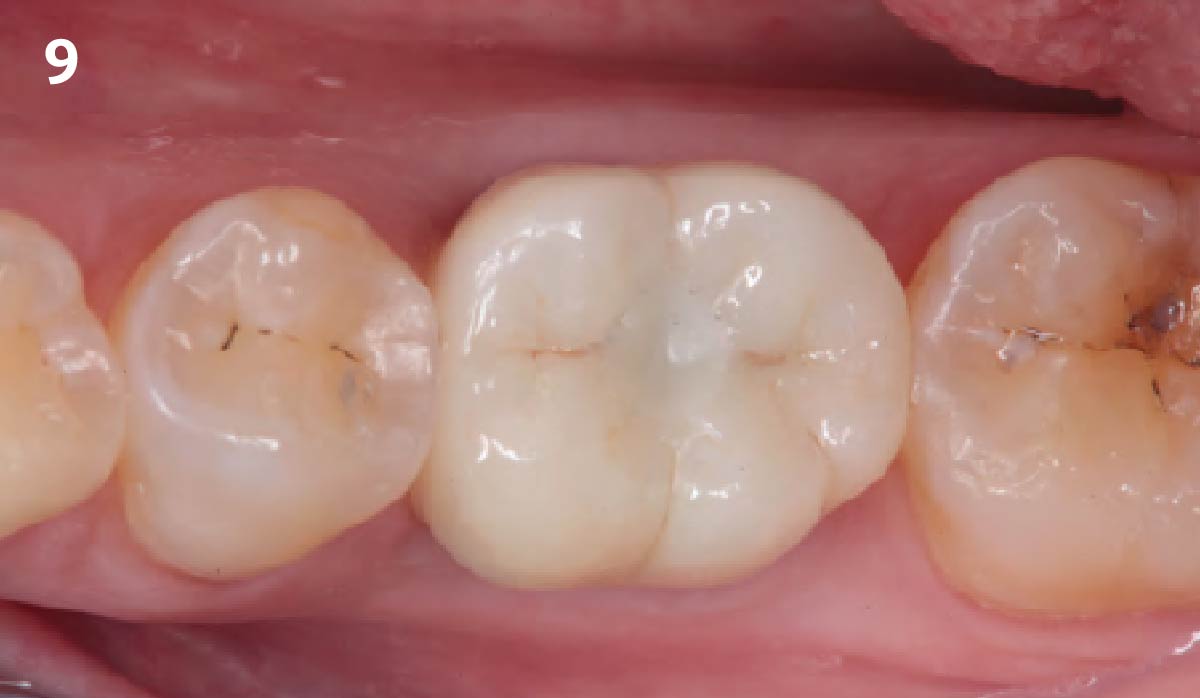
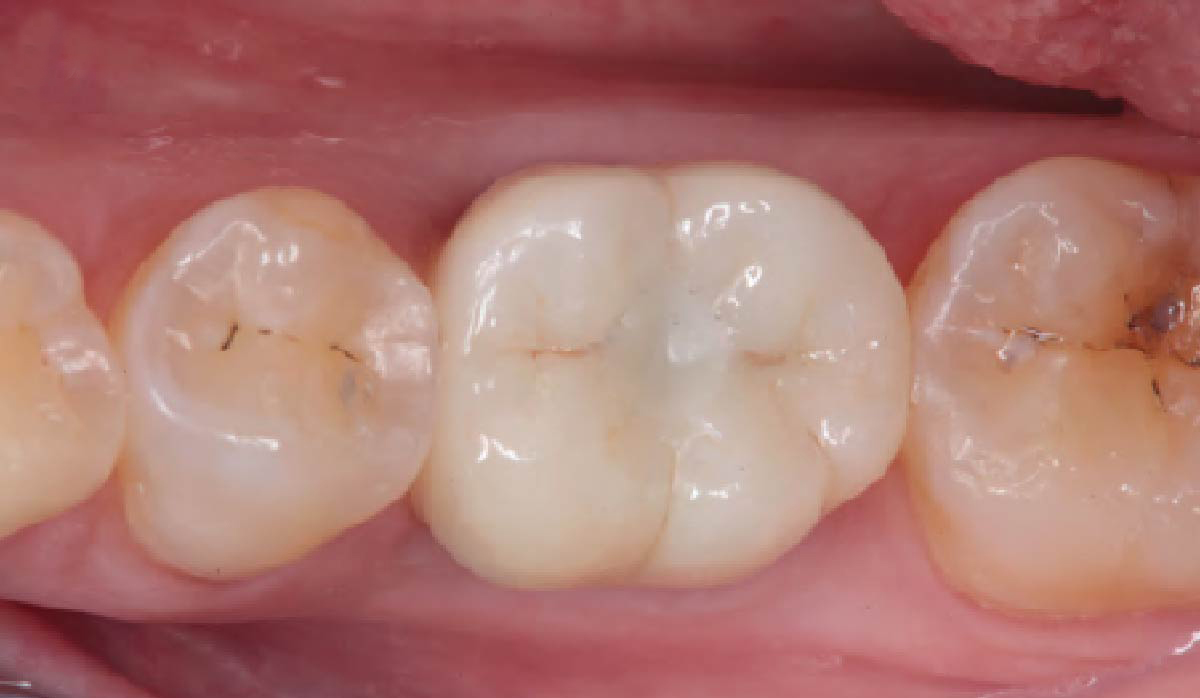
An occlusal view of the final one-piece, screw-retained zirconia crown restoration based on a Camlog® Titanium Base Abutment.

“The patient desires an implant placement for a fractured mandibular molar, as fast as possible.”

– Dr. Peter Hunt

THE OUTCOME

This single stage replacement protocol has proven to be simple, safe and highly effective providing the socket is fully degranulated and the implant is stable and not loaded in the early healing stages. It works well when a gingiva former is immediately placed into the implant instead of a cover screw, Geistlich Bio-Oss Collagen® is packed around the implant to fill the residual socket, then covered with a Geistlich Mucograft® and sutured. There is no need for flap advancement to cover over the socket.

This procedure really just merges a socket regeneration procedure with implant placement. It’s a simple and effective procedure which has now become quite standard for us.”

Dr. Peter Hunt

Dr. Peter Hunt

After graduate training on an Annenberg Fellowship at the University of Pennsylvania, dr. hunt helped start up the University of the Western Cape dental School in Cape Town, South Africa. he returned to the University of Pennsylvania where in time he became Clinical Professor of Periodontics. later he helped start up Nova Southeastern‘s dental School where he was Professor of Restorative dentistry, Post Graduate director and director of Implantology. he has had a private practice in Philadelphia focusing on implant and rehabilitation dentistry since 1981.

BIOBRIEF

Ramal Bone Graft for Congenitally Missing Maxillary Lateral Incisor

Dr. Richard E. Bauer, III

THE SITUATION

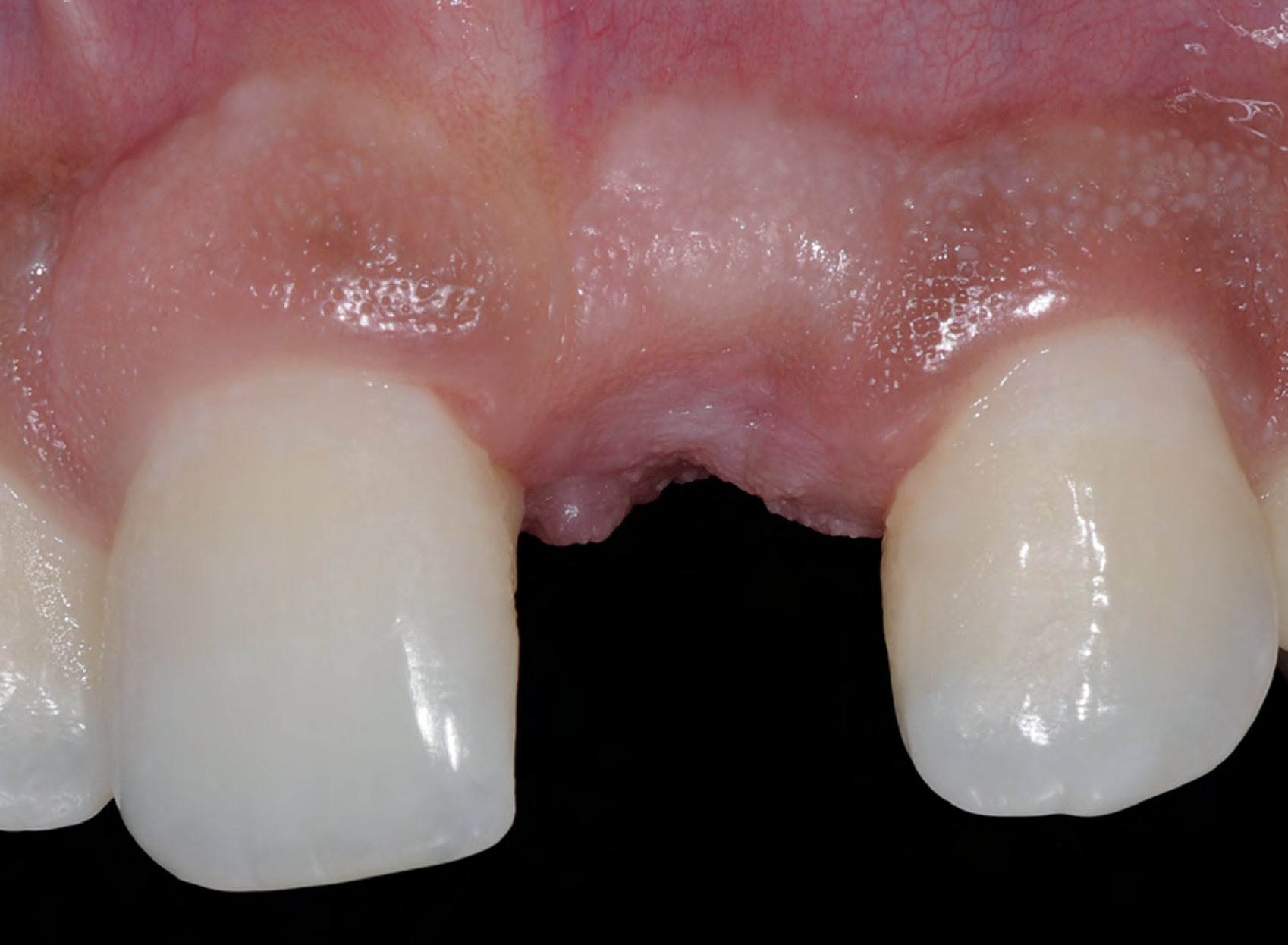
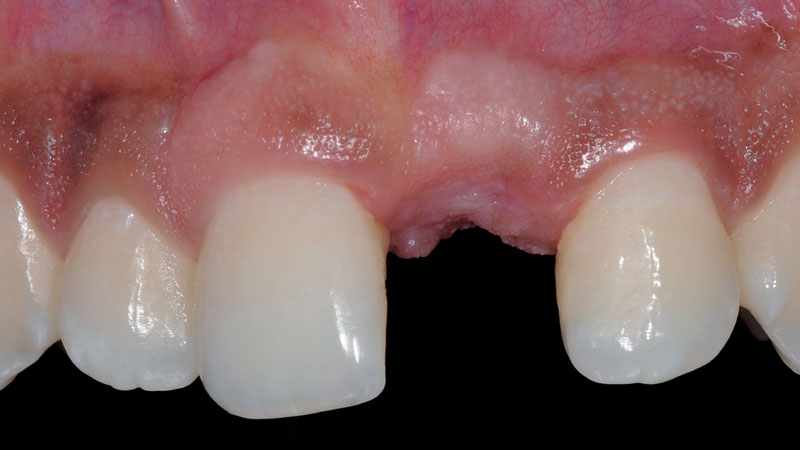
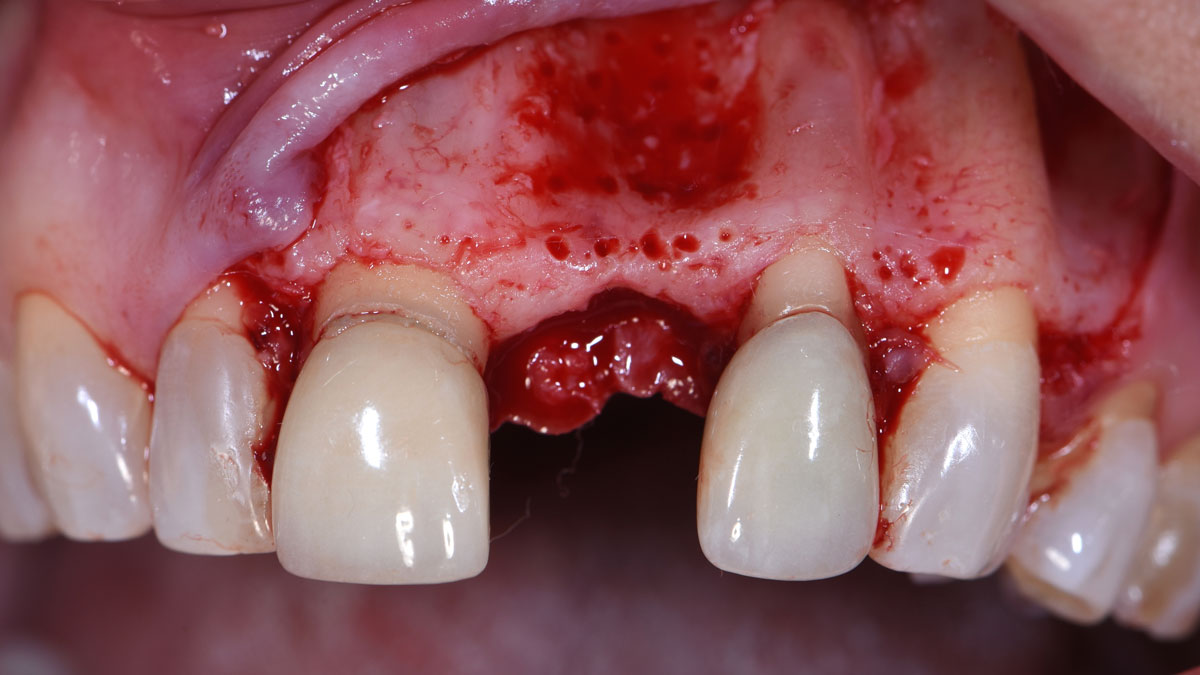
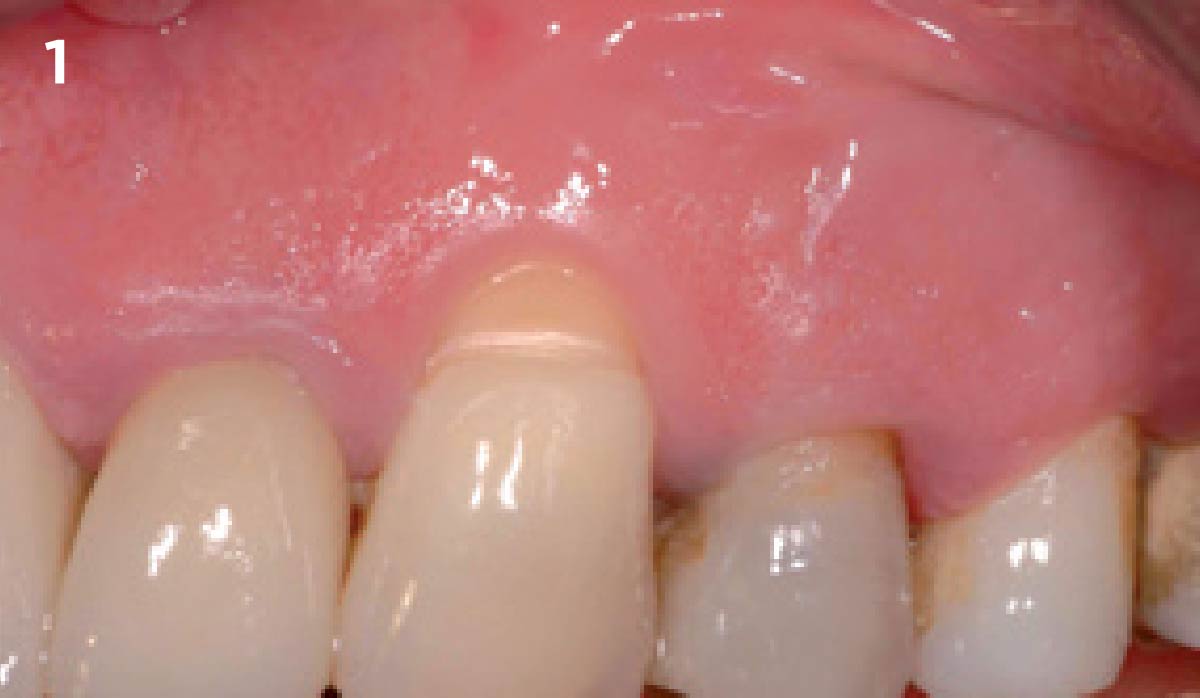
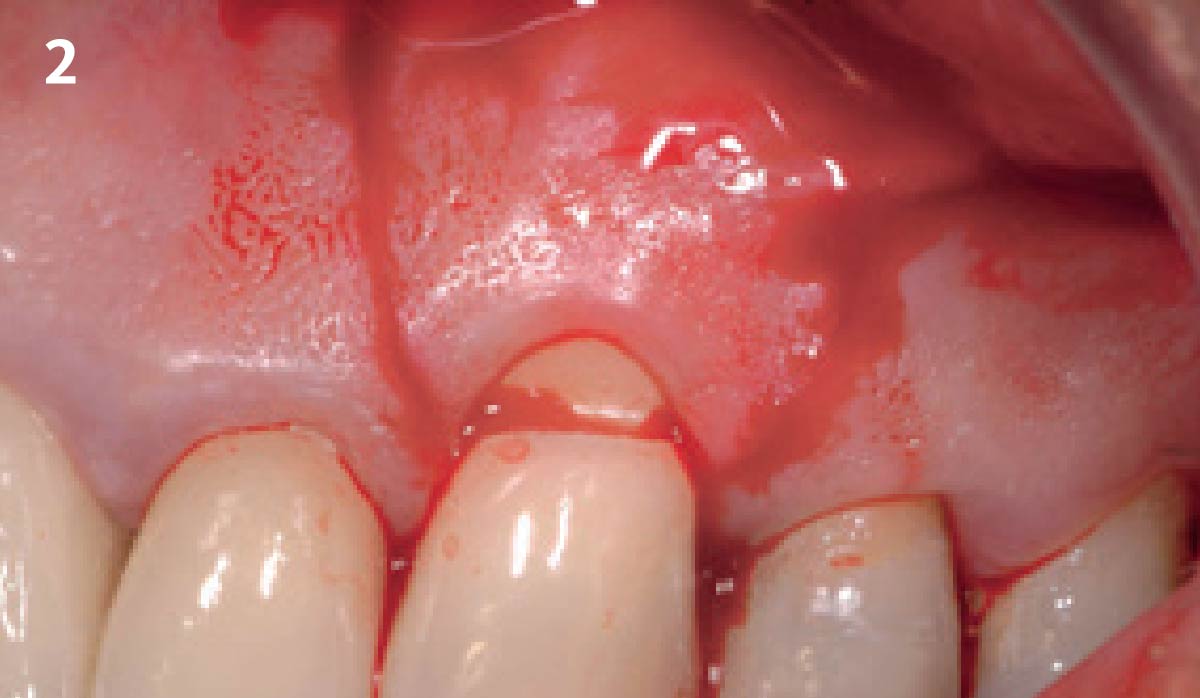
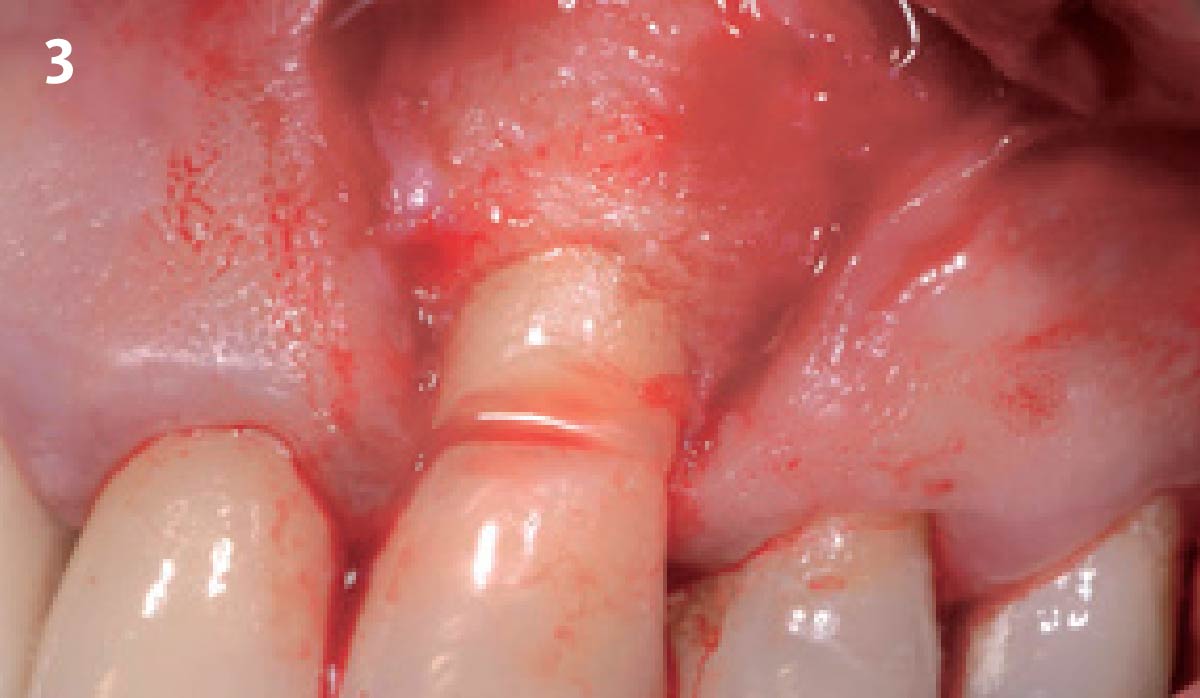
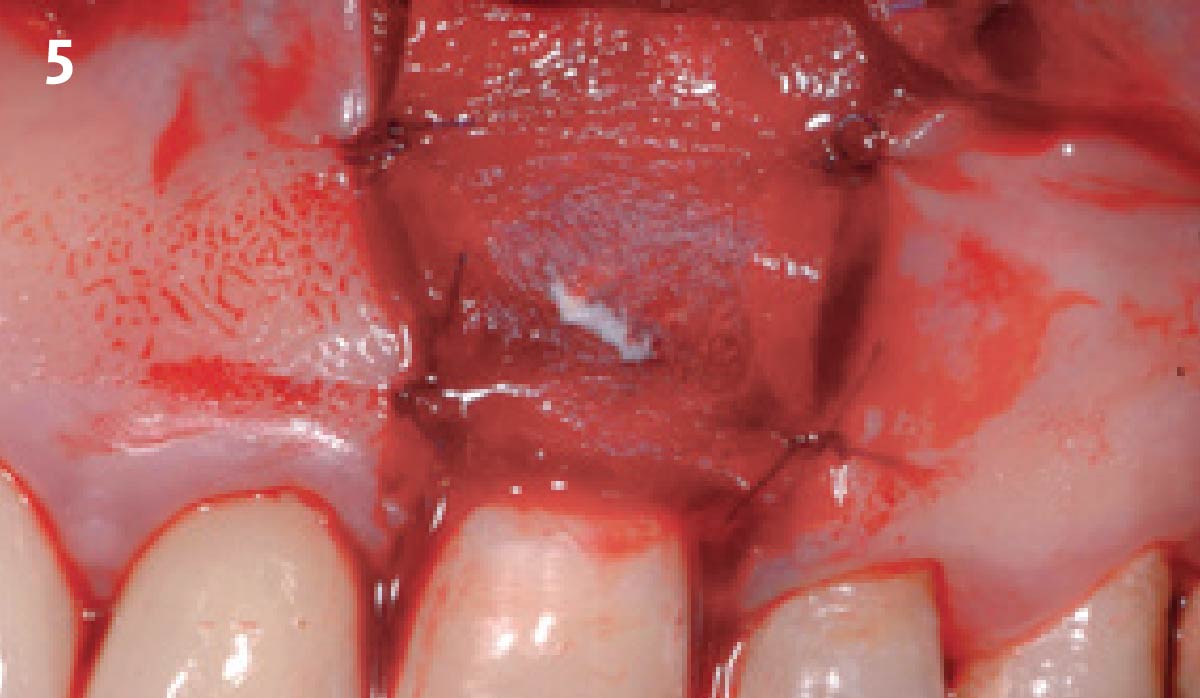
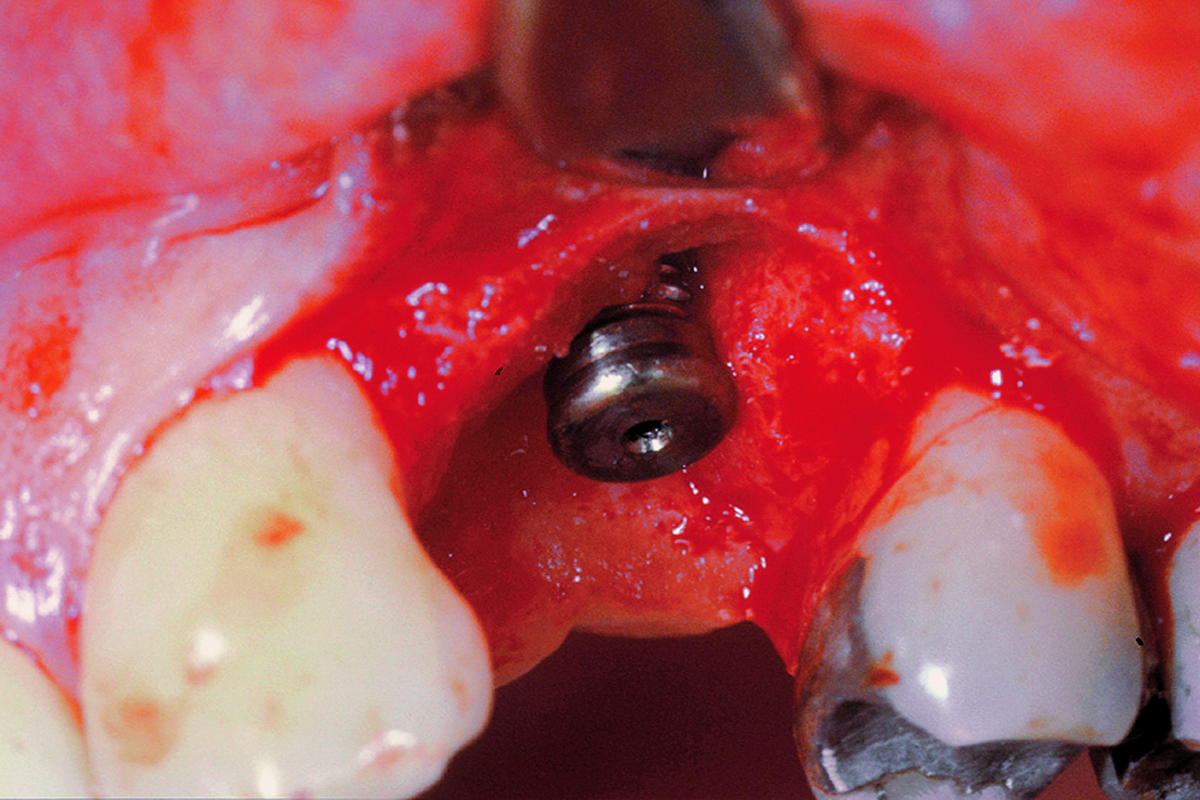
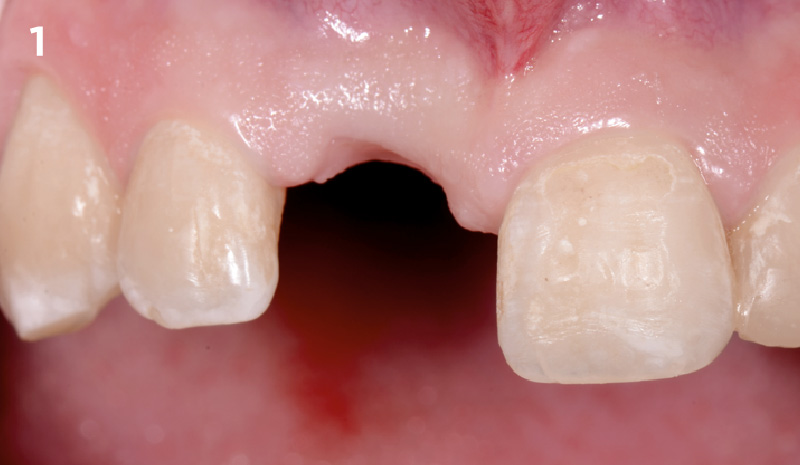
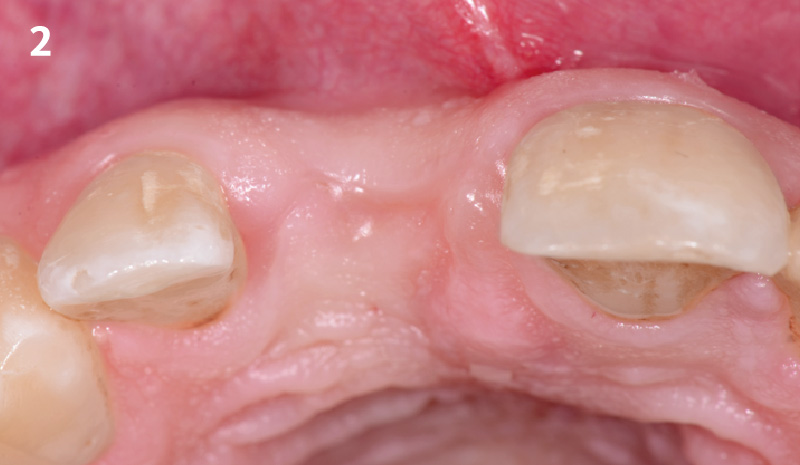
An 18-year-old female presented with a congenitally missing tooth #10. The patient previously sought care by another provider and had undergone guided bone regeneration with allograft and subsequent implant placement with additional grafting at the time of implant placement. The implant ultimately failed and was removed prior to my initial consultation. An examination revealed maximal incisal opening, within normal limits, missing #10 with 6 mm ridge width. In addition there was a significant palpable cleft-like depression on the facial aspect of the ridge, adequate attached tissue but reduced vertical height in relation to adjacent dentition and attached tissue. Previous surgeries resulted in extensive fibrous tissue with scarring at site #10. Plan: A ramal bone graft is indicated at the congenitally missing site #10 with Geistlich Bio-Oss® and Geistlich Mucograft® matrix utilized for ridge augmentation prior to secondary implant placement.

THE RISK PROFILE

Low RiskMedium RiskHigh Risk
Patient’s healthIntact immune system
Non-smoker 
Light smokerImpaired immune system 
Patient’s esthetic requirementsLowMediumHigh
Height of smile lineLowMediumHigh
Gingival biotypeThick – “low scalloped”Medium – “medium scalloped”Thin – “high scalloped”
Shape of dental crownsRectangularTriangular
Infection at implant sightNoneChronicAcute
Bone height at adjacent tooth site≤ 5 mm from contact point5.5 – 6.5 mm from contact point≥ 7 mm from contact point
Restorative status of adjacent toothIntactRestored
Width of tooth gap1 tooth (≥ 7 mm)1 tooth (≤ 7 mm)2 teeth or more
Soft-tissue anatomyIntactCompromised
Bone anatomy of the alveolar ridgeNo defectHorizontal defectVertical defect
watch video download pdf

THE APPROACH

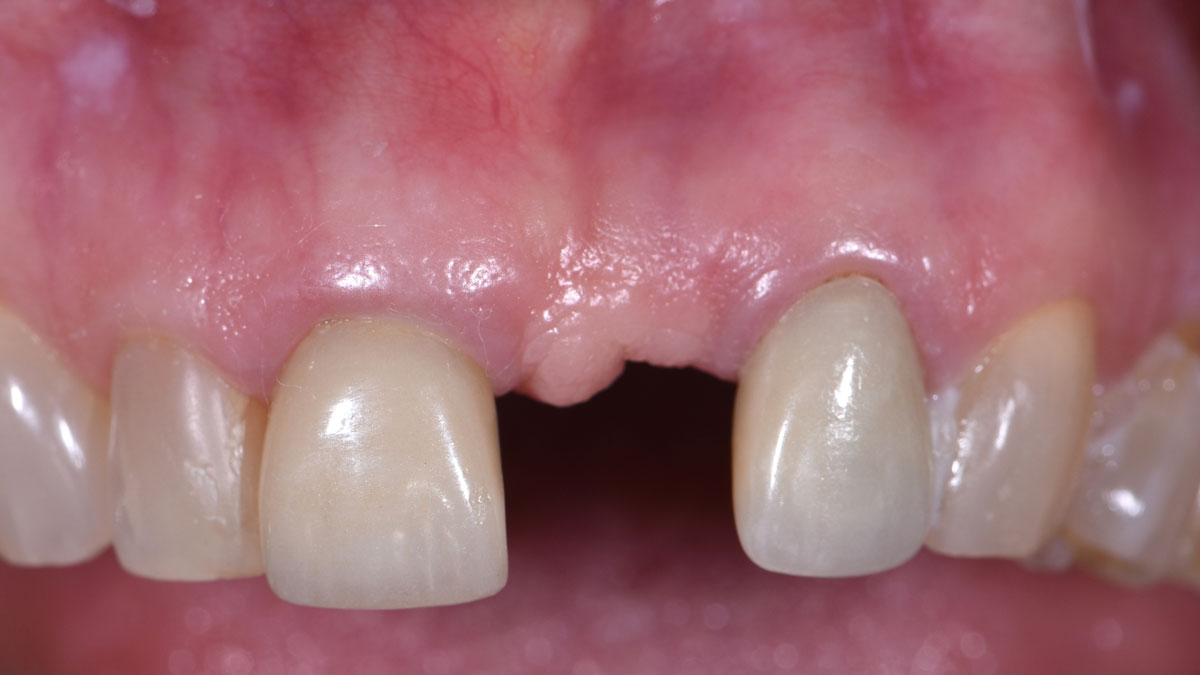
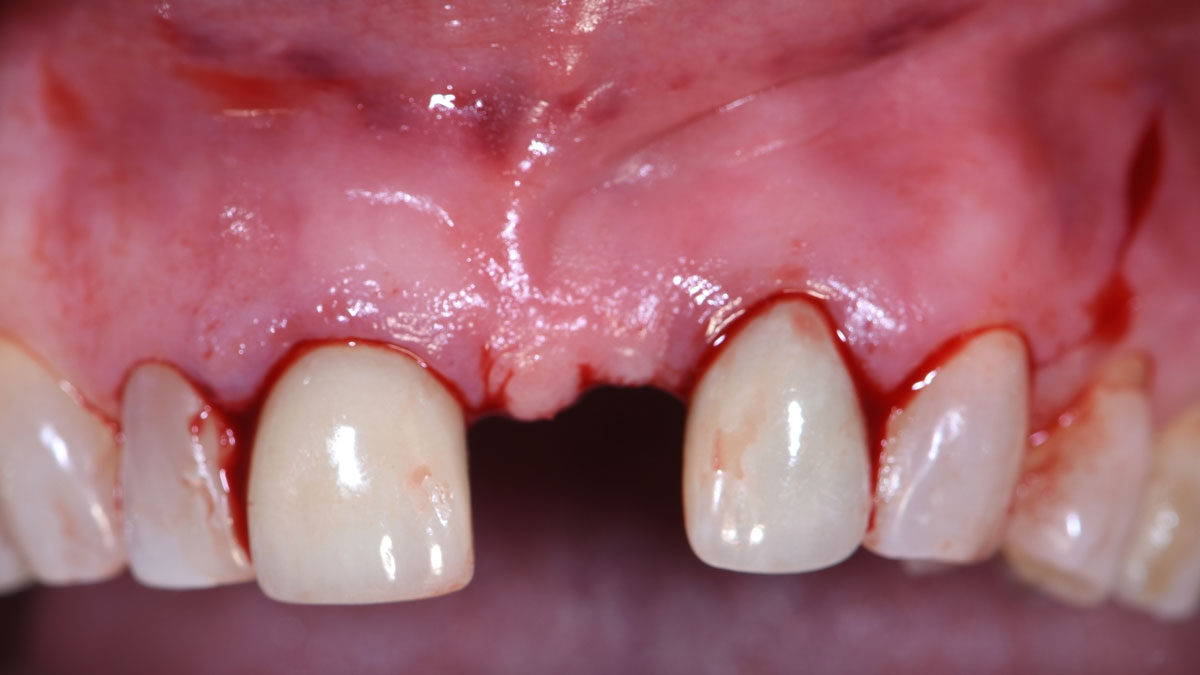
The goals for this patient are to reconstruct the osseous foundation and provide a matrix for improvement with the overlying soft tissue. Specifically, a coordinated multidisciplinary plan was established with the restoring dentist, periodontist and oral surgeon. A plan for idealized anterior cosmetic prosthetic restoration was established. Sequencing of treatment was established. Surgical phase one included a ramal bone graft to site #10 and Essix type temporary prosthesis for immediate post-operative phase followed by a temporary Maryland bridge. Surgical phase two included implant placement and simultaneous crown lengthening and osteoplasty. This stage was done with immediate provisionalization.

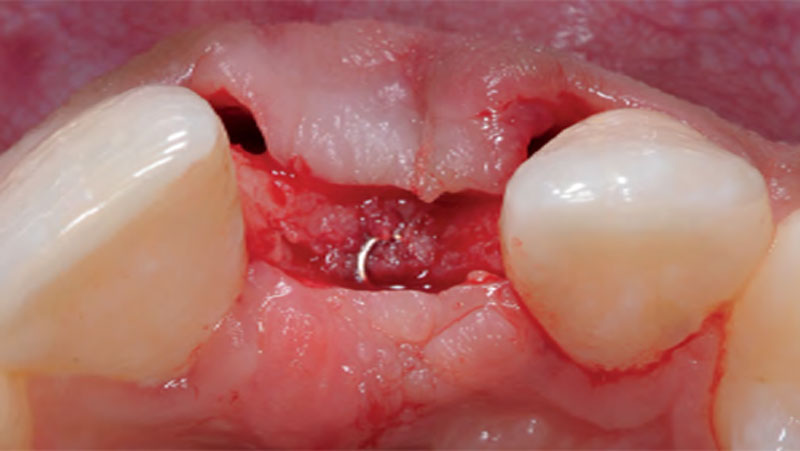
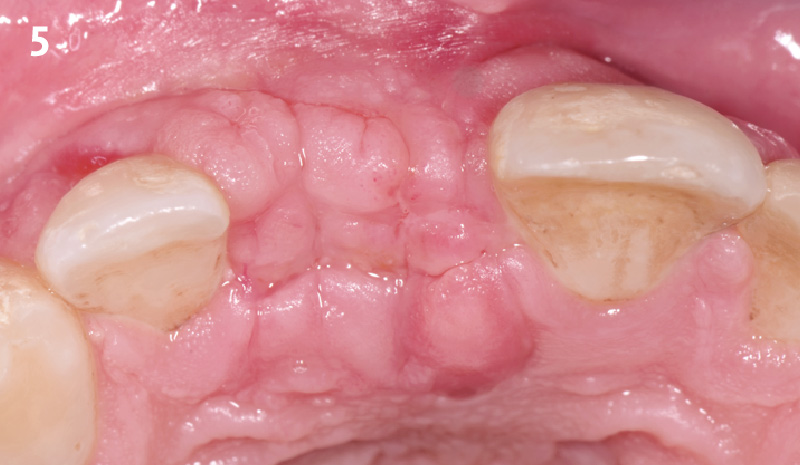
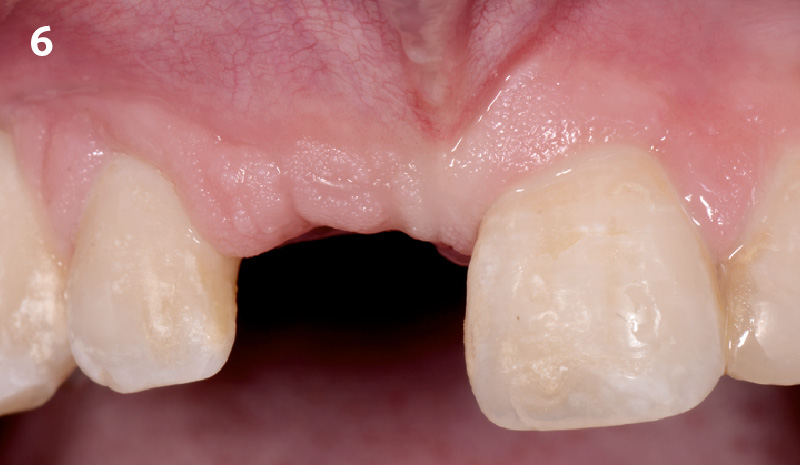
A flap has been raised and reveals a significant facial and palatal defect at congenitally missing site #10.
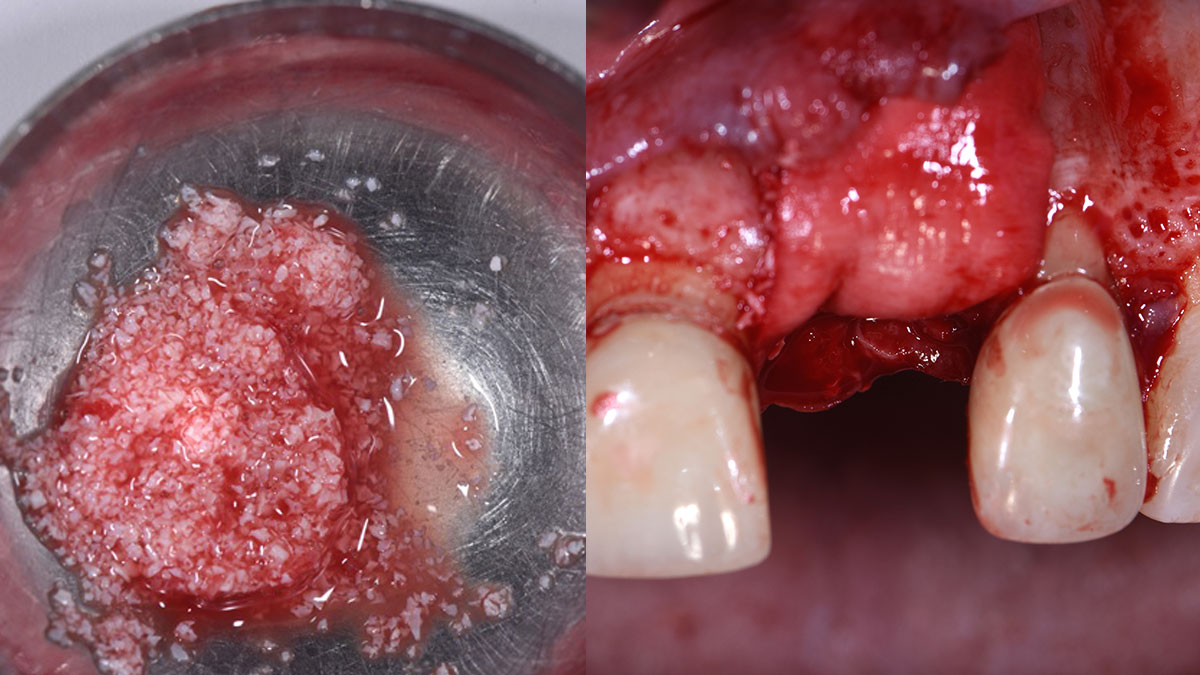
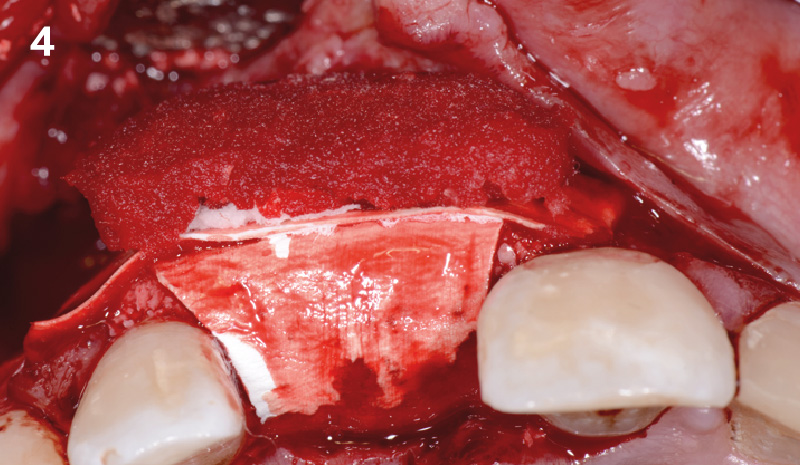
Harvested ramal graft. Slightly over-sized to allow for mitering and harvest of particulate autograft with a bone trap on the suction.
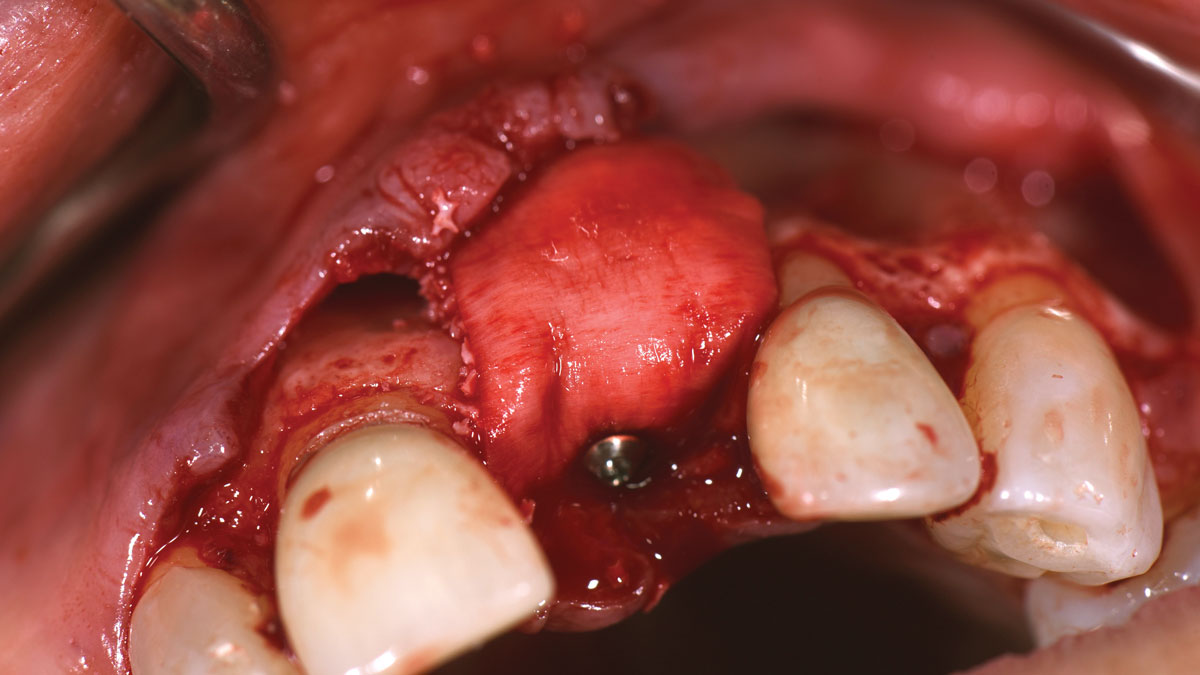
Onlay graft now secured with two fixation screws (Stryker) with a lag screw technique. Geistlich Bio-Oss Collagen® has been placed on the palatal aspect of site #10
Combination of a fixated onlay graft with Geistlich Bio-Oss®/autograft particulate graft at the periphery and over the facial plate of the adjacent dentition
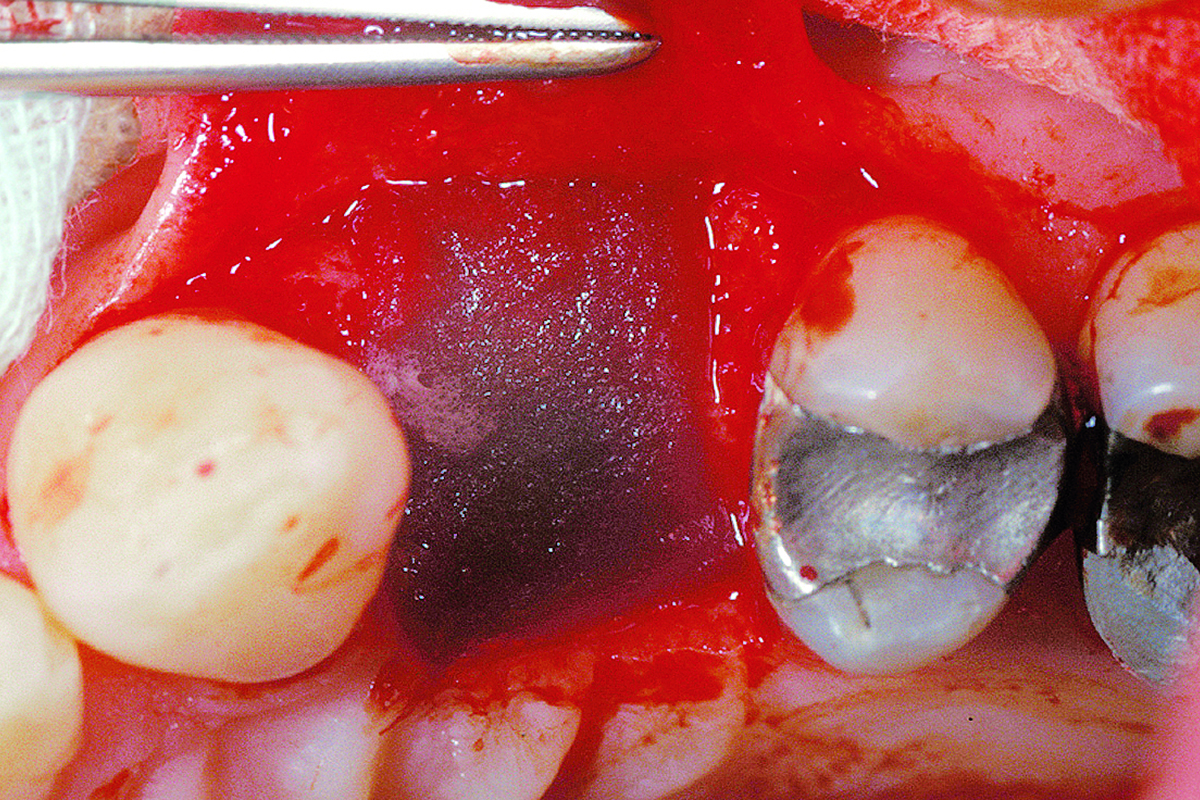
Geistlich Mucograft® matrix placed over facial augmentation of the adjacent dentition and ridge crest of the augmented site
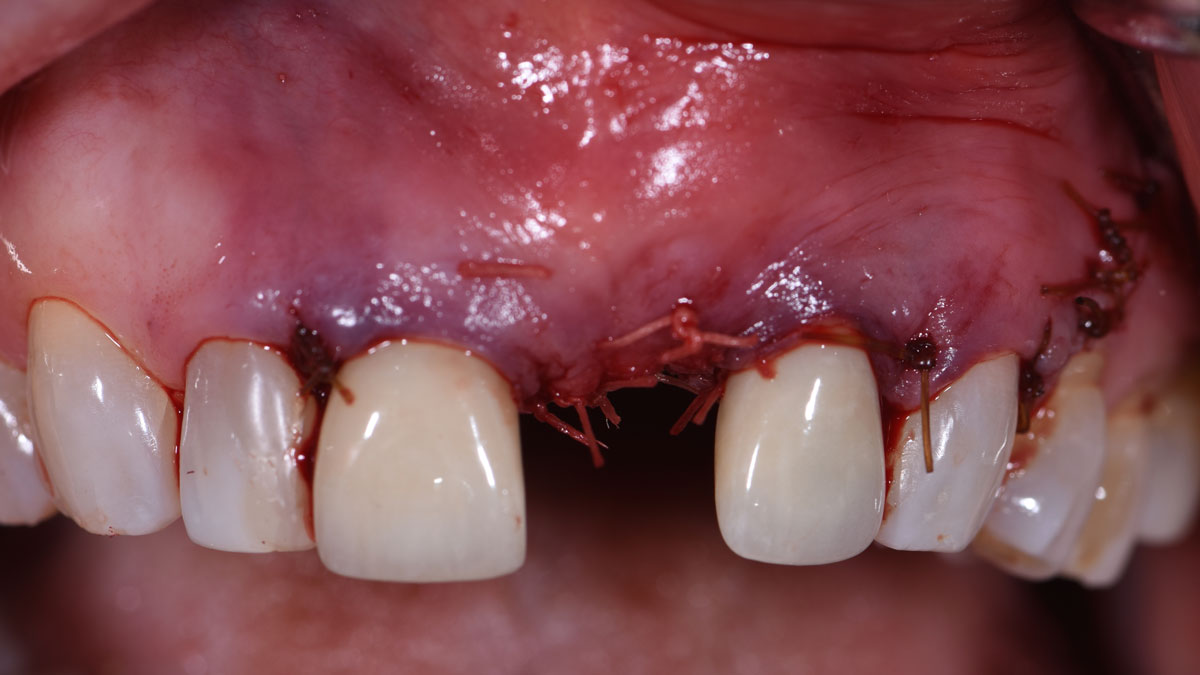
Closure following ramal grafting and Geistlich Mucograft®matrix application
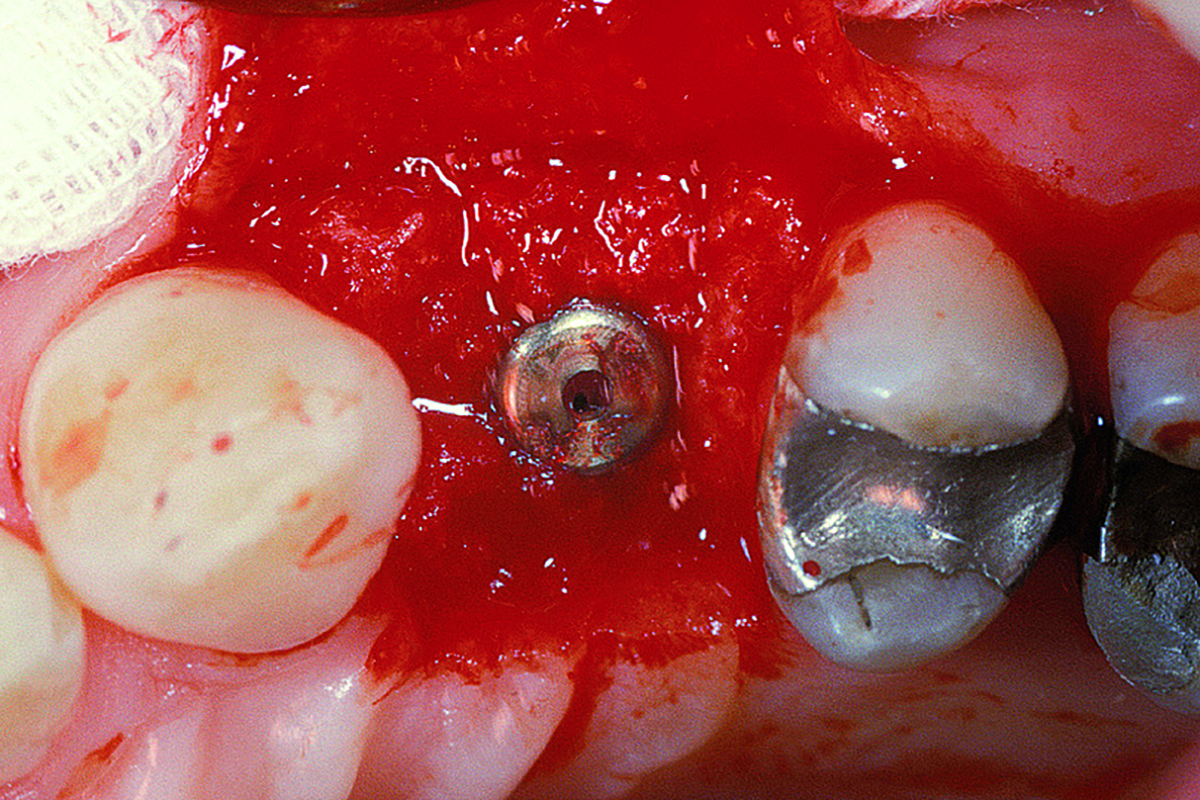
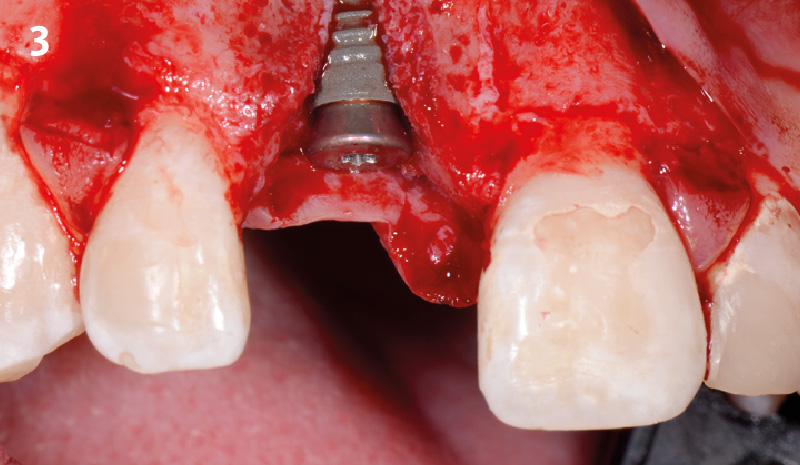
Implant placement with static guide and dental implant hand driver
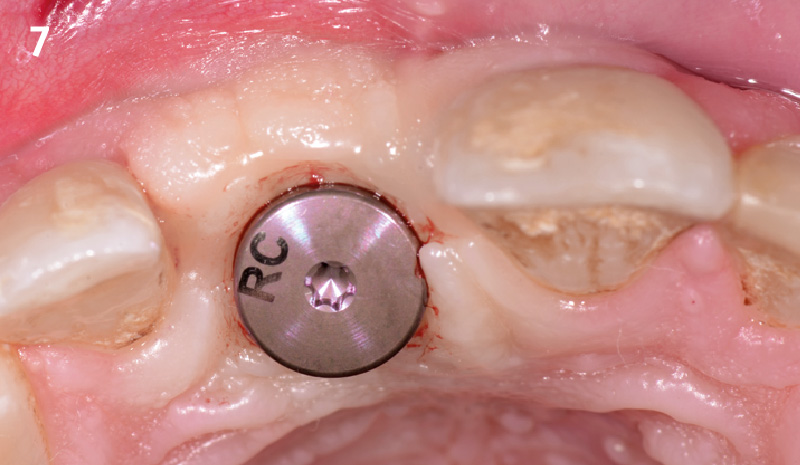
Implant placement with slight subcrestal placement of the platform just prior to osteoplasty by the periodontist.

“This is a young patient with a congenitally missing incisor that has high esthetic concerns and has had multiple failed surgical attempts that is now presenting for definitive management.”

THE OUTCOME

This case was dependent upon adequate hard-tissue reconstruction combined with soft-tissue manipulation to eliminate scar tissue and provide esthetic recontouring. Obtaining an adequate autogenous graft combined with Geistlich Bio-Oss® at the periphery of the onlay graft is essential for anterior-posterior and vertical augmentation. Utilizing a Geistlich Mucograft® matrix at the ridge crest to help contain the particulate graft and improve the soft-tissue profile for subsequent immediate provisionalization and re-contouring of the surrounding soft tissue played a significant role in the esthetic success.

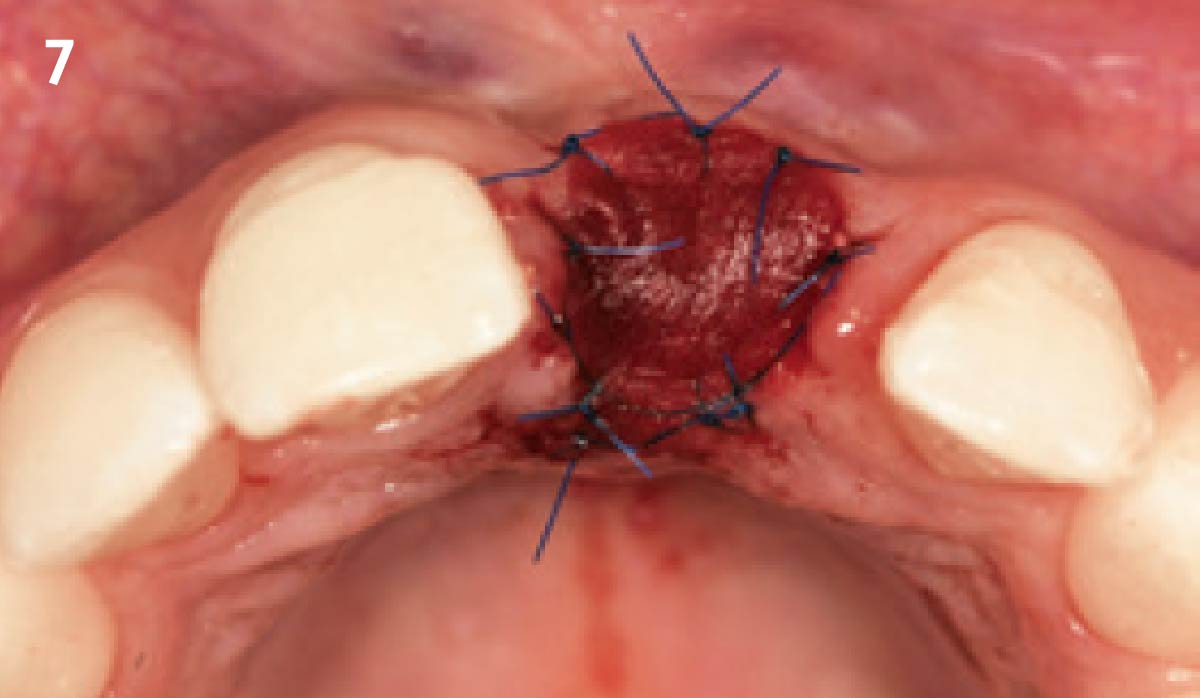
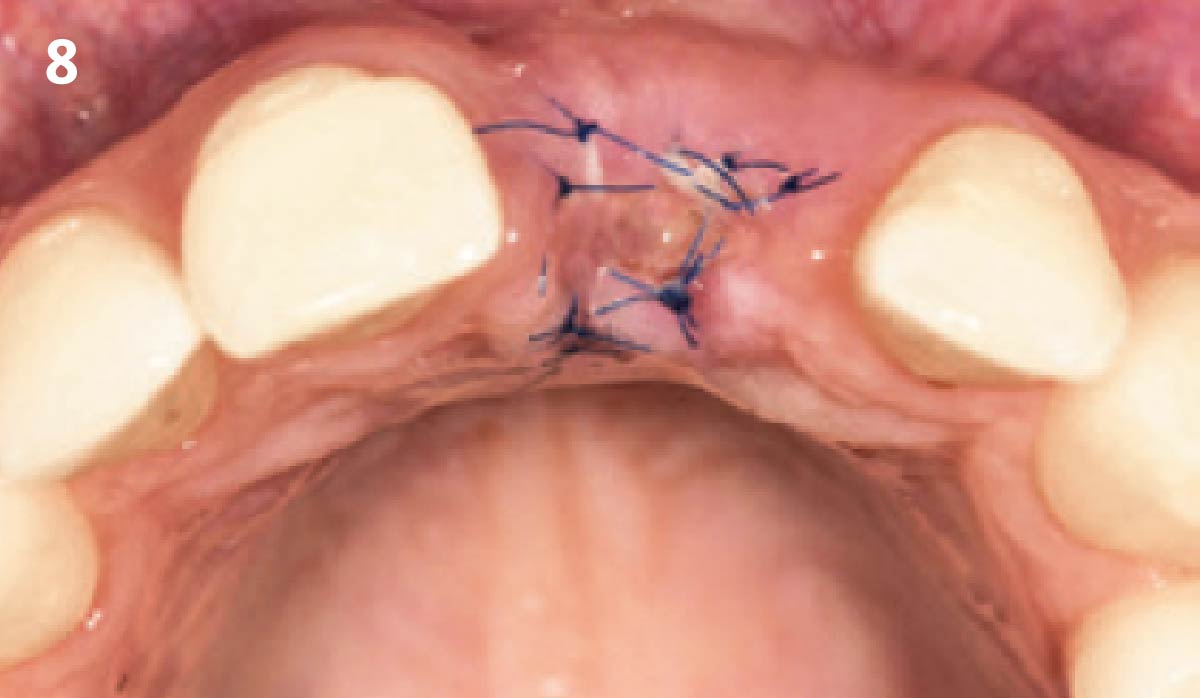
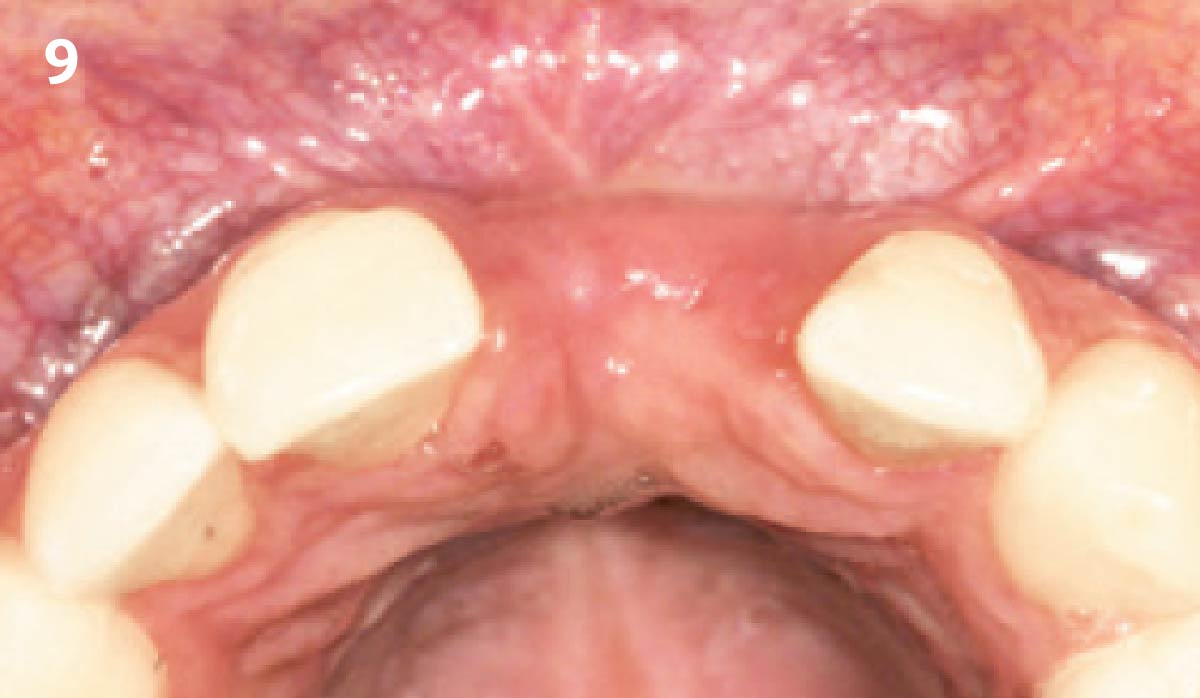
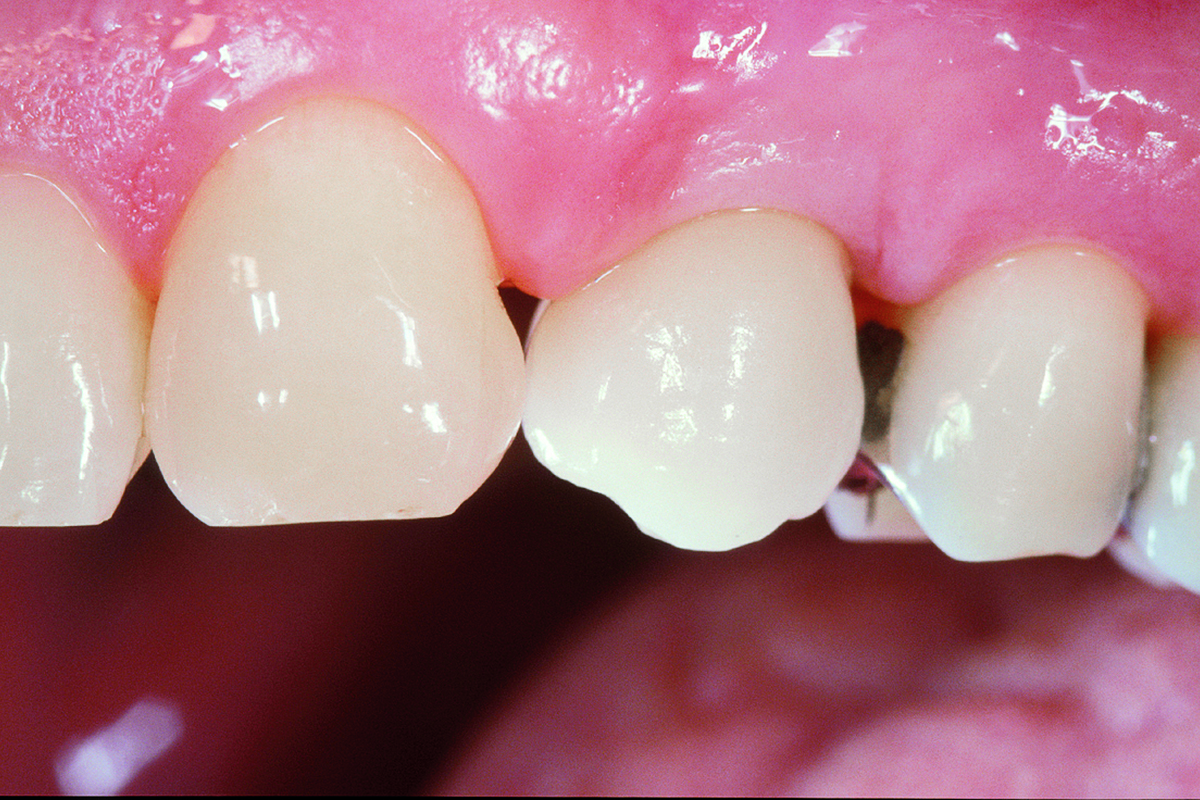
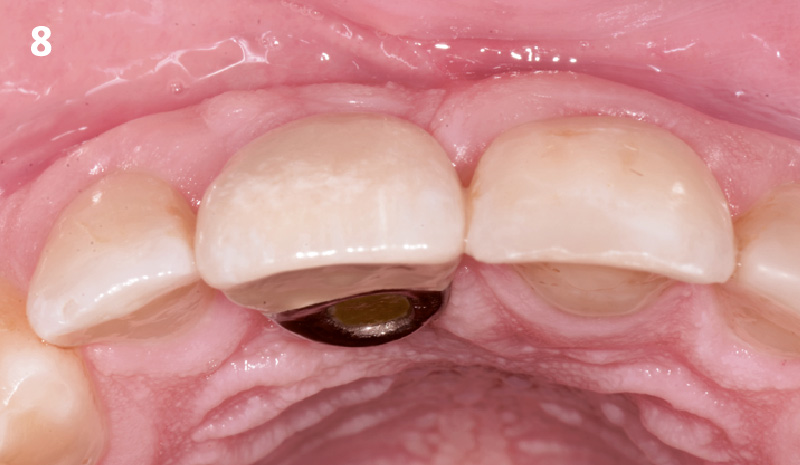
Immediate provisional in place two days after implant placement and osteoplasty. There has been significant gain in bony architecture and development of soft-tissue contours at a site that was extremely deficient of structure to begin with.”

Dr. Richard E. Bauer, III

Dr. Richard E. Bauer, III

Oral and Maxillofacial Surgeon – University of Pittsburgh

Richard E. Bauer, III, DMD, MD is a graduate of the University of Pittsburgh Schools of Dental Medicine and Medicine. Dr. Bauer completed his residency training in Oral and Maxillofacial Surgery at the University of Pittsburgh Medical Center. Dr. Bauer has served on multiple committees for the American Association of Oral and Maxillofacial Surgery (AAOMS). He is a full-time faculty member and Residency Program Director at the University of Pittsburgh in the department of Oral and Maxillofacial Surgery and his practice is focused on dental implants and corrective jaw surgery. He has been active in research with focus on bone regeneration and virtual applications for computer assisted planning and surgery.

WEBINAR

WEBINAR

WEBINAR

WEBINAR

CLINICAL CASE

CLINICAL CASE

CLINICAL CASE

CLINICAL CASE

CLINICAL CASE

CLINICAL CASE

CLINICAL CASE

CLINICAL CASE

CLINICAL CASE

CLINICAL CASE

CLINICAL CASE

CLINICAL CASE

CLINICAL CHALLENGE:

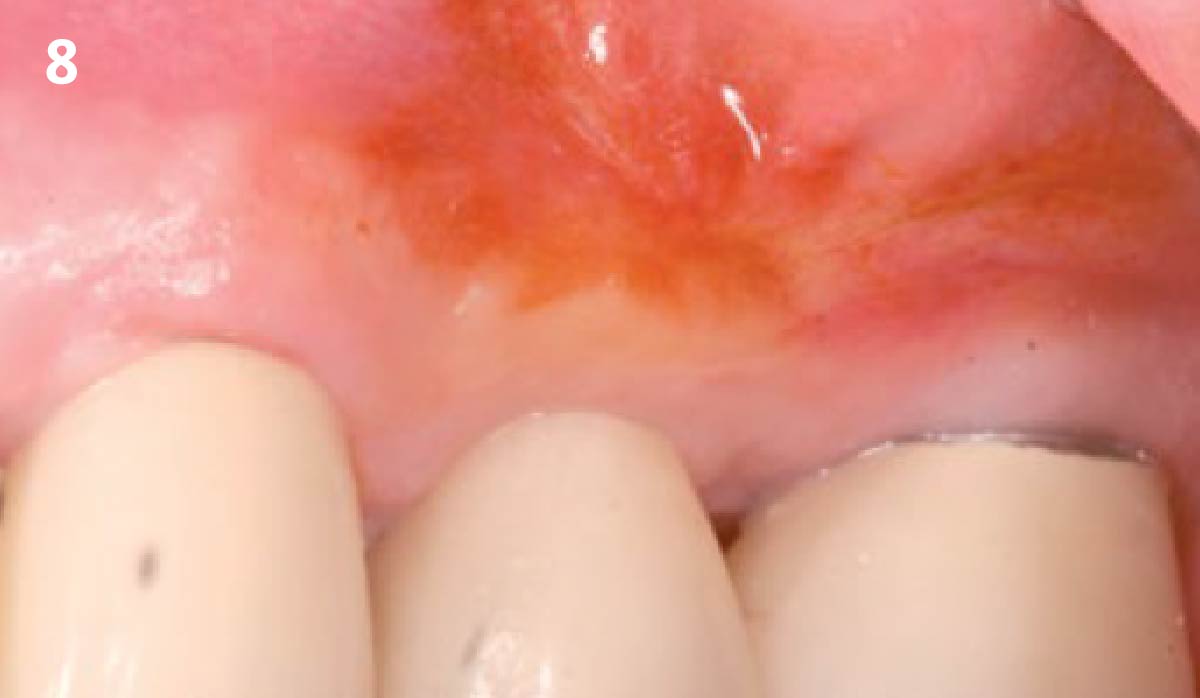
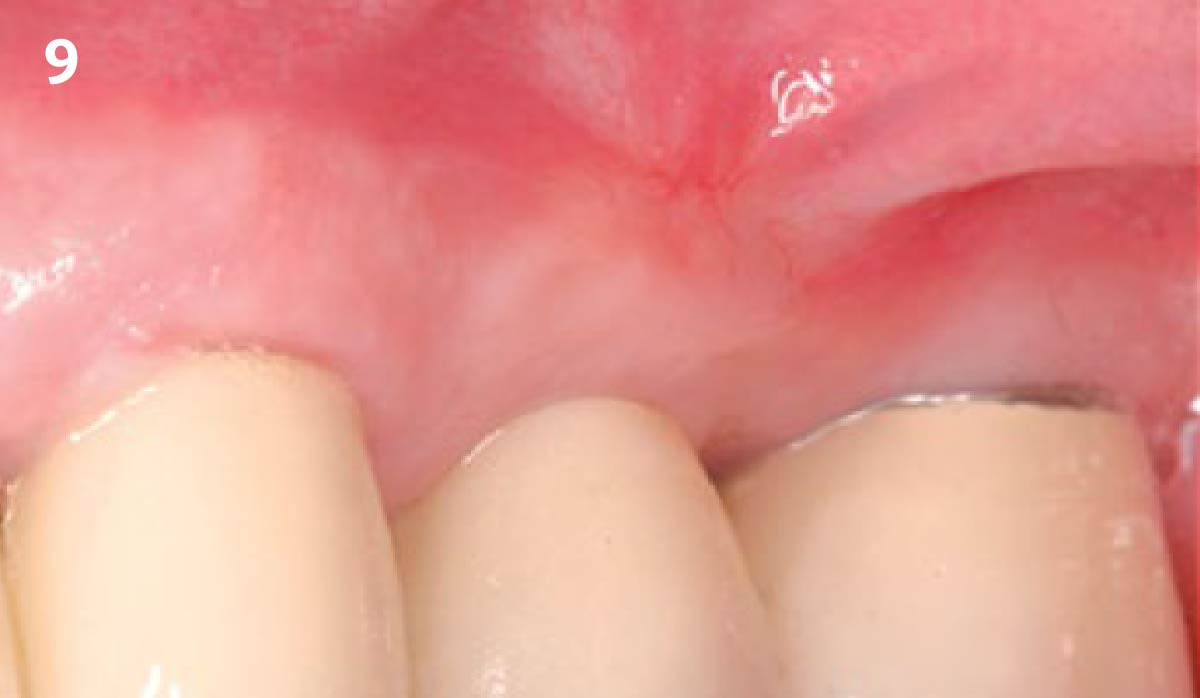
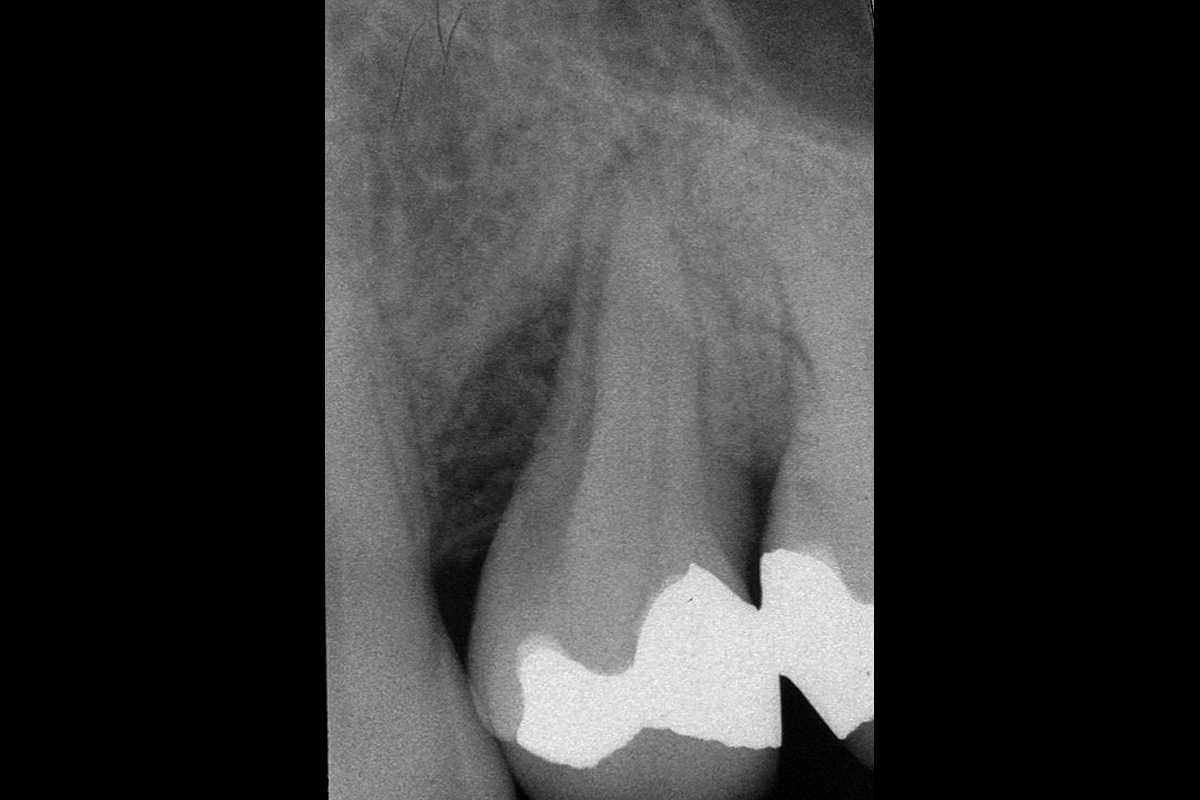
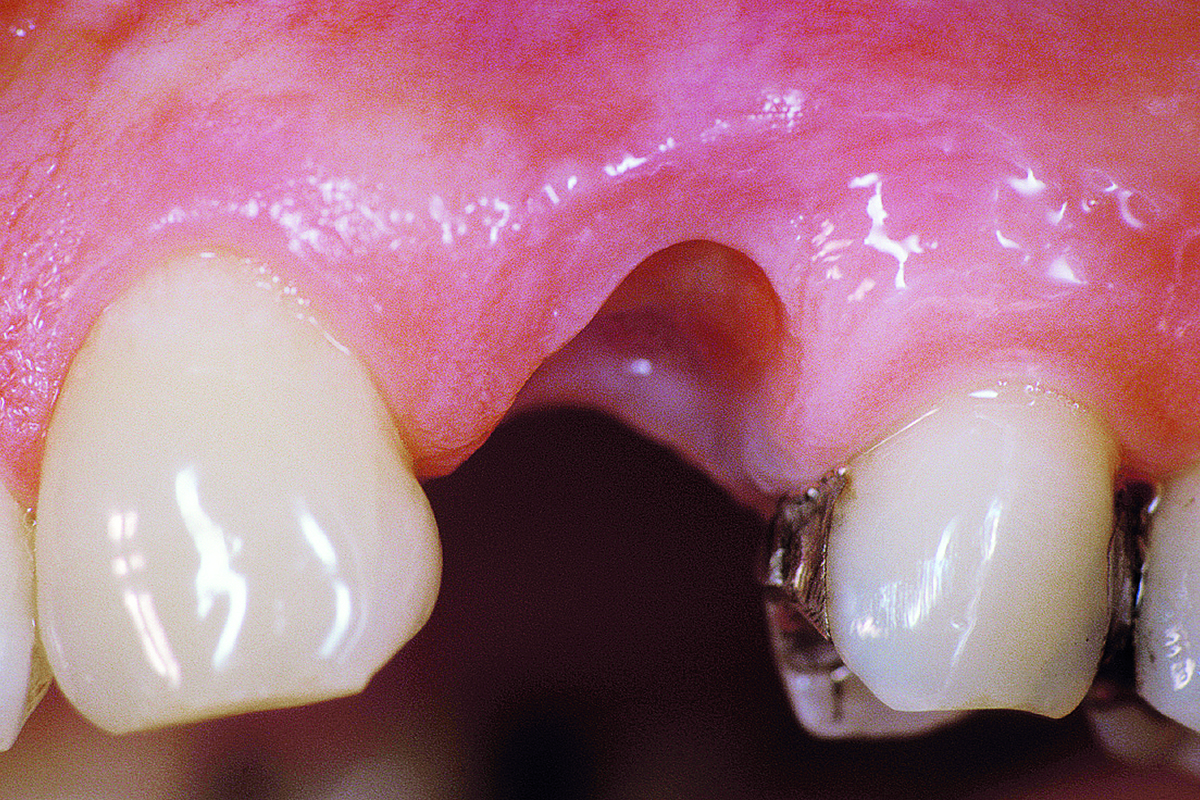
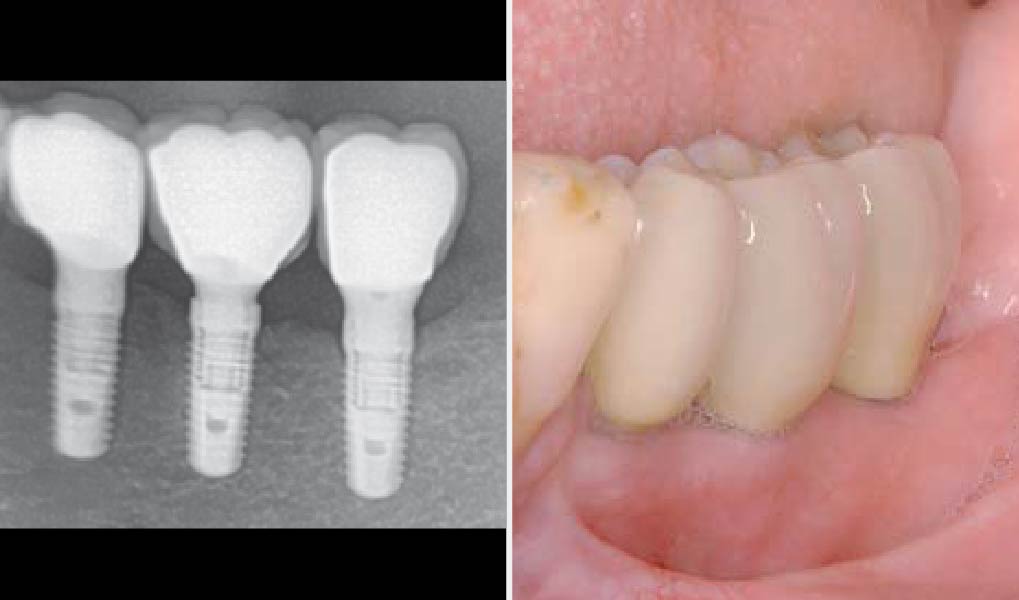
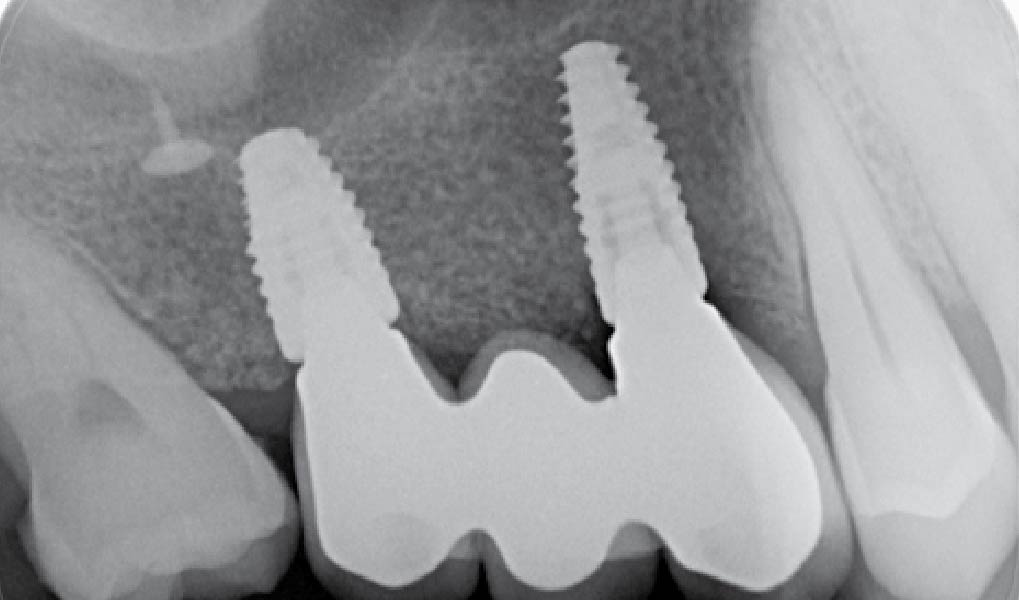
The upper premolar had to be removed due to advanced periodontal disease and severe bone loss around the infected tooth. The bone defect was an intra-alveolar defect without dehiscence or fenestration.

AIM/APPROACH:

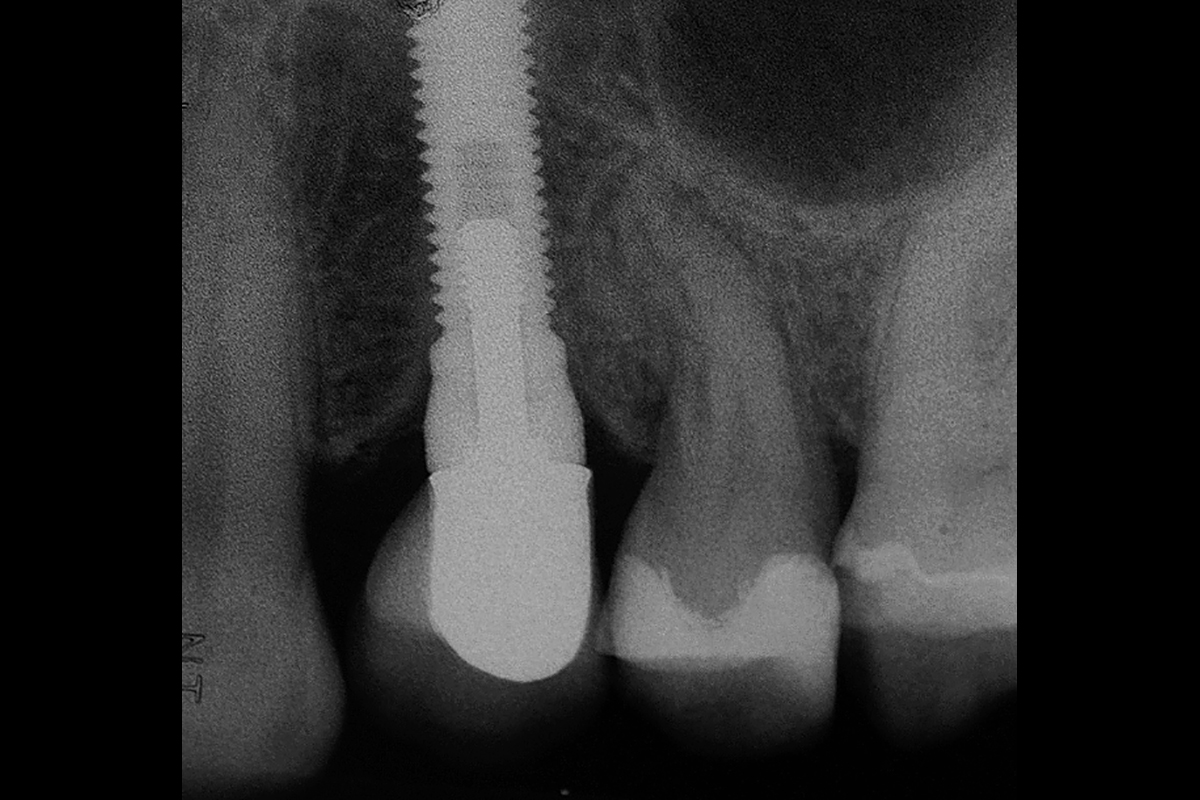
An early implant placement approach with a healing time of six weeks before implant placement was chosen. The bone augmentation with Geistlich Bio-Oss Collagen® was conducted simultaneously with implant placement. As this patient was treated in 1991, the case is one of the very first clinical applications of Geistlich Bio-Oss Collagen®

CONCLUSION:

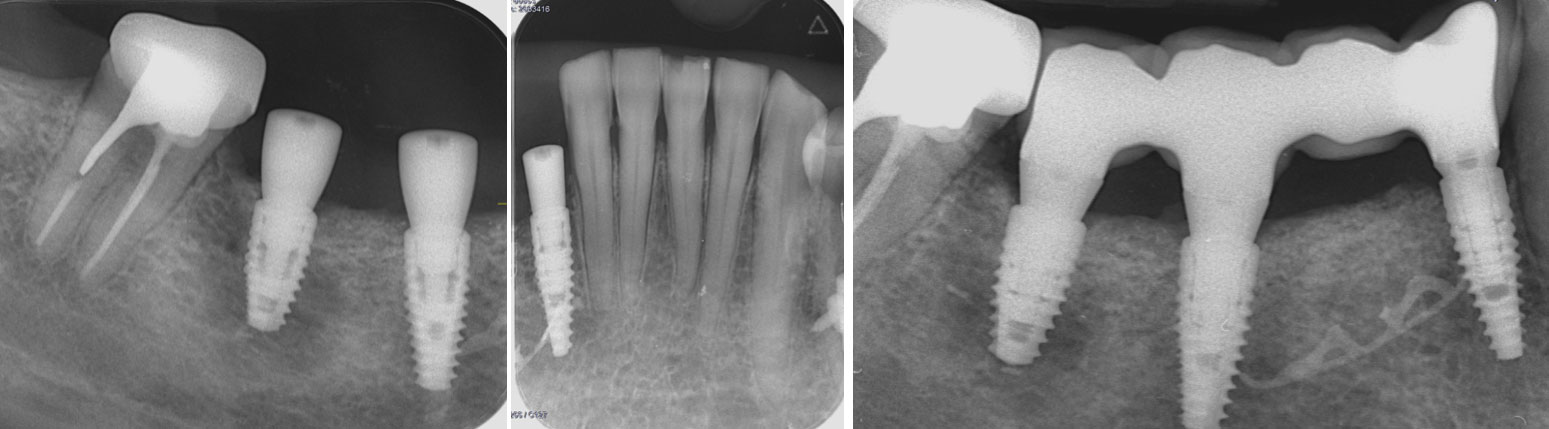
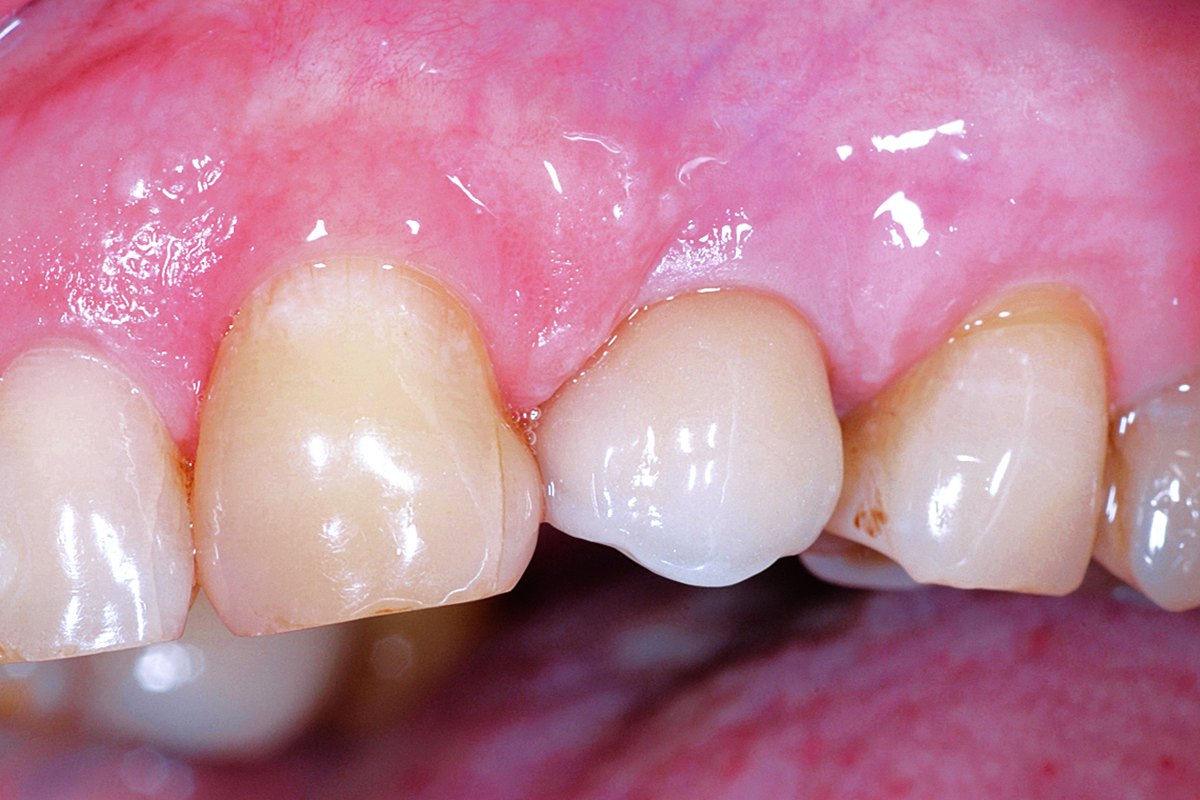
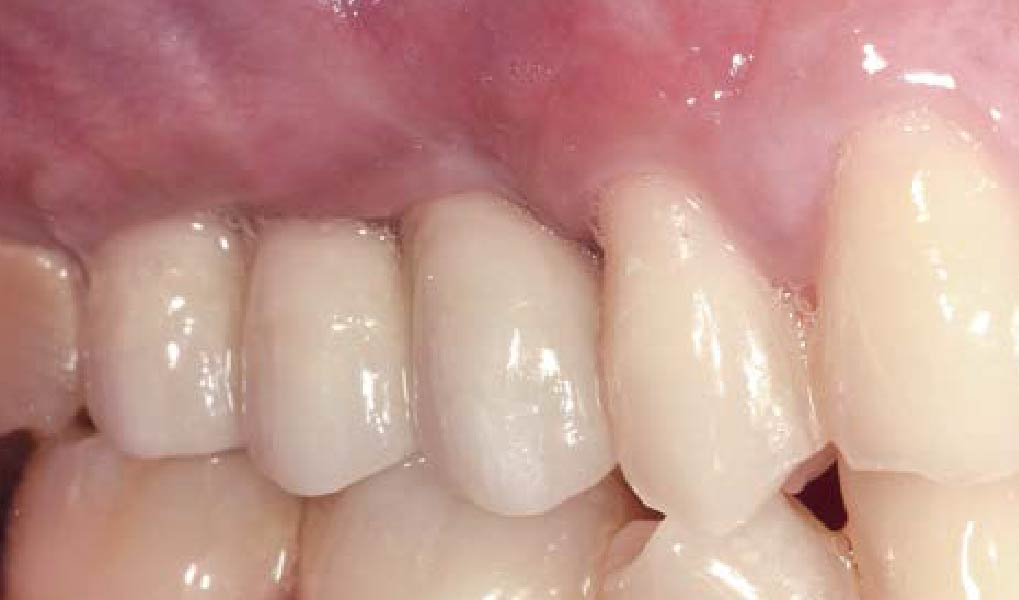
A premolar grafted with Geistlich Bio-Oss Collagen® during implant placement showed good long-term result after 25 years. Satisfactory hard and soft-tissue contour are present 25 years after implantation.

CLINICAL CASE

CLINICAL SITUATION:

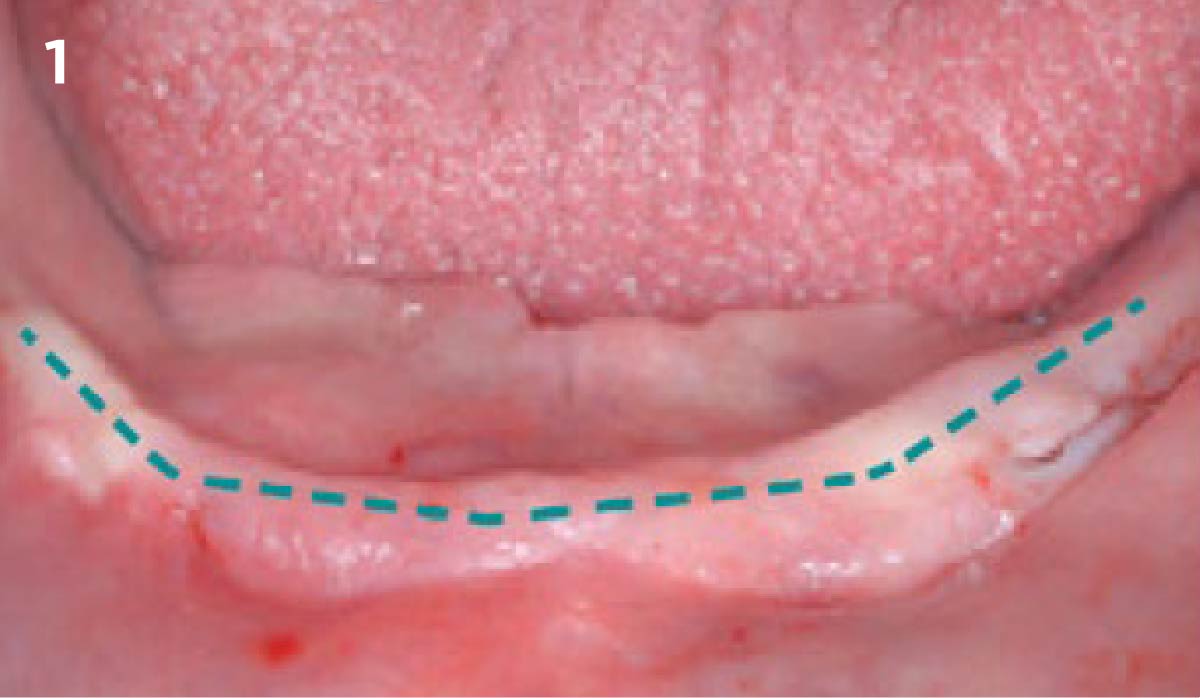
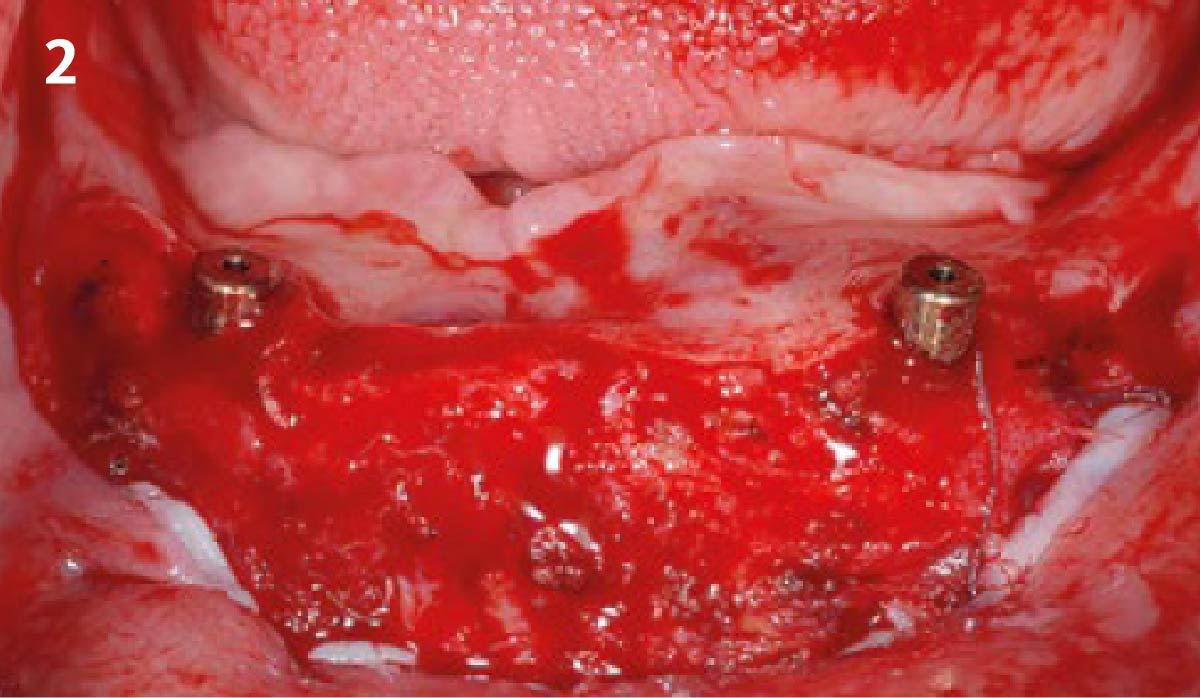
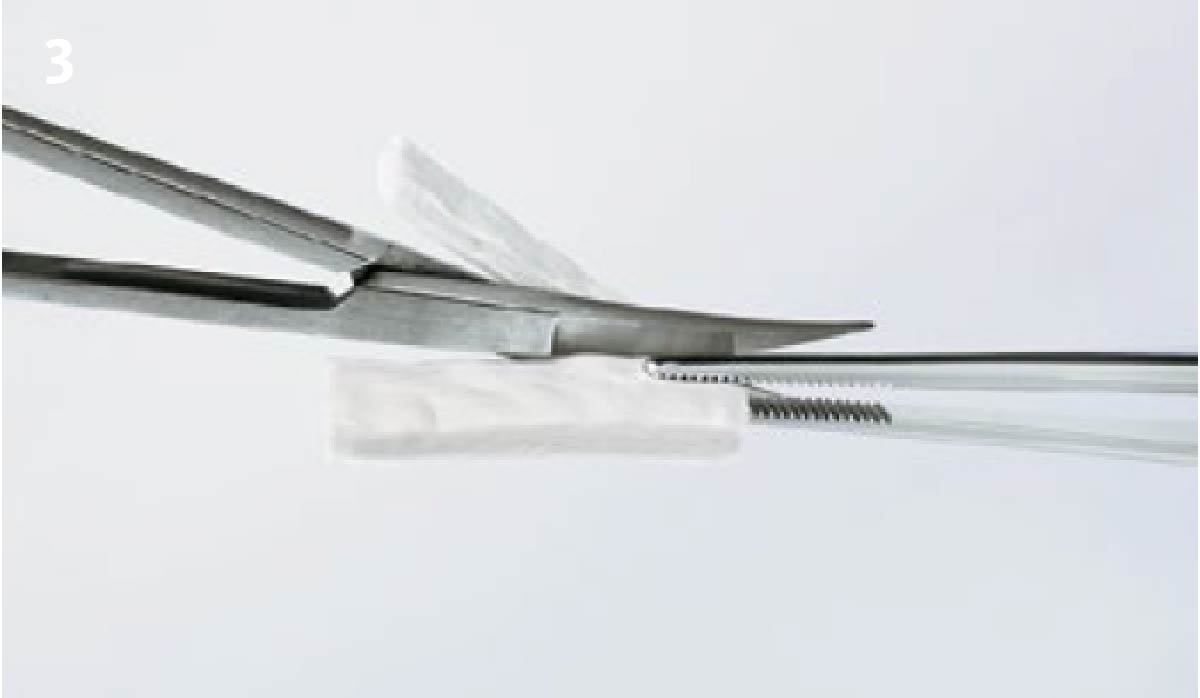
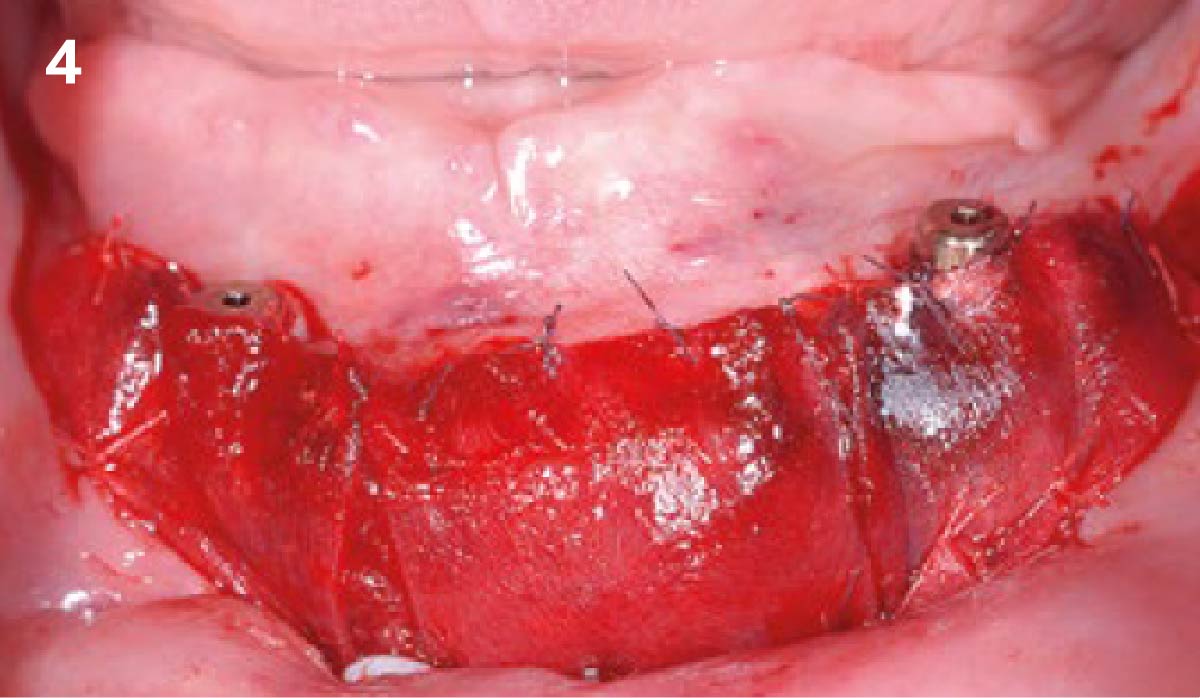
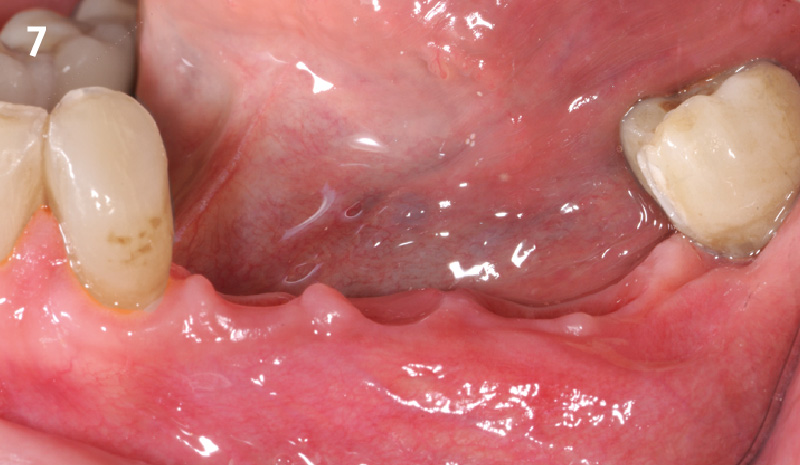
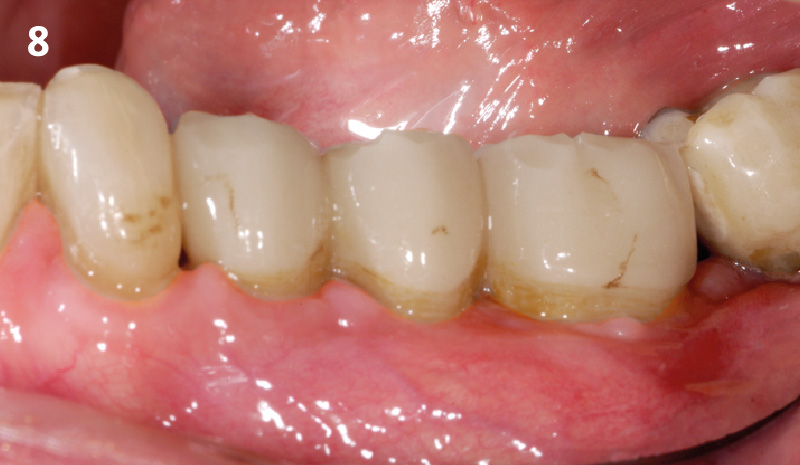
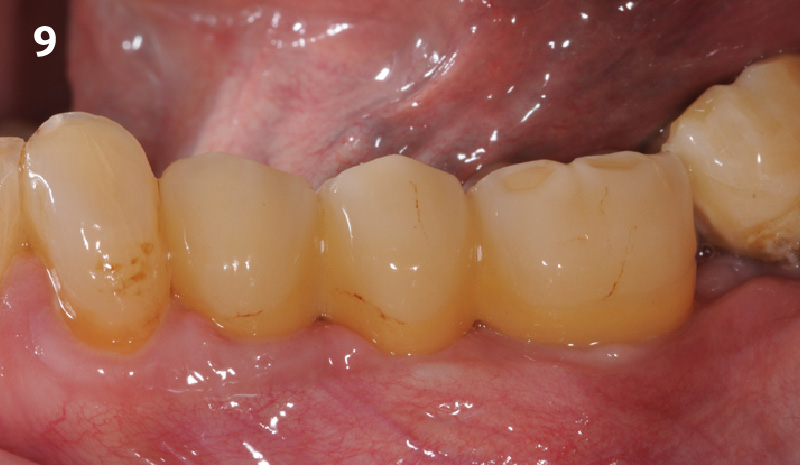
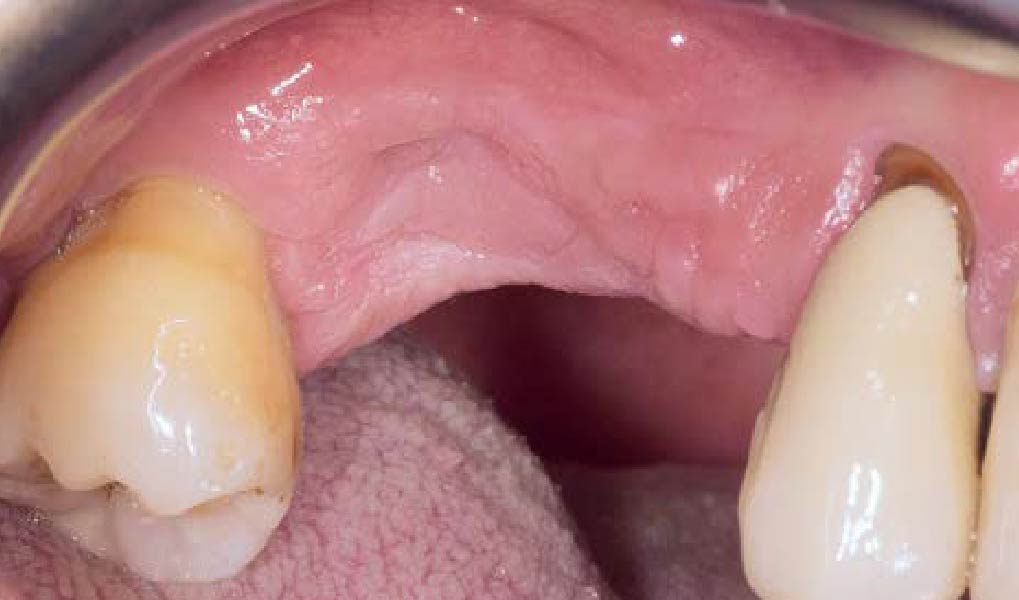
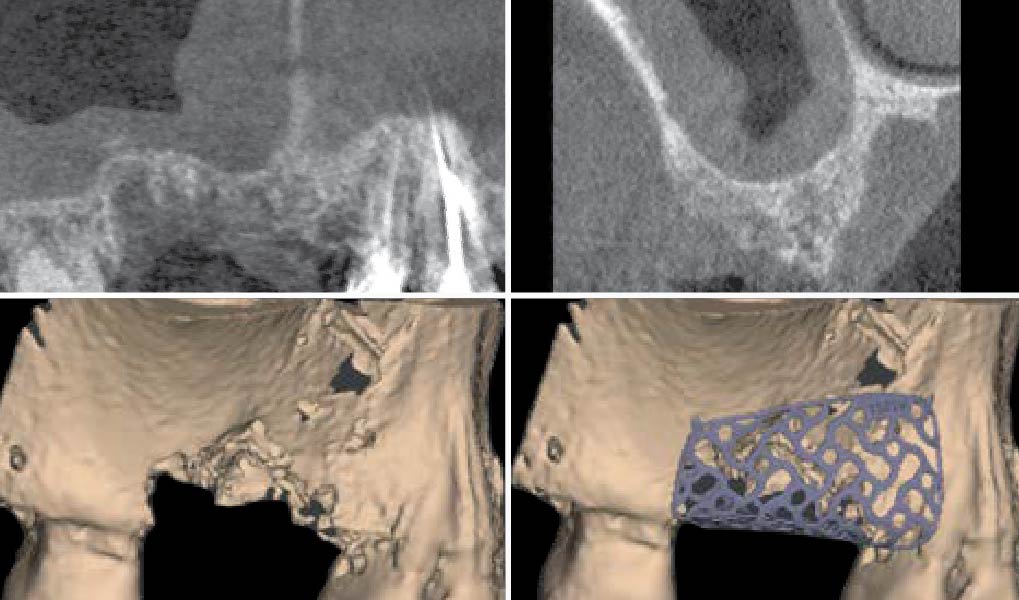
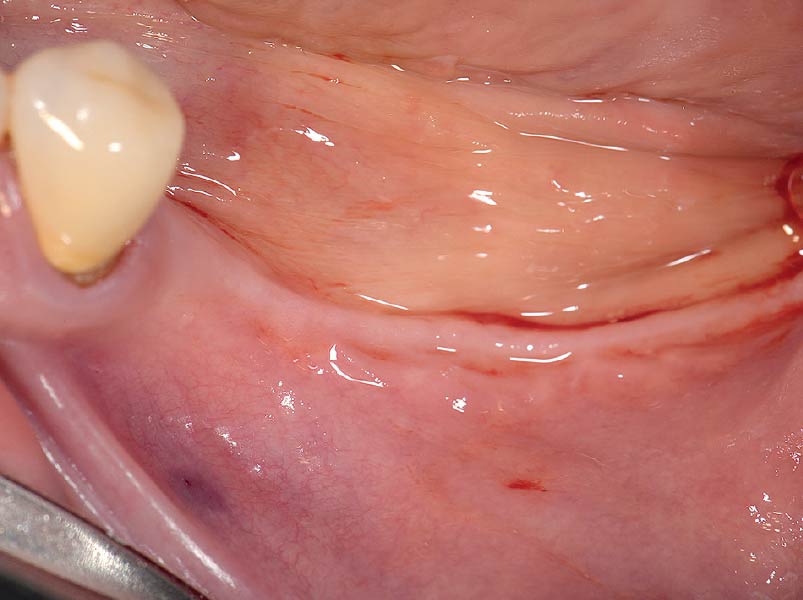
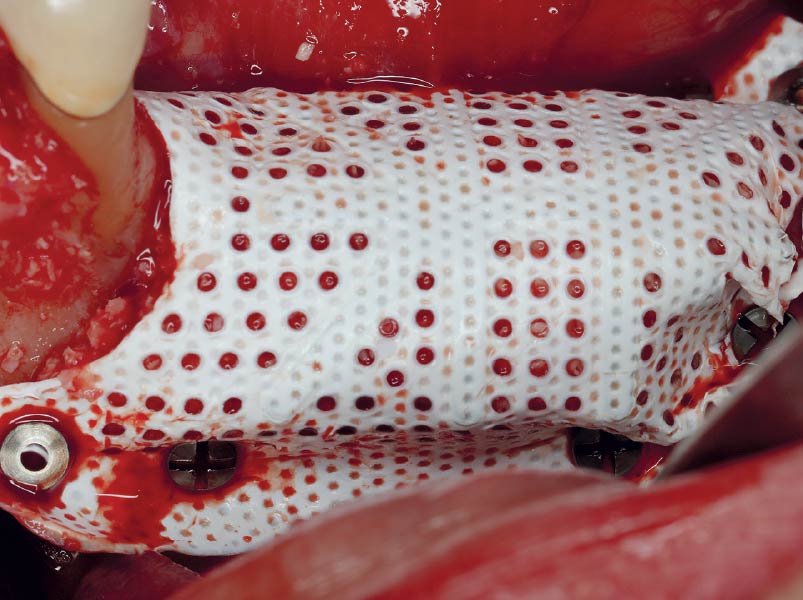
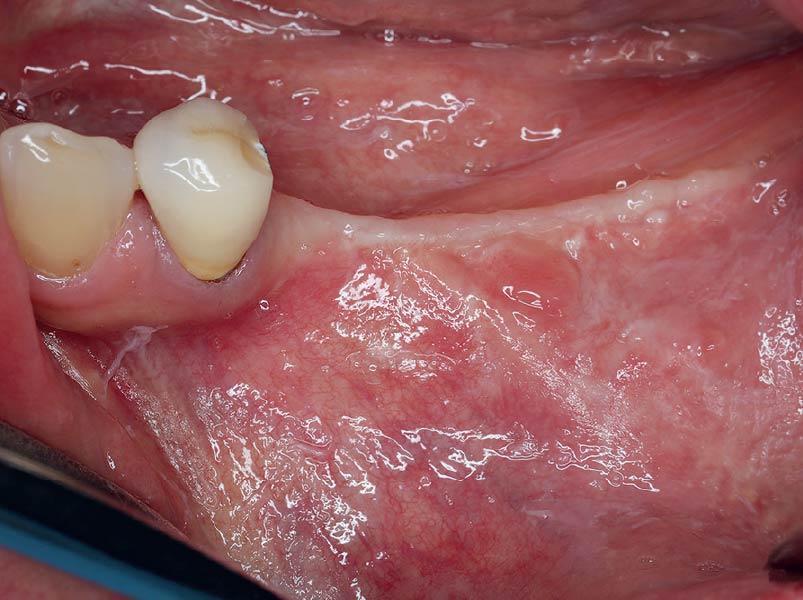
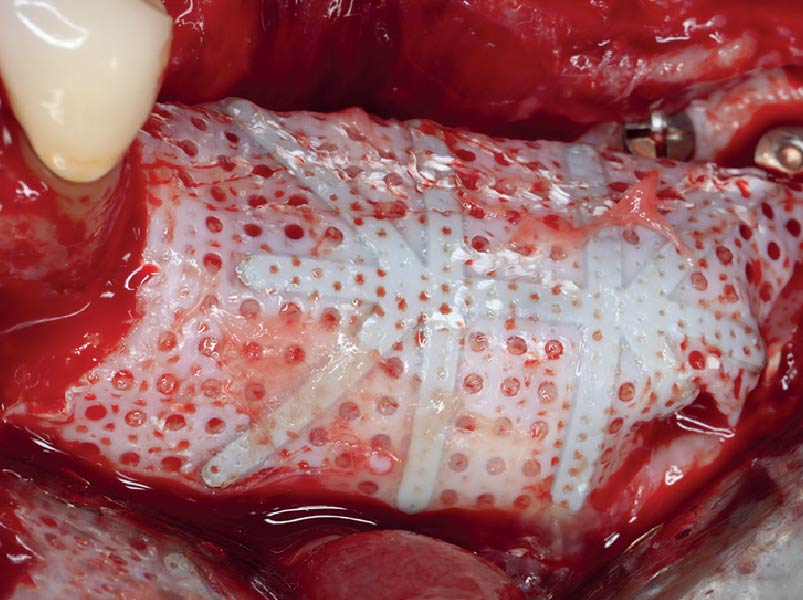
A 60-year-old female presented to the periodontics clinic at UTHSA for implant placement at sites #18 and #19. Upon clinical and radiographic examinations, the lower left edentulous ridge was diagnosed as a Siebert class III due to the presence of bucco-lingual and apico-coronal tissue defects. The treatment proposed included soft tissue grafting for increase of keratinized tissue followed by ridge augmentation using Yxoss CBR®mesh and a mix of autograft, vallos fibers, and platelet-rich plasma (PRP)

OUTCOME:

The vallos fibers combined with autogenous bone and the PRP created a stable fibrin bone graft that could be easily molded and contained within the mesh. Hydration with PRP was progressive until the graft reached the desired consistency. Wound healing following ridge augmentation was uneventful. There were no signs of infection or membrane exposure at the site. Mesh removal and implant placement is planned at 6-months following ridge augmentation.

CLINICAL CASE

CLINICAL CASE

CLINICAL CASE

CLINICAL CHALLENGE:

  • The planning of the patient’s case takes local and general patient-specific risk factors into consideration according to the principles of backward planning for implant positioning.

AIM/APPROACH:

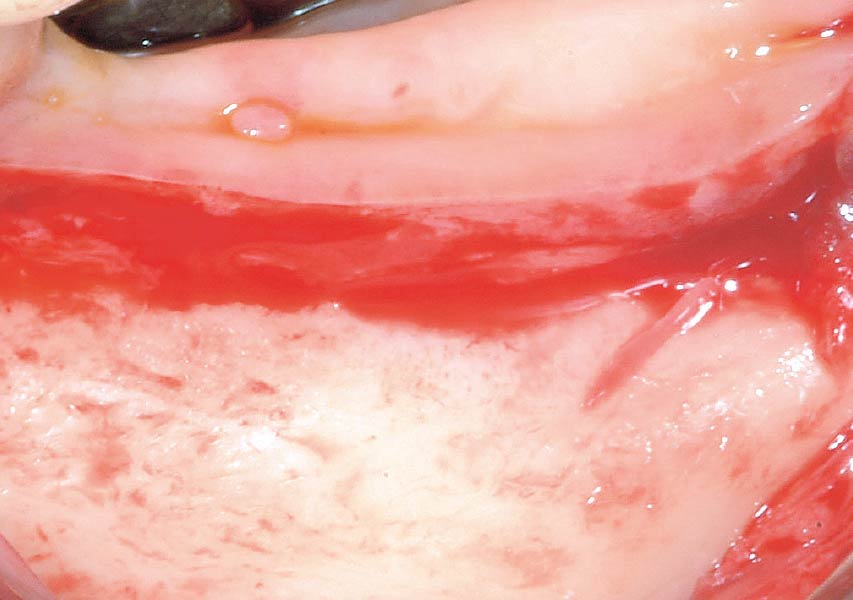
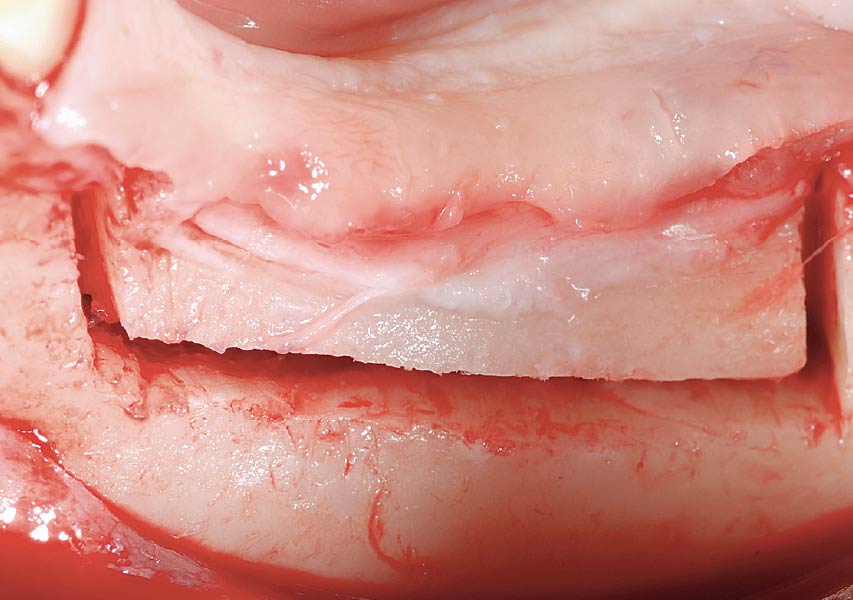
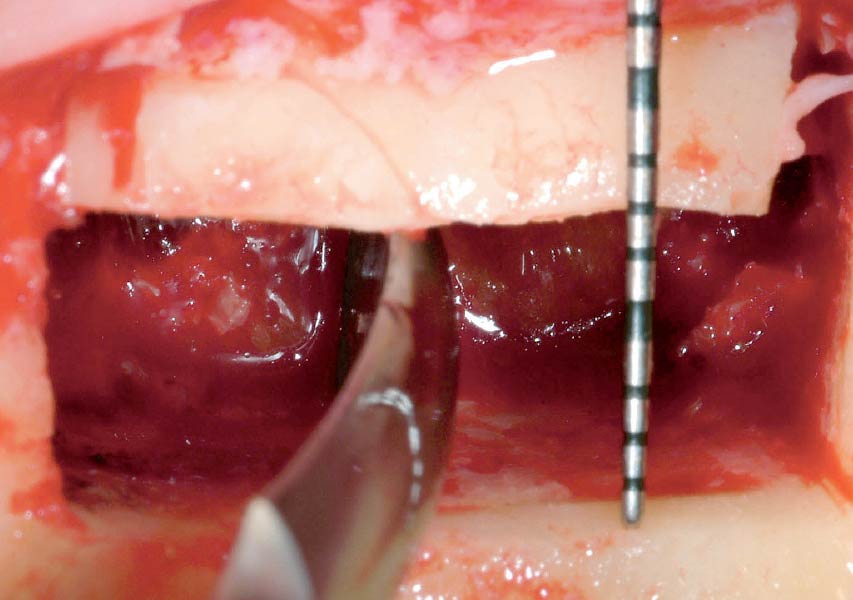
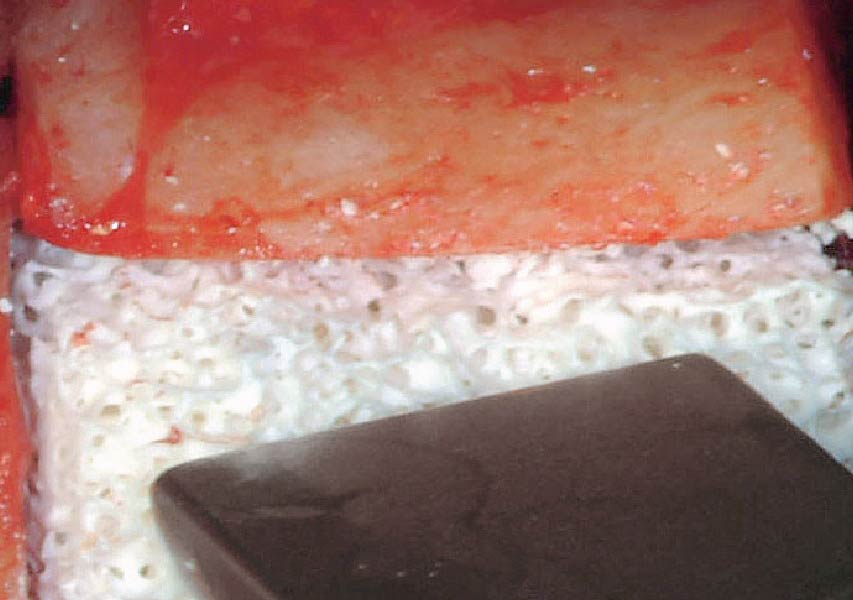
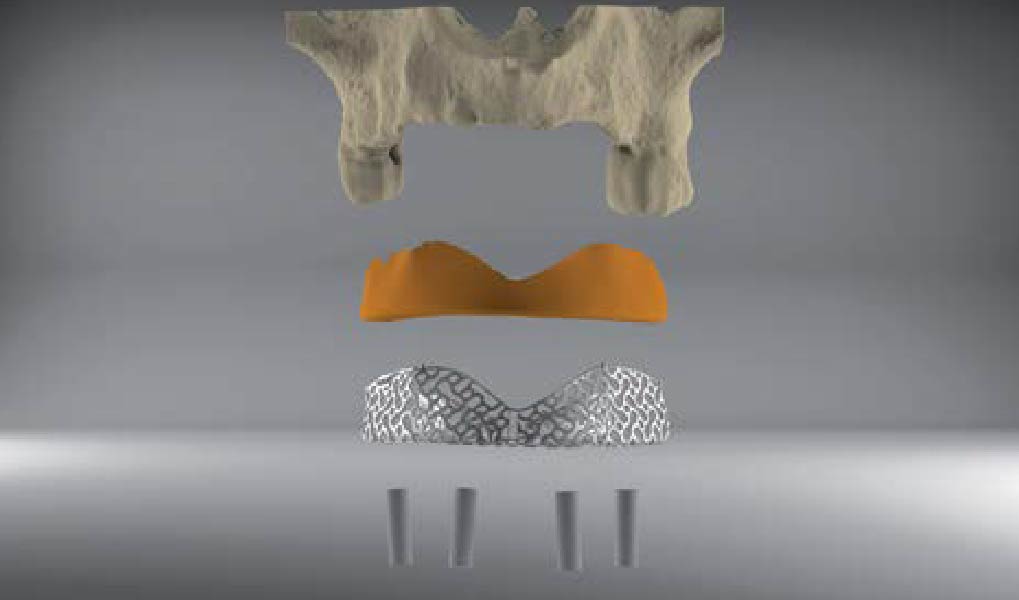
  • Highlights step-by-step the important procedures to regenerate the bone (horizontal and vertical) with the 3-D printing technology, Yxoss CBR®.

CLINICAL CASE

CLINICAL CASE

CLINICAL CASE

CLINICAL CASE

CLINICAL CASE

CLINICAL CASE

CLINICAL CASE

CLINICAL CASE

CLINICAL CASE

CLINICAL CHALLENGE:

  • Insufficient alveolar ridge height for implant placement and proximity to the alveolar nerve
  • Autologous bone harvesting is associated with patient discomfort

AIM/APPROACH:

  • Interpositional grafting with Geistlich Bio-Oss® Block for vertical augmentation
  • Alveolar ridge volume preservation and minimizing patient morbidity

CLINICAL CASE

CLINICAL CHALLENGE:

  • Severely atrophied alveolar ridge with insufficient bone volume for implant placement
  • ­­­­High complication rates and patient discomfort associated with large augmentations when using autologous bone grafts

AIM/APPROACH:

  • 3-dimensional augmentation of alveolar ridge by the fence technique for implant placement
  • At the same time reducing complication rates and patient discomfort

CLINICAL CASE

CLINICAL CHALLENGE:

  • Insufficient alveolar ridge width for implant placement
  • Autologous bone is subject to resorption and may lead to loss of volume

AIM/APPROACH:

  • Ridge Split procedure in combination with Geistlich Bio-Oss® and Geistlich Bio-Gide® for horizontal augmentation
  • Preservation of the alveolar ridge volume

CLINICAL CASE

CLINICAL CHALLENGE:

  • Insufficient alveolar ridge width for implant placement
  • Donor site morbidity after autologous bone block harvesting and resorption of autologous bone

AIM/APPROACH:

  • Horizontal alveolar ridge augmentation with Geistlich Bio-Oss® and Geistlich Bio-Gide®
  • Minimizing autologous bone harvesting and resorption protection

CLINICAL CASE

CLINICAL CASE

CLINICAL CASE

CLINICAL CASE

CLINICAL CASE

CLINICAL CASE

CLINICAL CASE

CLINICAL CASE

CLINICAL CASE

CLINICAL CASE

CLINICAL CASE

CLINICAL CASE

CONCLUSIONS:

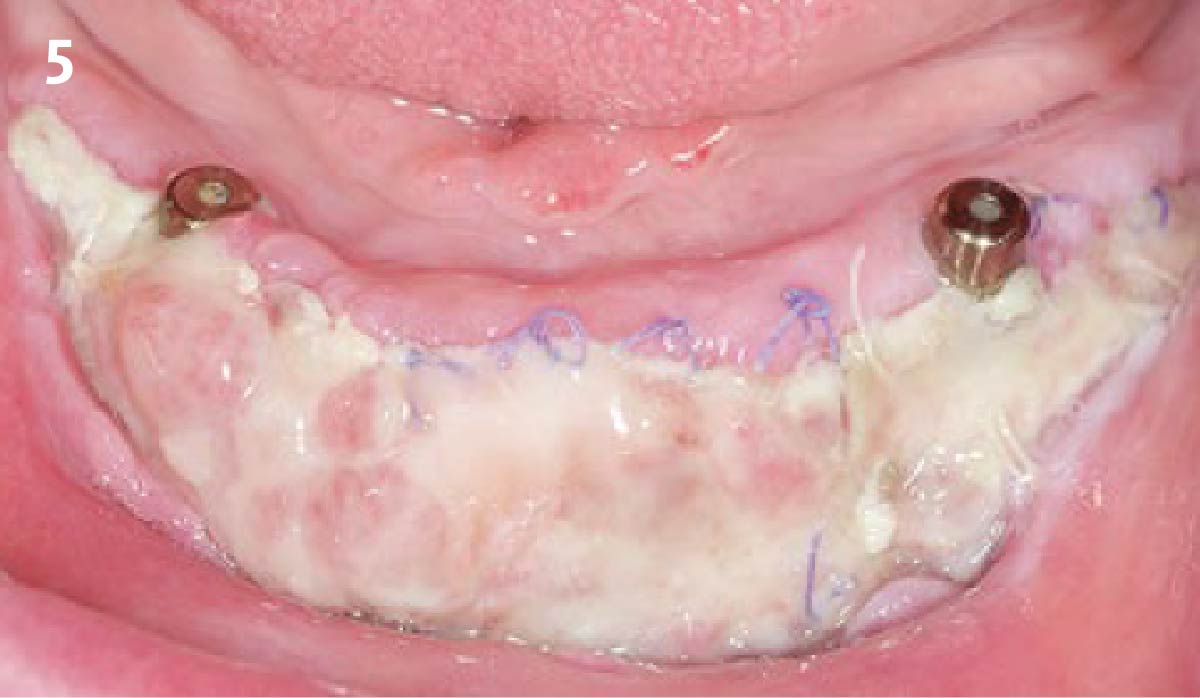
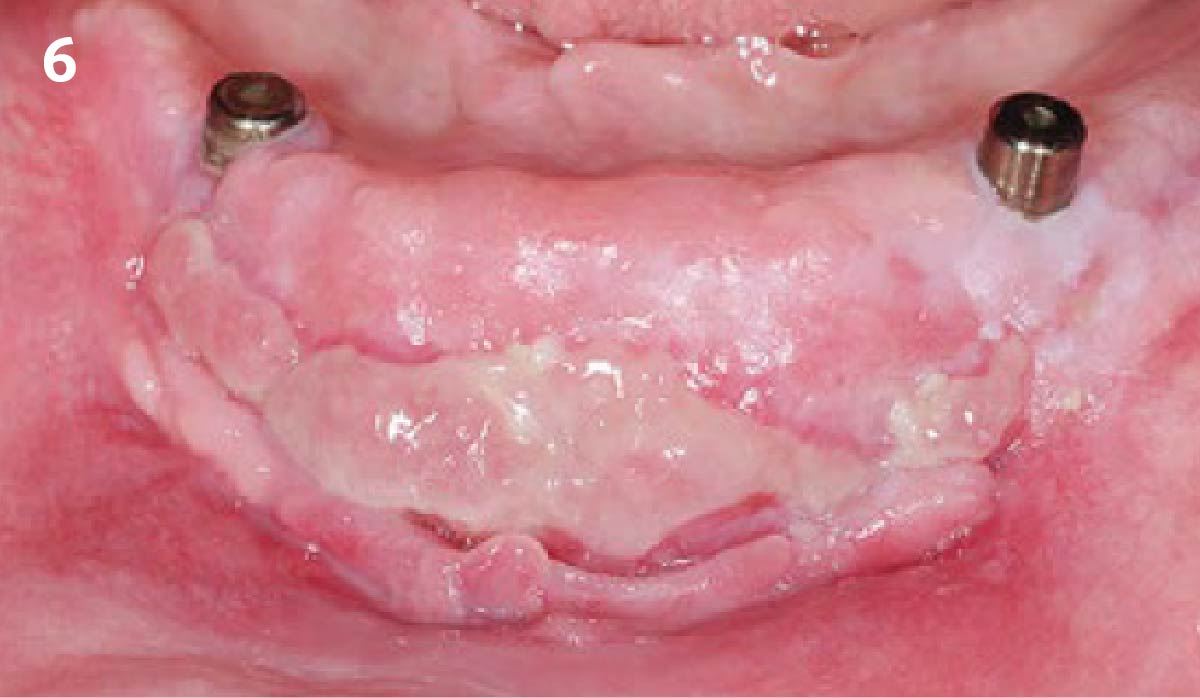
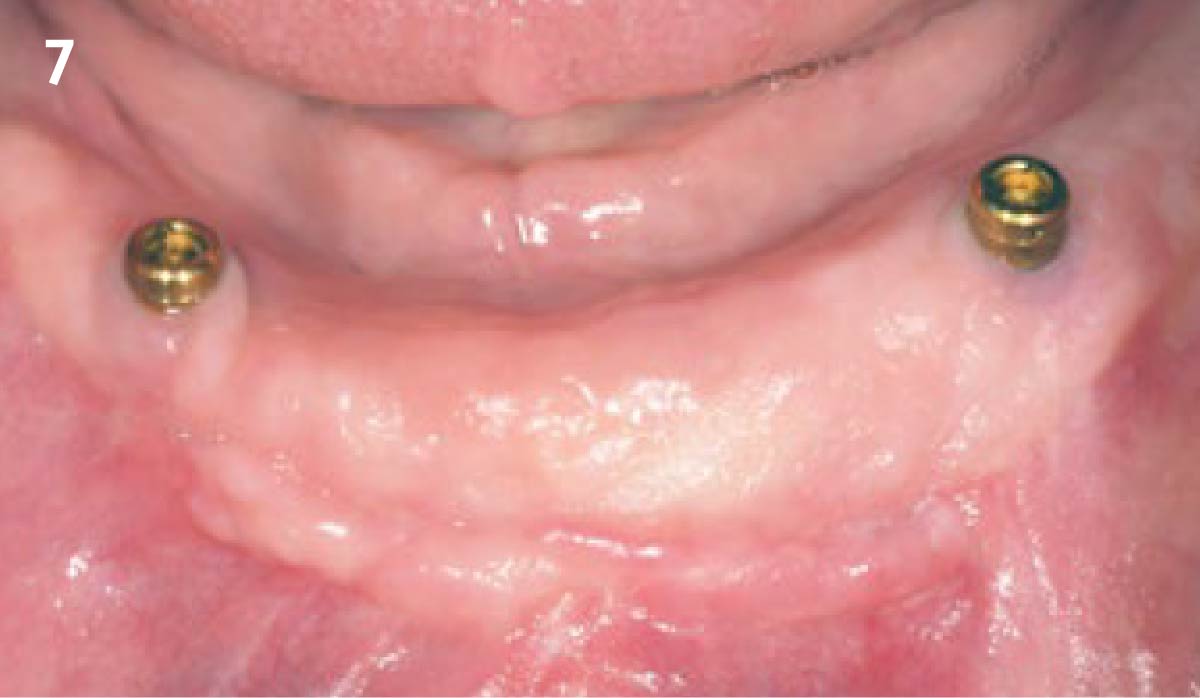
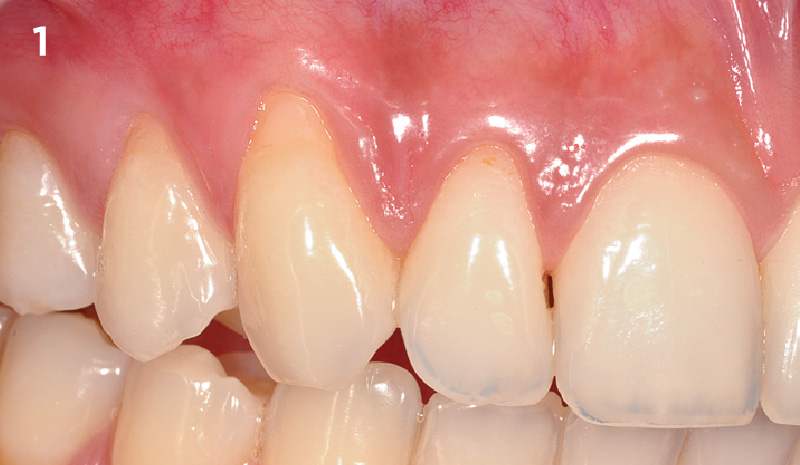
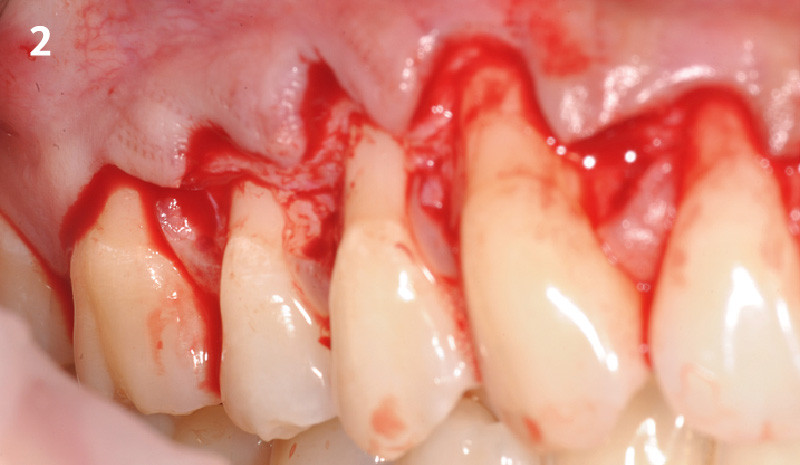
  • Geistlich Mucograft® with a keratinized tissue strip was utilized to increase vestibular depth and gain additional keratinized tissue.
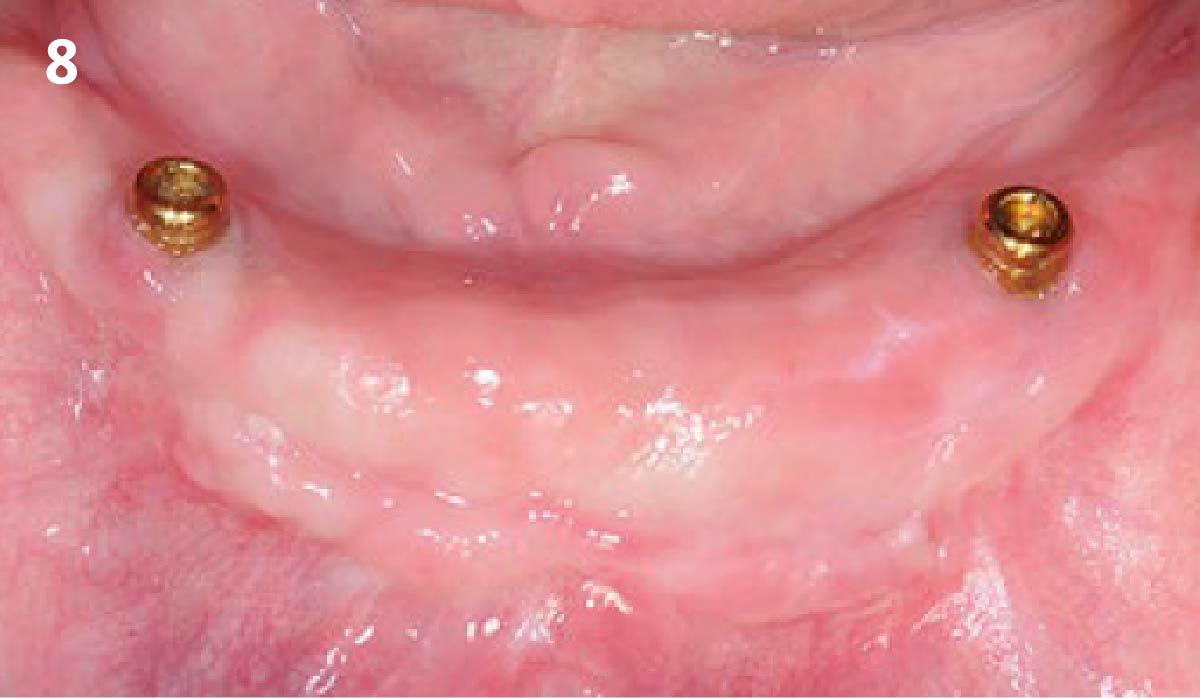
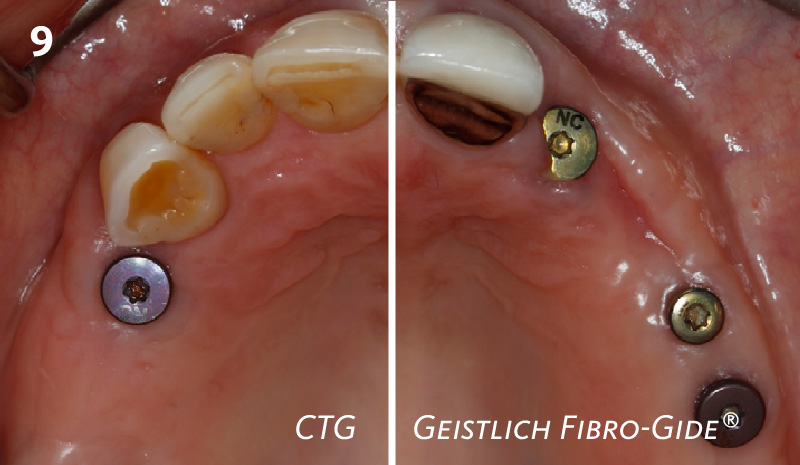
  • Augmentation of severely atrophied alveolar ridge provided sufficient bone for implant placement 8 months following augmentation.

CLINICAL CASE

CLINICAL CASE

CLINICAL CASE

CLINICAL CASE