

BIOBRIEF
Vertical Ridge Augmentation in the Anterior Maxilla
THE SITUATION
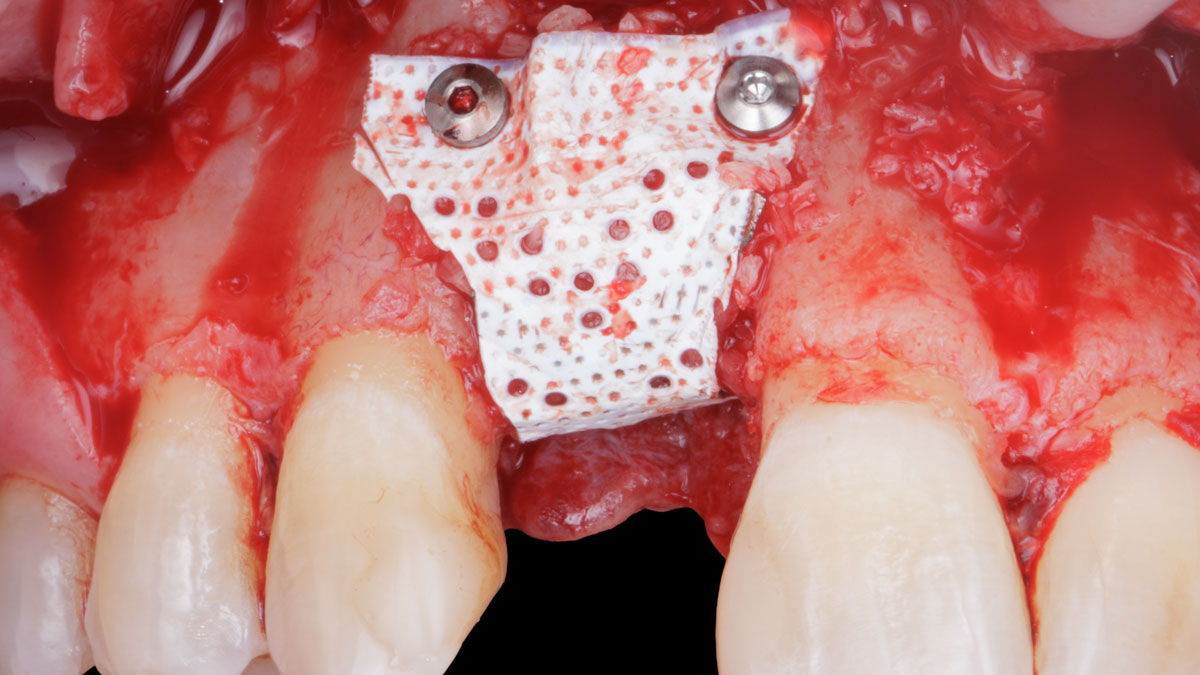
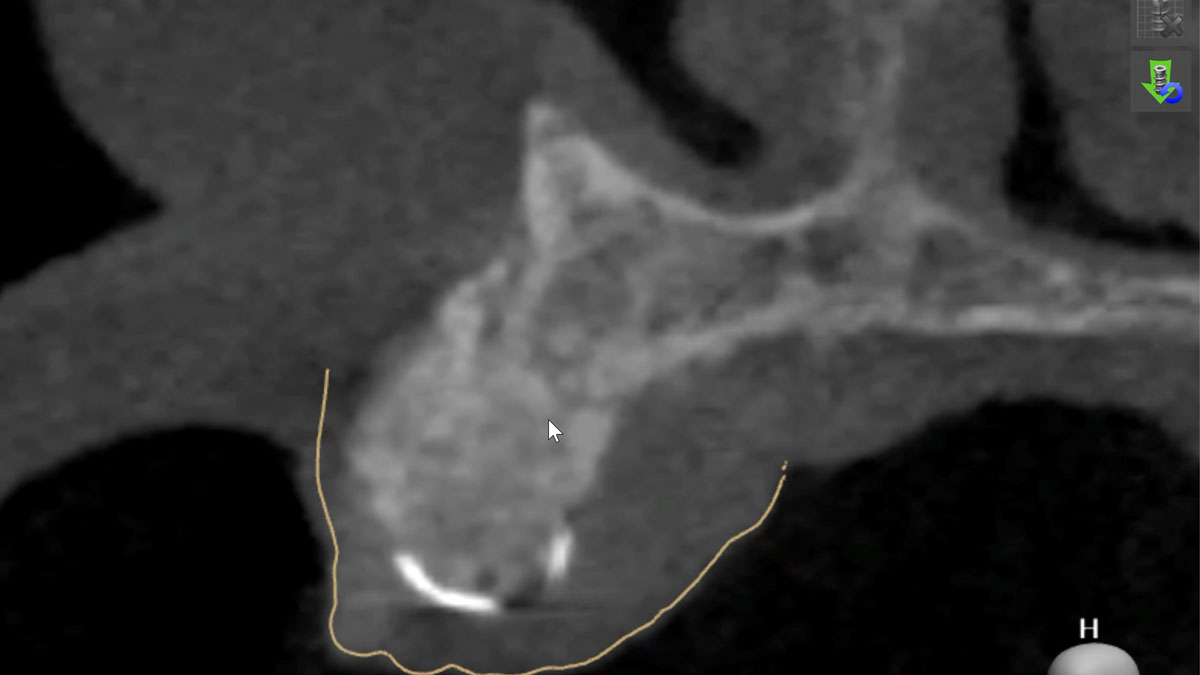
The site of tooth 7* had a history of peri-implantitis followed by implant removal, with severe vertical bone deficiency & insufficient bone for implant placement.
*Universal Numbering System
THE RISK PROFILE
| Low Risk | Medium Risk | High Risk | |
|---|---|---|---|
| Patient’s health | Intact immune system/ Non-smoker | Light smoker Impaired immune system/ | Heavy smoker |
| Patient’s esthetic requirements | Low | Medium | High |
| Height of the smile line | Low | Medium | High |
| Gingival biotype | Thick – “low scalloped” | Medium – “medium scalloped” | Thin – “high scalloped” |
| Infection at implant sight | None | Chronic | Acute |
| Bone height at adjacent tooth | ≤ 5 mm from contact point | 5.5 – 6.5 mm from contact point | ≥ 7 mm from contact point |
| Restorative status of adjacent tooth | Intact | Restored | |
| Width of tooth gap | 1 tooth (≥ 7 mm) | 1 tooth (≤ 7 mm) | 2 teeth or more |
| Soft-tissue anatomy | Intact | Compromised | |
| Bone anatomy of the alveolar ridge | No defect | Horizontal defect | Vertical defect |
 download pdf
THE APPROACH
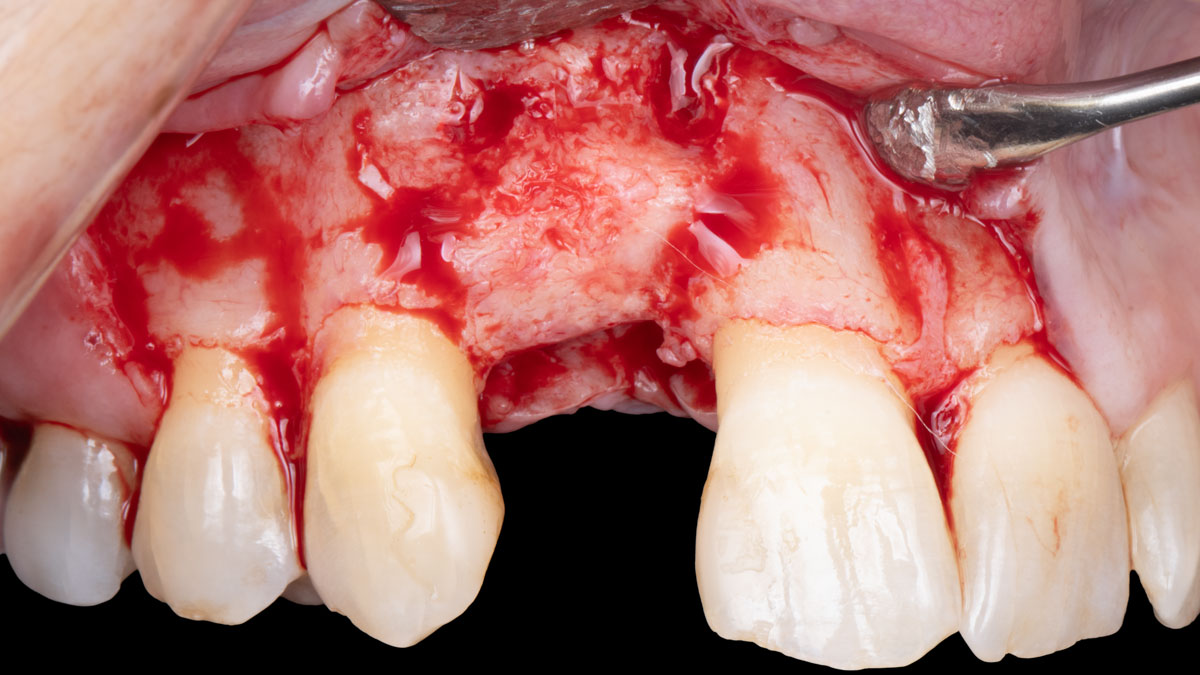
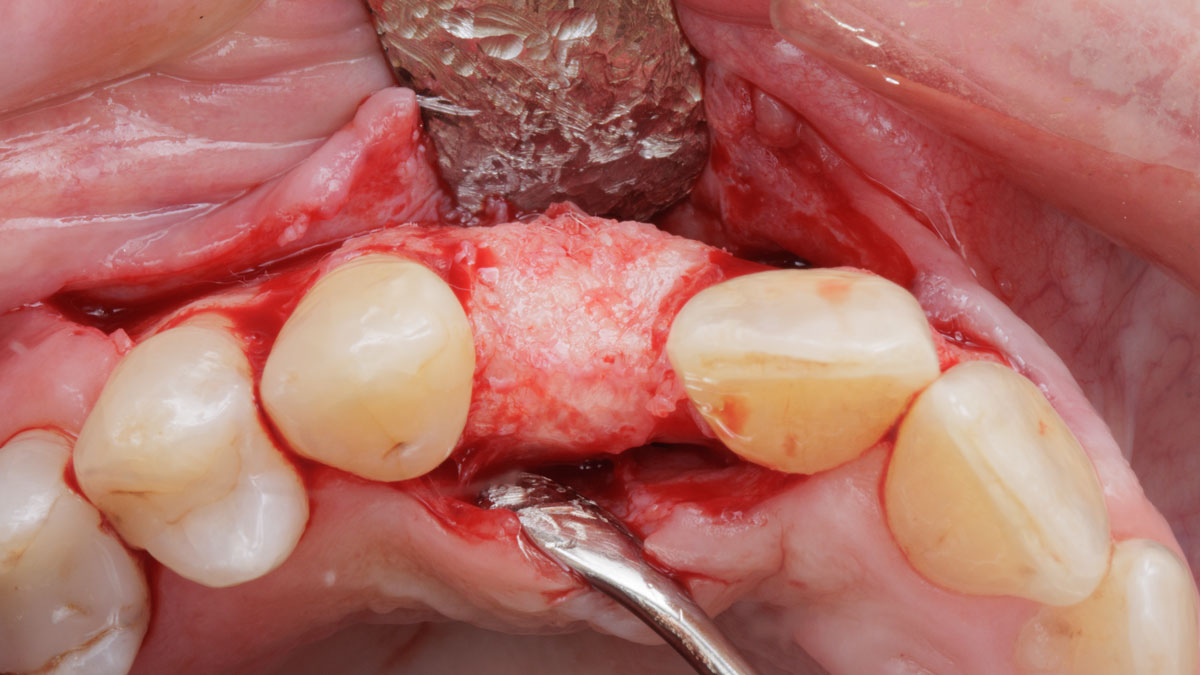
The goal was to achieve adequate ridge width and height to place the implant in a prosthetically driven position.
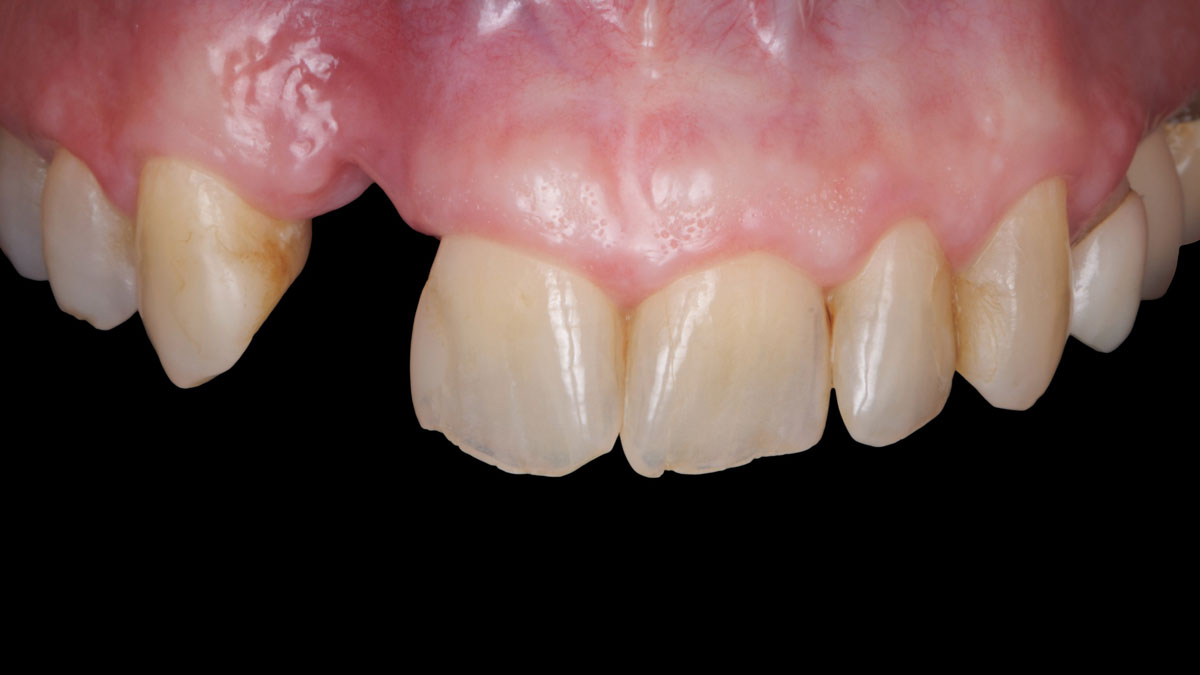
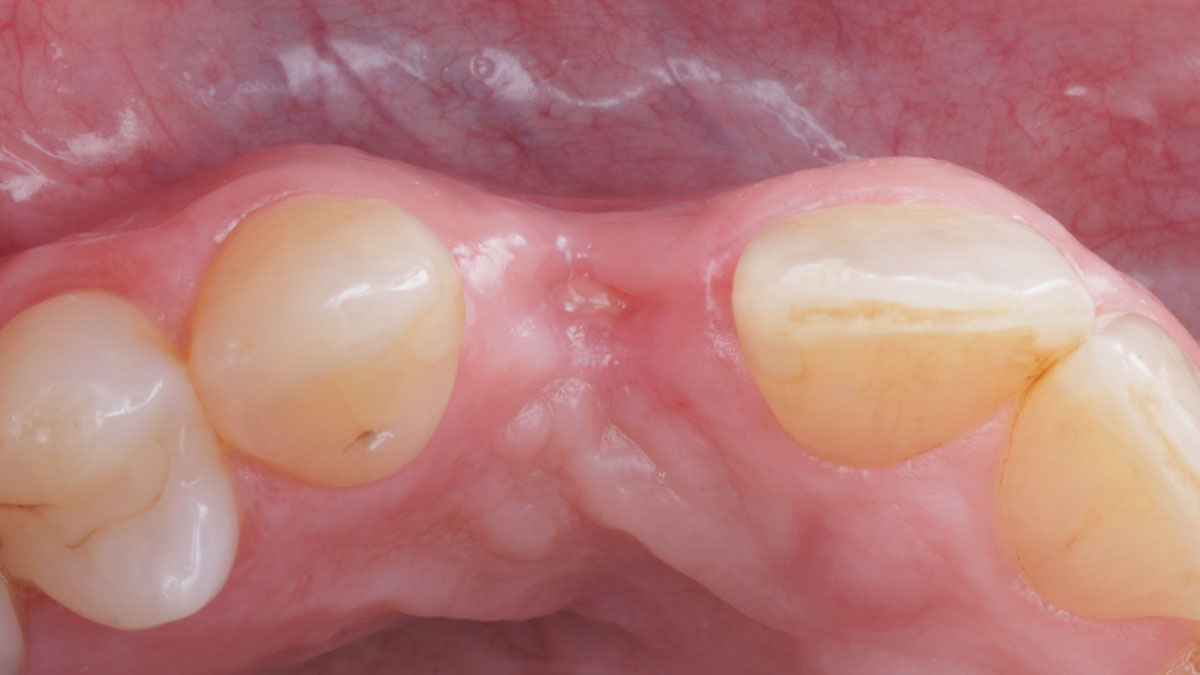
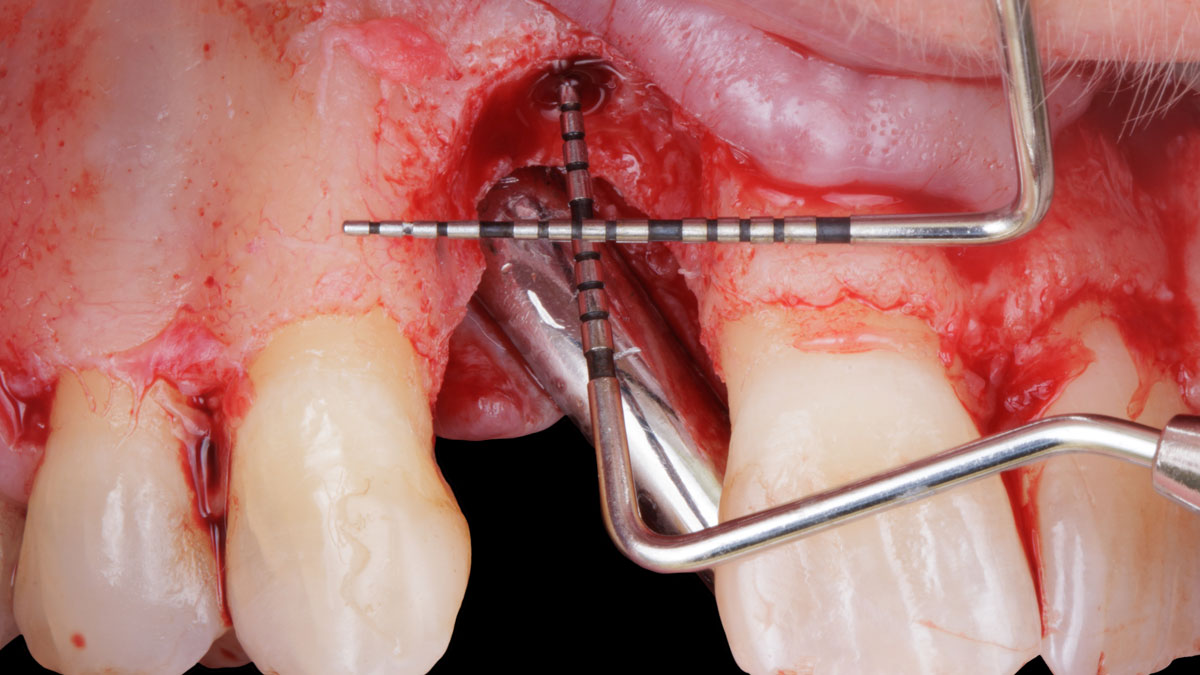
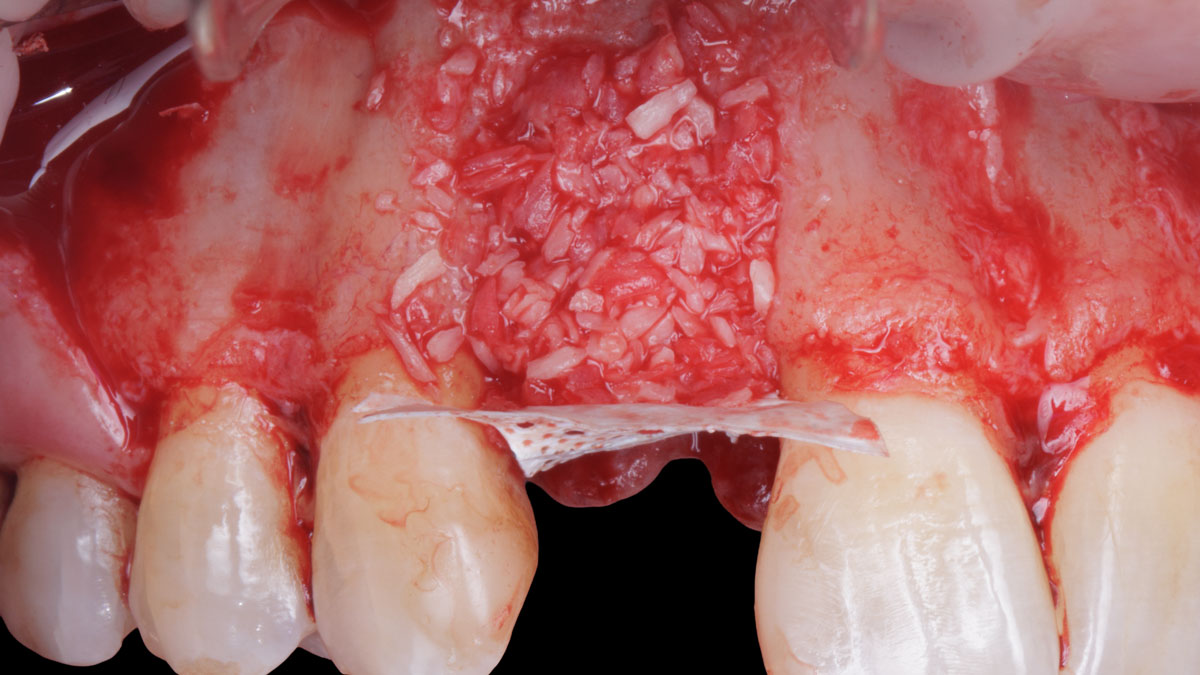
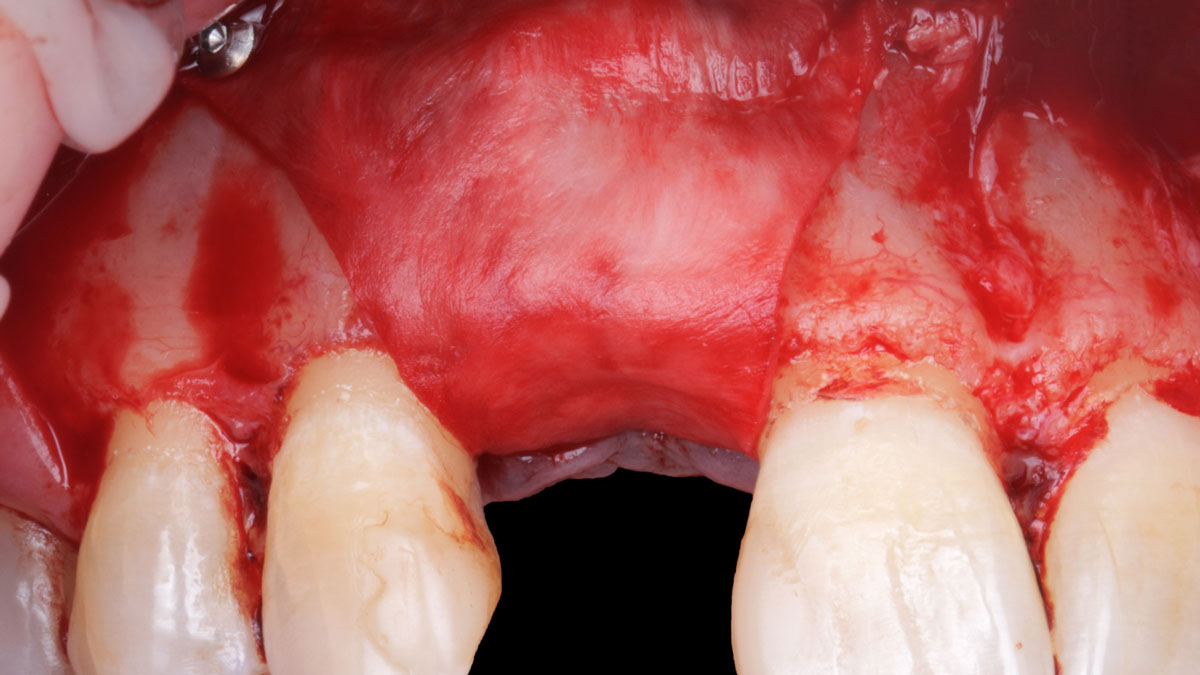
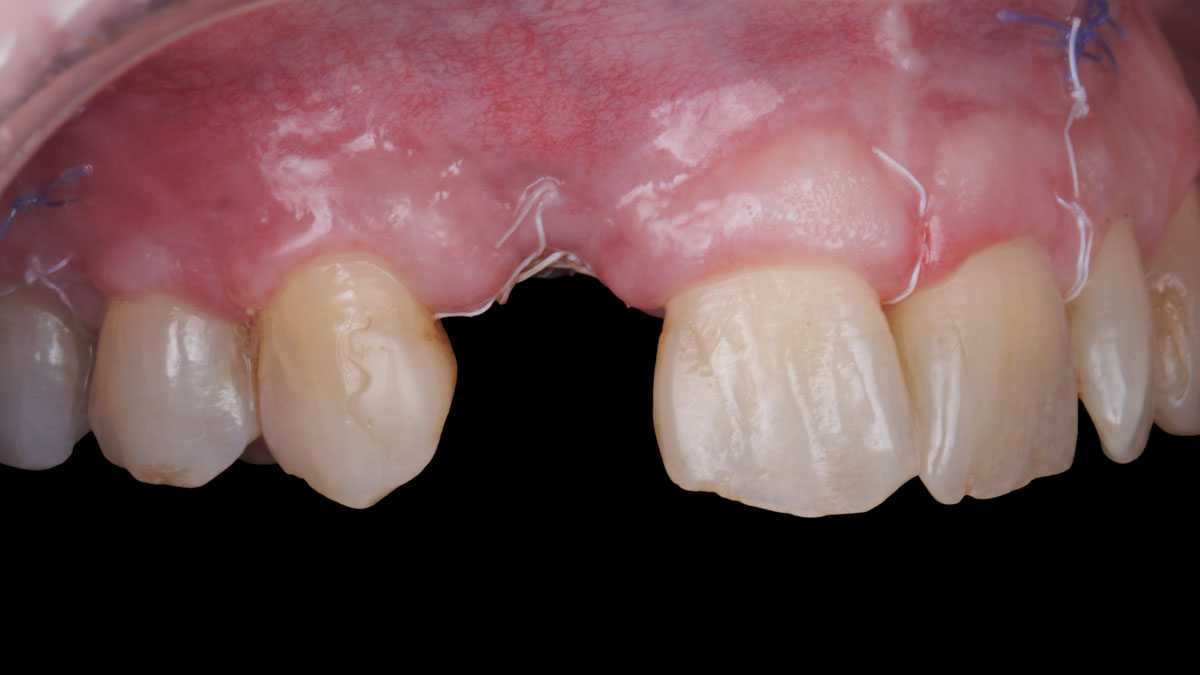
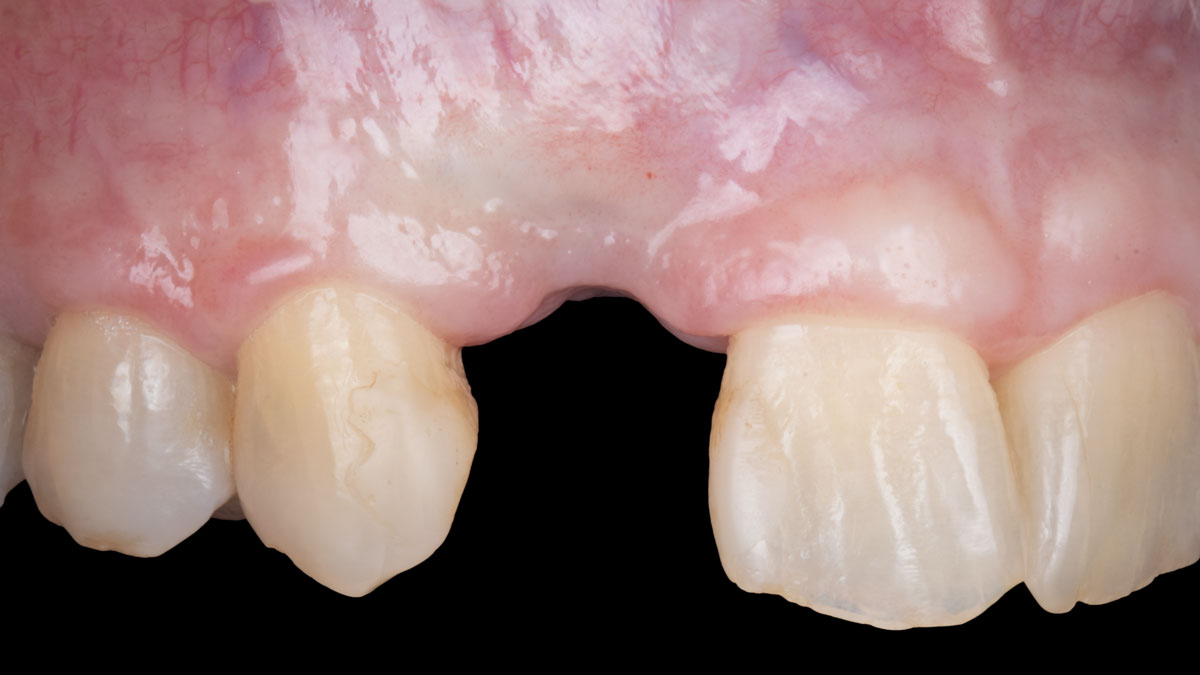
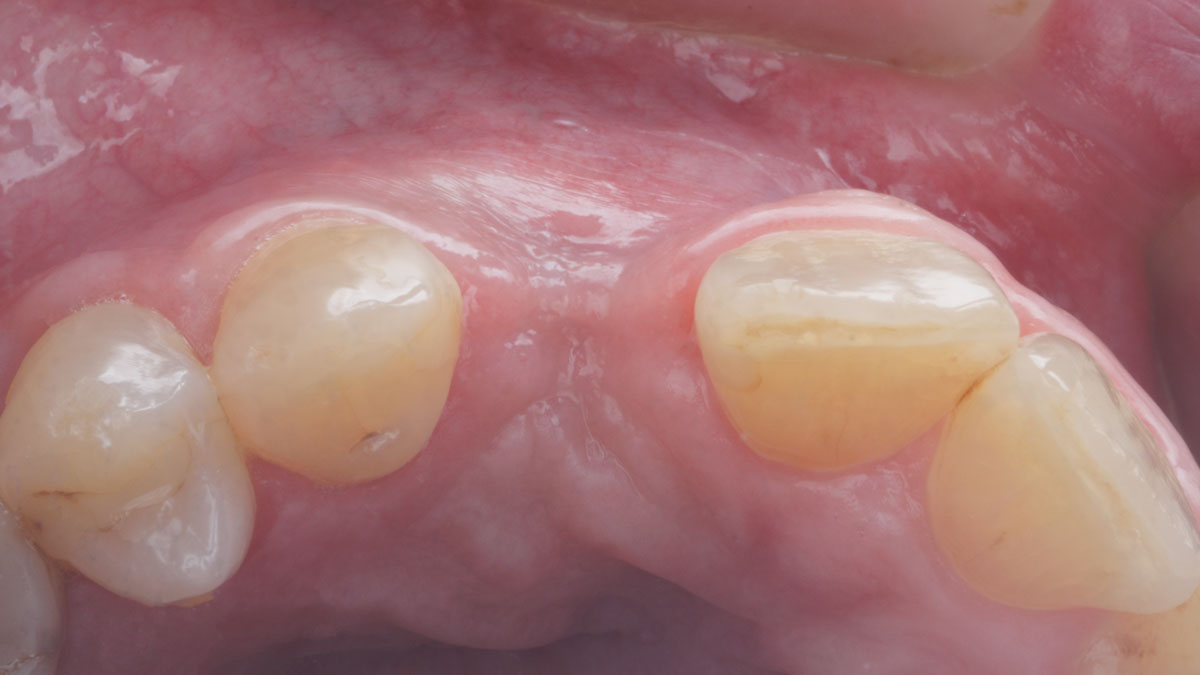
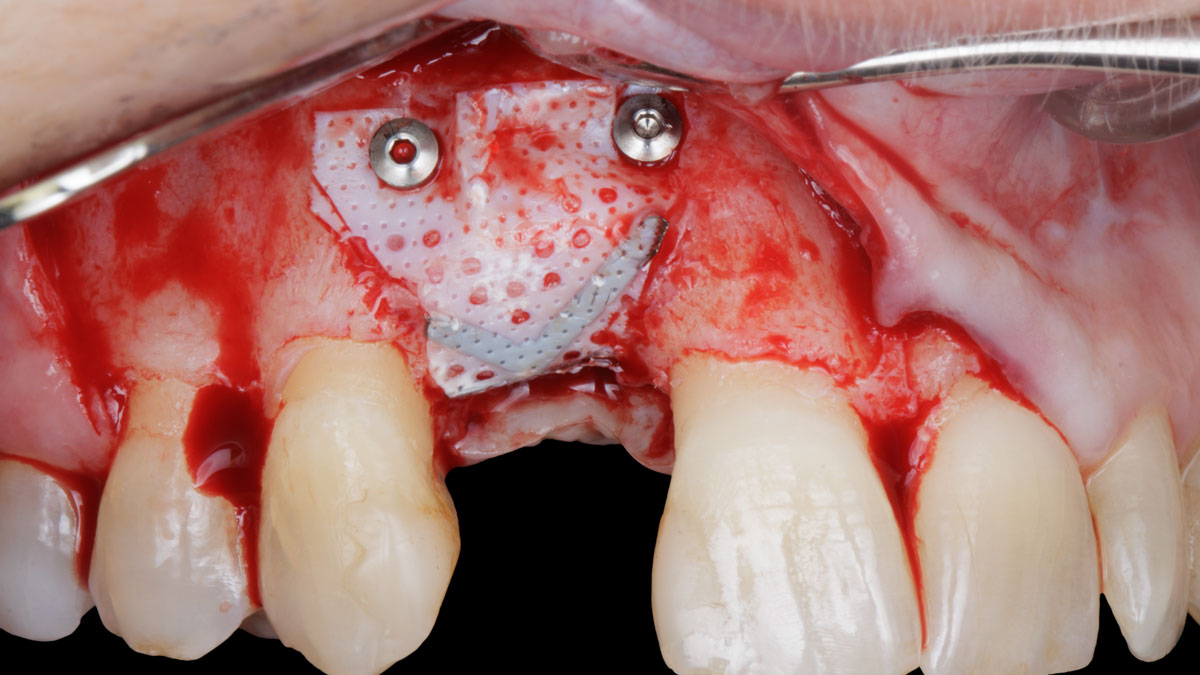
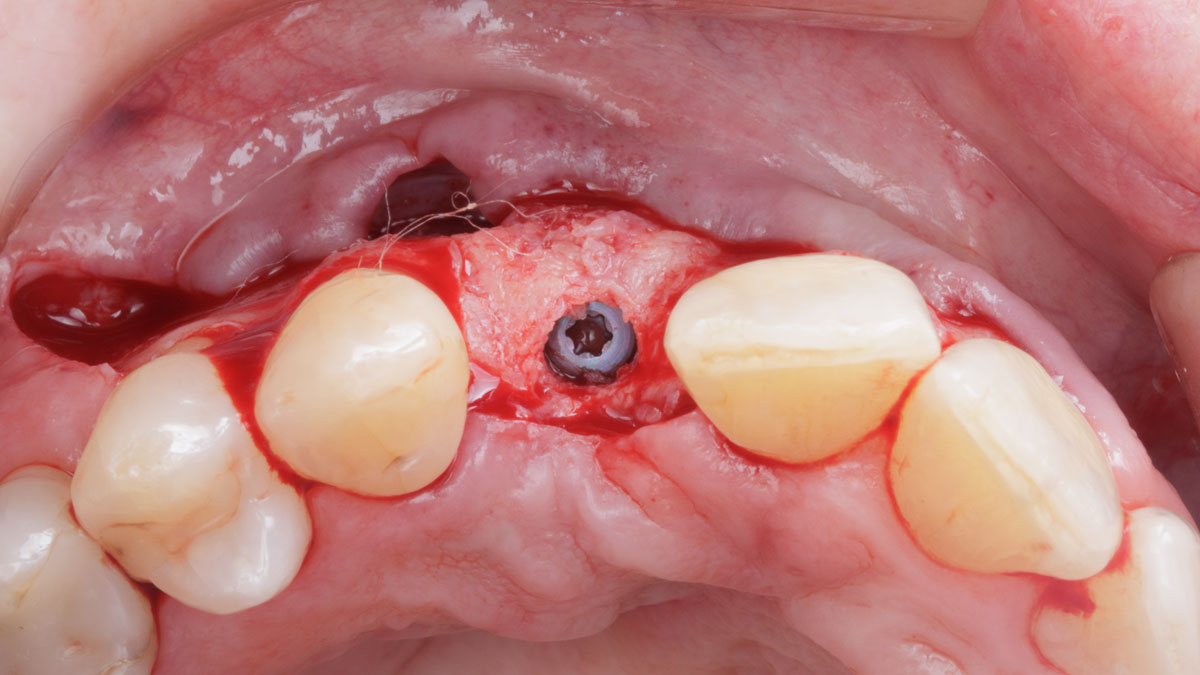
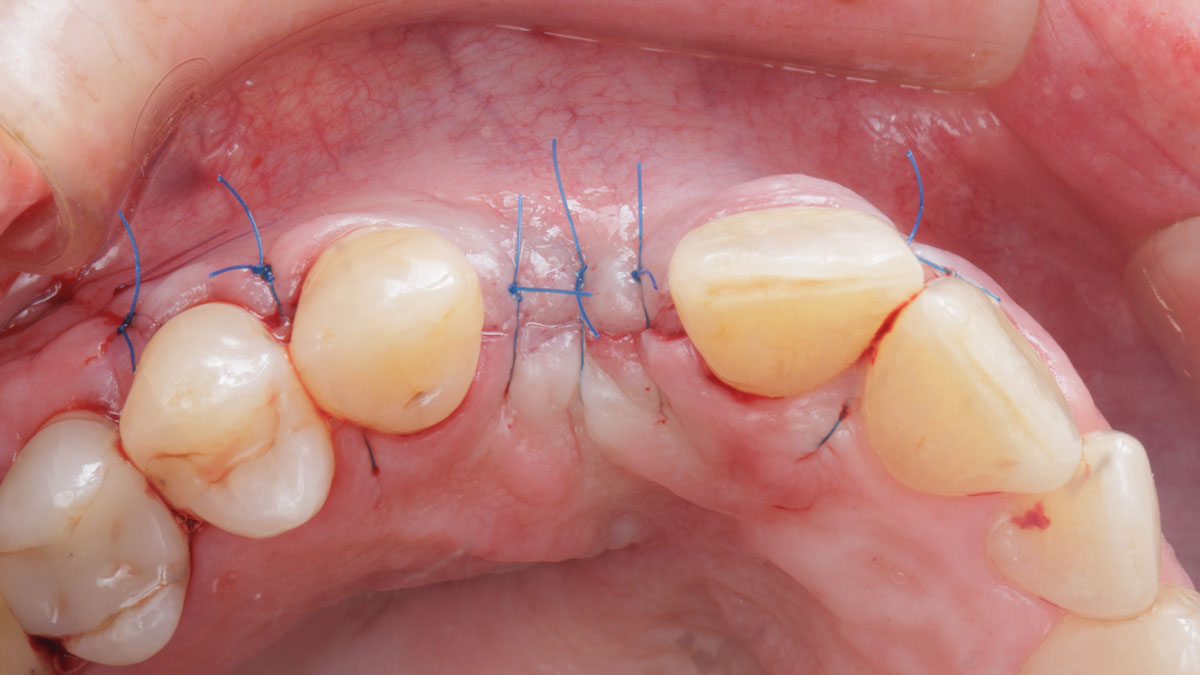
“Geistlich Bio-Gide® Forte is a versatile membrane that can be used in more indications than other membranes. It can be tacked, it can be screwed, it can be stitched or simply laid flat on a contained defect. It will behave well regardless of how you treat it.”
— Dr. Muhammad Saleh
THE OUTCOME
The use of Geistlich Bio-Gide® Forte, vallos® & RPM™ in guided bone regeneration led to significant horizontal and vertical bone gain, allowing for prosthetically driven implant placement.
Muhammad Saleh, BDS, MSD, PhD
Dr. Muhammad H. Saleh, Diplomate of the American Board of Periodontology, is a full-time faculty member at the University of Michigan and an internationally recognized lecturer in periodontology and implant dentistry. He has published over 140 peer-reviewed articles and reviews for leading Q1 journals. His numerous honors include the 2021 AAPF Schoor Award, 2022 Ramfjord Symposium Award, 2022 AAP Institute Award, 2024 AAPF LEAD and Nevins Awards, and the 2025 Roy H. Roberts Award.
Karim Ghishan, BDS, MS
Dr. Karim Ghishan is a specialist in Periodontology and Implant Dentistry. He earned his Doctor of Dental Medicine degree from Jordan University of Science and Technology in 2020, completed a two-year Visiting Scholar Program in Periodontics at the University of Iowa in 2023, and completed a Certificate in Periodontics and Master’s Degree at the University of Michigan in 2026. He has advanced training in periodontal plastic surgery, dental implant therapy, and regenerative procedures and currently practices in East Lansing, Michigan.