





BIOBRIEF
2-Stage Implant Placement in the Posterior Mandible Using the Sausage Technique™
THE SITUATION
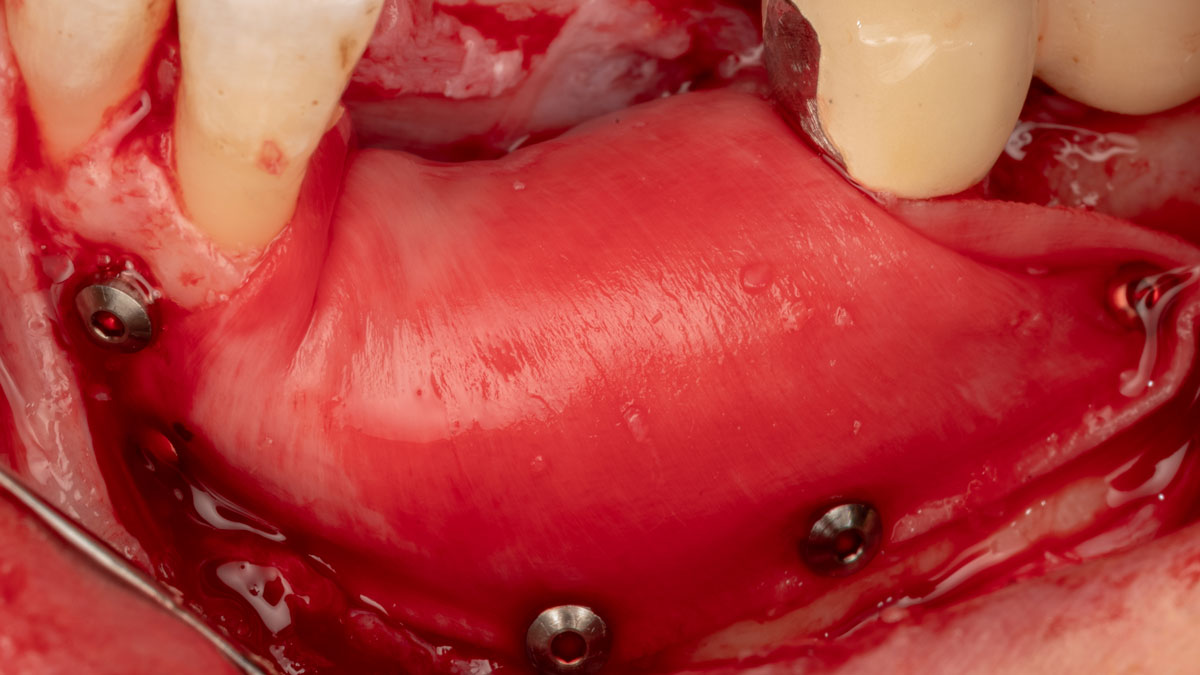
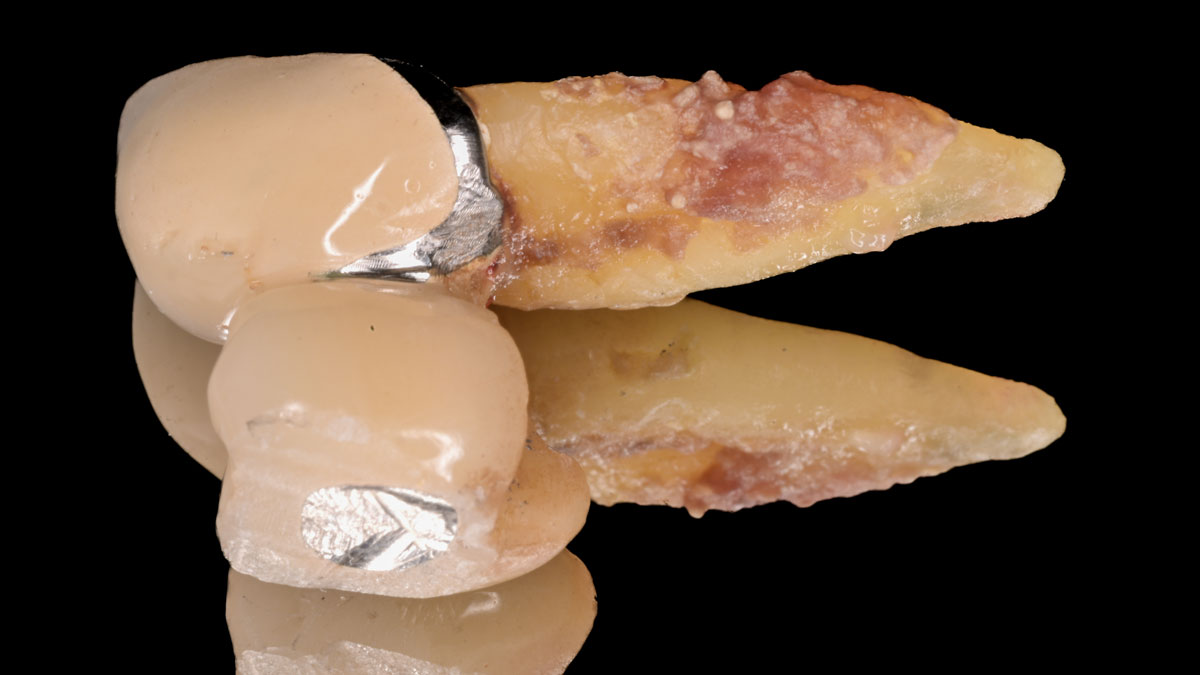
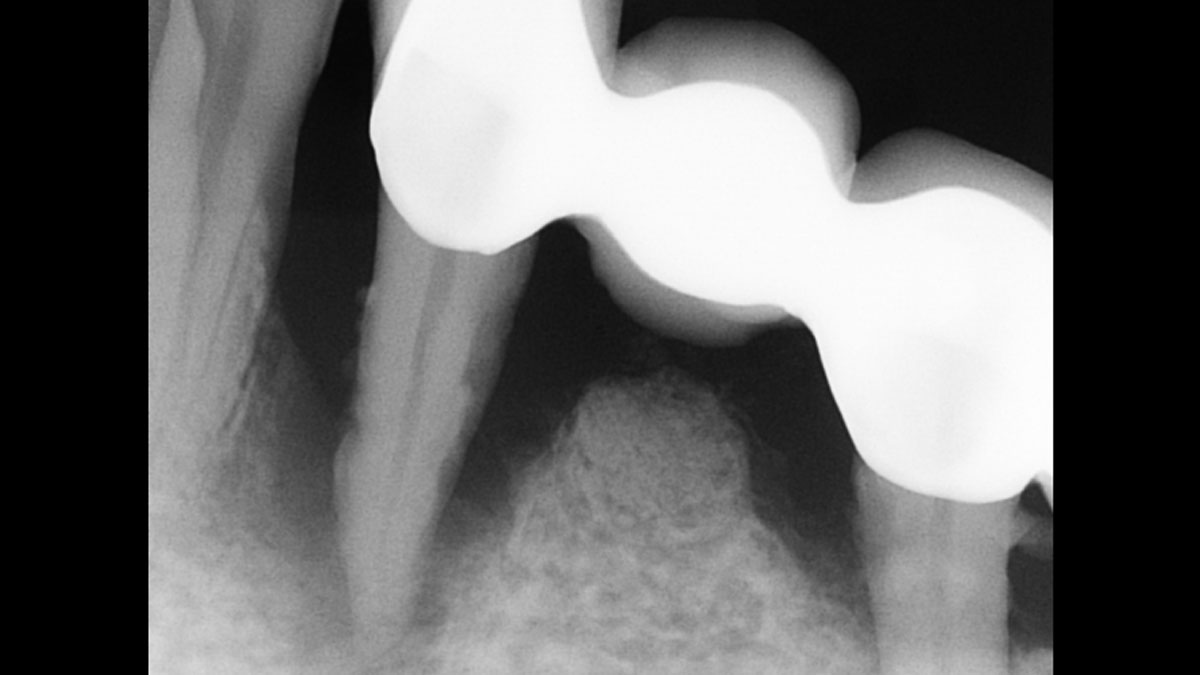
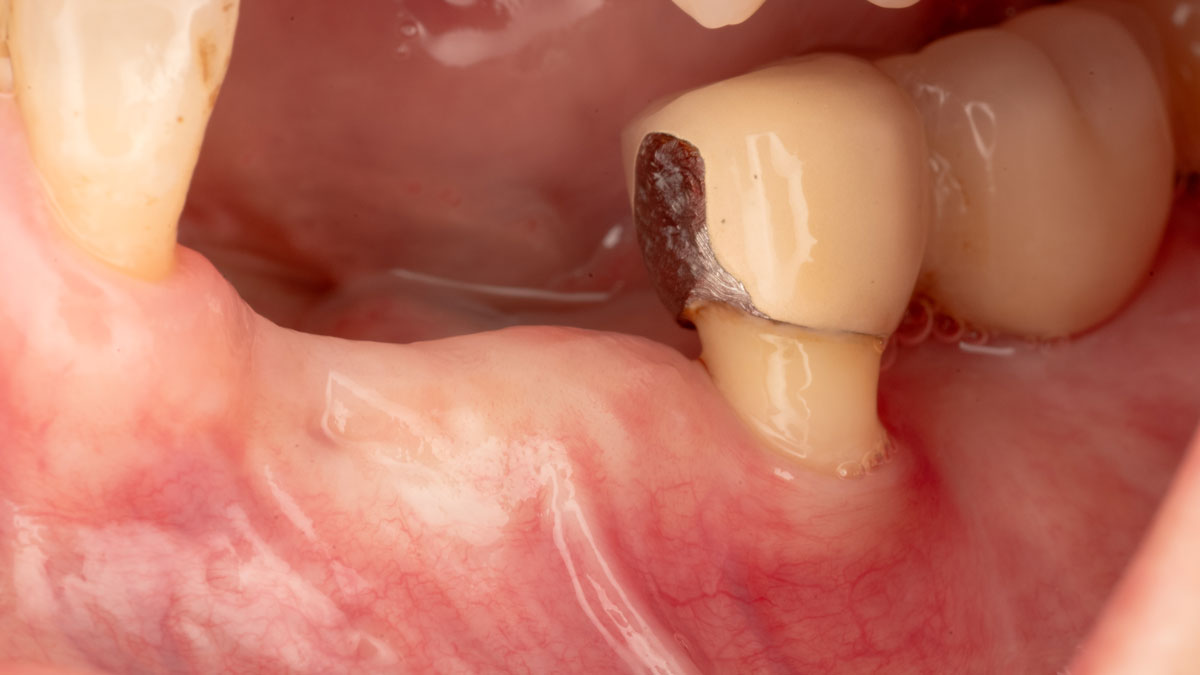
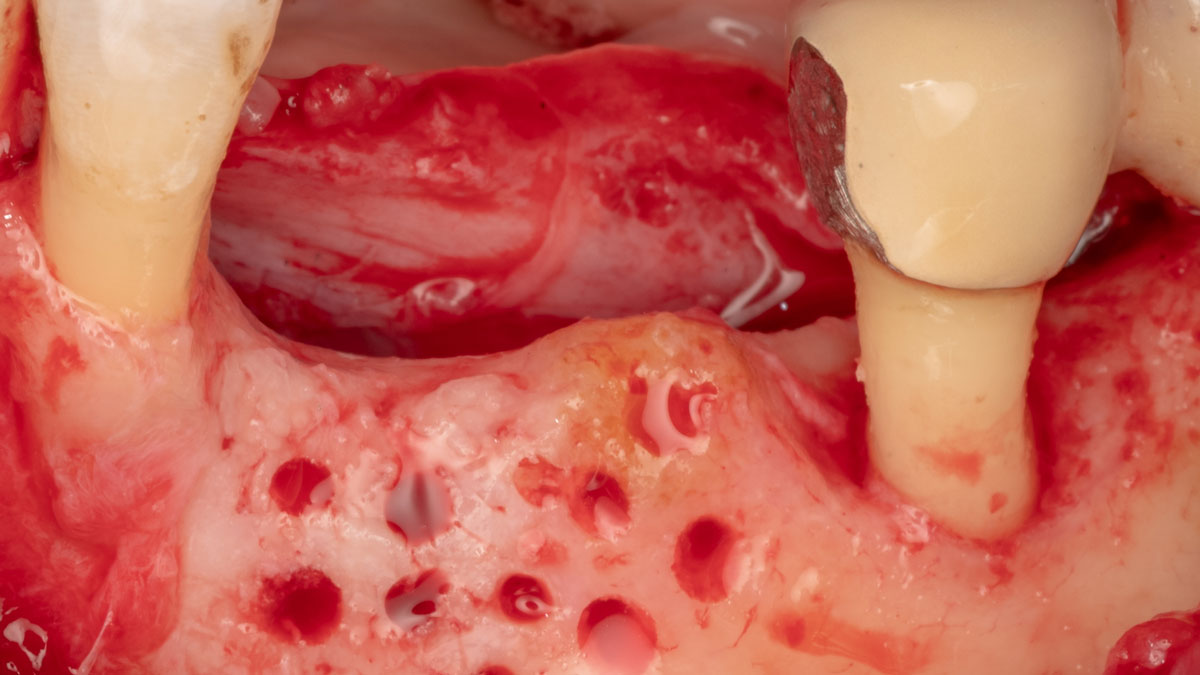
A 49-year-old female patient presented for periodontal treatment and implant consultation. Tooth 22* required extraction as it exhibited 100% bone loss on initial presentation with calculus deposits to apex. After extraction the site demonstrated a Siebert Class I defect with a significant horizontal discrepancy. The final goal was to restore the site with dental implants after treatment of periodontal disease and guided bone regeneration to correct the horizonta discrepancy.
*Universal Numbering System
THE RISK PROFILE
| Low Risk | Medium Risk | High Risk | |
|---|---|---|---|
| Patient’s health | Intact immune system/ Non-smoker | Light smoker Impaired immune system/ | Heavy smoker |
| Patient’s esthetic requirements | Low | Medium | High |
| Height of the smile line | Low | Medium | High |
| Gingival biotype | Thick – “low scalloped” | Medium – “medium scalloped” | Thin – “high scalloped” |
| Infection at implant sight | None | Chronic | Acute |
| Bone height at adjacent tooth | ≤ 5 mm from contact point | 5.5 – 6.5 mm from contact point | ≥ 7 mm from contact point |
| Restorative status of adjacent tooth | Intact | Restored | |
| Width of tooth gap | 1 tooth (≥ 7 mm) | 1 tooth (≤ 7 mm) | 2 teeth or more |
| Soft-tissue anatomy | Intact | Compromised | |
| Bone anatomy of the alveolar ridge | No defect | Horizontal defect | Vertical defect |
 download pdf
THE APPROACH
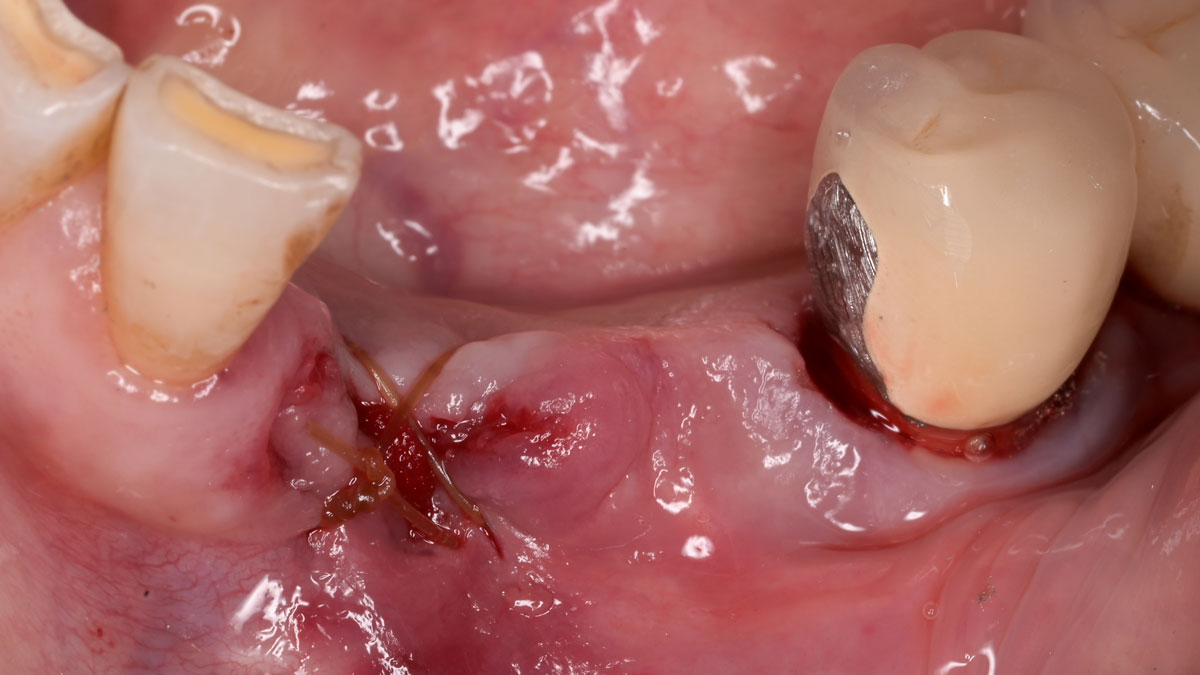
The treatment goal in this case is restoration of bone dimensions via guided bone regeneration and subsequent implant placement. The Sausage Technique™ was used for reconstruction of bone volume together with resorbable collagen membrane, fixation pins, and bone graft material.
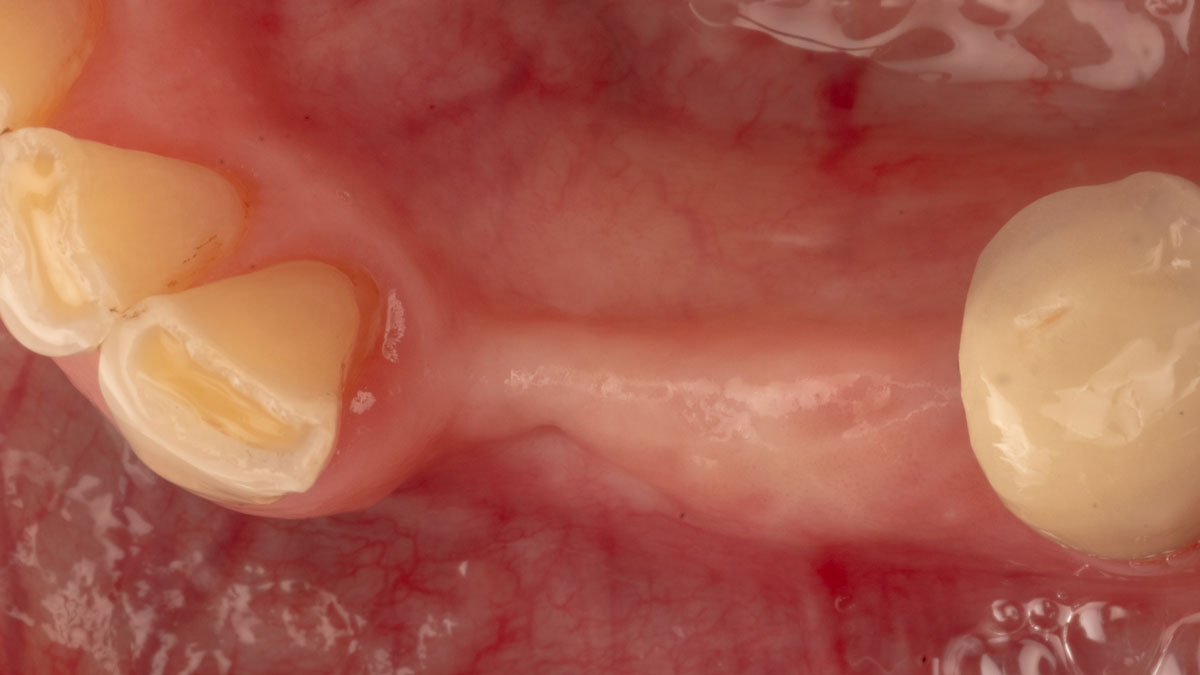
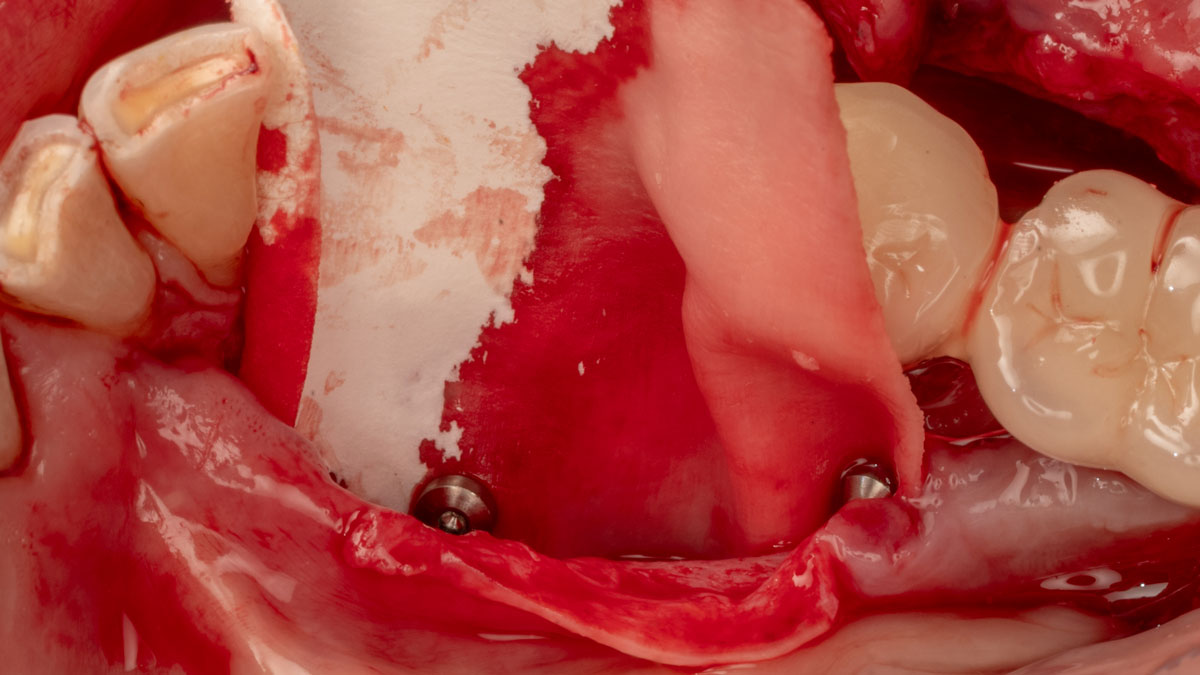
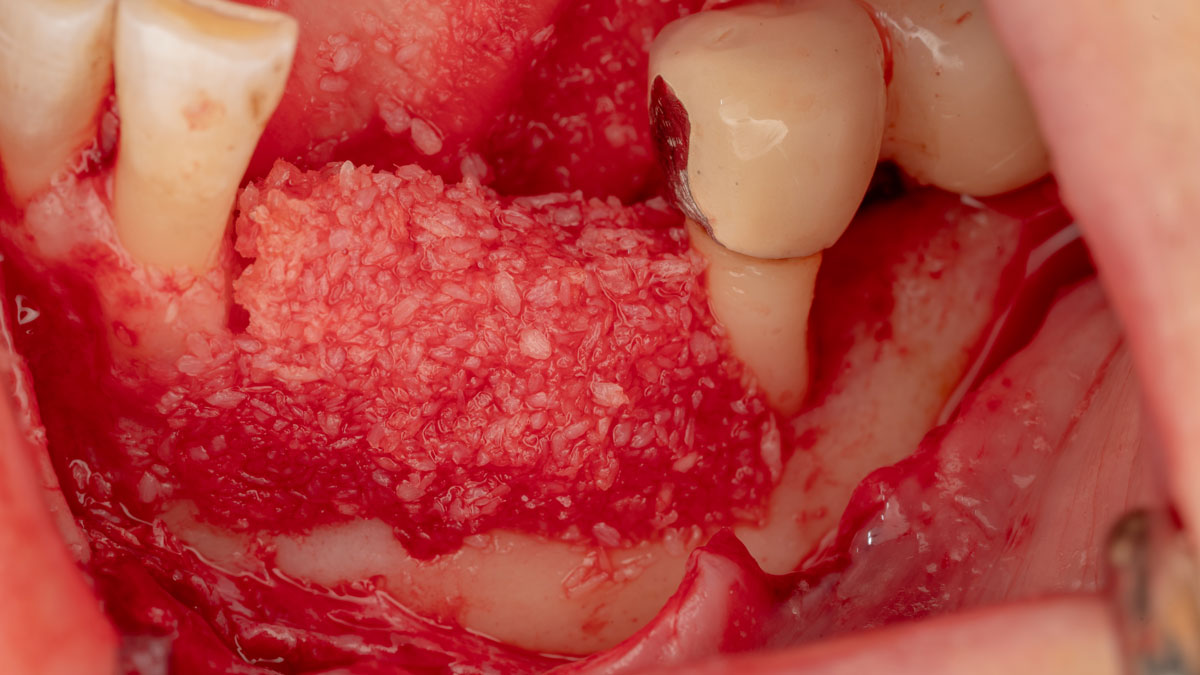
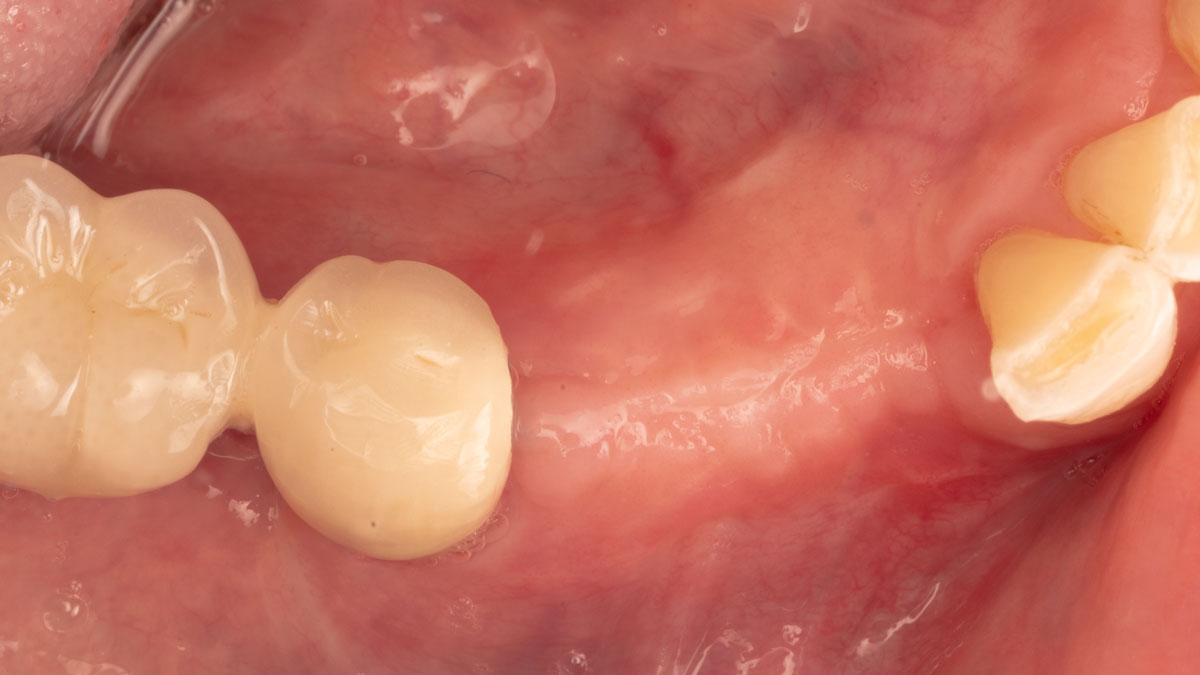
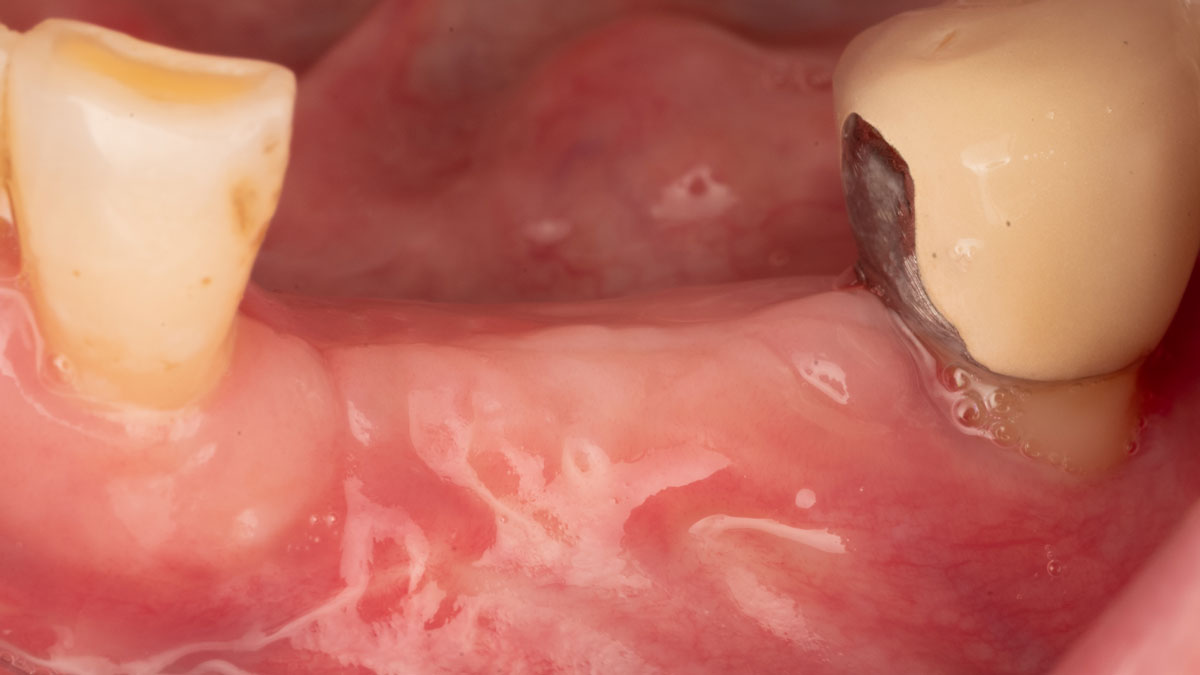
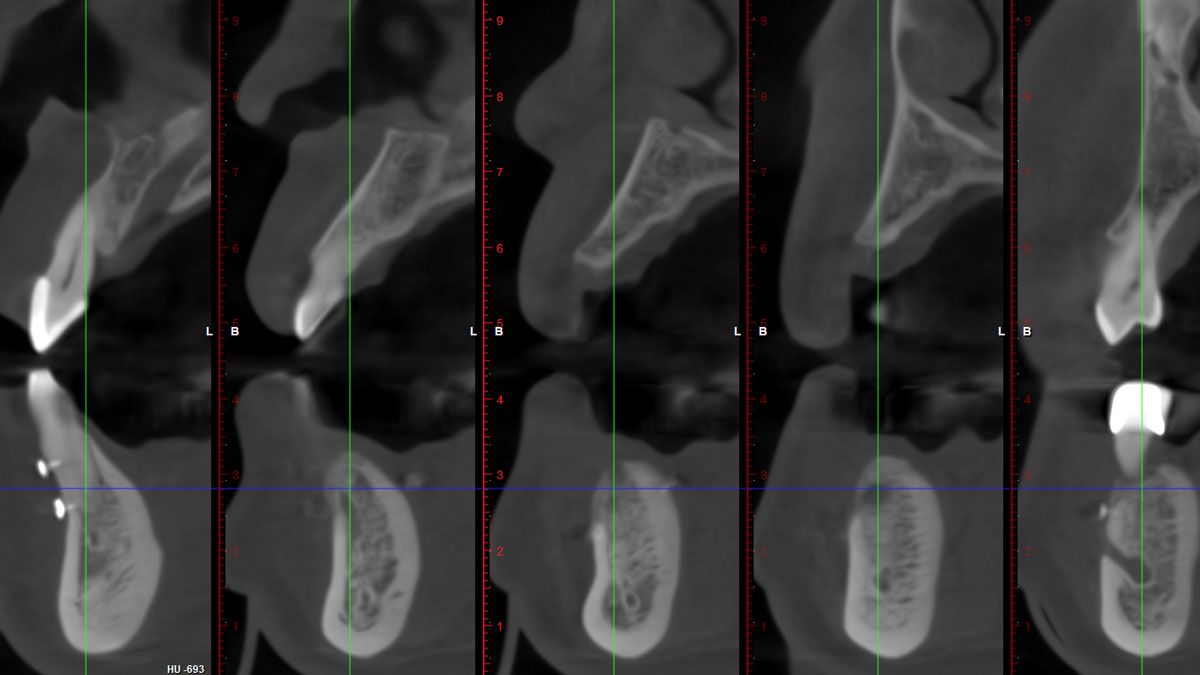
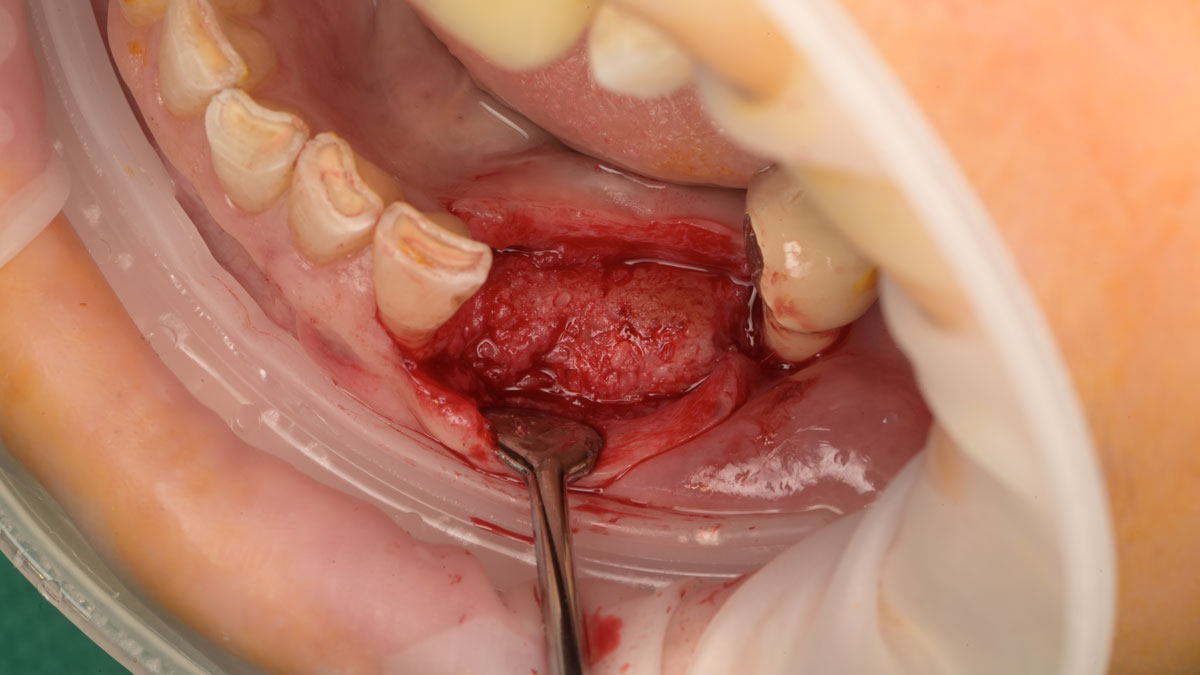
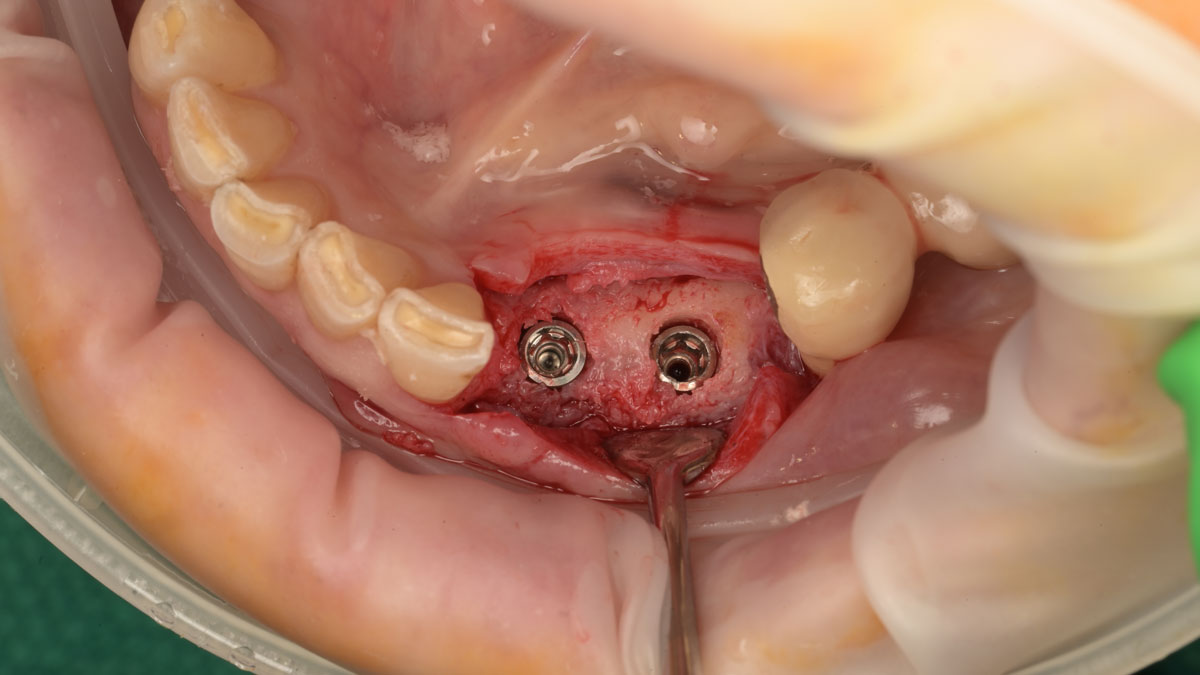
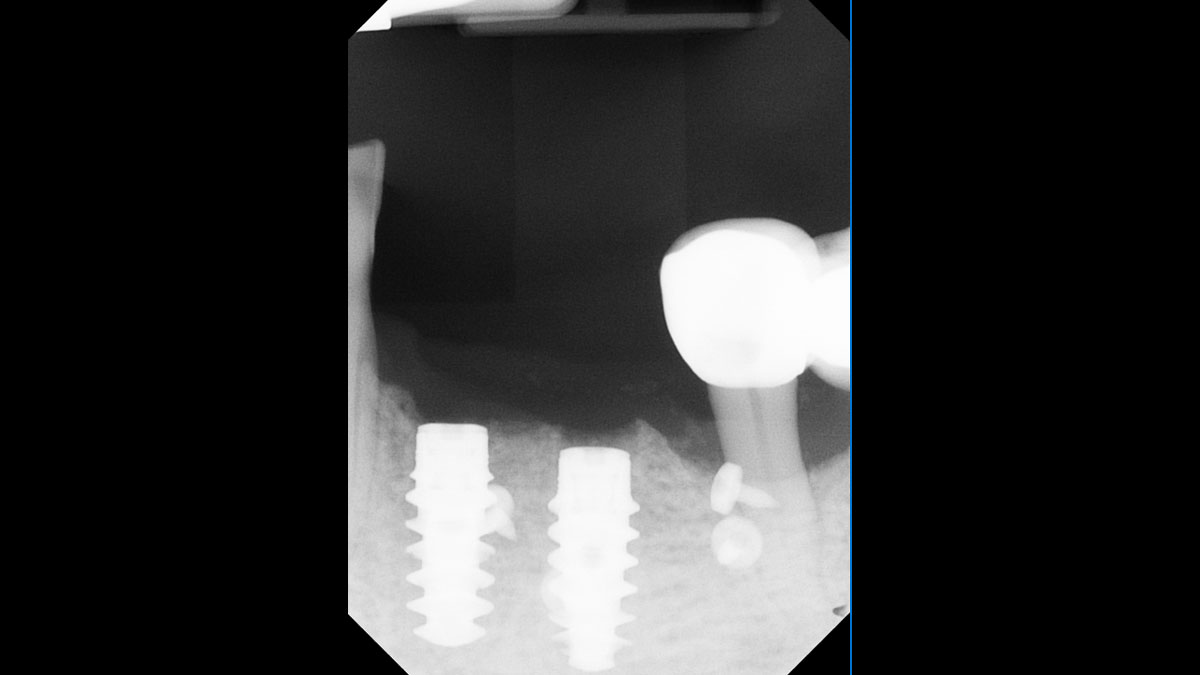
“A significant discrepancy in bone dimensions would compromise implant placement and positioning if approached without guided bone regeneration.”
— Dr. Andrea Ravidà
THE OUTCOME
Significant horizontal gain in bone volume was achieved utilizing guided bone regeneration with the Sausage Technique™ and Geistlich Bio-Gide® Forte resorbable collagen membrane, allowing for prosthetically driven implant placement.

Andrea Ravidà, DDS, MS, PhD
Dr. Andrea Ravidà is the Director of the Graduate Periodontics Program in the department of Periodontics at the University of Pittsburgh. He conducts clinical research focusing on periimplantitis, periodontitis, and short implants. He has published more than 90 peer-reviewed articles and conference abstracts/presentations related to periodontics and implant therapy. He is section editor of the International Journal of Oral Implantology and the Journal of Translational Medicine.
Jasper Wu, DDS, MDS
Dr. Jasper K. Wu received his Doctor of Dental Surgery degree from SUNY University at Buffalo School of Dental Medicine in 2019. He practiced both private and hospital-based dentistry in Buffalo, NY. Dr. Wu completed a Certificate in Periodontics and earned an MDS degree at the University of Pittsburgh School of Dental Medicine in 2026. He has received advanced training in periodontal plastic surgery, dental implant therapy, and regenerative procedures.